Archive for February, 2020
 Author:
  February 4th, 2020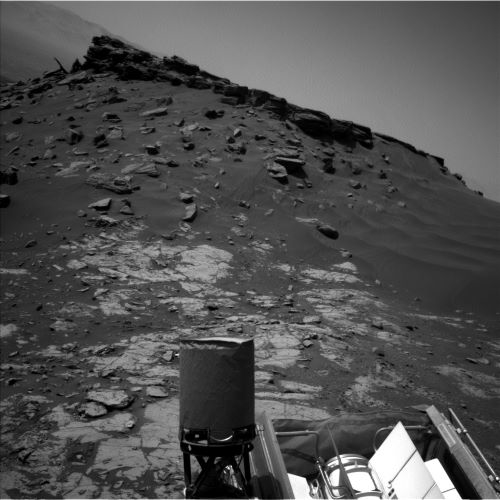
Curiosity Left Navigation Camera image taken on Sol 2661, January 31, 2020.
Credit: NASA/JPL-Caltech
NASA’s Curiosity Mars rover is now performing Sol 2665 tasks.
“It’s not the ground that is tilted, we are!” That’s the report from Abigail Fraeman, a planetary geologist at NASA’s Jet Propulsion Laboratory.

Curiosity Front Hazard Avoidance Camera Left B image taken on Sol 2665, February 4, 2020.
Credit: NASA/JPL-Caltech
Curiosity is near the contact between the clay-bearing “Glen Torridon” unit and the “Greenheugh” pediment, and the rover is parked at a mission-record setting 26.9˚ tilt.

Curiosity Left B Navigation Camera photo acquired on Sol 2664, February 3, 2020.
Credit: NASA/JPL-Caltech
Chemical information
Mars researchers are set to use the rover’s arm and remote sensing instruments to investigate the interesting textures and chemistry of rocks near the contact.
Fraeman says also on tap is use of the robot’s Chemistry and Camera (ChemCam) to collect chemical information from a bedrock target filled with nodules called “Garron Point” and a dark float rock that may have come from the Greenheugh pediment named “Mull of Galloway.”
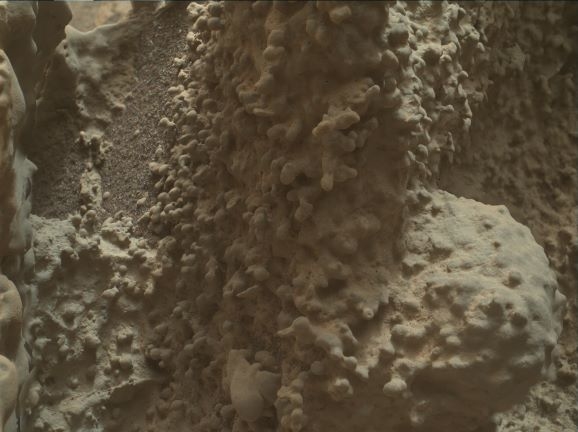
Curiosity Mars Hand Lens Imager photo produced on Sol 2664, February 3, 2020.
Credit: NASA/JPL-Caltech/MSSS
Curiosity Dust Removal Tool (DRT) is in use as is Alpha Particle X-Ray Spectrometer (APXS), the Mars Hand Lens Imager (MAHLI) and ChemCam to make observations of “Berwickshire,” a typical-looking piece of bedrock.
Nodules and veins
APXS and MAHLI will also observe “Cairnbulg,” an area with nodules, and MAHLI will take some images of a vein named “Ross and Cromarty.”
Also on the plan is a Mastcam multispectral observation of Berwickshire and a stereo Mastcam mosaic of the contact between the Greenheugh pediment and Glen Torridon.
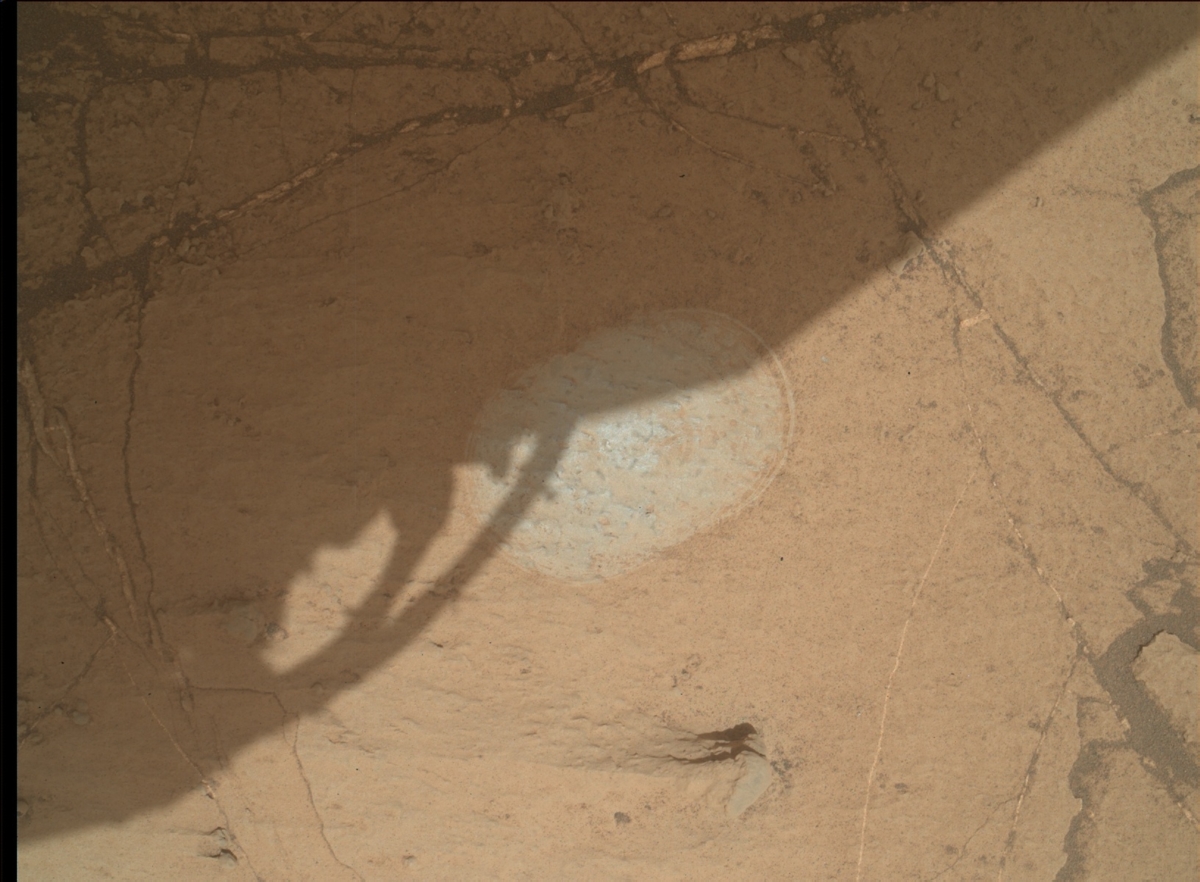
Curiosity Mars Hand Lens Imager photo produced on Sol 2665, February 4, 2020.
Credit: NASA/JPL-Caltech/MSSS
“ChemCam will collect more data from ‘Ramasaig,’ a dark vein near the rover, and ‘St. Monanas,’ another piece of rock with interesting textures,” Fraeman adds. “The rover will also acquire some environmental science observations that will be used to understand atmospheric properties and search for dust devils.”
Drill target
On the plan is a drive by Curiosity towards some flat rock outcrops that are nearby, but which the rover will be able to reach without having to park at such a high tilt.
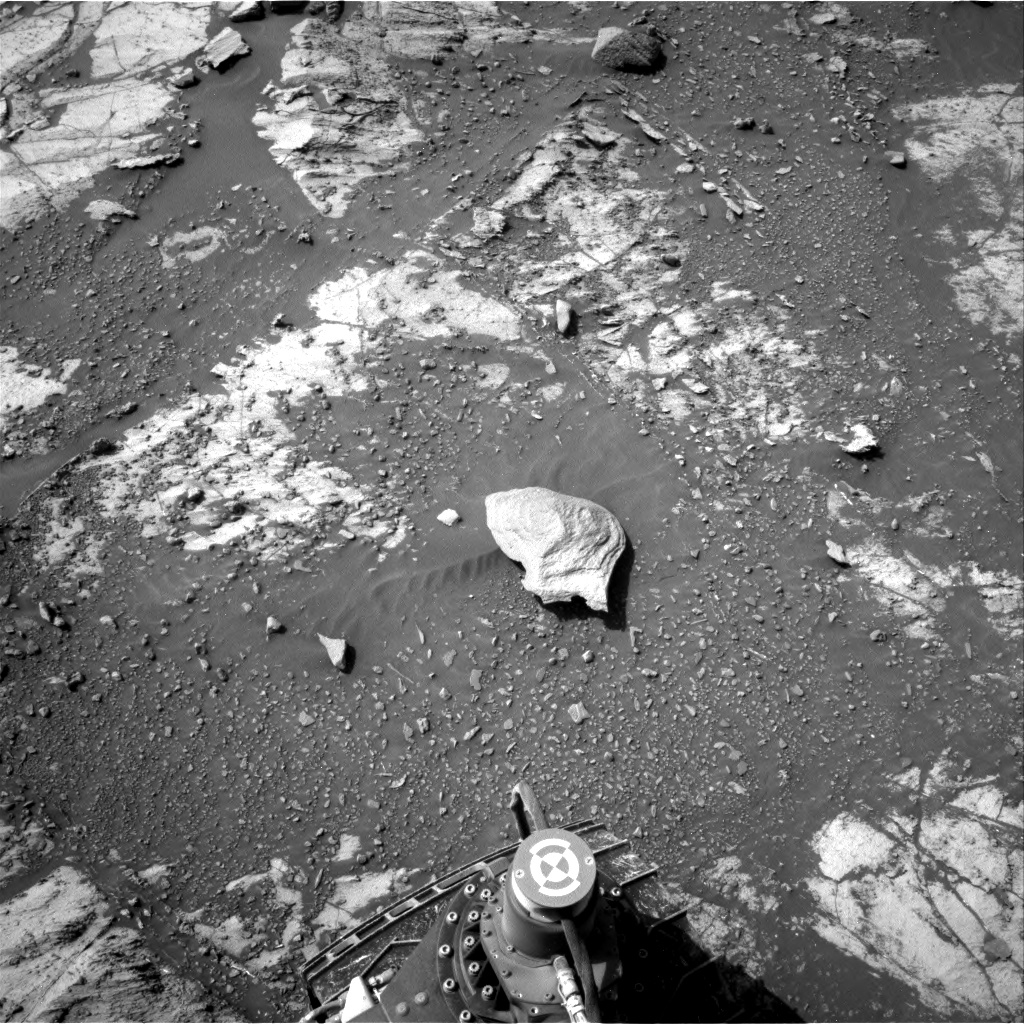
Curiosity Right B Navigation Camera image acquired on Sol 2664, February 3, 2020.
Credit: NASA/JPL-Caltech

Curiosity Right B Navigation Camera image taken on Sol 2665, February 4, 2020.
Credit: NASA/JPL-Caltech
“The observations we collect from this area next week,” Fraeman concludes, “will help us decide whether these flatter rocks would be a good target to drill!”
 Posted in

China’s farside rover images Chang’e-4 lander in the distance.
Credit: CNSA/CLEP
After landing on the Moon’s farside on January 3, 2019, China’s lunar rover Yutu-2 (Jade Rabbit-2) has now driven 1,204 feet (367.25 meters).
Both the Chang’e-4 lander and the rover ended their work for the 14th lunar day on Saturday (Beijing Time), and switched to dormant mode for the lunar night, according to the Lunar Exploration and Space Program Center of the China National Space Administration.

Yutu-2 rover (Jade Rabbit-2) has now driven 1,204 feet (367.25 meters). Credit: CNSA/CLEP
Lander/rover experiments
During the 14th lunar day of exploration, China’s state-run Xinhua news agency reports, the Yutu-2 continued to move along the planned route. The scientific instruments on the lander and rover worked as planned.
“The neutron radiation detector and low-frequency radio spectrometer on the lander worked normally and acquired first-hand scientific data. On the rover, the near-infrared spectrometer, panoramic camera, neutral atom detector and lunar radar carried out scientific exploration as planned,” Xinhua explained.
China’s Chang’e-4 mission was launched on Dec. 8, 2018, making the first-ever soft landing within the Von Kármán crater in the South Pole-Aitken Basin.
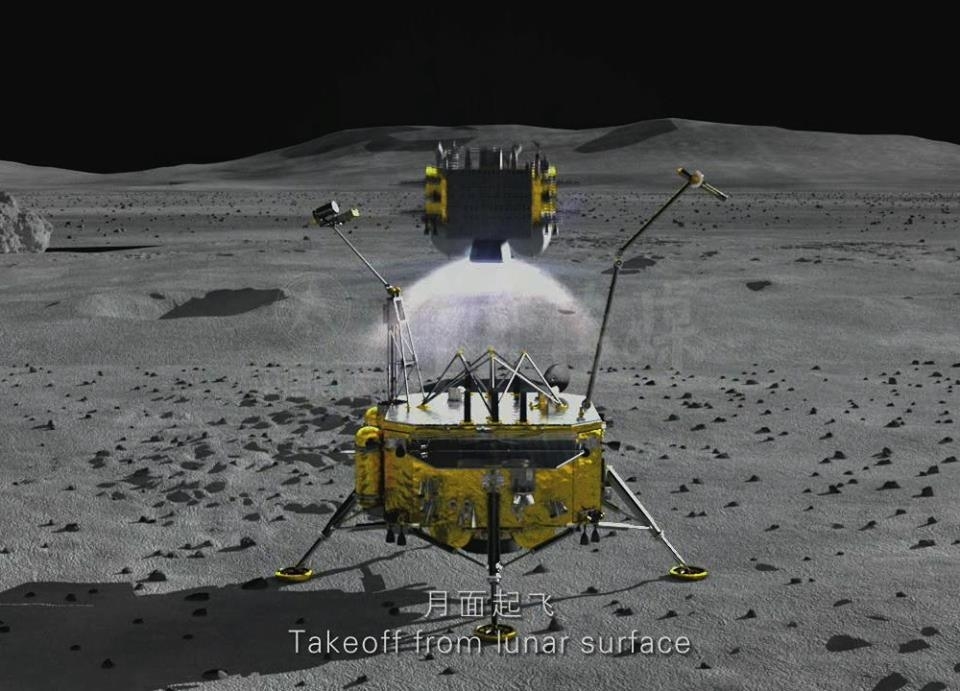
Chang’e-5 mission is intended to return lunar specimens back to Earth.
Credit: CCTV/Screengrab/Inside Outer Space
Next up: lunar samples
The country’s next lunar foray is the Chang’e-5 mission, slated for liftoff later this year.
The 8.2-metric-ton Chang’e-5 mission includes a lander, an orbiter, an ascender and a returner. The key tasks of the mission will be lunar sample collection, takeoff from the Moon, rendezvous and docking in lunar orbit, followed by a high-speed reentry into Earth’s atmosphere.

Credit: CCTV Video News Agency/Inside Outer Space screengrab
Quality of samples
Peng Jing, deputy chief designer of the Chang’e-5 probe at the China Academy of Space Technology recently noted that the mission will depart Wenchang Space Launch Center in Hainan province during the fourth quarter of this year.
If successful, this robotic spacecraft would attempt the first lunar sample return to Earth in over 40 years.
This mission is targeted for the northwestern part of the Oceanus Procellarum, a lunar mare on the western edge of the Moon’s near side.
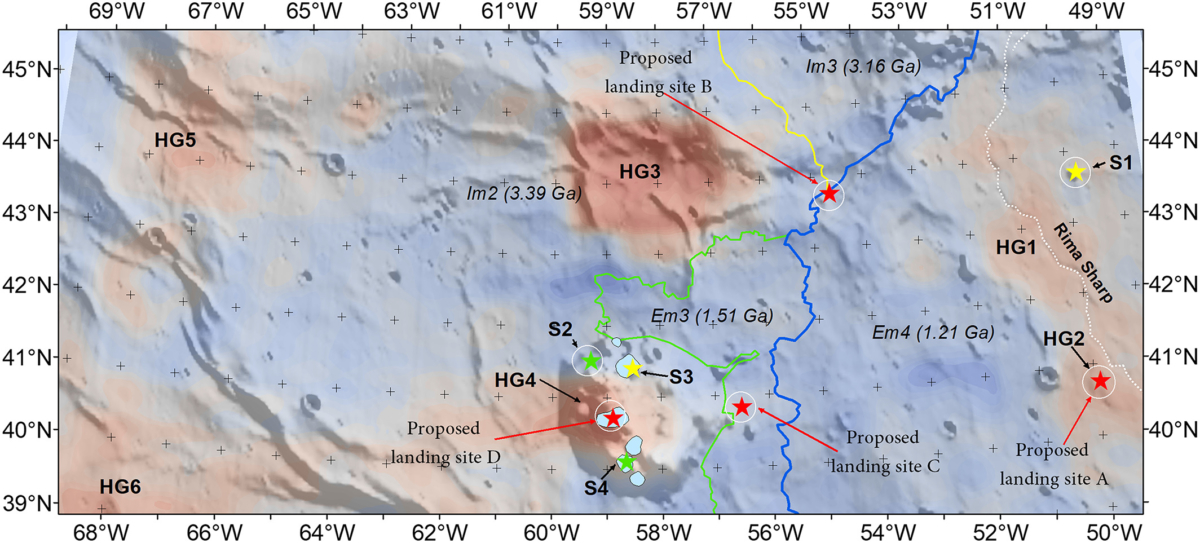
Locations of proposed Chang’e-5 landing sites (marked by red stars) from new study.
Credit: Chisenga, et al.
“The quantity of samples it will bring back depends on many factors, such as the landing site’s geology. We hope that it can collect at least 1 kilogram, and if everything goes well, it may bring two kilograms or even more,” Peng said in the China Daily story.
Scientific outpost
Turning to future lunar exploration, Peng said scientists and engineers have proposed that two or three missions could be made to set up a simple scientific outpost on the Moon, which would be able to accommodate astronauts for short-term stays, to carry out experiments and explore the feasibility of long-term visits.
Go to this video describing the mission:
China to Launch Chang’e-5, Mars Probes in 2020

Curiosity Chemistry & Camera image acquired on Sol 2663, February 2, 2020.
Credit: NASA/JPL-Caltech/LANL
As many of the readers of this website know…I do inspect quite a number of Curiosity Mars rover images daily.
I was intrigued by a recent new image…and I asked Pascal Lee, a planetary scientist of the Mars Institute and SETI Institute to help me identify what I’m observing. Here’s his reaction:
“The feature at the top of the image does look like a terrestrial nautiloid-form (important to keep those two words together and hyphenated)! Given that the background rock is full of spheroidal mineral concretions of the same scale, however, the nautiloid-form is most likely just a cluster of concretions that has been differentially eroded and made to stand out like a fossil might,” Lee told Inside Outer Space.
Lee added that, even if this was a fossil — which it likely isn’t” – “we should be reminded of what Carl Sagan used to say: “Extraordinary claims require extraordinary evidence.”

Credit: Pascal Lee
Tree of life…forest of life
However, Lee said, this also does bring to the fore the important point, which he has been harping about for some time, that, even if this were fossil life, no amount of fossil-finding on Mars will establish that we’ve found alien life. We would have found signs of “life off Earth,” but not necessarily established that it is life “that is not of the Earth.”
Lee said that alien life would be “establishable” as such…only if we could show that it does not fit on Earth’s Tree of Life, to which all known life forms on Earth belong (based on phylogeny, i.e., shared genetics).
“It would have to belong to a separate Tree of Life, one resulting from an independent origin. Once we’ve established that there are at least two Trees of Life in the solar system, we can speculate confidently that there must be a Forest of Life out there,” Lee advised.

Deep diving on Mars. Cavers deploy for underground exploration of the Red Planet.
Credit: Pascal Lee
Mars underground
To establish that scientists have found an alien life form on Mars, Lee added, we have to do genetics — not necessarily “DNA” sequencing, but genetic analysis in a more generic sense. To do genetics, the life form has to be alive – or dead since a very short time; biochemically still intact, he said.
“To find life that’s alive, we need to explore Mars’ underground where, deep enough, conditions at present would be warmer, wetter, and more sheltered than at the surface, sheltered especially from ionizing radiation, micrometeoritic bombardment, low atmospheric pressure, and drastic day-night temperature variations, which are likely to be bad news for any life,” Lee advised.

Loaded to the brim with samples, a robotic Mars Ascent Vehicle rockets off the planet under the watchful eye of an accompanying “go fetch” mini-rover.
Credit: NASA/JPL
Return sample
Even if we found fossils in samples returned from Mars, Lee said, “we would be hard-pressed to establish that it’s alien, as opposed to just life derived from life shared with the Earth in the past, via impacts, unless the samples actually contained extant life, which they would likely not…given that they would be from the surface of Mars or would have sat there for a long time.”
So in short, Lee said, the nautiloid-form pictured by Curiosity is indeed “weird and cool,” but ultimately, he added, “to have any chance of finding life that we’d be able to establish as alien, we must go and look for it underground.”
Interesting texture…but
“It is an interesting texture, could be anything from melted volcanic glass to weathering sedimentary concretions to slime molds from outer space sent to take over our Solar System,” adds Penelope Boston, Senior Advisor for Science Integration at NASA Ames Research Center. “I don’t know the size scale on the image nor the context of where it is from, etc.”
“I would add that finding any fossil material on Mars would be extremely exciting but would require the building of a major framework case of the geological context, the search for any biomolecules that might have been preserved in the material ranging from organic carbon to remains of lipids,” Boston told Inside Outer Space.
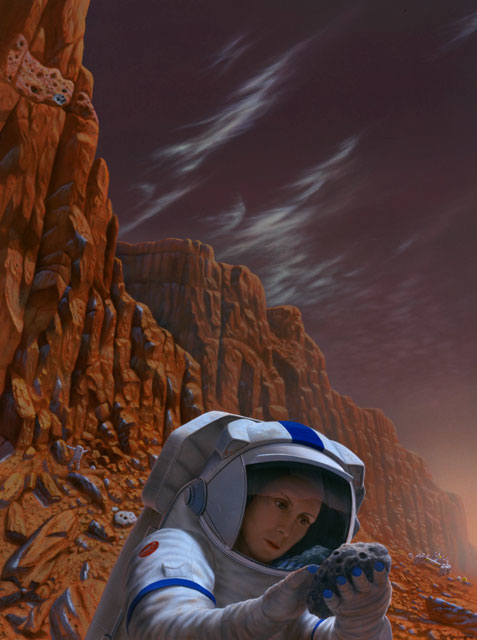
Confirmation of the existence and extent of life on Mars, whether ancient or current, will benefit human exploration. Here an exobiologist examines what appears to be a porous relic of a hot spring that has fallen from the canyon wall.
Credit: NASA/Pat Rawlings
Weak evidence
Boston said there are many additional techniques to try to see whether a form is a “one-off” or is in a setting with more than one example of a form. In addition, is there a stable isotope value consistent with what we know that life on Earth does to carbon (i.e. make it lighter than the source CO2)?
Similar in view as Pascal Lee, “we cannot tell from any of that whether it is related to Earth life or a second genesis,” Boston said. “Morphology alone is weak evidence, albeit possibly critical in drawing our attention to something to investigate, so it is super helpful but very far from definitive in any way,” she concluded.
Biological origin
As for the new Curiosity imagery showing an interesting feature, “it’s hard to say,” explains, Chris McKay, a noted Mars researcher at NASA Ames Research Center.
“There are certainly biogenic features that look like this but that’s quite a long way from saying these have to be biogenic features and could not be produced abiotically,” McKay adds.

Mars expedition probes the promise that Mars was a home address for past, possibly life today.
Credit: NASA
There are now a slew of papers that look at Curiosity images and some photos taken from the Mars Exploration Rover missions (Opportunity and Spirit) and say “these features look biotic to me,” McKay points out. “Very few people are convinced. These may or may not be biological.”
On Earth, McKay suggests, “such a claim of biological origin would be based on much better images, thin sections, etc. and backed by extensive analysis of the samples with multiple laboratory instruments. It is possible that someday a picture from Mars will be so good that its biological origin will be clear. Not yet,” he said.
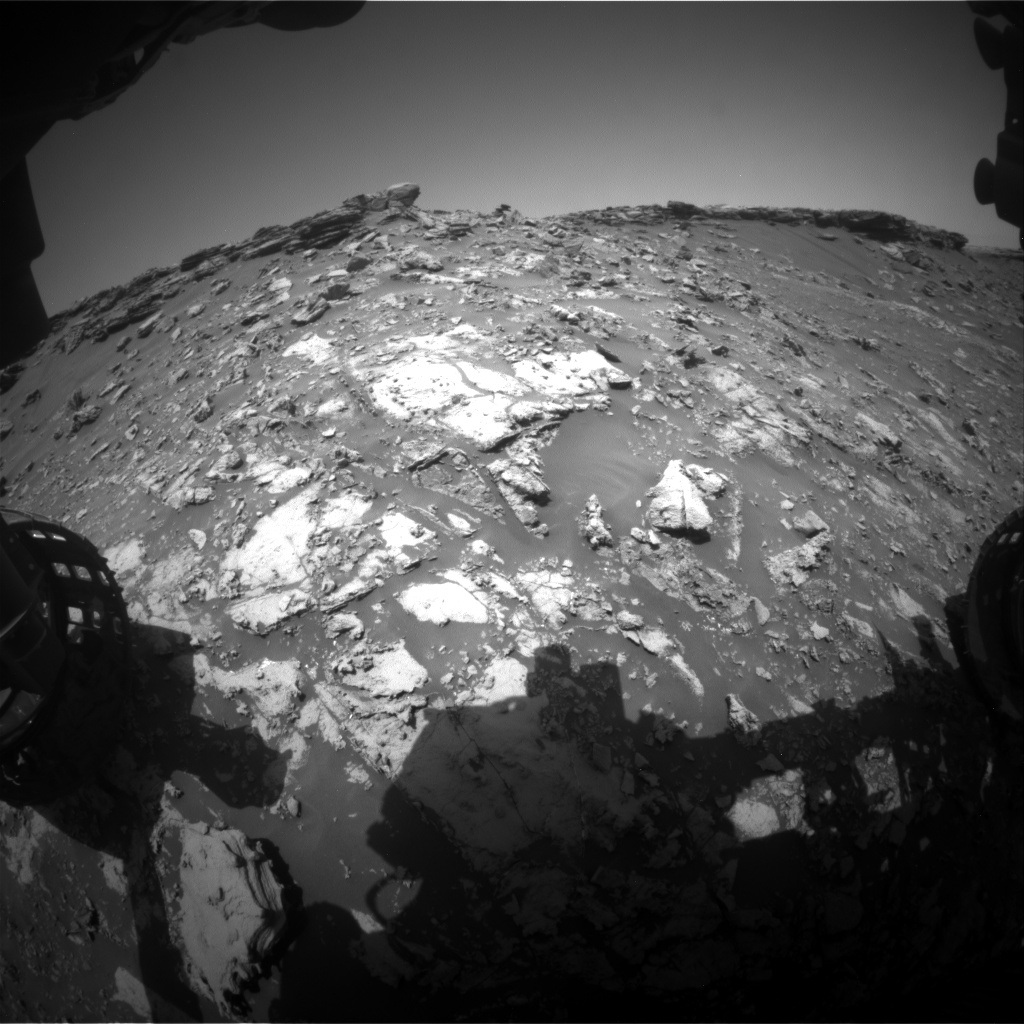
Curiosity Front Hazard Avoidance Camera Left B photo taken on Sol 2663, February 2, 2020.
Credit: NASA/JPL-Caltech
NASA’s Curiosity Mars rover is now performing Sol 2663 tasks.
Recent images include close-up photos of the robot’s surroundings, use of its Dust Removal Tool, and other scenic shots.
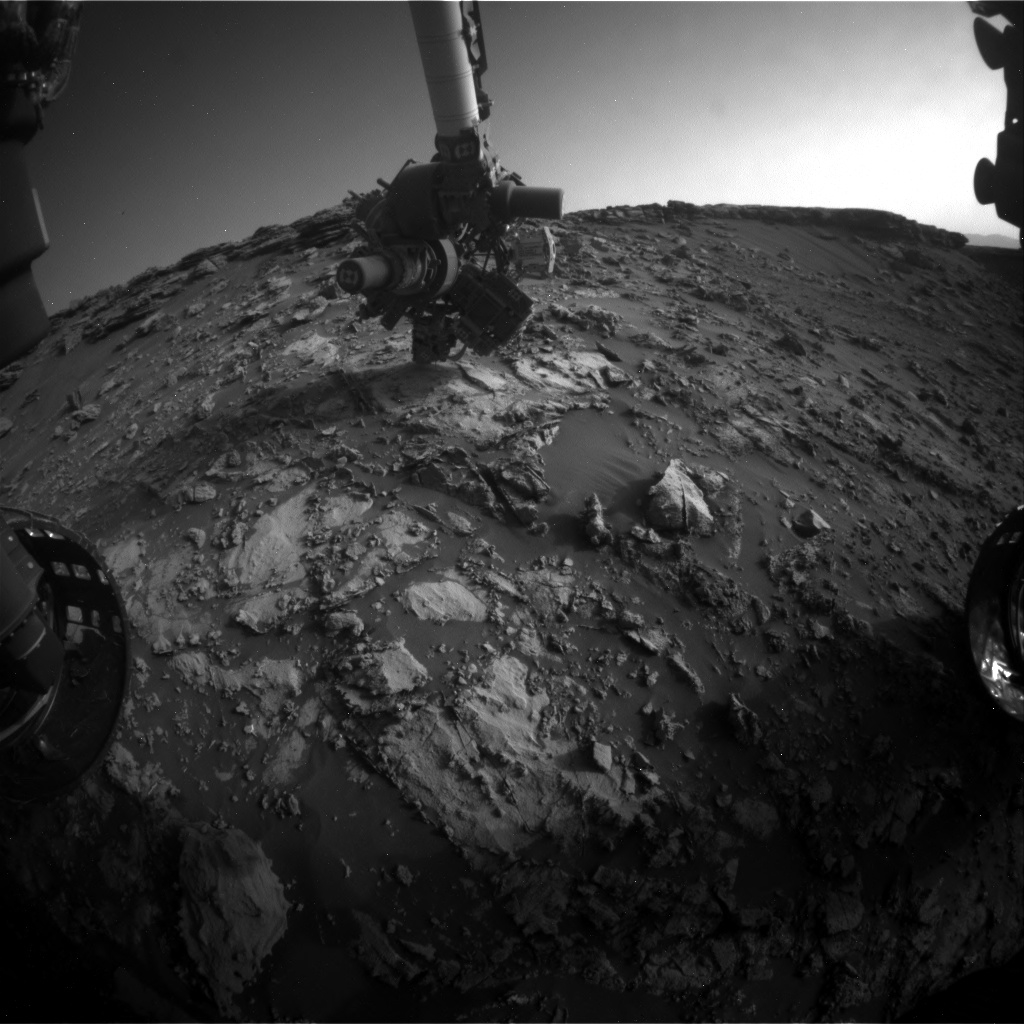
Curiosity Front Hazard Avoidance Camera Left B image acquired on Sol 2662, February 1, 2020
Credit: NASA/JPL-Caltech
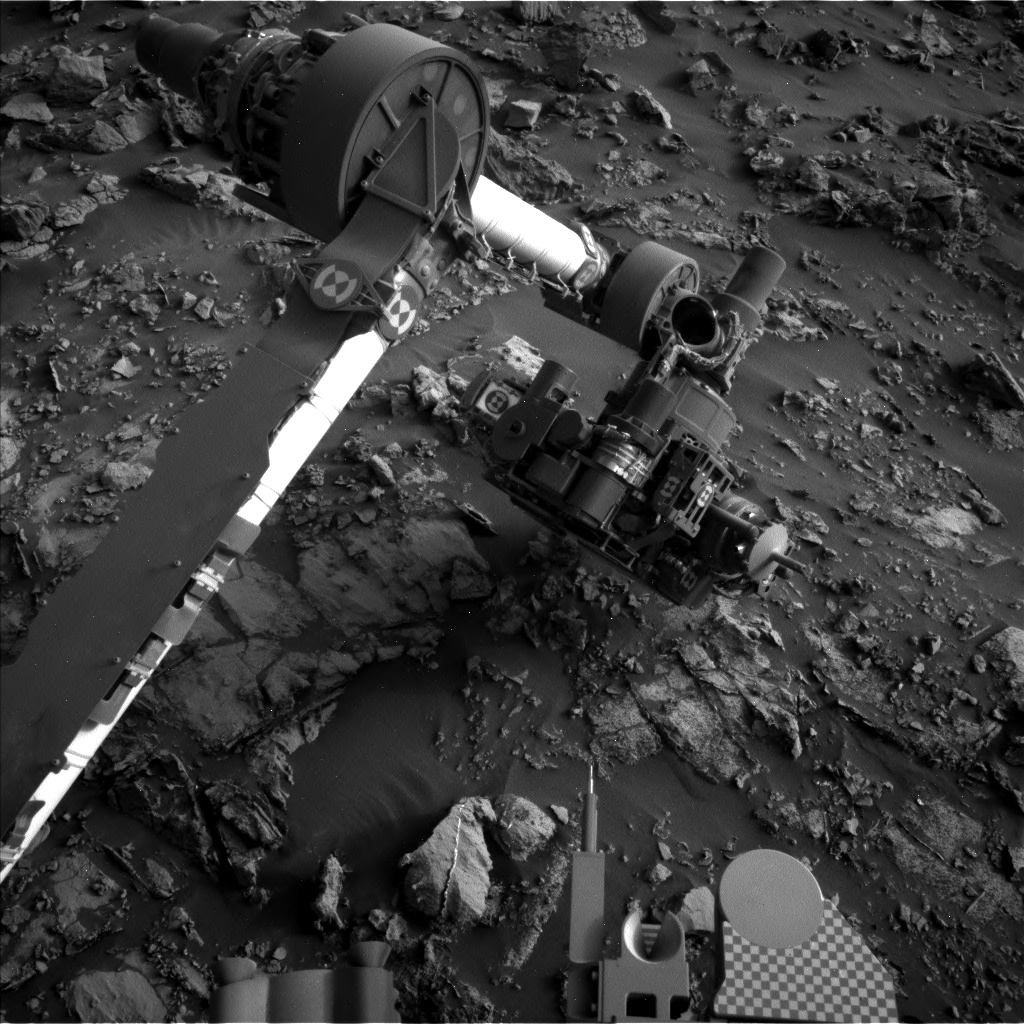
Curiosity Left B Navigation Camera photo taken on Sol 2662, February 1, 2020.
Credit: NASA/JPL-Caltech
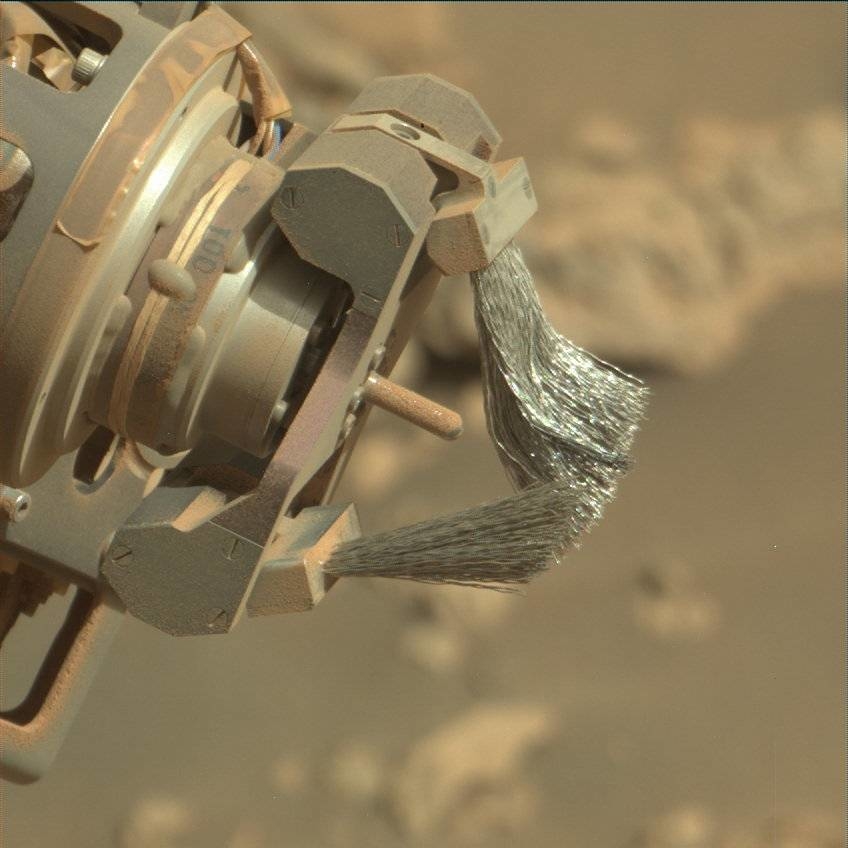
Curiosity Mast Camera Right image taken on Sol 2662, February 1, 2020.
Credit: NASA/JPL-Caltech/MSSS
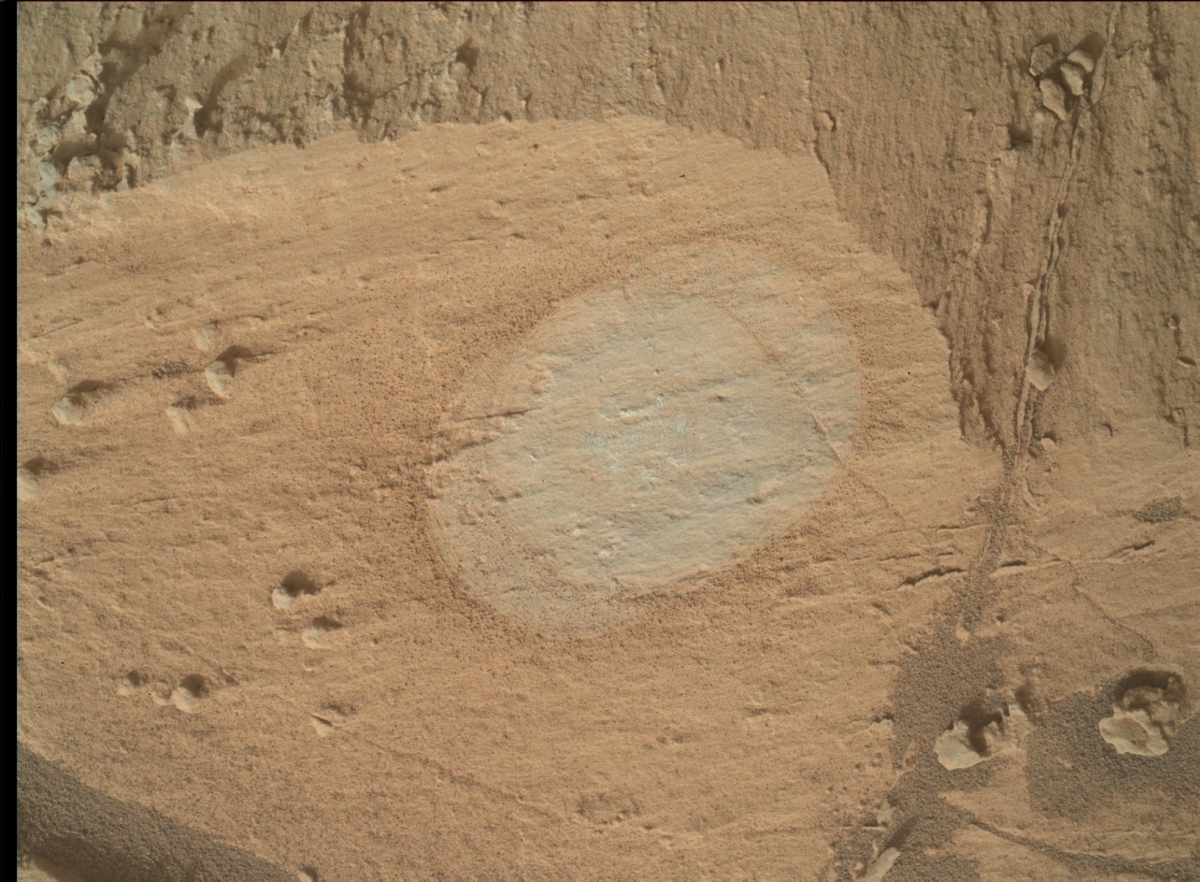
Curiosity Mars Hand Lens Imager photo taken on Sol 2662, February 1, 2020.
Credit: NASA/JPL-Caltech/MSSS
Curiosity Chemistry & Camera image acquired on Sol 2663, February 2, 2020.
Credit: NASA/JPL-Caltech/LANL
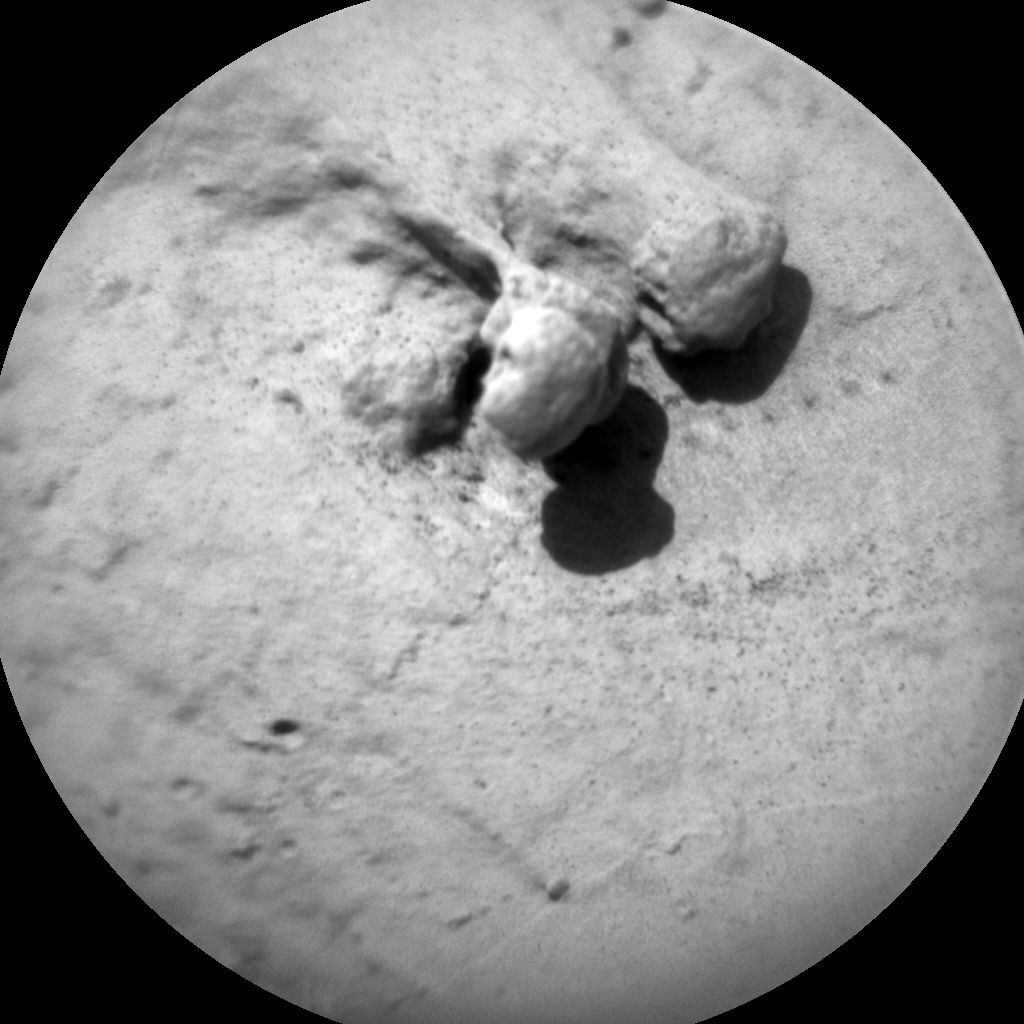
Curiosity Chemistry & Camera Remote Micro-Imaging (RMI) camera photo taken on Sol 2662, February 1, 2020.
Credit: NASA/JPL-Caltech/LANL
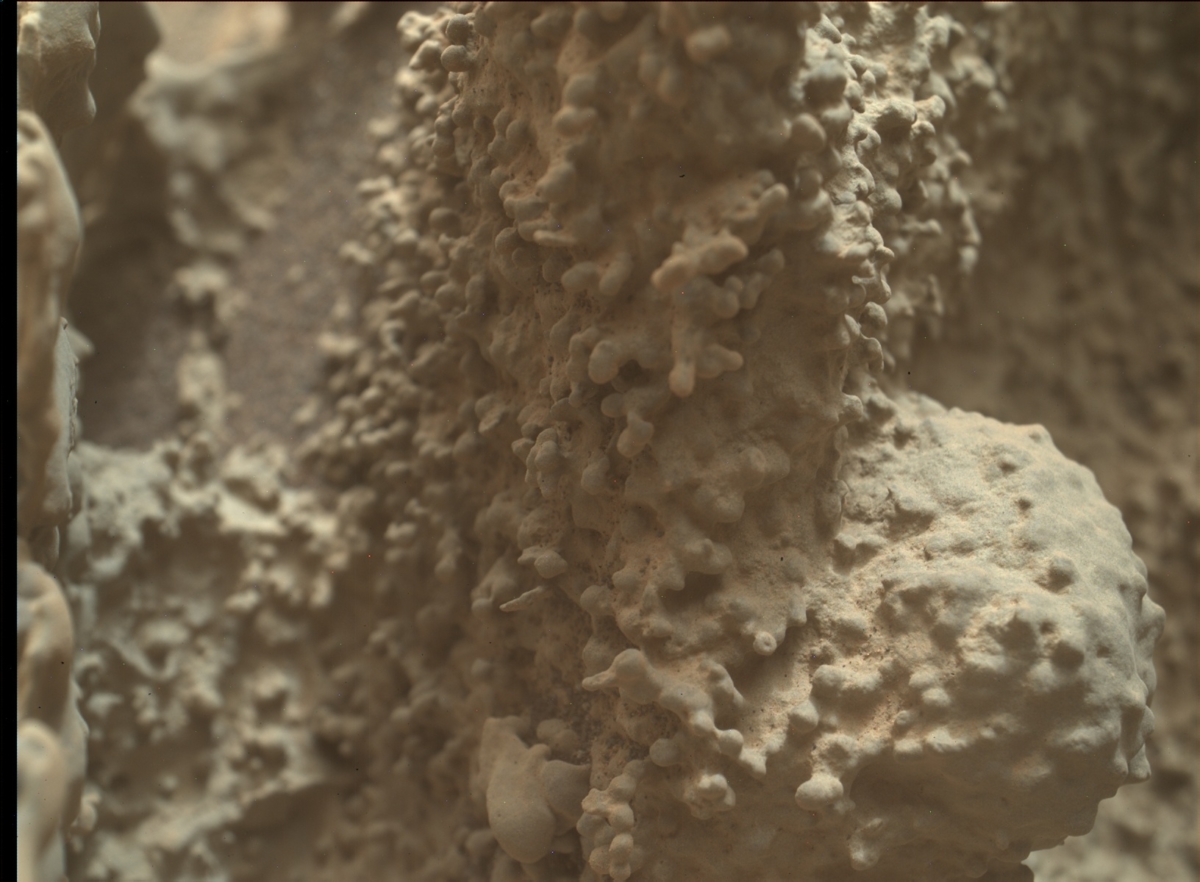
Curiosity Mars Hand Lens Imager photo taken on Sol 2662, February 1, 2020.
Credit: NASA/JPL-Caltech/MSSS

