Archive for May, 2019
 Author:
  May 3rd, 2019
Curiosity Front Hazcam Left B image taken on Sol 2395, May 2, 2019.
Credit: NASA/JPL-Caltech
NASA’s Curiosity Mars rover has just begun Sol 2396 duties.
The drop off of “Kilmarie” drill sample to the robot’s Sample Analysis at Mars (SAM) Instrument Suite on Sol 2293 appeared to be successful, reports Michelle Minitti, a planetary geologist at Framework in Silver Spring, Maryland.
Full results of the SAM analysis to be assessed.

Curiosity Mastcam Left image taken on Sol 2393 April 30, 2019, show sample inlet (one open) of the rover’s Sample Analysis at Mars (SAM) instrument suite.
Credit: NASA/JPL-Caltech/MSSS
Volatile, organic makeup
“The results are needed to help determine if we will dive even further into the volatile and organic makeup of the Kilmarie sample,” Minitti adds. “There was no sitting around and twiddling actuators, however, even though the amount of power available was limited.”

Curiosity ChemCam Remote Micro-Imager photo acquired on Sol 2394, May 1, 2019.
Credit: NASA/JPL-Caltech/LANL
Curiosity will gather more details about the Kilmarie sample mineralogy via another Chemistry & Mineralogy X-Ray Diffraction/X-Ray Fluorescence Instrument (CheMin) integration, and also pepper a suite of broken up bedrock fragments around the rover – “Deinabo,” “Durnhill,” and “Dumyat” – with Chemistry and Camera (ChemCam) shots to compare their chemistry to that of the more-coherent bedrock that Kilmarie represents.
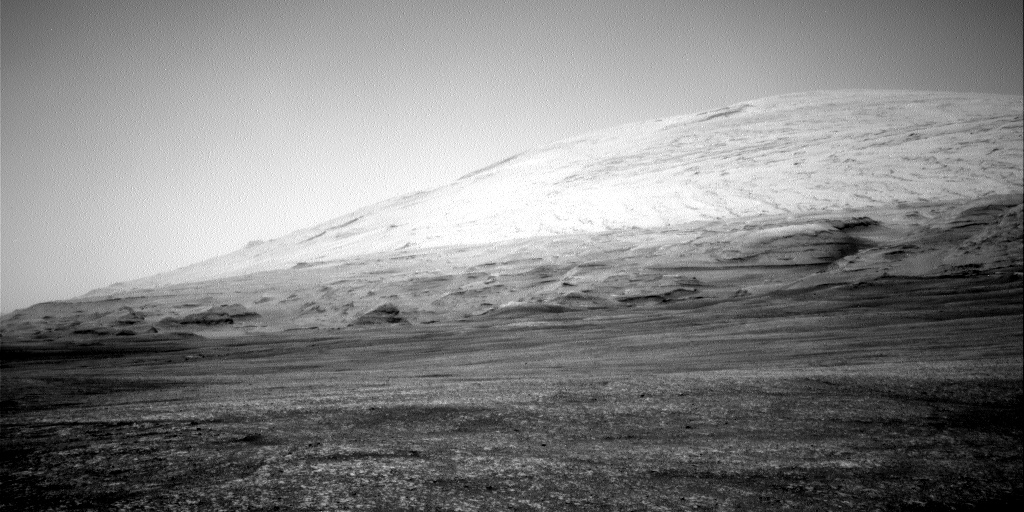
Curiosity Navcam Right B image taken on Sol 2394, May 1, 2019.
Credit: NASA/JPL-Caltech
Looking uphill
The rover is slated to acquire a long distance Remote Micro-Imager (RMI) mosaic, Minitti explains, “looking uphill toward the part of the Mount Sharp stratigraphy that is observed to have a strong spectral signature of sulfate from orbit.”
Changes caused by the wind are to be monitored by comparing the single Mars Descent Imager (MARDI) image acquired in a new plan to one acquired right after Curiosity’s arrival at Kilmarie on Sol 2381.
Changes in the environment will be monitored with a Navcam cloud movie and regular Rover Environmental Monitoring Station (REMS) and Radiation Assessment Detector (RAD) measurements.
 Posted in

Credit: Humans to Mars
Space is vast but seating is limited, register today!
I am very excited to be taking part in the upcoming Humans to Mars Summit 2019, being held at the prestigious National Academy of Sciences Building, Washington D.C. on May 14-16, 2019.
As the luncheon speaker on May 15, 2019, I’ll be focused on my new National Geographic book — Moon Rush: The New Space Race.
Spoiler alert: Subtitle – Back to the Moon – This Time to Stray?
Space protagonists
What better way to have a frank and open discussion with fellow space protagonists than to join for lunch?
Bound to be a food fight…I’m old, grumpy and still have a memory of space programs past. I’ve got things to say, and so do you!
Come join us.
Go to: https://h2m.exploremars.org/
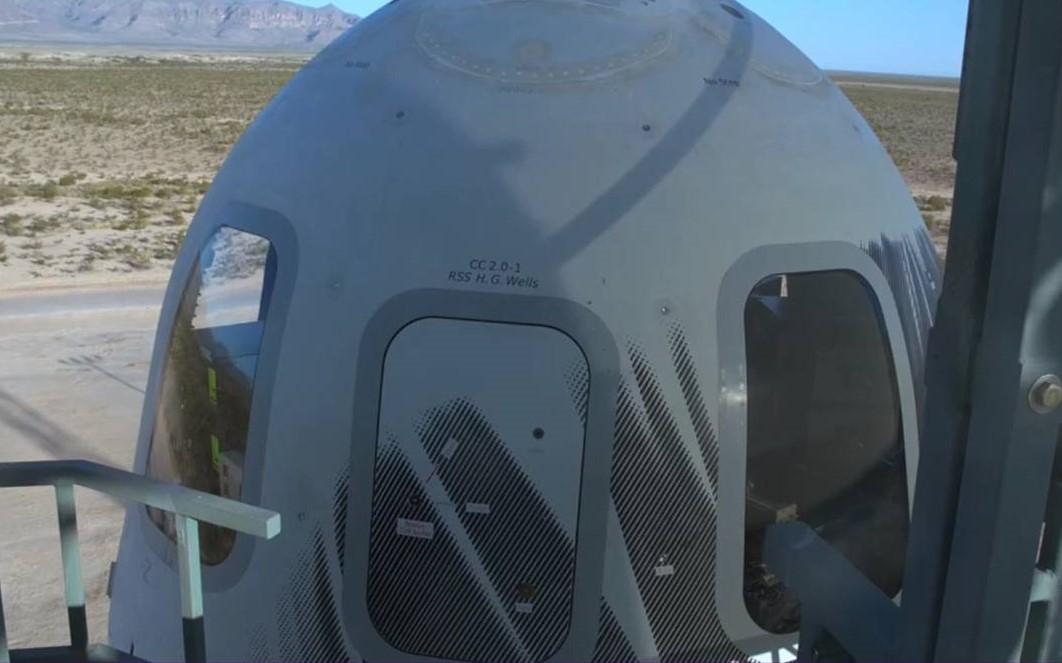
Credit: Blue Origin/Screengrab Inside Outer Space

Credit: Blue Origin/Screengrab Inside Outer Space

Credit: Blue Origin/Screengrab Inside Outer Space
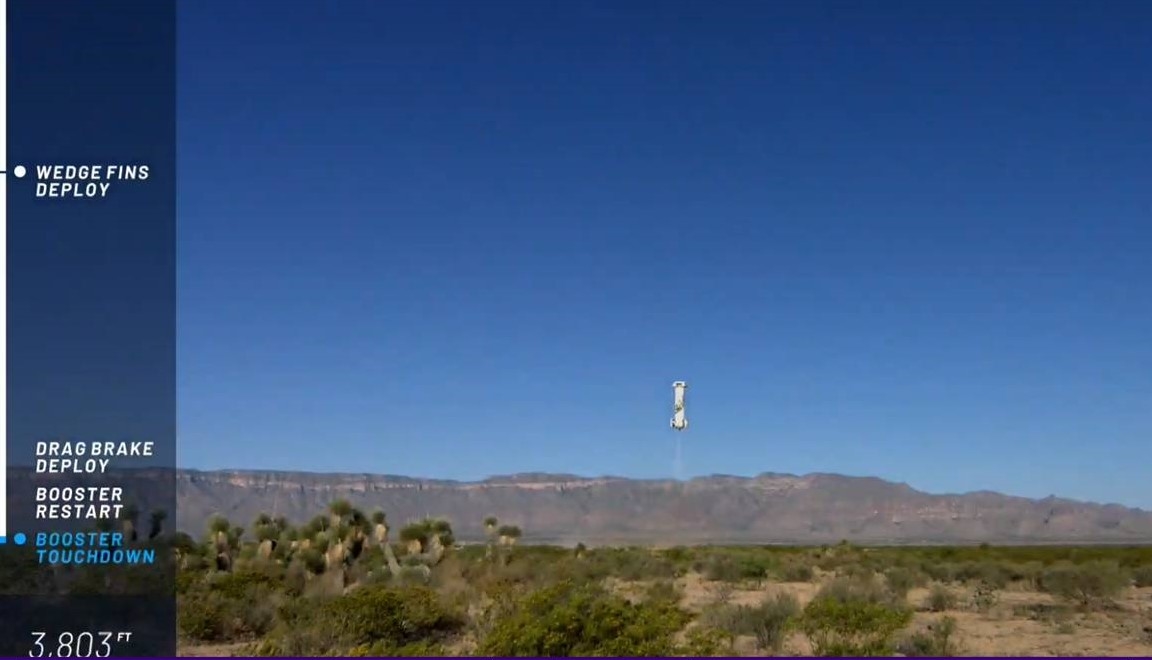
Credit: Blue Origin/Screengrab Inside Outer Space

Credit: Blue Origin/Screengrab Inside Outer Space
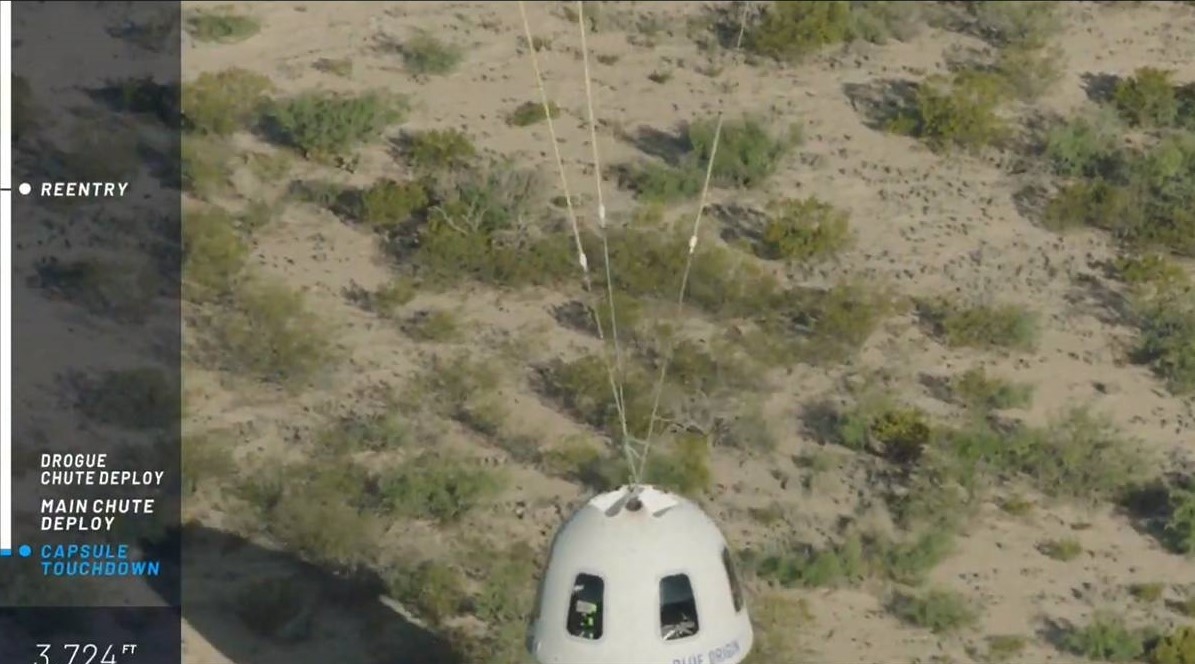
Credit: Blue Origin/Screengrab Inside Outer Space
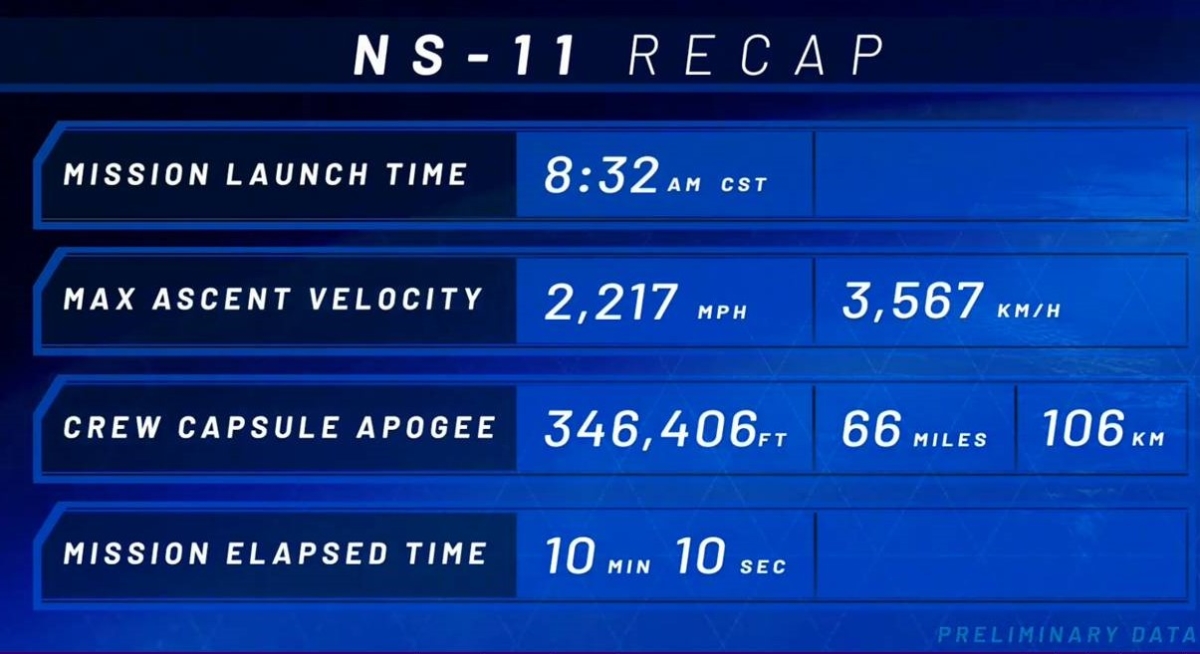
Credit: Blue Origin/Screengrab Inside Outer Space
The mission, named NS-11, took 38 payloads above the Kármán line into space.
Some of the payloads flying with us include:
Orbital Medicine – Orbital Medicine, a small business focused on aerospace medicine, comes to us through funding from NASA’s Flight Opportunities Program. On NS-11, Marsh Cuttino, MD, will demonstrate an experimental medical technology designed to treat a collapsed lung in zero gravity (which is a gravity-dependent procedure). Thanks to a previous flight on New Shepard, Dr. Cuttino has been able to evolve the technology and this flight will prove a near-final version that could one day save lives in space.
New Century Technology High School – A group of students from Huntsville, AL have designed an experiment to test temperature fluctuations in microgravity. The students were excited to get hands-on experience for a project they’ll be able to launch to space and worked with NASA engineers to perfect their design. By lowering launch costs, more and more students will have the chance to design, build and send technology to space.
MIT Media Lab Space Exploration Initiative – The Space Exploration Initiative is built on the spirit of the MIT Media Lab, uniting artists, engineers, scientists, and designers. As the first MIT flight with New Shepard, the Space Exploration Initiative is flying several scientific payloads, as well as two projects that use zero gravity as a medium for works of art. Telepresent Drawings in Space uses graphite to create a drawing that could only have been made in space.
Living Distance: A Spider-Inspired Robotic Dance in Weightlessness demonstrates a crystalline robotic device that navigates zero gravity, similar to a performance.
Other payloads include TESSERAE: Self Assembling Space Architecture, Floral Cosmonauts: Crystal Electro-Nucleation and Queen Bee Maiden Flight.

