Archive for June, 2018
 Author:
  June 6th, 2018
Curiosity Mastcam Left photo acquired on Sol 2071, June 4, 2018.
Credit: NASA/JPL-Caltech/MSSS
NASA’s Curiosity Mars rover is deep into Sol 2073 science operations.
Ken Herkenhoff, a planetary geologist at the USGS in Flagstaff, Arizona, reports that the focus of Curiosity operations continues to be on the analysis of the Duluth drill sample.
The latest Sample Analysis at Mars (SAM) Instrument Suite Evolved Gas Analysis (EGA) was scheduled for the evening of Sol 2072, so the results of that analysis have not been received yet.

Curiosity Mastcam Right image taken on Sol 2069, June 1, 2018.
Credit: NASA/JPL-Caltech/MSSS
Improve the statistics
Both SAM and the Chemistry & Mineralogy X-Ray Diffraction/X-Ray Fluorescence Instrument (CheMin) analyses require significant power, and can therefore not typically be scheduled on the same day.
“So today it’s CheMin’s turn to analyze the the Duluth sample again, to improve the statistics of the X-ray diffraction measurements,” Herkenhoff advises.
Winds
The uplink team was also able to squeeze in a few daytime observations before the overnight CheMin analysis: Right Mastcam images of Noodle Lake, the Duluth drill tailings, and the portion drop area to look for changes due to winds, Mastcam images of the Sun to measure dust opacity, and a Navcam zenith movie to look for clouds.

Curiosity Mastcam Left image acquired on Sol 2072, June 5, 2018.
Credit: NASA/JPL-Caltech/MSSS
“These observations should be helpful in determining the frequency, strength, and direction of winds near the surface and high above the rover,” Herkenhoff explains. “Such information will be very useful if the science team decides to drop another sample portion into either CheMin or SAM using the new sample transfer technique, as high winds can disperse the portion before it makes it into the instruments.”
 Posted in

Credit: Esri
Esri, a leader in geographic information system (GIS) software, has created Satellite Map – an application that maps the current location of about 14,000 human made objects orbiting the Earth.
The application is driven by data sourced from Space-Track.org, which is maintained by the Joint Functional Component Command for Space, and allows you to intersect with over 16,500 space objects.
A Preset dropdown menu allows you to select a subset of satellites, for example, Russian or low earth orbit satellites.
The buttons and sliders below the Preset dropdown can be used to build your own selection or refine a preset selection. It is possible to construct quite complex selections, for example, American satellites in low earth orbit (apogee/perigee <2,000km) that are not junk.
Clicking on an individual satellite in the 3d view will display a panel with detailed information. Links to NASA’s website are provided for additional information. In addition to displaying name and orbital details, the 3d view displays the satellite’s future trajectory with respect to the Earth’s surface. By default the trajectory is for one day but this can be changed to either one hour or one week.
Space junk
Perhaps the most surprising fact for users of this application is the large proportion of orbital objects classified as junk. Approximately 3/4 of human made objects are spent rocket boosters or debris from satellite collisions.
It is important to note that satellite positions are derived from an ephemeris database downloaded in May, 2015. As such this app will not display satellites launched since then or reflect intentionally or unintentionally orbital adjustments. Similarly atmospheric friction and gravitational forces are likely to influence orbital position. However the different between projected and actual position is unlikely to be perceptible at the scale used.
Go to:
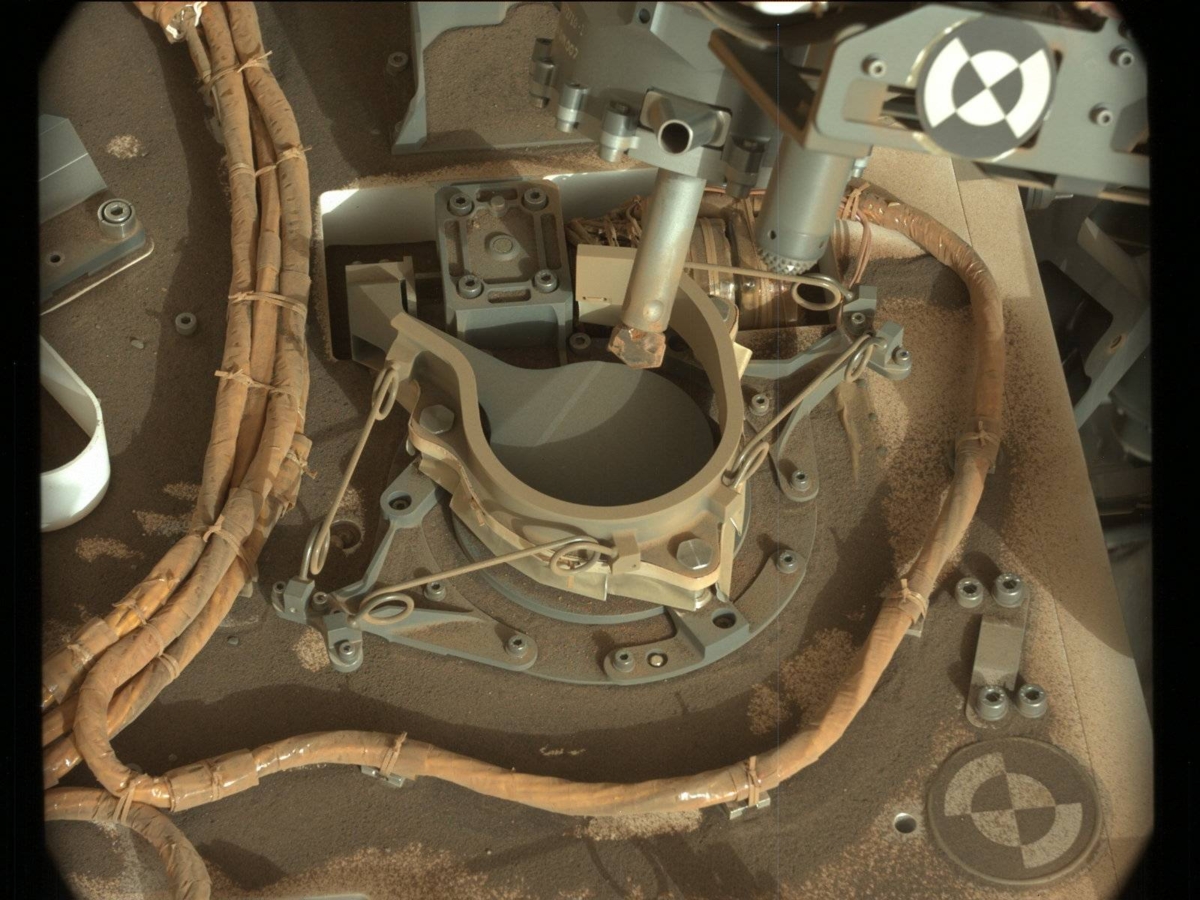
Curiosity drill bit positioned over the Chemistry & Mineralogy X-Ray Diffraction/X-Ray Fluorescence Instrument (CheMin) inlet as part of the new Feed Extended Sample Transfer (FEST) drop-off technique.
Curiosity Mastcam Left photo taken on Sol 2068, June 1, 2018.
Credit: NASA/JPL-Caltech/MSSS
NASA’s Curiosity Mars rover is wrapping up Sol 2072 duties.
Reports Abigail Fraeman, a planetary geologist at NASA/JPL in Pasadena, California: “Every single day that the Curiosity team gets to go into work and operate a one-ton rover on the surface of Mars is a good day. But last Friday was not just your typical good day — it was a very, very, very good day.”
Adding a personal opinion, Fraeman adds “it was probably one of the top five most excellent planning days we’ve had on the mission to date.” Early Friday morning the science team learned that the Feed Extended Sample Transfer (FEST) drop-off of the “Duluth” drill sample to Chemistry & Mineralogy X-Ray Diffraction/X-Ray Fluorescence Instrument (CheMin) had worked. “This means we had enough rock powder in the instrument to measure its mineralogy.”
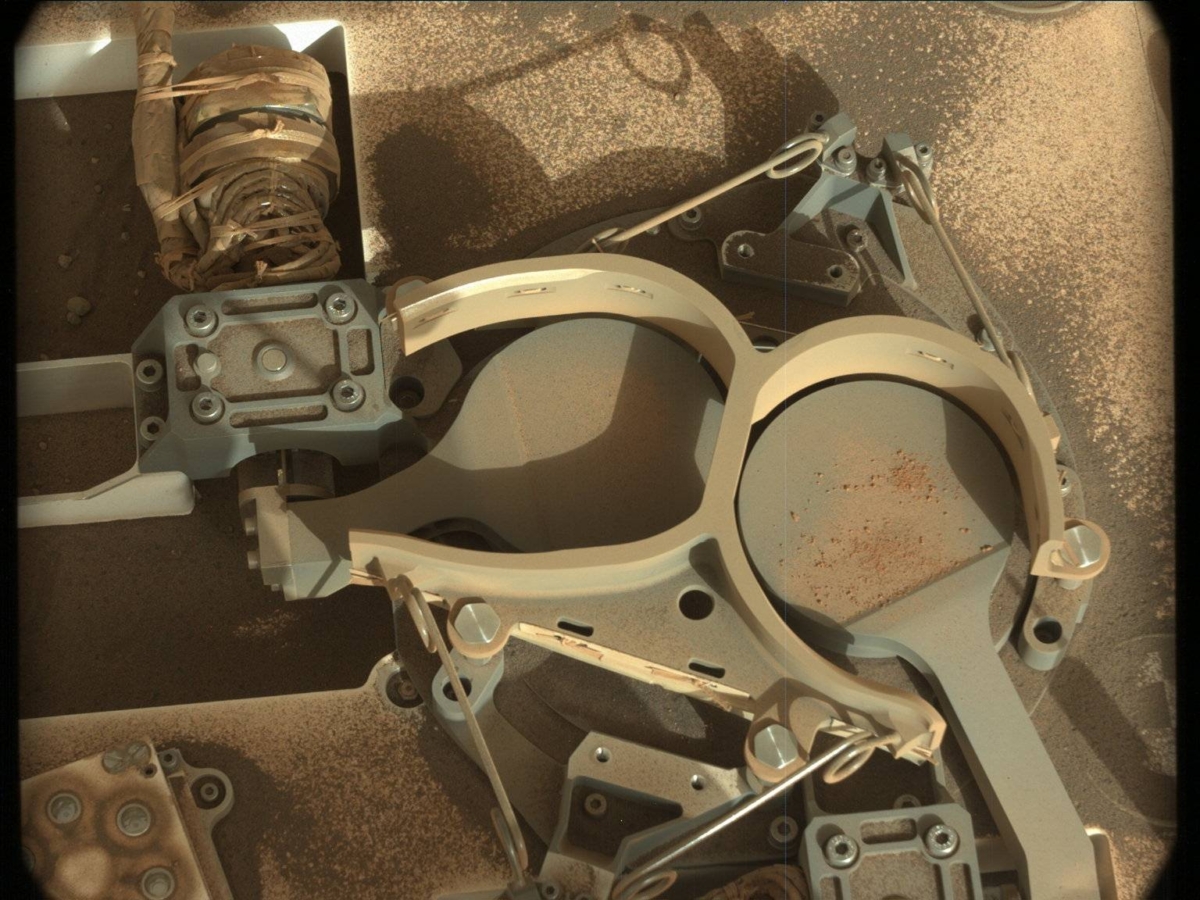
Curiosity Mastcam Left image taken on Sol 2071, June 4, 2018.
Credit: NASA/JPL-Caltech/MSSS
Critical step
Most importantly, now that Curiosity controllers demonstrated this critical step on Mars, the team can officially say that Curiosity’s drilling and sample transfer capabilities have been restored.
“This represents a huge accomplishment for the tireless engineers who’ve worked over a year to learn to operate the vehicle in a way it was never designed to work,” Fraeman explains. It’s also an extremely exciting time for the science team, as scientists are eager to learn the key information CheMin and the Sample Analysis at Mars (SAM) Instrument Suite will provide and further unravel the history of Gale Crater.
FESTive spirit
“The scientists and engineers at JPL celebrated this accomplishment with a joyous afternoon cookie break,” Fraeman notes.
Duluth drill sample analysis activities were to continue in the sol 2070-2072 plan.
“Since we now know we have successfully delivered to CheMin, SAM is up next. Our main activity for the weekend plan was a preconditioning of SAM and the sample dropoff using the FEST technique,” Fraeman says. “We also squeezed in some remote sensing science of our local area.”
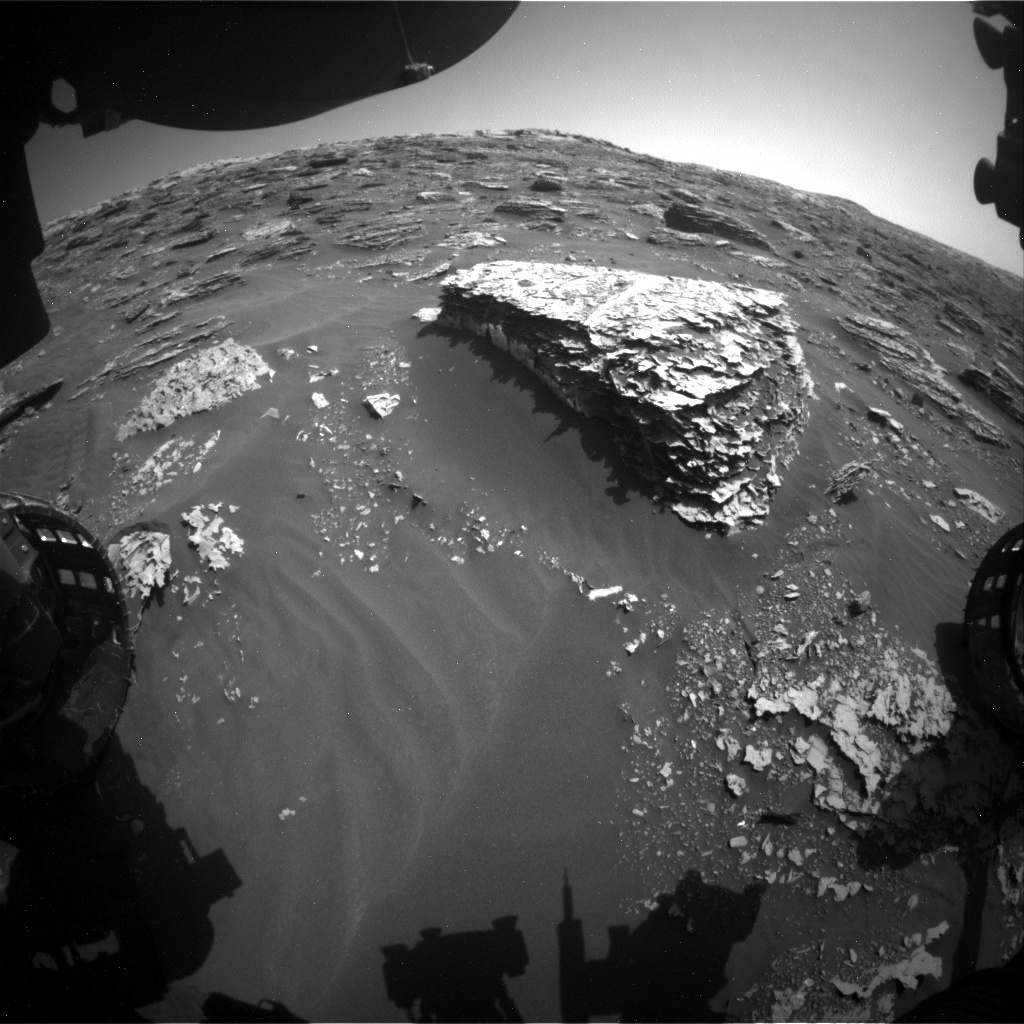
Curiosity Front Hazcam Left B photo acquired on Sol 2072, June 5, 2018.
Credit: NASA/JPL-Caltech
Change detection imagery
On sol 2070 the plan called for acquiring Chemistry and Camera (ChemCam) Laser-induced breakdown spectrometer (LIBS) observations of targets named “Little Marais” and “Bartlett,” and a Mastcam change detection image of an area where the robot dropped a previous portion of the drill sample on the ground.
Also planned is to take a Mastcam tau (dust monitoring) observation on sol 2070, followed up with a Navcam dust devil movie, dust devil survey, and suprahorizon and zenith movies on sol 2071, Fraeman concludes.
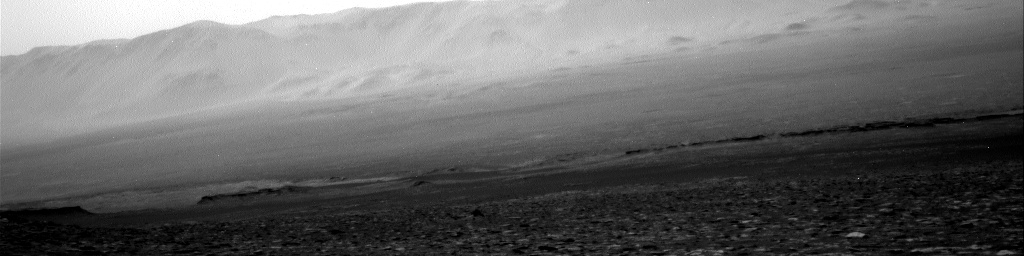
Curiosity Navcam Right B image taken on Sol 2072, June 5, 2018.
Credit: NASA/JPL-Caltech
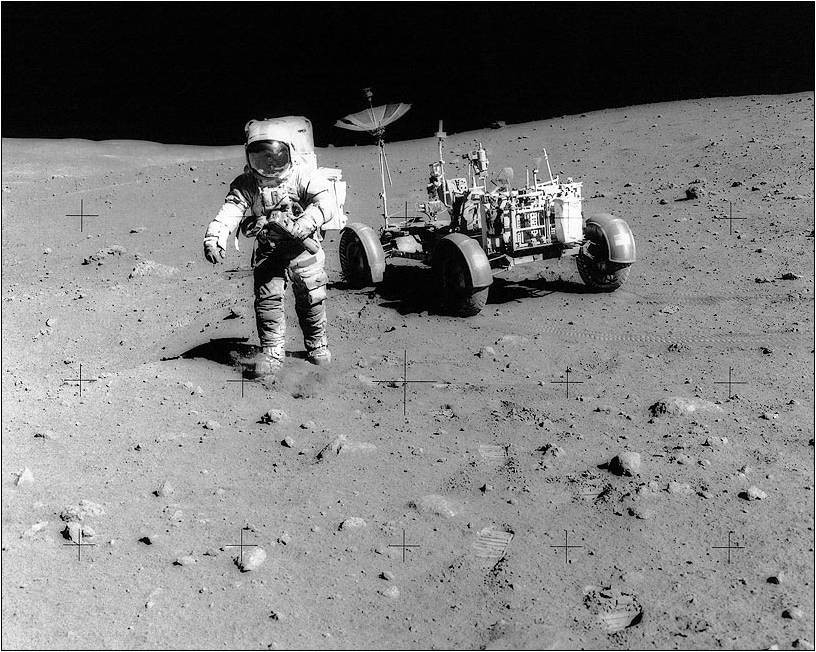
Apollo 15’s David Scott performed a seat belt assault during his 1971 mission to the Moon.
Credit: NASA
On Wednesday, May 30th, NASA held the “Transformative Lunar Science” talks in the James Webb auditorium at NASA Headquarters. Hosted by Dr. James Green, NASA Chief Scientist, the talks discussed cutting-edge science that is transforming our understanding of the Moon, and what we can still learn from our nearest neighbor.
The talks included a panel discussion with Mr. David Schurr, Deputy Director of NASA’s Planetary Science Division, and Dr. Jason Crusan, Director of the Advanced Exploration Systems Division.

Credit: NASA
A panel discussion on the future of lunar science and exploration, including description of Apollo 15’s “Seat Belt Assault,” involved three preeminent lunar scientists — Dr. Carlé M. Pieters, (Brown University) spoke about the lunar water cycle; Dr. Robin Canup, (Southwest Research Institute) talked about the origin of the Earth-Moon system; Dr. David Kring, (USRA Lunar and Planetary Institute) spoke about how the Moon can reveal the chronology of the Solar System.
The Q&A was moderated by Dr. James W. Head III (Brown University).
Go to:
https://sservi.nasa.gov/articles/transformative-lunar-science-talks/
Credit: Via NASA/JPL
Just in time for “Asteroid Day” on June 29th!
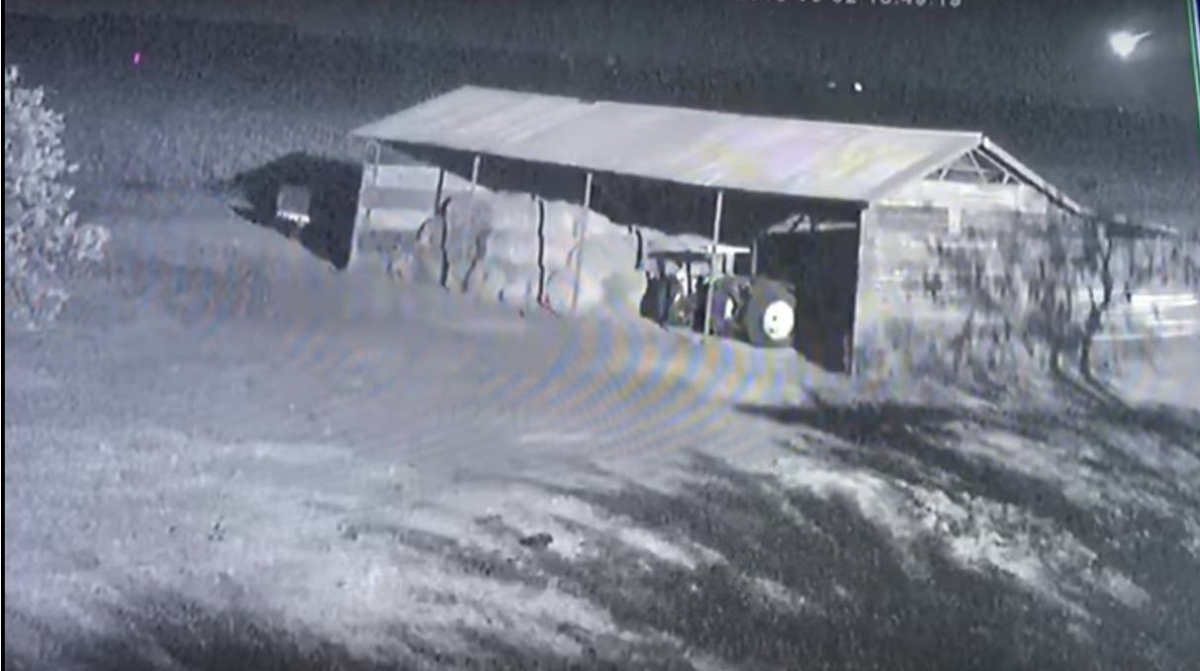
A small asteroid discovered on Saturday disintegrates hours later over Southern Africa
As noted in a JPL release: “A boulder-sized asteroid designated 2018 LA was discovered Saturday morning, June 2, and was determined to be on a collision course with Earth, with impact just hours away. Because it was very faint, the asteroid was estimated to be only about 6 feet (2 meters) across, which is small enough that it was expected to safely disintegrate in Earth’s atmosphere. Saturday’s asteroid was first discovered by the NASA-funded Catalina Sky Survey, located near Tucson and operated by the University of Arizona.”
Match up
Although there was not enough tracking data to make precise predictions ahead of time, notes the JPL statement, a swath of possible locations was calculated stretching from Southern Africa, across the Indian Ocean, and onto New Guinea.
Reports of a bright fireball above Botswana, Africa early Saturday evening match up with the predicted trajectory for the asteroid.
Bright fireball
This object penetrated Earth’s atmosphere at the high speed of 10 miles per second (38,000 mph, or 17 kilometers per second and disintegrated several miles above the surface, creating a bright fireball that lit up the evening sky.
Infrasound data collected just after the impact clearly detected the event from one of the listening stations deployed as part of the International Monitoring System of the Comprehensive Nuclear-Test-Ban Treaty. The signal is consistent with an atmospheric impact over Botswana.
The event was witnessed by a number of observers and was caught on webcam video here:
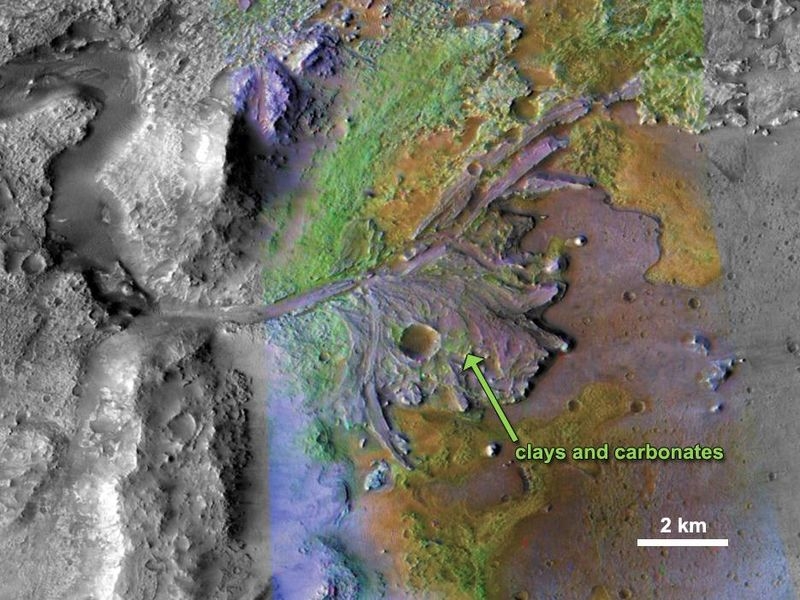
The Jezero Crater delta, a well-preserved ancient river delta on Mars. New research suggests sedimentary rocks made of compacted mud or clay, like those found in the Jezero Crater delta, are the most likely to contain microbial fossils.
Credit: NASA/JPL-Caltech/MSSS/JHU-APL
A candidate landing site for NASA’s Mars 2020 rover is being flagged as a prime spot for finding fossils on Mars. A duty of that robotic mission is to collect rock samples to be returned to Earth for analysis by a future mission.
A team led by a University of Edinburgh researcher has determined that sedimentary rocks made of compacted mud or clay are the most likely to contain fossils. These rocks are rich in iron and a mineral called silica, which helps preserve fossils.

New planetary prowler – the NASA Mars 2020 rover – scouring the Red Planet for select samples for eventual return to Earth.
Credit: NASA/JPL
Wet past
On Mars, Jezero Crater tells a story of the on-again, off-again nature of the wet past of Mars. Water filled and drained away from the crater on at least two occasions. More than 3.5 billion years ago, river channels spilled over the crater wall and created a lake. Scientists see evidence that water carried clay minerals from the surrounding area into the crater after the lake dried up. Conceivably, microbial life could have lived in Jezero during one or more of these wet times. If so, signs of their remains might be found in lakebed sediments.

NASA Mars 2020 rover is designed to collect samples, store the specimens in tubes, then deposit the tubes on the surface for later pick-up.
Credit: NASA/ESA
Fossils of microbes
A new review study – “A Field Guide to Finding Fossils on Mars” – was published in the Journal of Geophysical Research: Planets, a journal of the American Geophysical Union. It sheds light on where fossils of microbes, if they exist, might be preserved on the Red Planet.
This paper reviews the rocks and minerals on Mars that could potentially host fossils or other signs of ancient life preserved since Mars was warmer and wetter billions of years ago.
Earth’s fossil record
The research team applied recent results from the study of Earth’s fossil record and fossilization processes, and from the geological exploration of Mars by rovers and orbiters, in order to select the most favored targets for astrobiological missions to Mars.
They conclude that mudstones rich in silica and iron‐bearing clays currently offer the best hope of finding fossils on Mars and should be prioritized, but that several other options warrant further research. They also recommend further experimental work on how fossilization processes operate under conditions analogous to early Mars.
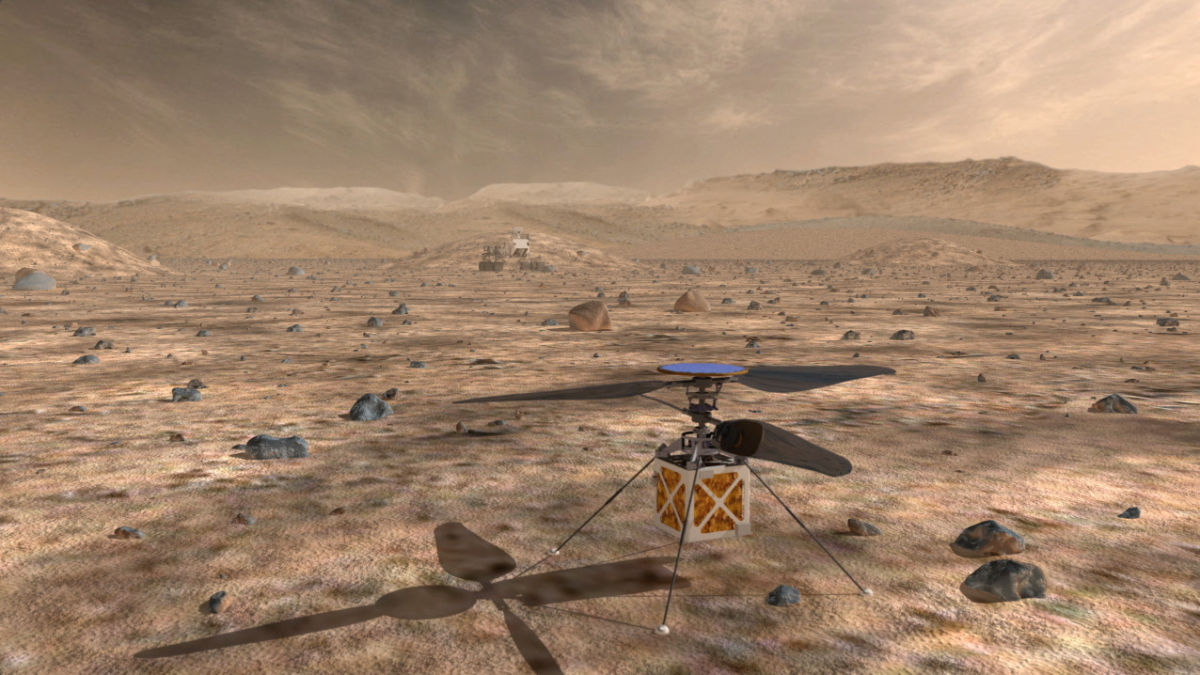
Newly selected helicopter for the Mars 2020 rover can extend the exploration zone of the rover’s landing location.
Credit: NASA/JPL-CALTECH
Prioritize promising deposits
The study, led by Sean McMahon of the UK Centre for Astrobiology, School of Physics and Astronomy at the University of Edinburgh, also involved researchers at NASA’s Jet Propulsion Laboratory, Brown University, California Institute of Technology, Massachusetts Institute of Technology and Yale University in the U.S.
“There are many interesting rock and mineral outcrops on Mars where we would like to search for fossils, but since we can’t send rovers to all of them we have tried to prioritize the most promising deposits based on the best available information,” said McMahon.
For the free access research paper, go to:
https://agupubs.onlinelibrary.wiley.com/doi/full/10.1029/2017JE005478

Callisto, a reusable first stage demonstrator.
Credit: CNES via SatelliteObservation.net
The French space agency, CNES, is exploring reusable rockets.
Jean-Marc Astorg, the head of CNES’ launch vehicles directorate recently gave a technical talk on Europe’s response to U.S. reusable launchers and its plans for the future. Also detailed: the pros and cons of reuse; Callisto, a reusable first stage demonstrator; an overview of worldwide development efforts, including China’s work on developing a reusable launcher too: Long March 8-R, to be ready for 2028.

Credit: CNES via SatelliteObservation.net
This article posted on SatelliteObservation.net is a translated transcript of what he said, illustrated by slides shown during the presentation.
https://satelliteobservation.net/2018/06/02/cnes-director-of-launchers-talks-reusable-rockets/

Now headed for Mars – The Interior Exploration using Seismic Investigations, Geodesy and Heat Transport spacecraft (InSight) inside the Astrotech processing facility at Vandenberg Air Force Base in California.
Credit: USAF 30th Space Wing/Alex Valdez
A critical part of planetary protection is keeping contaminants from humans from riding aboard spacecraft. That’s a challenge. Spacecraft assembly facilities harbor a low but persistent amount of biological contamination despite the use of clean rooms.
In the clean room facilities, NASA implements a variety of planetary protection measures to minimize biological contamination of spacecraft. These steps are important because contamination by Earth-based microorganisms could compromise life-detection missions by providing false positive results.
Menagerie of microorganisms
New research led by Rakesh Mogul, a Cal Poly Pomona professor of biological chemistry offers the first biochemical evidence explaining the reason the contamination persists.
Despite extensive cleaning procedures, however, molecular genetic analyses show that the clean rooms harbor a diverse collection of microorganisms, or a spacecraft microbiome, that includes bacteria, archaea and fungi, explains Mogul. The Acinetobacter, a genus of bacteria, are among the dominant members of the spacecraft microbiome.

Acinetobacter baumannii
Credit: BioCote
“We’re giving the planetary protection community a baseline understanding of why these microorganisms remain in the clean rooms,” Mogul adds. “There’s always stuff coming into the clean rooms, but one of the questions has been why do the microbes remain in the clean rooms, and why is there a set of microorganisms that are common to the clean rooms.”
Hands-on experience
Chemistry professor Gregory A. Barding, Jr., was a collaborator and second author on a recent research paper published in the journal Astrobiology.
The remaining 22 coauthors are all Cal Poly Pomona students – 14 undergraduates in chemistry, three chemistry graduate students and five undergraduates in biological sciences.
“We designed the project to give students hands-on experience – and to support the learn-by-doing philosophy of Cal Poly Pomona. The students did the research, mostly as thesis projects in the areas of enzymology, molecular microbiology and analytical chemistry,” Mogul notes in a Cal Poly Pomona news release.

Specially garbed specialists process the Phoenix Mars lander, seen here in the Kennedy Space Center clean room, following its trip from Colorado to Florida.
Credit: Barbara David
Strain gauge
To appraise how the spacecraft microbiome survives in the clean room facilities, the research team analyzed several Acinetobacter strains that were originally isolated from the NASA Mars Odyssey and Phoenix spacecraft facilities.
They found that under very nutrient-restricted conditions, most of the tested strains grew on and biodegraded the cleaning agents used during spacecraft assembly.
Cleaning agent culprits
The research work showed that cultures grew on ethyl alcohol as a sole carbon source while displaying reasonable tolerances towards oxidative stress. This is important since oxidative stress is associated with desiccating and high radiation environments similar to Mars.
The tested strains were also able to biodegrade isopropyl alcohol and Kleenol 30, two other cleaning agents commonly used, with these products potentially serving as energy sources for the microbiome.
The bottom line from Mogul and his research team: For planetary protection, more stringent cleaning steps may be needed for missions focused on life detection. Furthermore, the research highlights the potential need to use differing and rotating cleaning reagents that are compatible with the spacecraft to control the biological burden.

