Archive for June, 2018
 Author:
  June 12th, 2018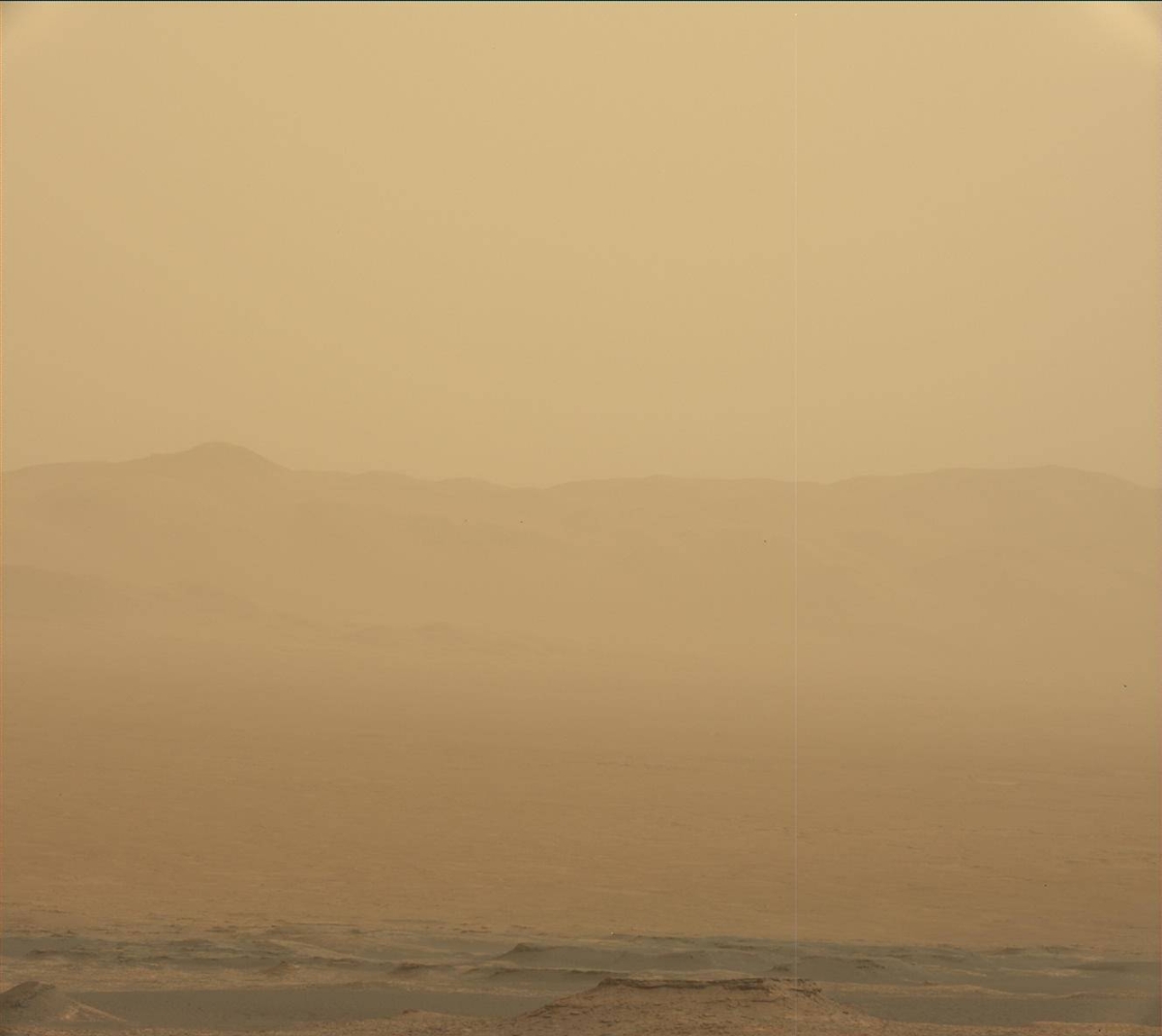
Curiosity Mastcam Left image acquired on Sol 2077, June 10, 2018.
Credit: NASA/JPL-Caltech/MSSS
Now in Sol 2079, NASA’s Curiosity Mars rover is monitoring an evolving dust storm on the Red Planet.
Over the weekend, an error cropped up during a regular test of the high gain antenna (HGA) actuators, leaving the antenna unavailable for uplink of a recent plan, but otherwise healthy, reports Michelle Minitti, a planetary geologist for AFramework in Silver Spring, Maryland.
The team instead was to use Mars Reconnaissance Orbiter (MRO) to uplink a brief suite of activities to the rover, including the commands to recover the high gain antenna for use.
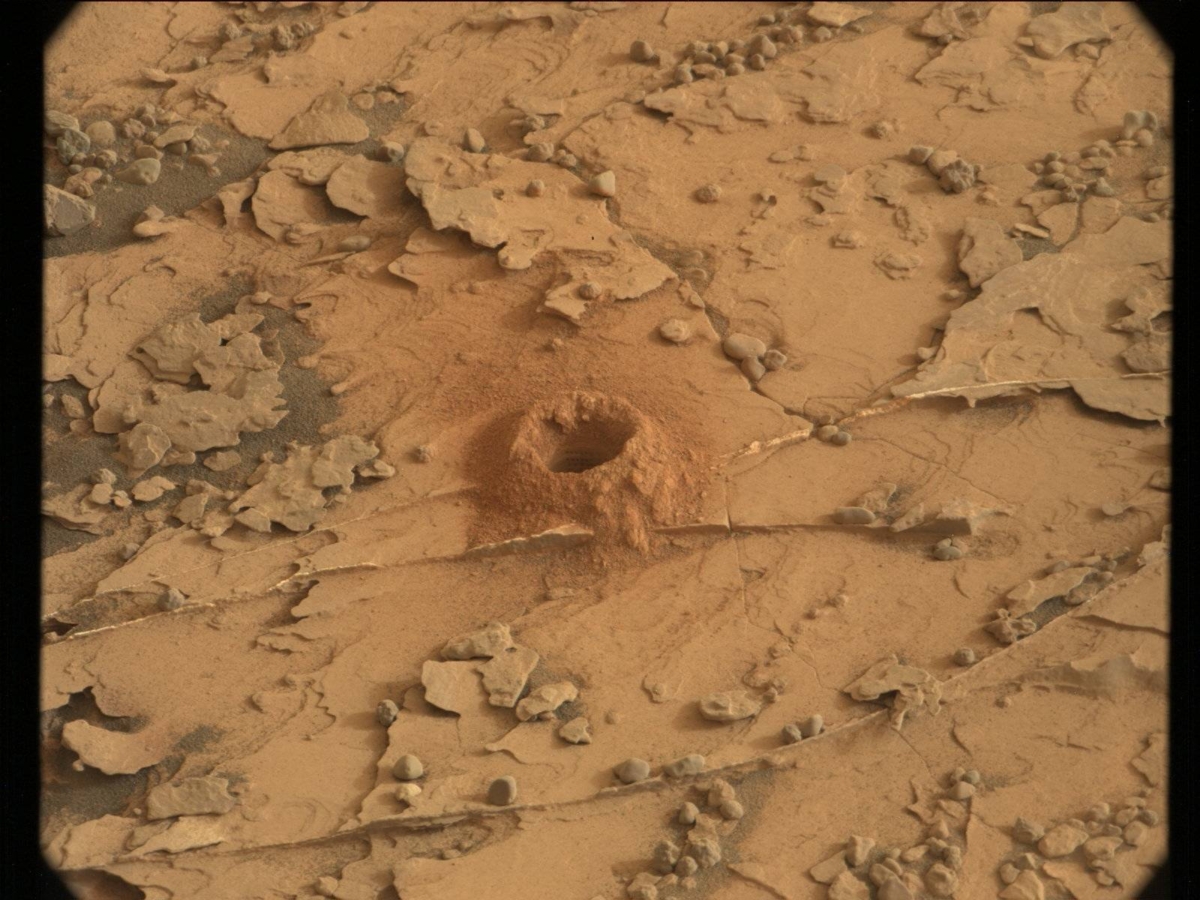
Curiosity Mastcam Right photo taken on Sol 2078, June 11, 2018.
Credit: NASA/JPL-Caltech/MSSS
Drill-related duties
The MRO uplink window is hours later than a usual HGA uplink window, so with less time in the plan, so robot operators had to postpone drill-related work until a later plan, Minitti adds.
Curiosity researchers, however, did get confirmation that all is ready for the next step of drill-related activities: dumping the “Duluth” sample for analysis by Alpha Particle X-Ray Spectrometer (APXS), the rover’s Mars Hand Lens Imager (MAHLI), Chemistry and Camera (ChemCam) and Mastcam.
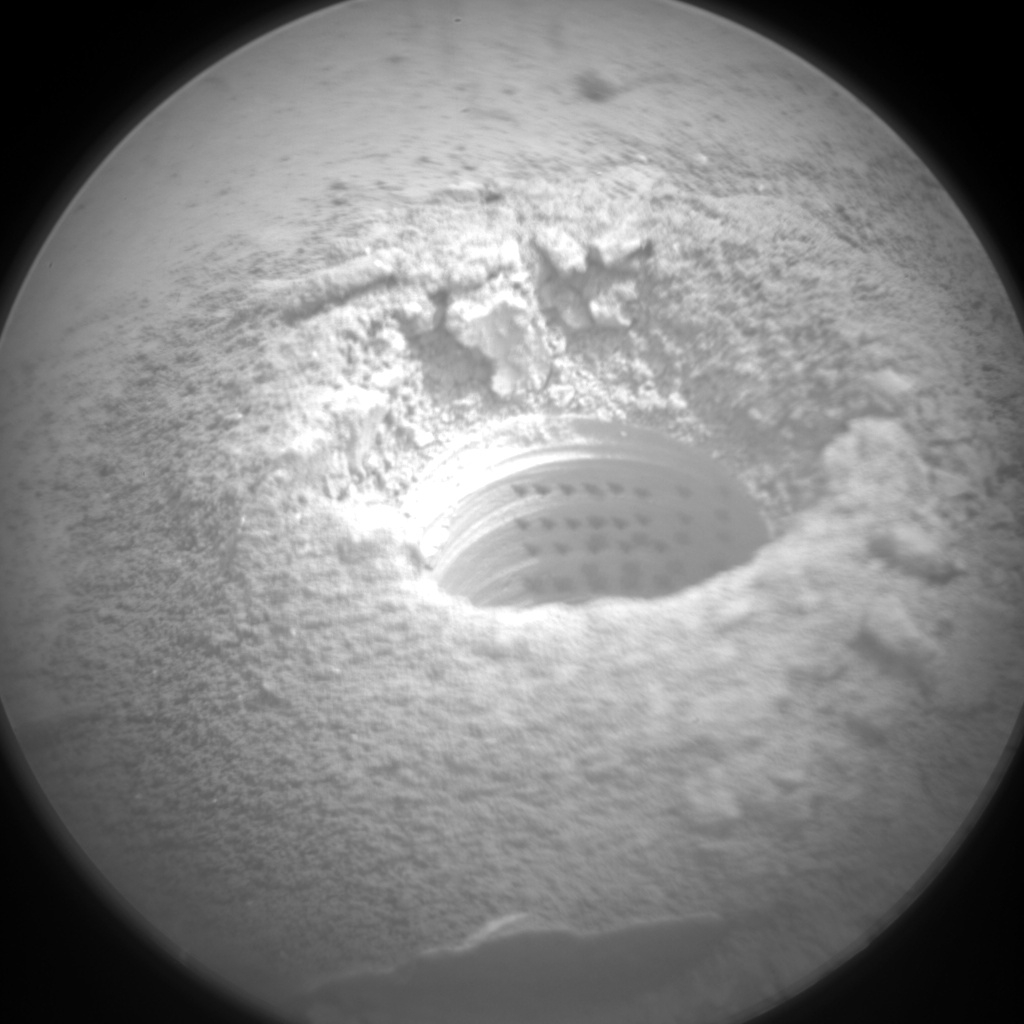
Curiosity ChemCam Remote Micro-Imager photo taken on Sol 2077, June 10, 2018.
Credit: NASA/JPL-Caltech/LANL
A new plan calls for high-priority activities dedicated to monitoring the changing conditions associated with the ever-growing dust storm on Mars, Minitti notes.
Dust loads
“Mastcam will measure the dust load in the atmosphere, and image two areas, ‘Noodle Lake’ and a spot where a test Duluth sample portion was dropped, to look for wind-induced changes,” Minitti reports.
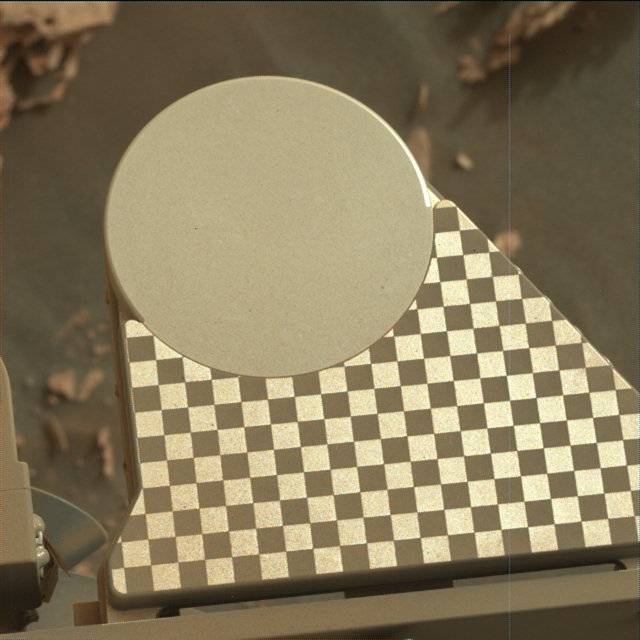
Curiosity Mastcam Left image taken on Sol 2078, June 11, 2018 at 08:11:51 UTC.
Credit: NASA/JPL-Caltech/MSSS
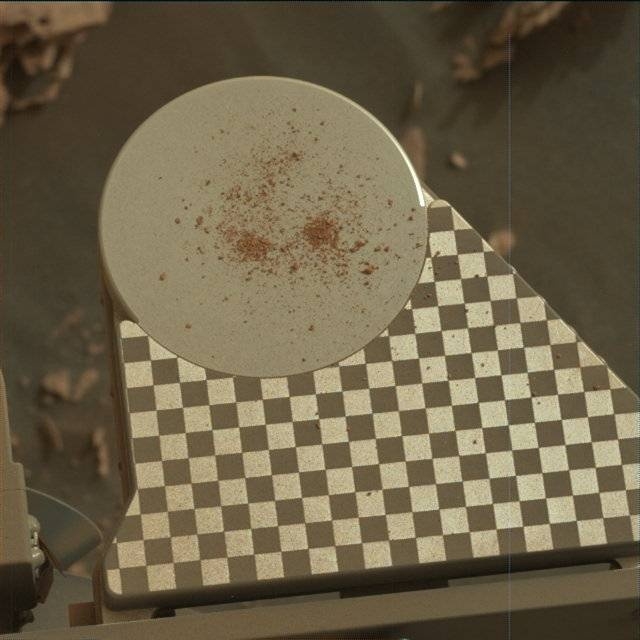
Curiosity Mastcam Left photo acquired on Sol 2078 June 11, 2018 at 08:16:40 UTC.
Credit: NASA/JPL-Caltech/MSSS
Regular Rover Environmental Monitoring Station (REMS) measurements will provide scientists the data they need for weather reports as the storm builds.
 Posted in

Credit: Boeing
The powerhouse engine for the reusable Phantom Express spaceplane is slated to undergo a series of daily hot-fire tests at NASA’s Stennis Center in Mississippi starting this summer.
Boeing is building the spaceplane under the Defense Advanced Research Projects Agency (DARPA) program.
The reusable Phantom Express spaceplane will take off vertically and land horizontally. The vehicle will be equipped with an expendable second stage capable of placing up to 3,000 pounds (1,361 kg) of payload into low Earth orbit.
Behind the program is demonstrating a new paradigm for more routine, responsive and affordable space access.
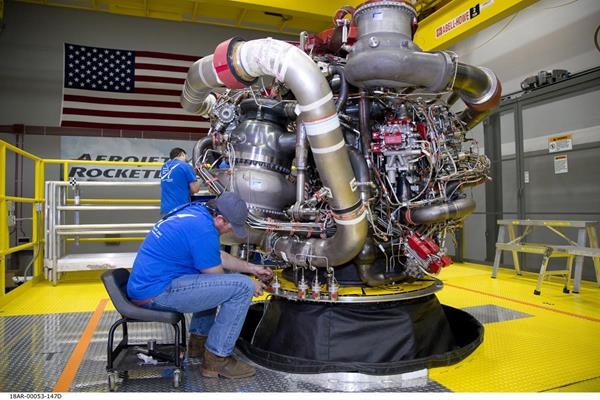
Aerojet Rocketdyne technicians complete final assembly on the first AR-22 rocket engine, shown at its facility located at Stennis Space Center. The engine was built for Boeing as part of the U.S. Defense Advanced Research Projects Agency Experimental Spaceplane program.
Credit: Aerojet Rocketdyne
Reusability feature
Aerojet Rocketdyne’s AR-22 engine is capable of generating about 375,000 pounds (170,097 kg) of thrust and was designed to fly 55 missions with service every 10 missions. This reusability feature makes the AR-22 ideally suited for Phantom Express.
Derived from the Space Shuttle Main Engine that was designed from the outset for reusability, the AR-22 is the main propulsion for Phantom Express.
Aircraft-like operations
In a company statement, AR-22 Program Manager Jeff Haynes said: “The aircraft-like operations of Phantom Express are an important factor in the rapid turnaround of this spaceplane.” Haynes added that the engine has a hinged nacelle “that makes it easier to access and inspect the engines for rapid turnaround.”
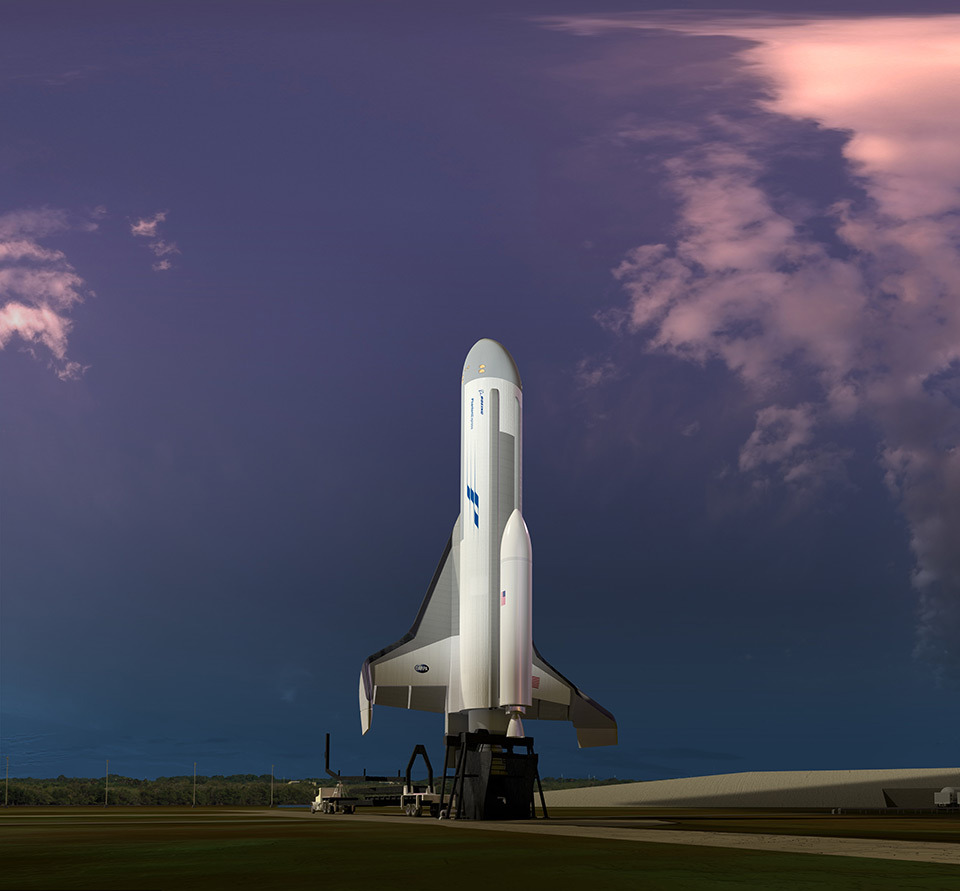
Credit: Boeing
AR-22 testing will also provide insights that will be used to refine Phantom Express flight and turnaround procedures, while also informing the design requirements for the new ground infrastructure that Boeing is developing for the flight program.

This global map of Mars shows a growing dust storm as of June 6, 2018. The map was produced by the Mars Color Imager (MARCI) camera on NASA’s Mars Reconnaissance Orbiter spacecraft. The blue dot indicates the approximate location of Opportunity.
Credit: NASA/JPL-Caltech/MSSS
Science operations for NASA’s Opportunity rover have been temporarily suspended as it waits out a growing dust storm on Mars.
The storm now spans more than 7 million square miles (18 million square kilometers) — an area greater than North America — and includes Opportunity’s current location at Perseverance Valley.

Opportunity photo taken by rover’s Front Hazcam Sol 5104.
Credit: NASA/JPL
Atmospheric opacity
The swirling dust has raised the atmospheric opacity, or “tau,” in the valley in the past few days, blotting out sunlight. The Opportunity rover uses solar panels to provide power and to recharge its batteries. The rover’s power levels had dropped significantly by Wednesday, June 6, requiring the Mars machinery to shift to minimal operations.

Opportunity image acquired by rover’s Navigation Camera Sol 5083.
Credit: NASA/JPL
Opportunity is in its 15th year; the team has operated the rover for more than 50 times longer than originally planned.
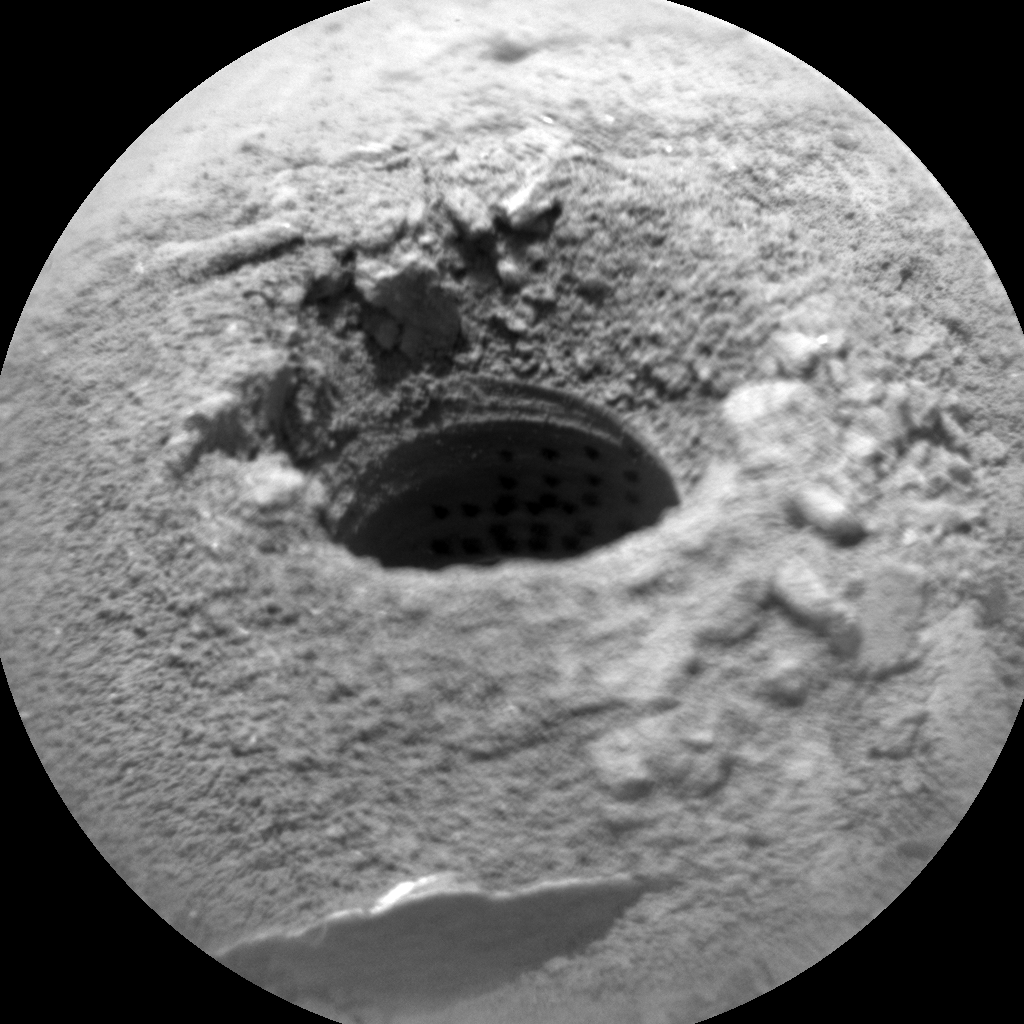
Laser strikes within Duluth drill hole. Curiosity ChemCam Remote Micro-Imager photo acquired on Sol 2075, June 8, 2018.
Credit: NASA/JPL-Caltech/LANL
NASA’s Curiosity Mars rover is now in Sol 2076, ready to tackle a weekend of duties.
Reports Rachel Kronyak, a planetary geologist from the University of Tennessee in Knoxville, the weekend plan has two main priorities: perform another analysis with the robot’s Chemistry & Mineralogy X-Ray Diffraction/X-Ray Fluorescence Instrument (CheMin) on the Duluth drill sample and continue a campaign of dust storm monitoring.
Dust storm
There’s a dust storm developing on the other side of Mars. In response, the environmental group has planned a suite of activities to monitor how the amount of dust in the atmosphere will change over the next few sols.
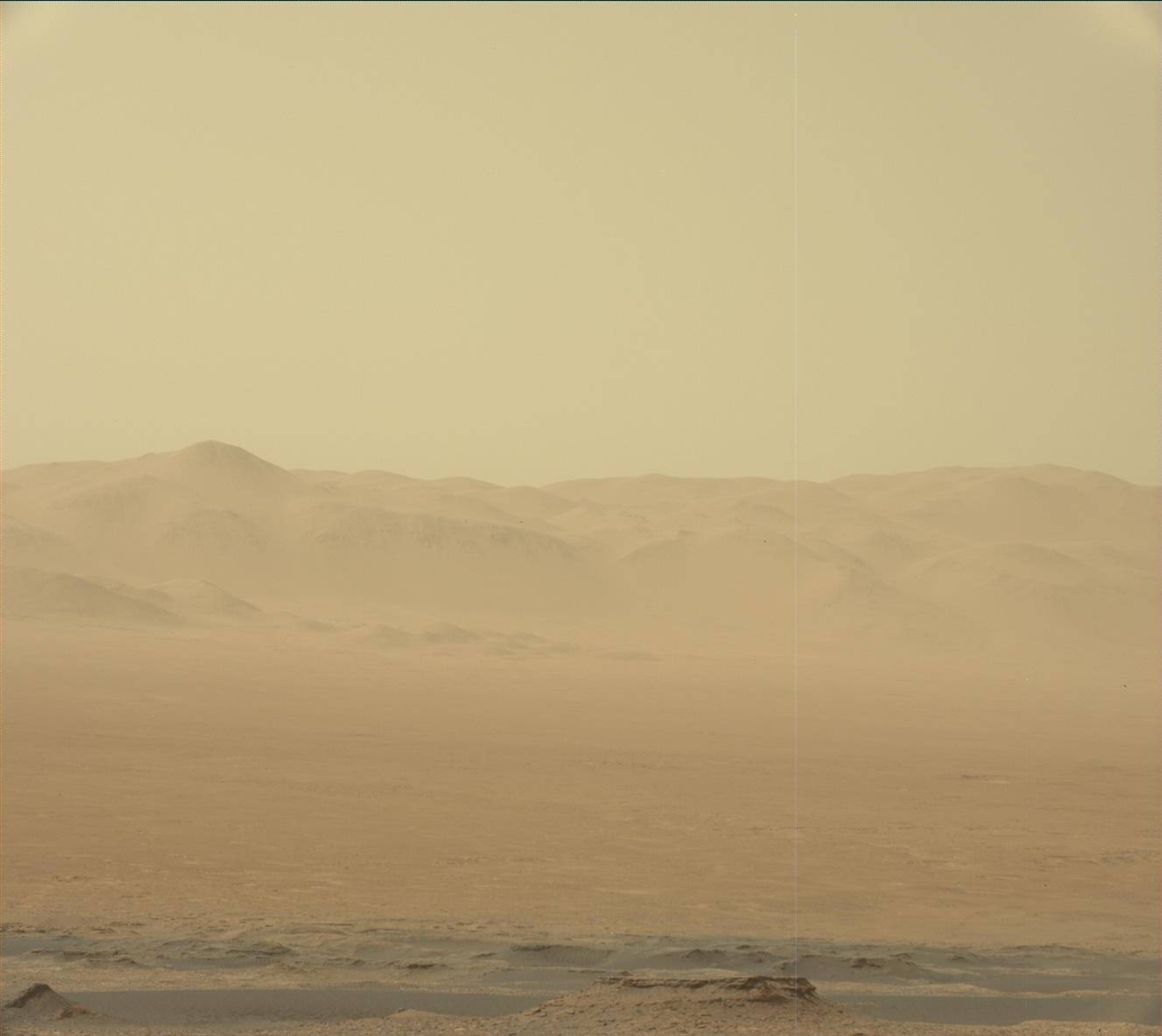
Dust storm watching. Curiosity Mastcam Left image taken on Sol 2070, June 3, 2018.
Credit: NASA/JPL-Caltech/MSSS
“To measure dust in the atmosphere, we’ll first point Mastcam towards the sun and take a tau measurement, which lets us determine the optical depth vertically. Then we’ll take a Mastcam image of the crater rim to determine line-of-sight extinction, which is directly related to the amount of dust present,” Kronyak explains. In addition, a few movies using Curiosity’s Navcam are to be taken, to assess clouds, wind direction, and to look for dust devils.
Duluth drill hole
“Overnight on Sol 2076-2077, we’ll perform our third CheMin analysis on the Duluth drill sample. Our geology theme group planned some additional activities later in the day on Sol 2077 to support our assessment of the Duluth drill hole,” Kronyak adds, including a Chemistry and Camera (ChemCam) Laser-induced Breakdown Spectroscopy (LIBS) raster of the drill hole and several change detection Mastcam images.
“Whenever Curiosity is parked at a location for more than a few sols, we commonly take a series of these change detection images to systematically look for material that has moved. We’ll also do a LIBS observation on the nearby rock target “Isanti” and perform a routine check-up on the Mastcam instrument with a sky column observation,” Kronyak concludes.
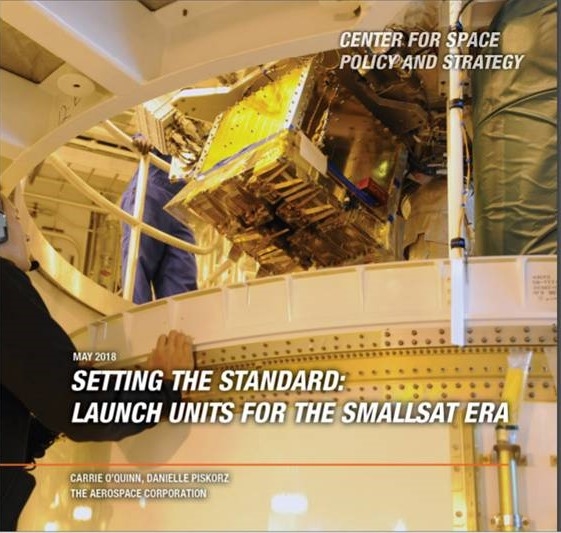
Over the next ten years, more than 6,000 smallsats are expected to launch. That’s an over six-fold increase from the previous decade. As the smallsat market grows, launch remains the main bottleneck to timely and affordable access to space.
The Aerospace Corporation’s Center for Space Policy and Strategy (CSPS) released a new policy paper today that explores the benefits of Launch Unit standards for smallsats.
Straightforward access
The authors’ proposed standard configurations, like the Launch Unit, would enable straightforward access to launch vehicles, cargo, and satellites, leading to standard schedules and known pricing.
Currently, most smallsats are launched as secondary payloads when there is excess space in a launch vehicle. In addition, every deployment must be specifically designed for each smallsat. The capabilities and agility of the smallsat industry would be greatly enhanced by the implementation of a smallsat launch standard.
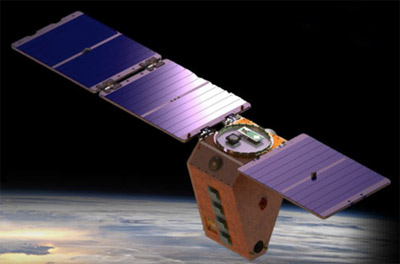
Credit: LASP/NASA/GeoOptics
Launch standard
This standard would address the physical properties of the smallsat (size, volume, vibrational modes) as well as the mechanical and electrical connections to the launch vehicle.
This paper explores the benefits of defining a launch standard for medium-class (25-200 kilogram) smallsats and provides options for its development.
To view the paper — Setting the Standard: Launch Units for the SmallSat Era — go to:
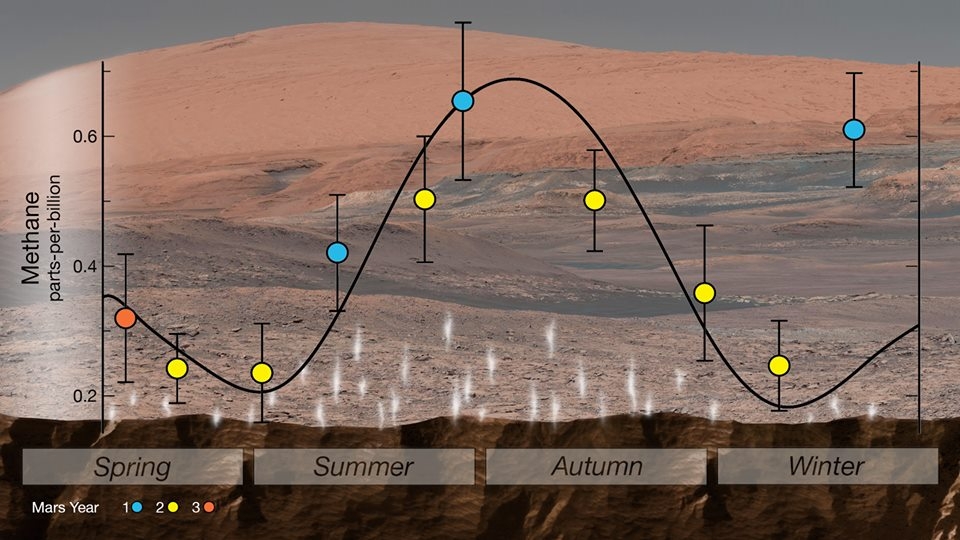
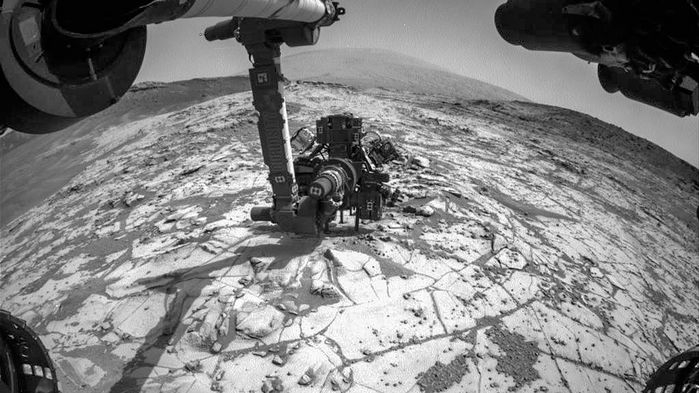
NASA’s Curiosity rover has found new evidence preserved in rocks on Mars that suggests the planet could have supported ancient life, as well as new evidence in the Martian atmosphere that relates to the search for current life on the Red Planet. While not necessarily evidence of life itself, these findings are a good sign for future missions exploring the planet’s surface and subsurface.
BTW: Follow the money…follow the water…follow the methane!
A biological signature for the methane is not ruled out.
“Are there signs of life on Mars?” said Michael Meyer, lead scientist for NASA’s Mars Exploration Program, at NASA Headquarters. “We don’t know, but these results tell us we are on the right track.”
Credit: NASA/JPL-CALTECH
Next steps
Carnegie Institution’s Andrew Steele was a key member of the research team, whose work on this project built off his discovery six years ago of indigenous organic carbon in 10 Martian meteorites. The organic molecules he found in 2012 are comparable to those found by Curiosity.
Steele says that the next steps must be looking for organic compounds that are released from the rock samples at lower temperatures.
“The next target is material that comes out when heated to less than 600 degrees Celsius, which is where the molecules are that will provide evidence of biological activity or the kinds of abiotic chemistry that could give rise to life,” Steele said.
Go to Science magazine at:
http://www.sciencemag.org/news/2018/06/nasa-rover-hits-organic-pay-dirt-mars
Also:
http://science.sciencemag.org/content/360/6393/1096.full

Given a revitalization of interest in lunar exploration, work is underway to develop a navigation system for the Moon that scales with increasing demand and can be utilized by government and commercial space missions.
Advanced Space LLC of Boulder, Colorado announced today it signed a two-year contract with NASA to continue development of a cislunar-centric navigation system.
A Cislunar Autonomous Positioning System (CAPS) is a public-private partnership to enable robust cislunar activities.
Space: a busy place
“As we increase the number of vehicles in space and missions to the Moon, we must equally advance the technology used to figure out where they are and where they are going,” said Bradley Cheetham, CEO of Advanced Space. “As space becomes busier, we are working to reduce the cost and congestion associated with mission planning and operations.”
This new contract builds on a six-month Phase I effort supported by NASA and the next two years will focus on the detailed technical development of required software and supporting systems. Key milestones coming up will include technical interface meetings and reviews with interested potential users, be they NASA, commercial, or international, explains a company press statement.

Credit: NASA
Matching grant
Advanced Space also received a matching Advanced Industries Accelerator Grant for $250,000 from the Colorado Office of Economic Development and International Trade in May 2018 to support the development of this technology within the state.
Advanced Space supports the exploration, development, and settlement of space through software and services that leverage unique subject matter expertise to improve the fundamentals of spaceflight.
For more information on this creative space firm, go to:

Credit: Virgin Galactic
Attention Millennials, Gen Xers, Baby Boomer or older generations: space tourism is not an excursion that appeals to everyone.
According to a new Pew Research Center survey:
About four-in-ten Americans (42%) say they would definitely or probably be interested in orbiting the Earth in a spacecraft in the future, while roughly six-in-ten (58%) say they would not be interested.
Interest in being a space tourist is higher among younger generations and men. A majority (63%) of Millennials (born 1981 to 1996) say they would definitely or probably be interested in space tourism. Only minorities of Gen Xers (born 1965 to 1980) (39%) and those in the Baby Boomer or older generations (27%) would be interested.
About half of men (51%) say they would be interested in orbiting the Earth in a spacecraft, compared with one-third of women (33%).
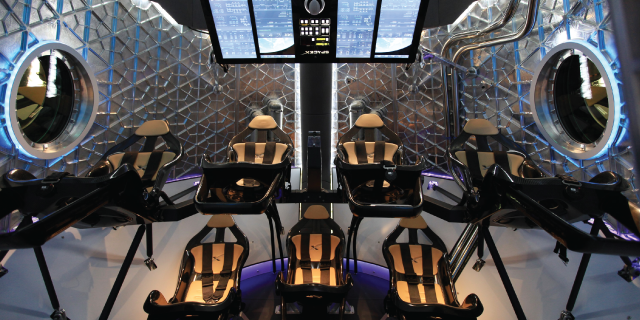
A look through the open hatch of the Dragon V2 reveals the layout and interior of the seven-crew capacity spacecraft. SpaceX unveiled the new spacecraft during a ceremony at its headquarters in Hawthorne, California, on May 29, 2014. (NASA/Dimitri Gerondidakis)
Reasons for space travel
Among the 42% of Americans who said they would be interested in traveling into space, the most common reason given (by 45% of those asked) was to “experience something unique.” Smaller shares of this group said they would want to be able to view the Earth from space (29%) or “learn more about the world” (20%).
Among the 58% who said they would not want to orbit the Earth aboard a spacecraft, equal shares said the main reason was that such a trip would be either “too expensive” (28% of those asked) or “too scary” (28%) or that their age or health wouldn’t allow it (28%).

Too expensive, too scary
Men and women and older and younger Americans cited different reasons for why they would not want to travel into space.
Millennials and Gen Xers were more likely to say the main reason they would not be interested was that it would be too expensive or too scary.
But for Baby Boomers and older generations, the most common reason they would not be interested in orbiting the Earth was that their age or health would not allow it (of those who were asked this question, 45% of those in the Baby Boomer or older generations said this, compared with 6% of 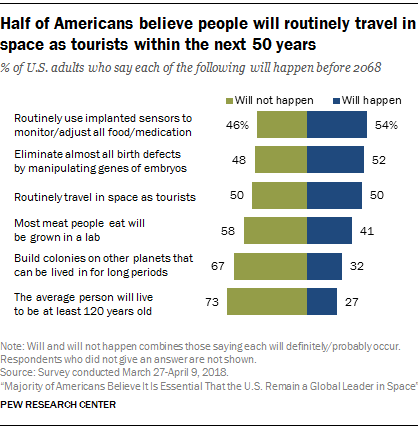 Millennials).
Men were more likely than women to say the main reason they would not be interested in orbiting the Earth in a spacecraft was that it would be too expensive (37% vs. 22%), but women were more inclined than men to say they would not want to go because it would be too scary (34% vs. 18%).
Off-world colonies
Americans were also asked about their expectations for space tourism in the next 50 years.
The public is split over whether this will happen, with half saying that people will routinely travel in space as tourists by 2068 and half saying this will not happen.
Americans are more skeptical about the possibility of colonies on other planets – an endeavor championed by space entrepreneurs Elon Musk and Jeff Bezos.
About one-third of Americans (32%) say people will build colonies on other planets that can be lived in for long periods by 2068.
To read the entire survey, written by the Pew Center’s Mark Strauss and Brian Kennedy, go to:
Also, go to the Pew Center’s new survey “Majority of Americans Believe It Is Essential That the U.S. Remain a Global Leader in Space” at:
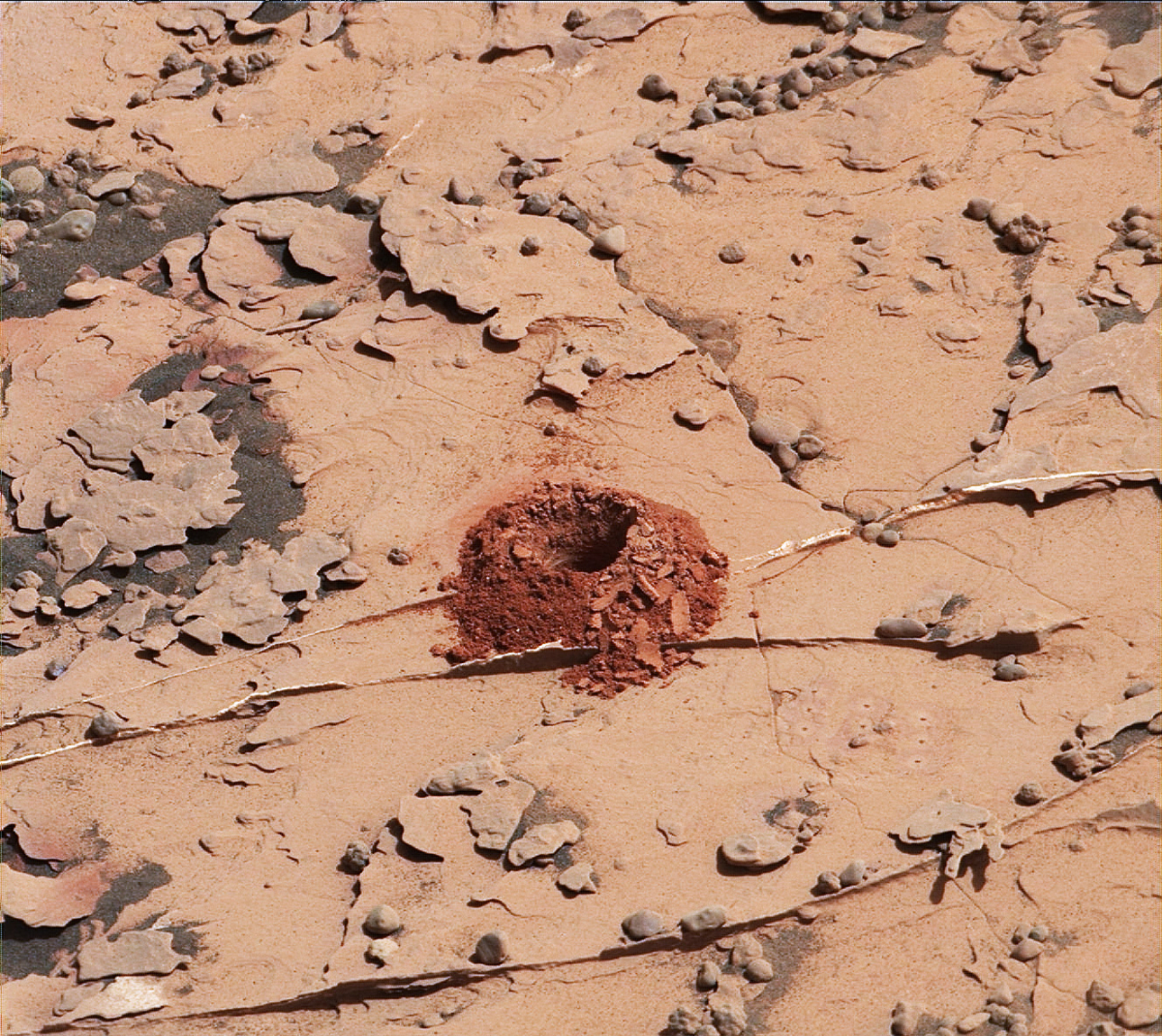
A close-up image of a 2-inch-deep hole produced using a new drilling technique for NASA’s Curiosity rover. The hole is about 0.6 inches (1.6 centimeters) in diameter. This image was taken by Curiosity’s Mast Camera (Mastcam) on Sol 2057. It has been white-balanced and contrast-enhanced.
NASA/JPL-Caltech/MSSS
NASA’s Curiosity Mars rover is now wrapping up Sol 2074 duties.
Curiosity rover scientists received the happy news that the Sample Analysis at Mars (SAM) Instrument Suite received enough sample to conduct its “evolved gas” analysis of the powdered rock from the “Duluth” drill hole!
“This will allow the team to study the composition of Duluth and search for clues about the habitability of Gale Crater billions of years ago,” explains Scott Guzewich, an atmospheric scientist at NASA/Goddard Space Flight Center in Greenbelt, Maryland. “It also fully validates the new sample drop off routines that were created to work with our new ‘feed-extended drilling’ technique.”
After a busy several sols where Curiosity’s onboard laboratories got back in action, the rover’s plan of action was relatively quiet with Chemistry and Camera (ChemCam) Laser-induced Breakdown Spectroscopy (LIBS) analysis of rock targets “Little Marais” and “Independence,” and some housekeeping activities from SAM following its investigations sols ago.
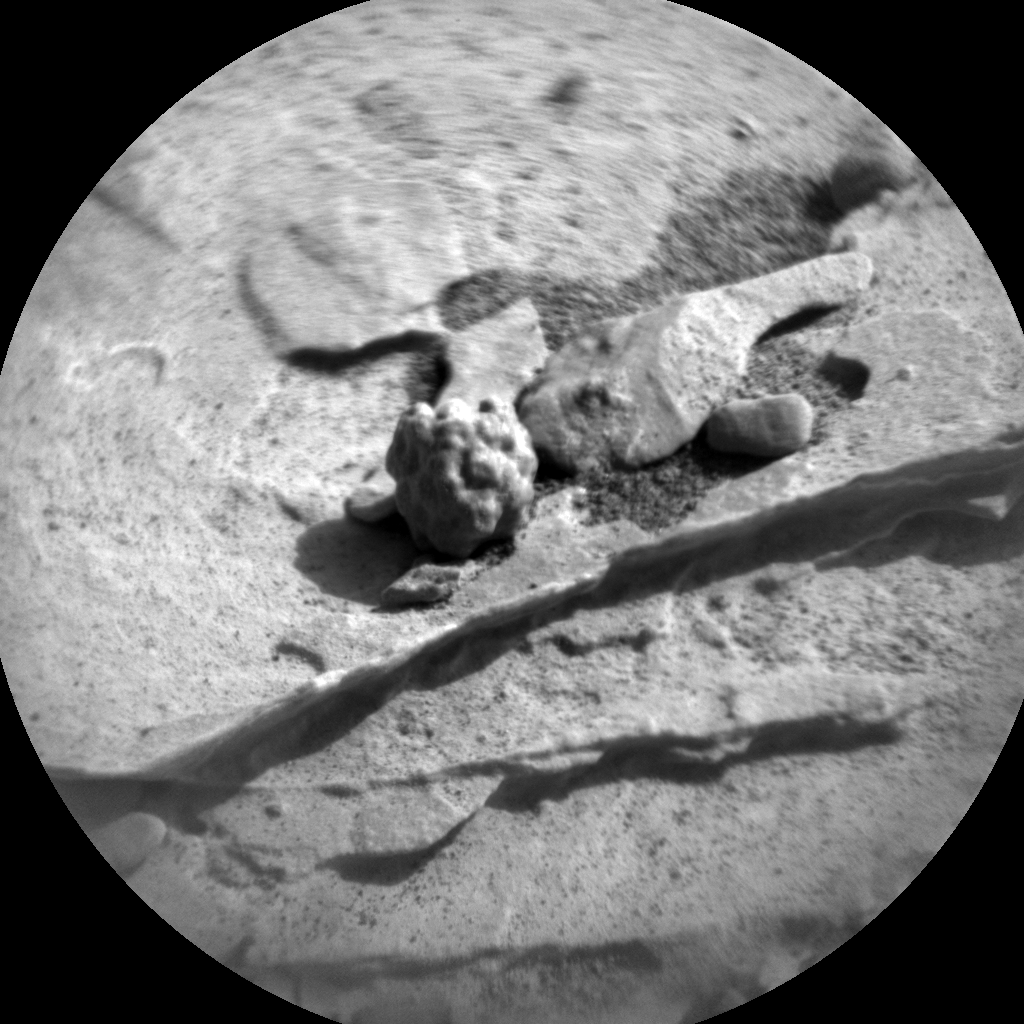
Curiosity ChemCam Remote Micro-Imager photo acquired on Sol 2074, June 7, 2018.
Credit: NASA/JPL-Caltech/LANL
Dust storm
Guzewich reports that the environmental science theme group is monitoring a growing large dust storm on the other side of Mars.
“To help keep tabs on if and when this storm begins to impact Gale Crater, we added two observations with Mastcam to monitor the amount of dust in the atmosphere and a short Navcam dust devil survey,” Guzewich adds.
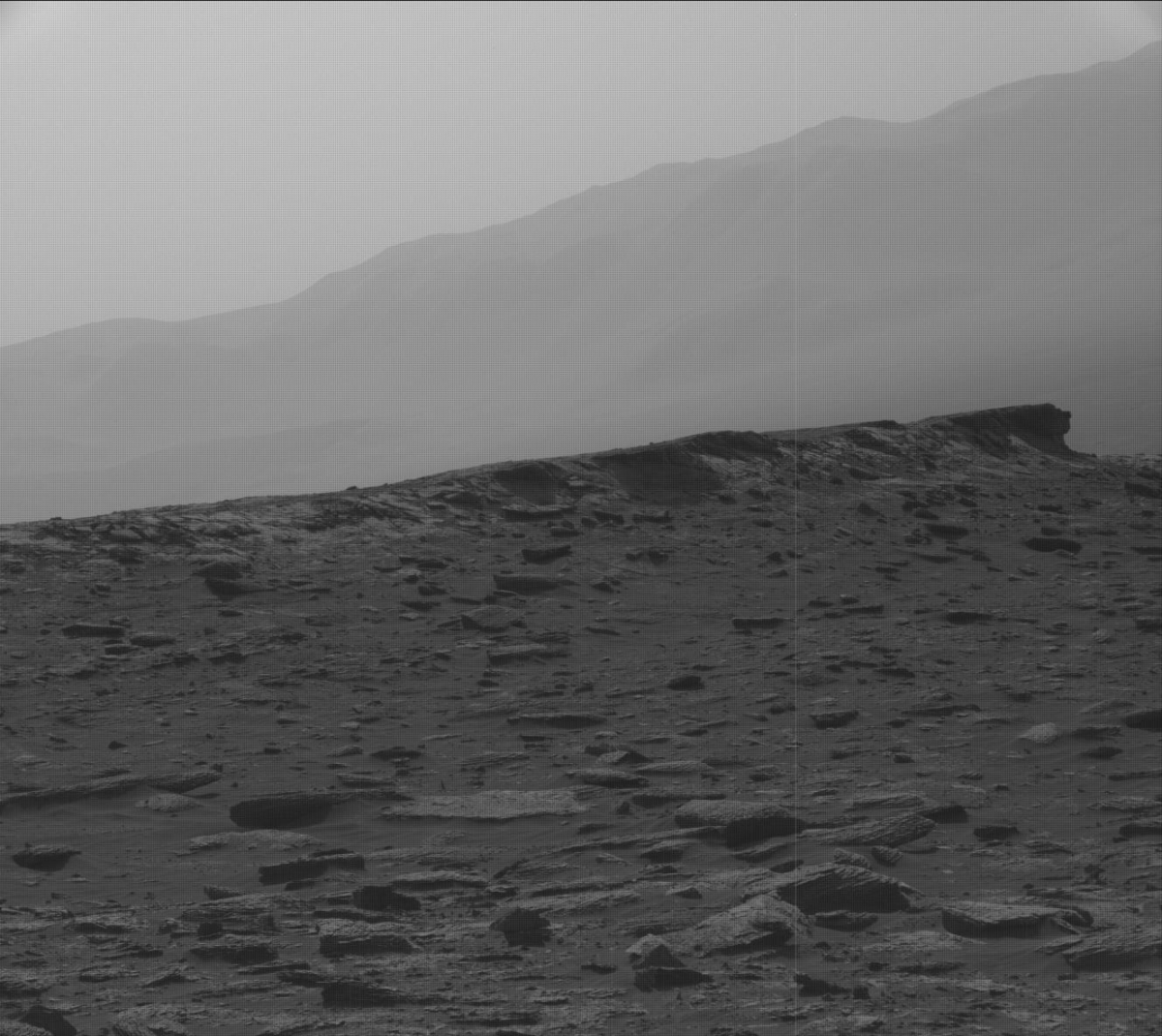
Amount of dust in Gale crater is likely to increase over the next several days and viewing of the crater’s rim will become far hazier.
Photo taken by Curiosity Mastcam Left camera on Sol 2072, June 5, 2018.
Credit: NASA/JPL-Caltech/MSSS
“We expect that even if the storm dissipates before becoming a global dust storm,” Guzewich points out, “that the amount of dust in Gale will increase over the next several days,” with the view of the crater’s rim becoming far hazier.

International Space Station.
Credit: NASA
U.S. Sen. Ted Cruz (R-Texas), chairman of the Subcommittee on Space, Science, and Competitiveness convened a hearing entitled “Examining the Future of the International Space Station: Stakeholder Perspectives,” on Wednesday, June 6, 2018.
The second in a series of hearings to examine the role of the International Space Station (ISS), this hearing provided ISS stakeholders the opportunity to discuss the value of the ISS to our national space program and the future of human space exploration.

Credit: ASAP/NASA
Golden era
Commerce Committee ranking member, Bill Nelson, said in an opening statement:
“This November will mark twenty years since the Russians launched the Zarya module into space. NASA launched the Unity module two weeks later, and so began assembly of the International Space Station.
Now, we are on the verge of a golden era for the ISS. Boeing and SpaceX are set to begin launching crew from Cape Canaveral to the ISS next year. That will allow us to increase the number of astronauts aboard the station and dramatically increase the amount of research we can do there.
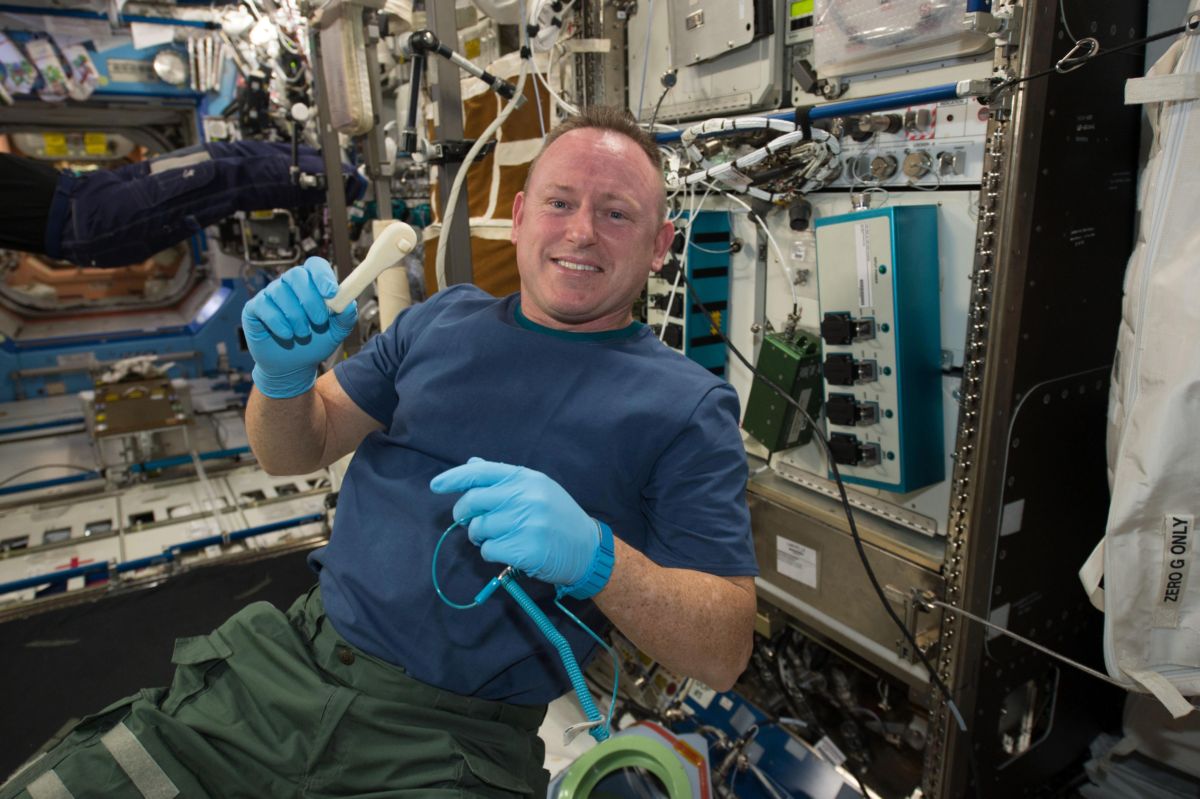
Ratcheting up use of 3D printing onboard the International Space Station. NASA Astronaut Barry (Butch) Wilmore holds a 3-D printed ratchet wrench from the new 3-D printer aboard the International Space Station. The printer completed the first phase of a NASA technology demonstration by printing a tool with a design file that was transmitted from the ground to the printer.
Credit: NASA
It’s taken the dedication of countless workers at Kennedy Space Center, at Johnson Space Center and in countries all over the world to get to this point.
Through 2030
Thanks to their efforts, the ISS is performing well and should keep functioning through 2030 or even longer.
Now is the time to reap the benefits of all of that effort and to maximize the return from our investment in ISS.
There is a strong, bipartisan consensus that we need a steady and deliberate commercialization of activities in low Earth orbit. That transition depends on the development of demand for services in low Earth orbit by non-NASA entities.
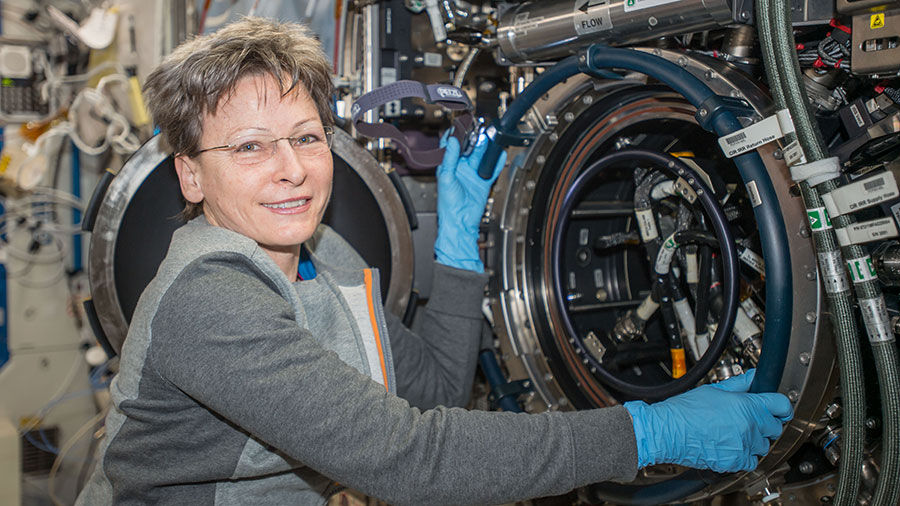
Astronaut Peggy Whitson works on the Combustion Integrated Rack in the U.S. Destiny laboratory module.
Credit: NASA
Arbitrary end date
Setting an arbitrary end date for the ISS in 2025 isn’t going to help build demand for these types of activities. To the contrary, it could crush the demand.
Who would want to make large, multi-year investments in space research and development activities if they have no assurance there will be a platform in orbit on which to carry out their activities?
What about the commercial crew and cargo capabilities that we are investing so heavily in right now? What would happen to them if there is no certainty that they will have a destination just a few years after they first get started?

Credit: China Manned Space Agency
China station
The Chinese certainly realize this. I suspect it is no accident that, within a few months of the administration’s proposal to end federal funding for ISS in 2025, the Chinese announced that their space station will soon be open for business. Just last week they invited countries around the world to conduct research aboard their station beginning in the 2020s.
And the research capabilities they advertise – medical sample analysis, combustion science, freezers, a science glovebox – sound remarkably similar to the ISS.
Cultivate demand
One day, low Earth orbit may be filled with commercial space stations serving NASA and other government and private sector customers. And NASA will be leading a human mission to Mars.
The ISS isn’t an obstacle to those developments – the ISS is the key to enabling them.
I am looking forward to today’s discussion on how the ISS can help cultivate the demand for new space activities and accelerate the development of commercial space habitats.”
Video of hearing:
Witnesses and written testimony
1)
Cynthia Bouthot
Director of Commercial Innovation & Sponsored Programs, Center for the Advancement of Science in Space
2)
Jim Chilton
Senior Vice President
Space and Launch, The Boeing Company
3)
Bob Mitchell
President
Bay Area Houston Economic Partnership
4)
Michael Suffredini
Chief Executive Officer and President
Axiom Space

