Archive for March, 2018
 Author:
  March 9th, 2018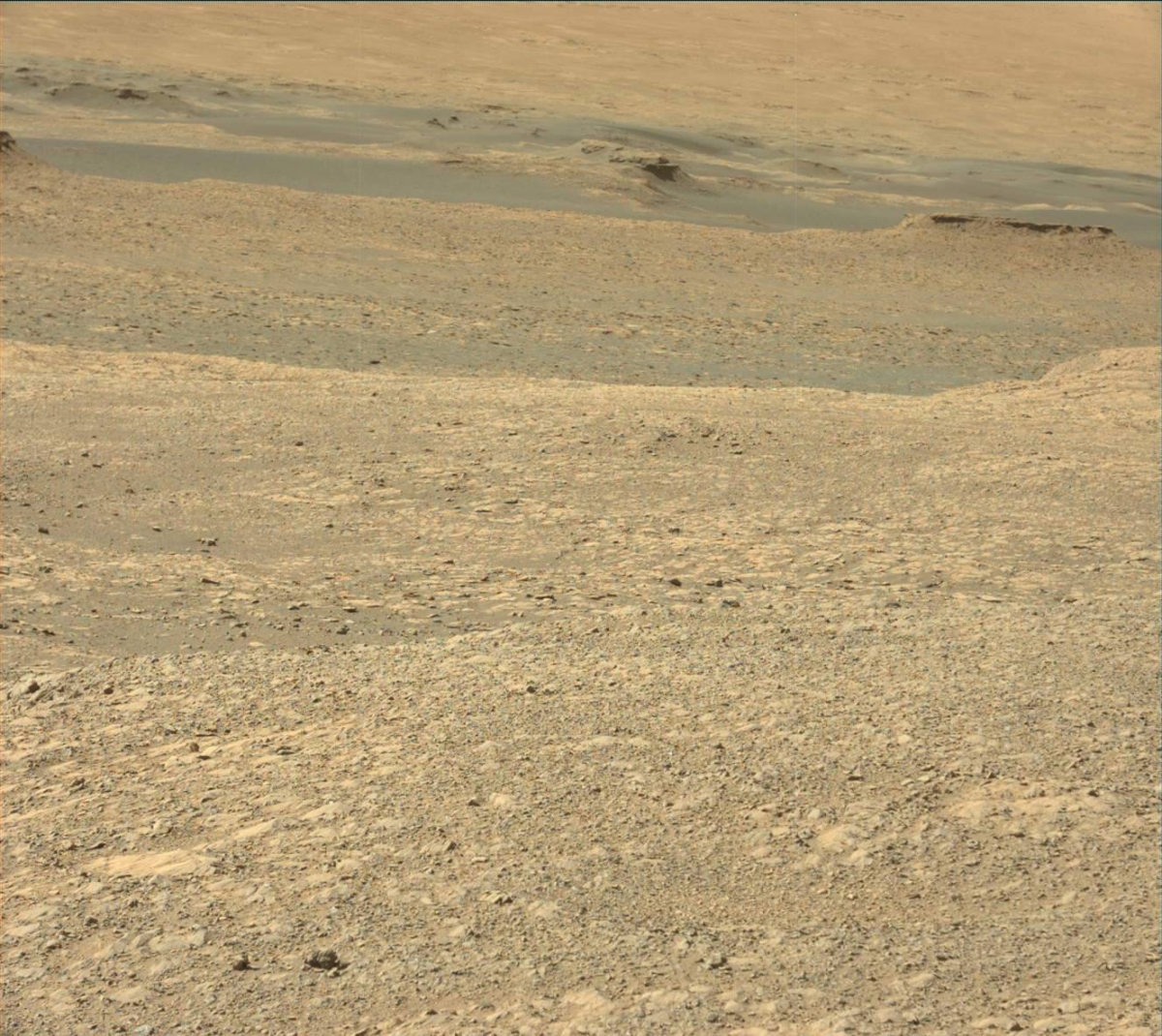
Curioisty Mastcam Left image acquired on Sol 1985, March 7, 2018.
Credit: NASA/JPL-Caltech/MSSS
Seasons make a big difference for Mars vistas, reports Roger Wiens, Curiosity’s Chemistry and Camera (ChemCam) principal investigator and geochemist at Los Alamos National Laboratory in New Mexico. The Red Planet is halfway between winter solstice and spring equinox in the southern hemisphere where the robot now resides.
“The atmosphere around the globe is the clearest in southern winter. Once spring starts, turbulence increases and dust storms begin,” Wiens points out.
Curiosity is now performing Sol 1987 science tasks.
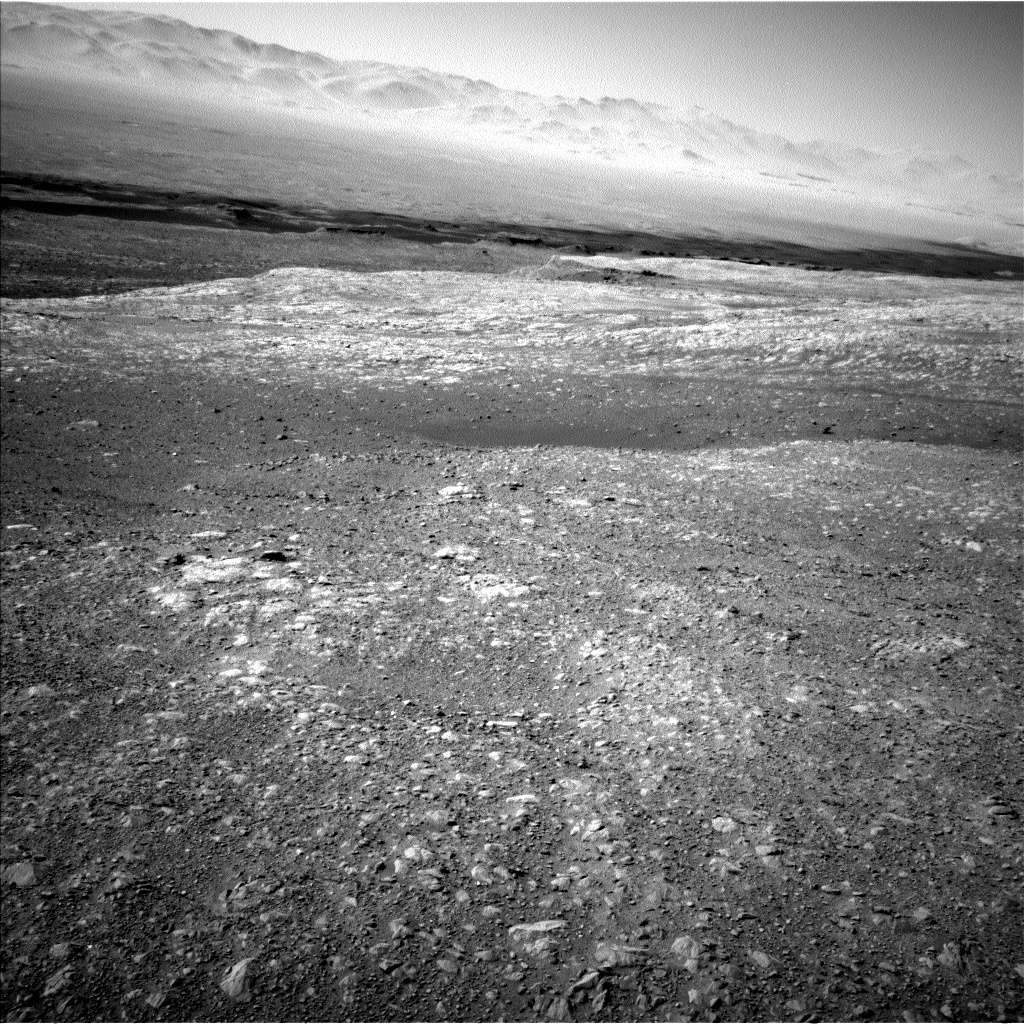
Curiosity Navcam Left B photo taken on Sol 1986, March 8, 2018.
Credit: NASA/JPL-Caltech
Clear skies
Curiosity science teams are taking advantage of the clear skies to take long-distance ChemCam Remote Micro Imager (RMI) telescope mosaics of the terrain on Mt. Sharp and on the crater rim.
“We are especially interested in a Mt. Sharp unit characterized by features that look like yardangs, which are typically wind-sculpted elongated features in a landscape that is experiencing erosion,” Wiens adds. “We’re also very interested in the apparent fluvial channels seen descending from the crater rim.”
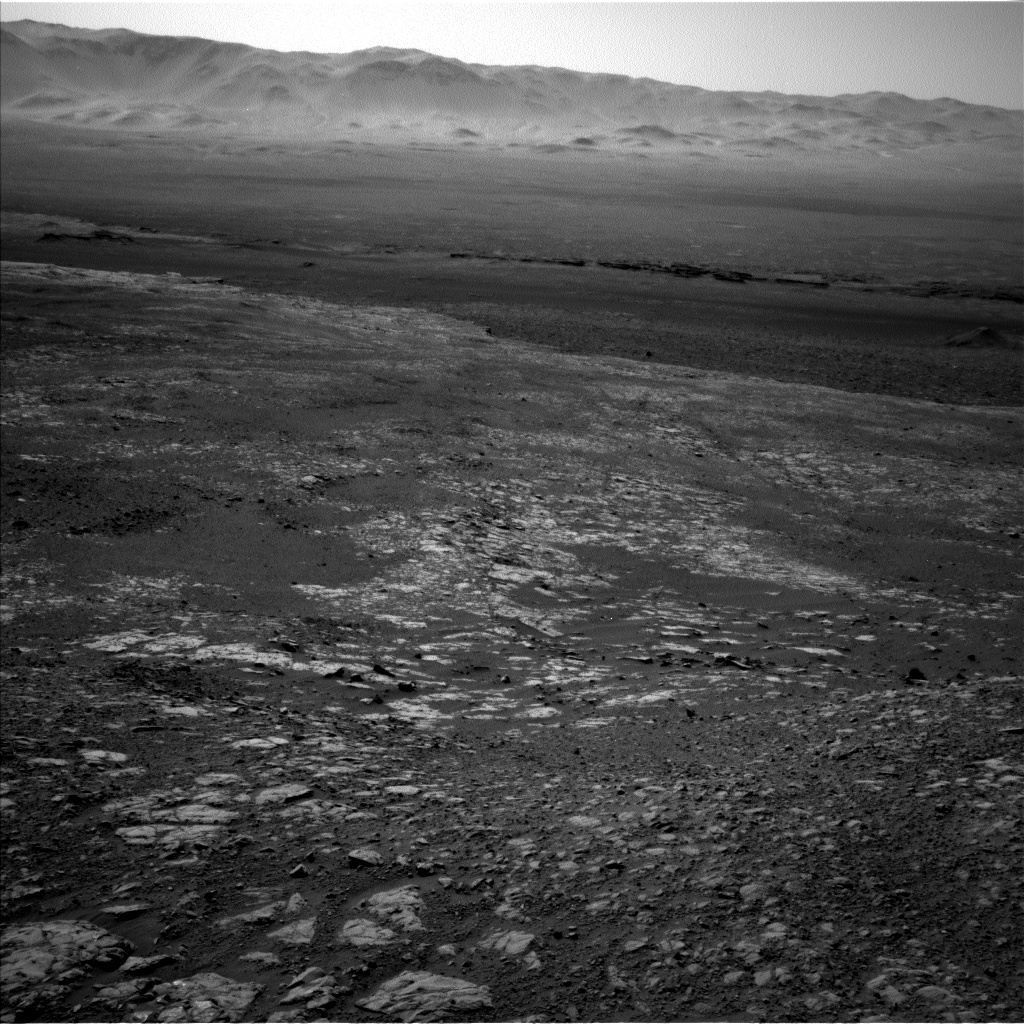
Curioisty Navcam Left B image acquired on Sol 1985, March 7, 2018.
Credit: NASA/JPL-Caltech
The rover’s Navcam has already been used to image at least two channels.
“We are curious…when was the last time that water flowed down these channels? Was it steady flow, or catastrophic? Is there evidence of snow and ice,” Wiens questions, “or was the water more likely delivered as rain?”
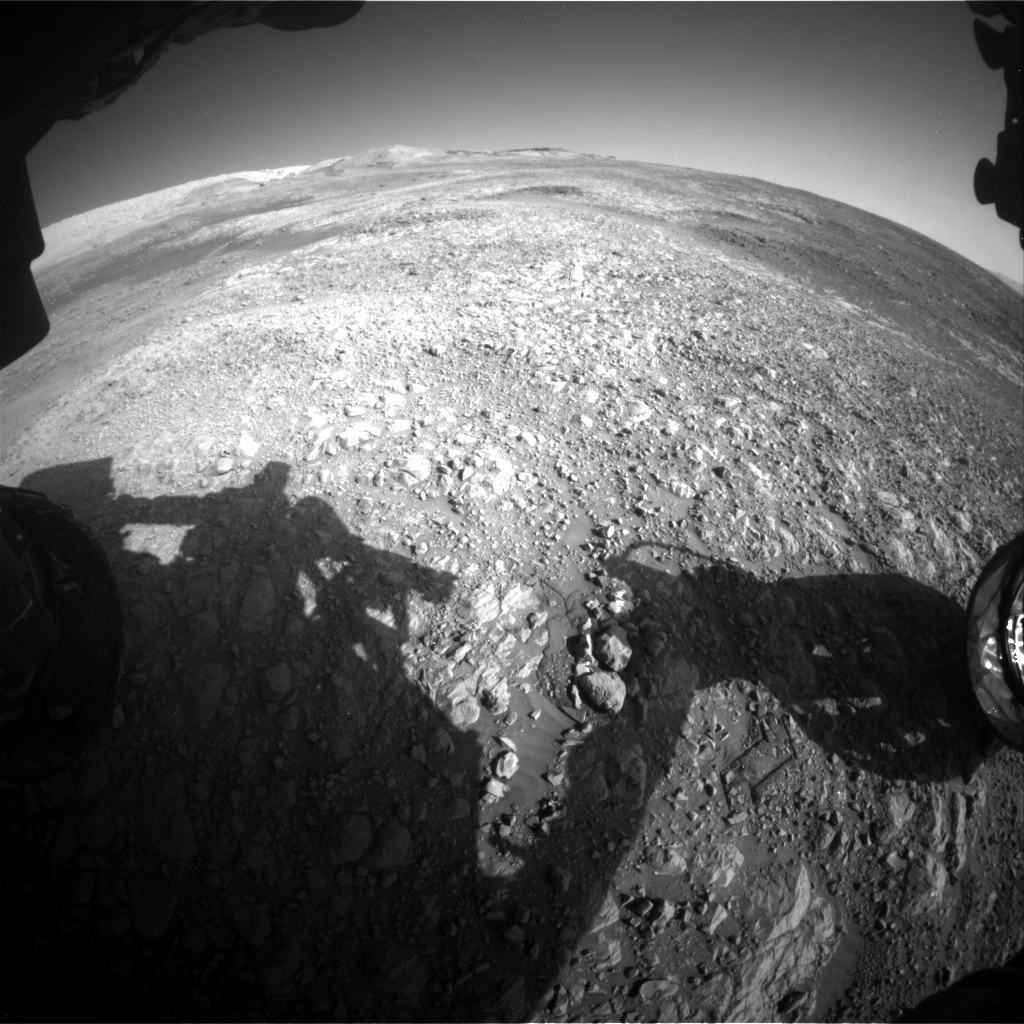
Curiosity Front Hazcam Left B photo taken on Sol 1986, March 8, 2018.
Credit: NASA/JPL-Caltech
Gravel underfoot
Under clear skies, Curiosity has recently driven close to 100 feet (30 meters) and is now stationed on a gravelly patch of ground.
“The rover is heading northeast along the top of Vera Rubin Ridge. With only gravel underfoot, the arm instrument teams decided to forgo contact science at this location,” Wiens explains.
On the plan is for the robot to use ChemCam and Mastcam to observe small bedrock targets “Sgurr nan Gilean” and “Braemar.” Mastcam will use optical filters to observe the latter target.
Slight downhill drive
After a planned long northerly and slightly downhill drive aiming for nearly 270 feet (82 meters), Curiosity is slated to image the surroundings, done by Hazcam, Navcam, and Mastcam. It will include a Mastcam clast survey.
Also on the plan, the Autonomous Exploration for Gathering Increased Science (AEGIS) software will use the Navcam images to pick a target for ChemCam investigation.
On the second sol of this plan ChemCam will take long-distance images of the yardang unit on Mt. Sharp and of the Peace Vallis area.
Navcam will take several movies to look for dust devils and thin clouds. The rover’s Dynamic Albedo of Neutrons (DAN), Radiation Assessment Detector (RAD), and Rover Environmental Monitoring Station (REMS) will also take data.
Credit: NASA/JPL-Caltech/Univ. of Arizona
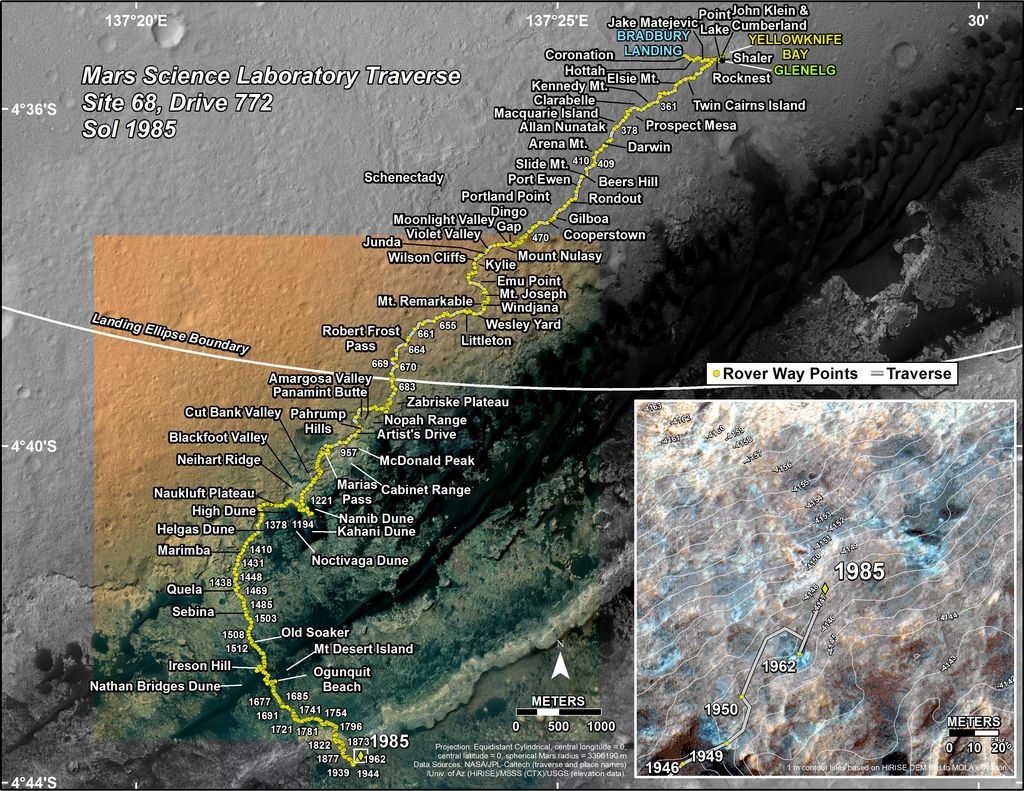
New traverse map
Meanwhile, a new map has been issued that shows the route driven by NASA’s Mars rover Curiosity through the 1985 Martian day, or sol, of the rover’s mission as of March 8, 2018.
Numbering of the dots along the line indicate the sol number of each drive. North is up. The scale bar is 1 kilometer (~0.62 mile).
From Sol 1962 to Sol 1985, Curiosity had driven a straight line distance of about 93.78 feet (28.59 meters), bringing the rover’s total odometry for the mission that began in August 2012 to 11.33 miles (18.23 kilometers).
The base image from the map is from the High Resolution Imaging Science Experiment Camera (HiRISE) in NASA’s Mars Reconnaissance Orbiter.
 Posted in

Credit: CMSA
A third edition of the Global Exploration Roadmap has been issued, a report that includes a step-by-step explanation of China’s future space station objectives for the 2020s.
The newly issued Roadmap outlines the interests of 14 space agencies that belong to the ISECG, a group that includes the China National Space Administration.
Two phases
As cited in the ISECG 2018 report:
In September 2010, the Chinese government approved the implementation of their space station project.
China’s Space Station project is organized in two phases:
- the first phase includes the Space Laboratory;
- the second phase includes construction of a Space Station.
The Tiangong 2 Space Laboratory was launched in September 2016. Then, the Shenzhou-11 crewed spacecraft and cargo spacecraft docked with the lab.

Credit: CMS
Core, specialized modules
The China Space Station consists of a core module and two specialized modules with the complex having an orbital inclination of 42 degrees and an altitude of approximately 547-724 miles (340-450 kilometers), explains the ISECG report.
China’s space station has a design life of 10 years with the ability to extend service life through maintenance.
After the construction is completed, two or three astronauts will live and work continuously for long durations, with the station supporting a maximum of six people during periods of crew rotation.
The station is equipped with an external robotic arm and other equipment to support station construction, maintenance and operations.

Deployed micro-satellite monitored the combined Tiangong-2/Shenzhou-11 vehicles.
Credit: CCTV
Sub-phases
China’s Space Station phase is divided into three sub-phases.
In the key technical verification phase, the test core module is launched and multiple pilot and cargo spacecraft launches test the core module to validate astronaut long-term presence, regenerative life support systems, flexible solar wing and drive mechanism, and overall control of a large flexible structure and space station assembly.
Following this key technical verification phase, the two specialized modules are launched completing the construction phase.
During this period, a number of Shenzhou crewed and cargo spacecraft will be launched to support the completion of construction tasks and carry out scientific and technological experiments simultaneously.
When the Space Station construction tasks are completed, the operations phase begins.

The Tianhe core module for China’s Space Station undergoes ground testing.
Credit: CCTV/Screengrab
Research and exploration activities
The astronaut crew will conduct long-duration missions to conduct scientific and technological research and exploration activities.
On the basis of the existing three-module configuration, an additional docking interface is available with the capability of docking an additional permanent element.
China’s Space Station can accommodate other countries’ spacecraft access that meets the standards of China’s space station and can also be equipped with an external experimental platform and experimental equipment.
As explained in the ISECG report, additional modules may be added to the Chinese Space Station in the future.
International cooperation
The main scientific research and application directions of the Chinese Space Station are:
- space medicine,
- space life science and biotechnology,
- microgravity fluid physics,
- space material science,
- microgravity basic physics,
- space astronomy and astrophysics,
- space environment and space physics,
- aerospace components,
- space geosciences and applications,
- space-based information technology,
- new aerospace technologies and applications.

Credit: CMSE/Wei Yan Juan

International cooperation, the ISECG report explains, can be based on module level cooperation, on other countries’ spacecraft visits, on astronaut joint flights, and on cooperation in space science and space applications research.
To read this China update within the 2018 ISECG report, go to pg. 13:
https://www.globalspaceexploration.org/wordpress/wp-content/isecg/GER_2018_small_mobile.pdf

Credit: ISECG
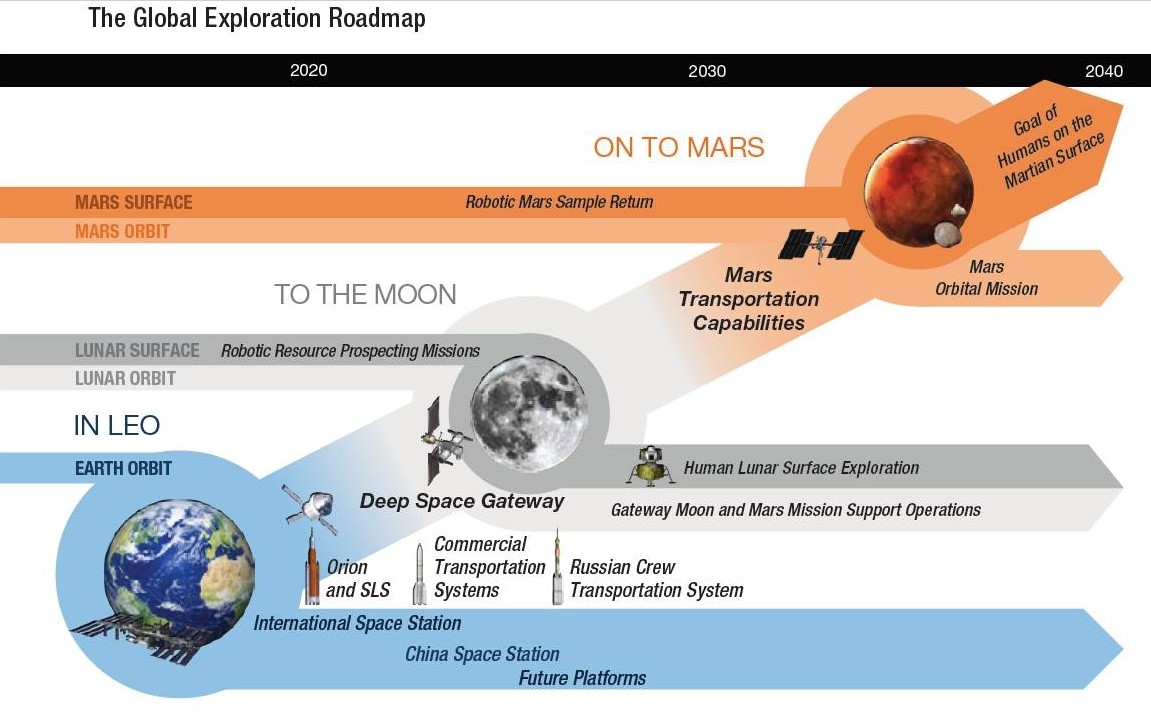
Agencies participating in the International Space Exploration Coordination Group (ISECG) are advancing a long-range international exploration strategy to expand human presence into the Solar System, which begins with the International Space Station, proceeds to the Moon, and leads to human missions to explore Mars.
A third edition of the Global Exploration Roadmap has been issued, following the first roadmap released in September 2011 and updated in August 2013.
Credit: ISECG
This new iteration includes updated agency plans and programs and aims to “facilitate stakeholder engagement within countries and across space agencies to realize human and robotic exploration of destinations where humans may one day live and work,” according to the ISECG.
Agency plans
This third edition of the Global Exploration Roadmap, first released in September 2011 and updated in August 2013, includes updated agency plans and programs and aims to facilitate stakeholder engagement within countries and across space agencies to realize human and robotic exploration of destinations where humans may one day live and work.
This new edition of the Global Exploration Roadmap reaffirms the interest of 14 space agencies to expand human presence into the Solar System, with the surface of Mars as a “common driving goal.”

Credit: ISECG
Coordinated effort
The report reflects a coordinated international effort to prepare for space exploration missions beginning with the International Space Station (ISS) and continuing to the lunar vicinity, the lunar surface, then on to Mars.
The expanded group of agencies within the ISECG spotlights the growing interest in space exploration and the importance of cooperation to realize individual and common goals and objectives.
To read this highly informative 2018 report, go to:
https://www.globalspaceexploration.org/wordpress/wp-content/isecg/GER_2018_small_mobile.pdf

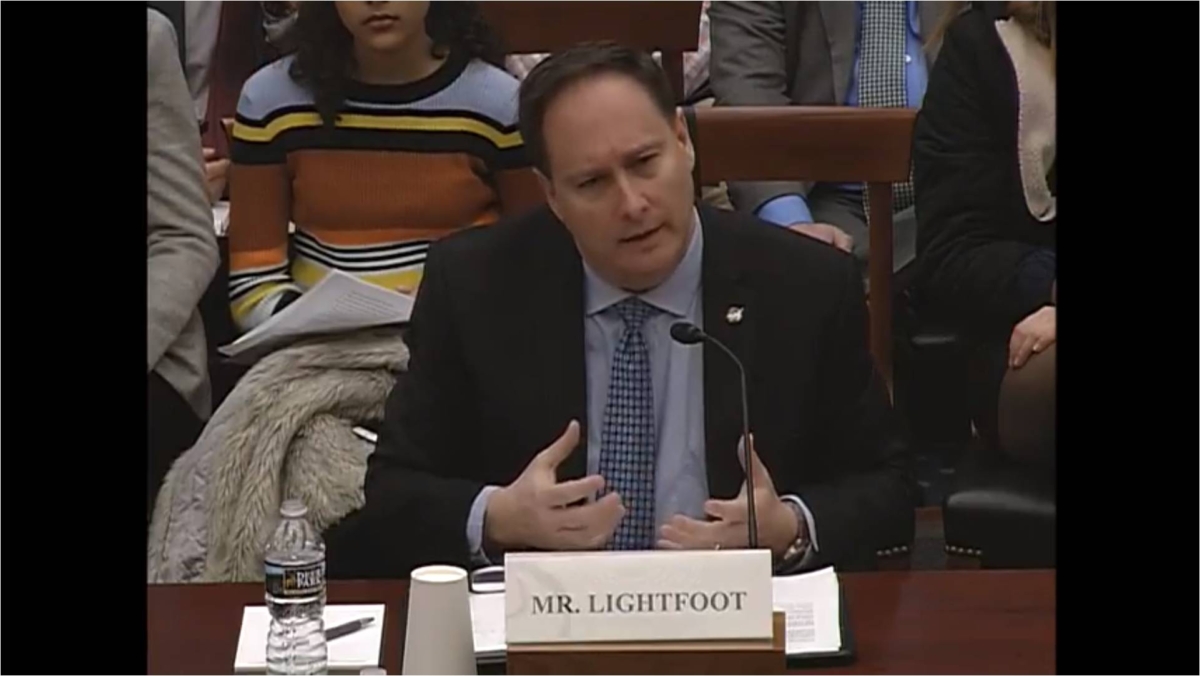
A House Subcommittee on Space carried out a hearing on March 7: An Overview of the NASA Budget for Fiscal Year 2019
The sole witness was NASA’s Robert Lightfoot, Jr., Acting Administrator.
Moon: proving ground
In an opening Statement Space Subcommittee Chairman Brian Babin (R-Texas) noted that Mars has been, and will remain, the first interplanetary destination for humanity.
“And along the way, NASA has been encouraged to carry out any mission necessary, including cis-lunar activities, to advance future interplanetary exploration,” Chairman Babin said.

“There are many benefits to this strategy. The moon offers a proving ground closer to home for advancing the technologies necessary for deep space exploration. The opportunities for commercial and international participation could greatly enhance a lunar mission. And the more frequent operational cadence will better prepare astronauts, mission crews and the commercial partners for future missions.” Babin noted.
Range of questions

Subcommittee members served up a wide range of questions for NASA’s Lightfoot on Moon and Mars exploration plans to a variety of topics, including the James Webb Space Telescope and other future missions, including the space agency’s plans for fending off asteroids.
To view a video of the hearing, go to:
The written testimony of NASA’s Lightfoot is available at:
The full opening statement by Babin is posted at:
Curiosity Mars Hand Lens Imager (MAHLI) photo produced on Sol 1984, March 6, 2018.
Credit: NASA/JPL-Caltech/MSSS
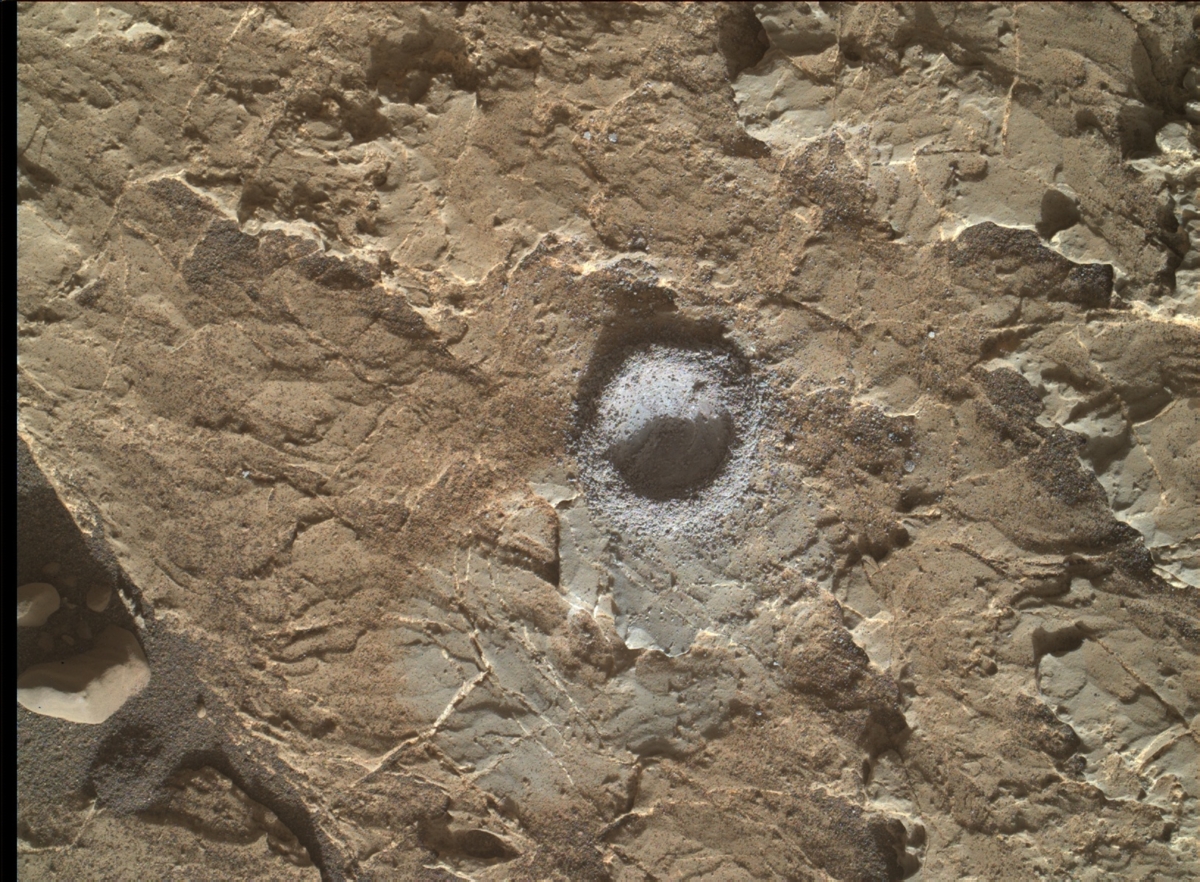
Just how hard is a rock and any way to tell ahead of drilling?
That’s the question raised by Roger Wiens, a geochemist at Los Alamos National Laboratory (LANL) in Los Alamos, New Mexico.
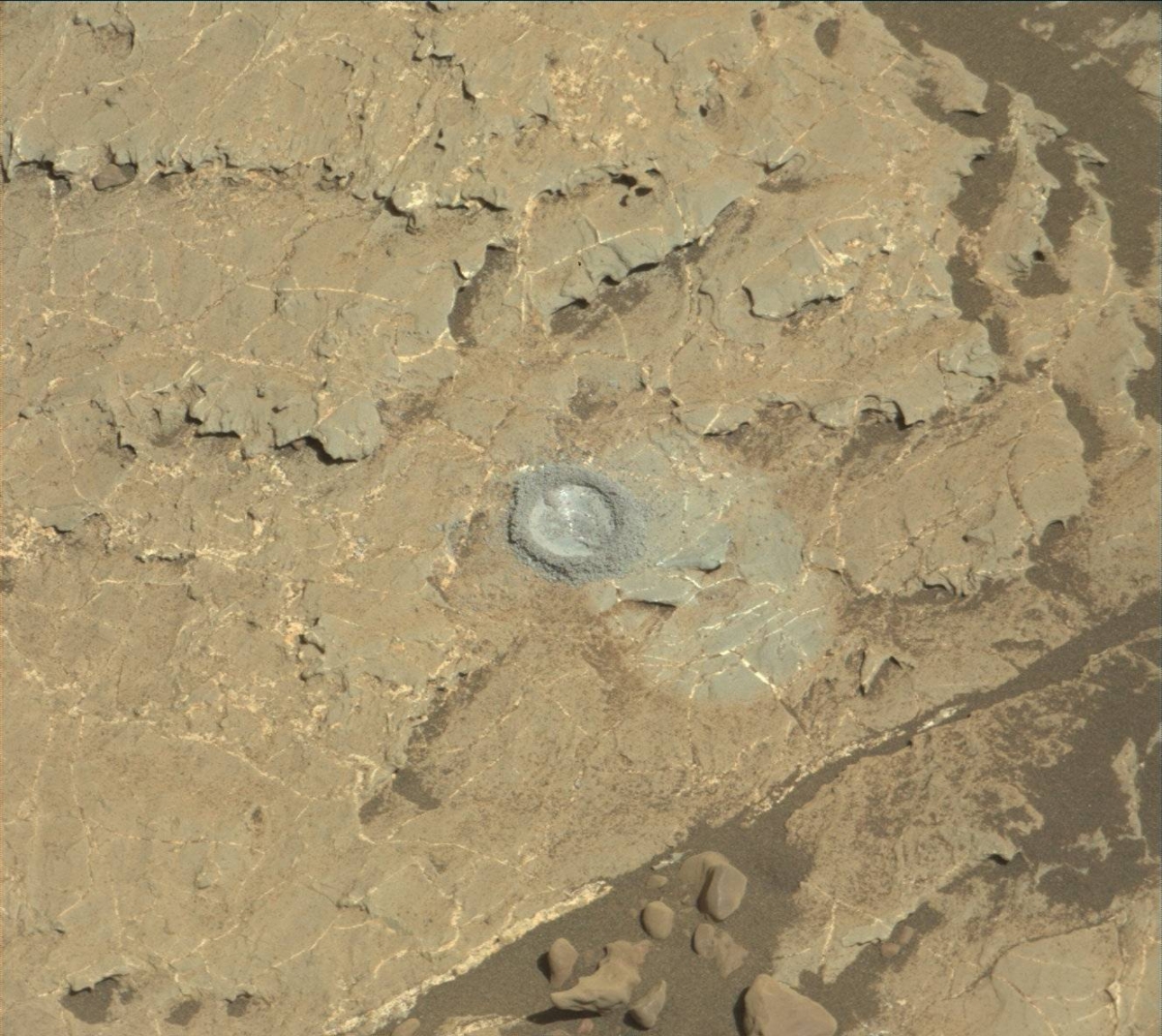
Curiosity Mastcam Right image taken on Sol 1983, March 5, 2018.
Credit: NASA/JPL-Caltech/MSSS
“Last week when the first Vera Rubin Ridge drill-hole attempts turned out to be too shallow at ‘Lake Orcadie’ discussion in the team turned to the question of: “How hard is that rock? Is there a way to know before starting the drill hole how hard the rock will be, so we can anticipate whether Curiosity’s new drill technique will be successful?”
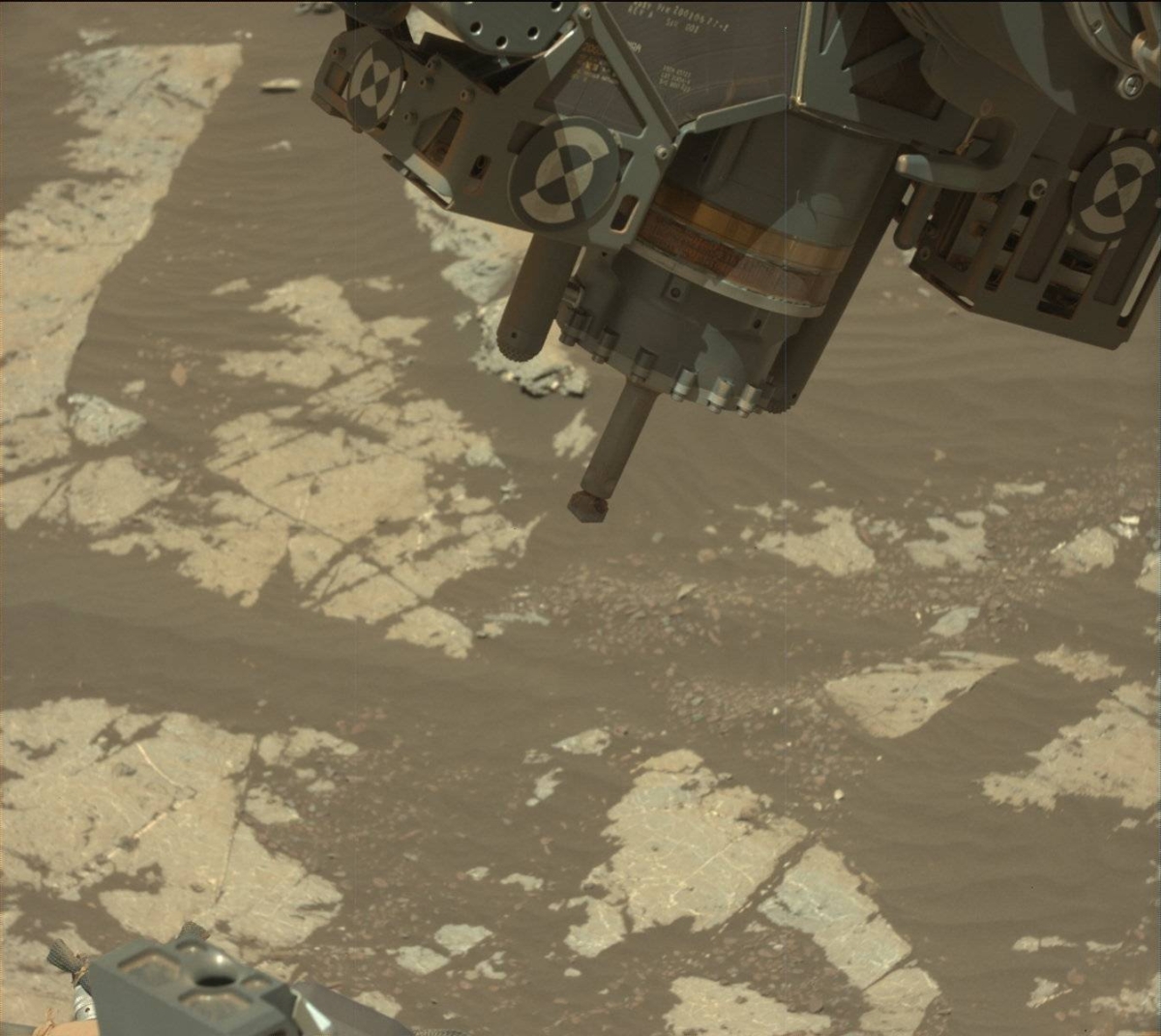
Curiosity Mastcam Left photo taken on Sol 1983, March 5, 2018.
Credit: NASA/JPL-Caltech/MSSS
Several indicators
Wiens reports that the rover team has several indicators of rock hardness:
a) retention of natural features such as craters,
b) the imprints of wheel marks on the rocks, when we see them,
c) scratch marks from the Dust Removal Tool (DRT) brush, and
d) laser pits from the rover’s Chemistry and Camera (ChemCam) instrument.
This turns out to be a lot of data, especially from ChemCam and the robot’s Mars Hand Lens Imager (MAHLI).
Mineral hardness scales
“However, no one has yet made a quantitative study of rock hardness vs. apparent laser pit depth or brush scratches,” Wiens adds. “The problem is that other factors can affect how deep the pit or scratches look in our images, especially including lighting angle and rock texture and color, but also, for the laser, the distance from the rover and the focus quality. Even so, a study to determine apparent laser pit depth or scratch depth vs. hardness may be useful.”
The classic Mohs mineral hardness scale, Wiens points out, was developed over 200 years ago, based on ten readily available minerals ranging from talc (hardness of 1) to diamond (hardness of 10).
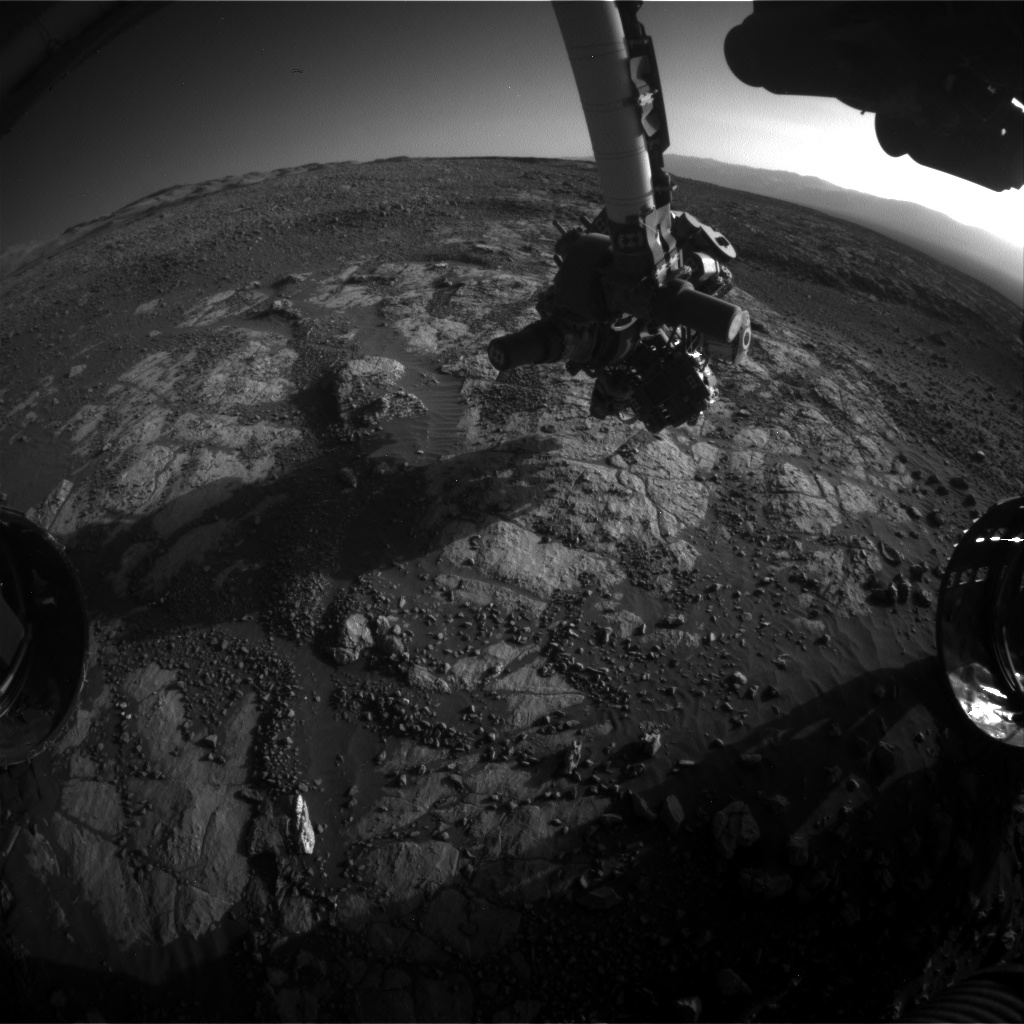
Curiosity Front Hazcam Right B image acquired on Sol 1984, March 6, 2018.
Credit: NASA/JPL-Caltech
“It is still used because of its simplicity…you can buy a kit with each of the representative minerals and try using them to scratch the mineral that you want to test. However, for quantitative measurements, most studies use the Vickers scale, which was defined 100 years ago and is reported in kilogram per square millimeter. It is traditionally measured by the size of the indentation left from a diamond tip with a given force applied,” Wiens says.
Back to driving
Meanwhile, back on Mars, Curiosity is now performing Sol 1985 tasks.
The robot is slated to drive away from it current hard-rock location, with the first drive since Sol 1962, planned to go backwards for almost 100 feet (30 meters) in a northeasterly direction.
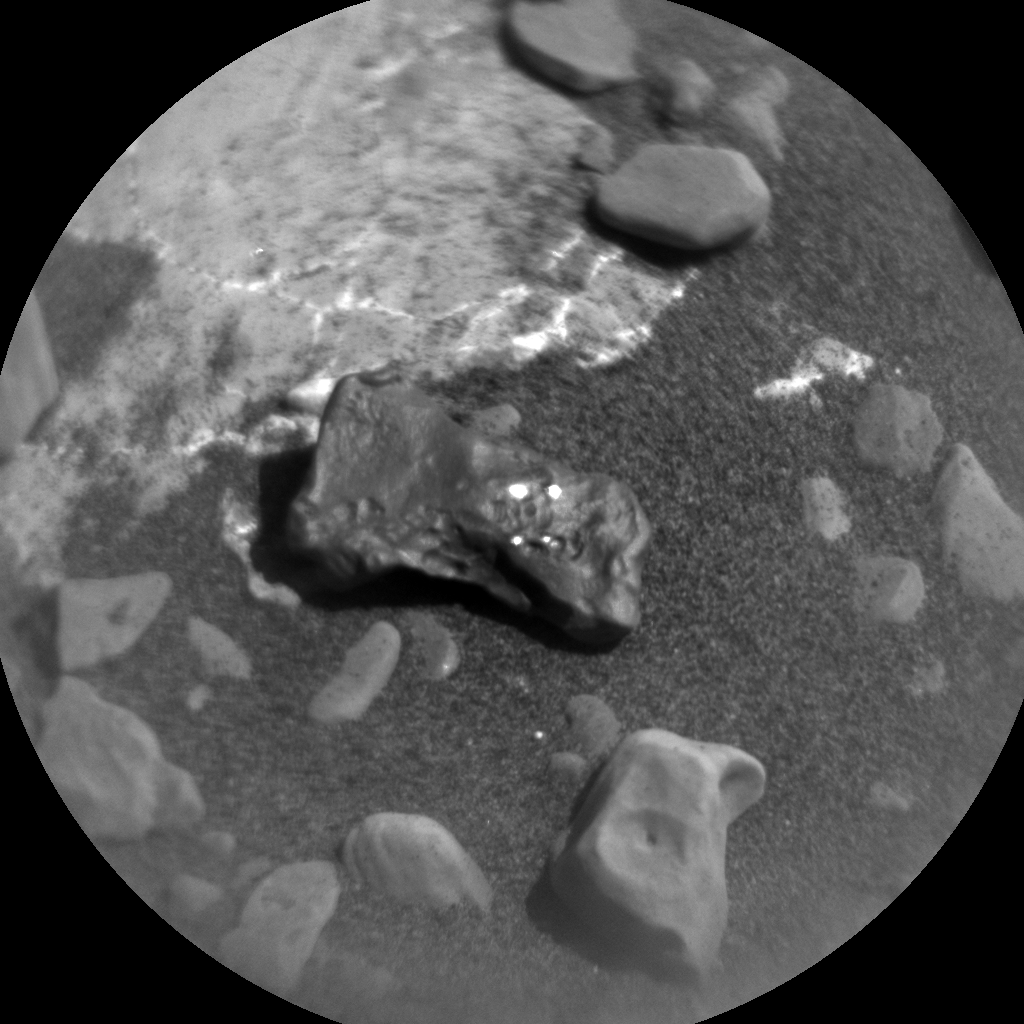
Curiosity’s Chemistry and Camera (ChemCam) Remote Micro-Imager took this photo of meteorite, “Ben Nevis_2” – a small iron clast with four bright glints, which are sunlight reflections off the metal made bare by previous ChemCam laser shots. Image taken on March 3, 2018, Sol 1981.
Credit: NASA/JPL-Caltech/LANL
Meteorite observations
“Prior to leaving this site, ChemCam and Mastcam will make one more observation each of a meteorite, “Ben Nevis_2” – a small iron clast with four bright glints, which are sunlight reflections off the metal made bare by previous ChemCam laser shots,” Wiens reports.
Also on the plan, Curiosity’s Mastcam will make crater rim extinction and basic tau (atmospheric visibility) observations. After the drive Mastcam, Hazcam, and Navcam will document the new rover surroundings.
Mt. Sharp mosaic
Navcam will take a zenith movie and a 360 degree observation. Mastcam will also take a clast survey image, and ChemCam will take a remote micro-imager (RMI) mosaic of the Yardang portion of Mt. Sharp.
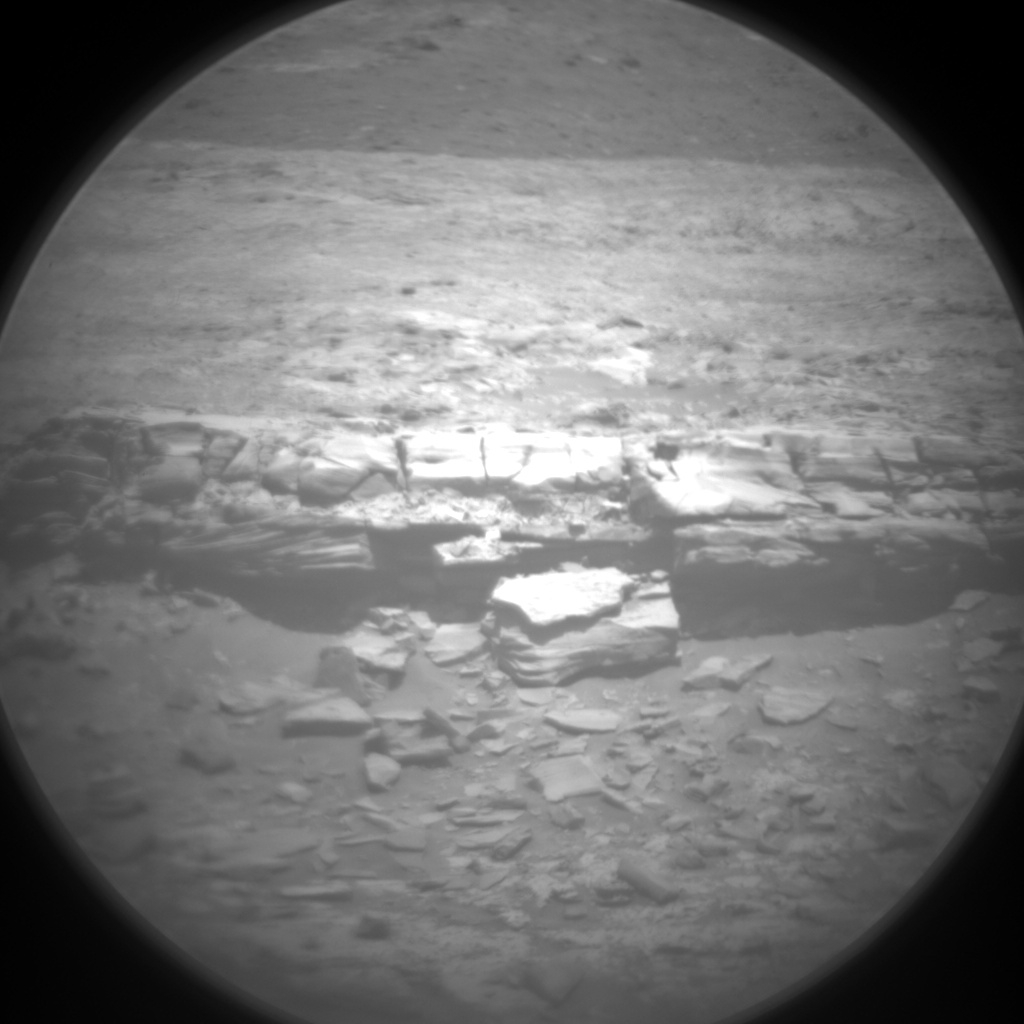
ChemCam Remote Micro-Imager photo taken on Sol 1984, March 6, 2018.
Credit: NASA/JPL-Caltech/LANL
Wiens says that use of and will use Autonomous Exploration for Gathering Increased Science (AEGIS) software to select an outcrop target near the rover for chemical analysis.
Lastly, the rover’s Dynamic Albedo of Neutrons (DAN), Mars Descent Imager (MARDI), Radiation Assessment Detector (RAD), and Rover Environmental Monitoring Station (REMS) will also take data.

Credit: ASU/Emerge
Welcome to Luna City, a bustling metropolis on the Moon in the year 2175.
Arizona State University (ASU) in Tempe is offering an off-world experience via Emerge – a free art, science and technology festival that explores the future in evocative ways through an annual public event.
Emerge will transform the state-of-the-art Galvin Playhouse on ASU’s Tempe campus into a rich, immersive experience grounded in space-science research and the inspirational vision of the group’s Writer at Large, Kim Stanley Robinson.
Hear, touch and play
According to the Luna City website, come see, hear, touch and play the future in their unfolding story of human habitation beyond Planet Earth!
“Luna City’s singular history and authentic reality is a synthesis of art and space science, your gateway into a complex vision of a human future lived in a place separate from yet intimately connected with our own.”
This immersive experience is available March 17-18.

Credit: NASA
Commonplace commons
In this 2018 festival ideas about “habitat” are explored, in the form of an immersive visit to a Moon habitation, Luna City.
The intent of the effort is to curate a set of experiences that create a rich multi-threaded texture of the alien-yet-familiar world of human life
in Luna City in the year 2175, a life in which living in space and on other planets has become commonplace.
For more information on this event, a guided tour of a Luna City neighborhood, as well as a live podcast recording by Eric Molinsky, host of Imaginary Worlds, and a presentation from Writer At Large, Kim Stanley Robinson, go to:
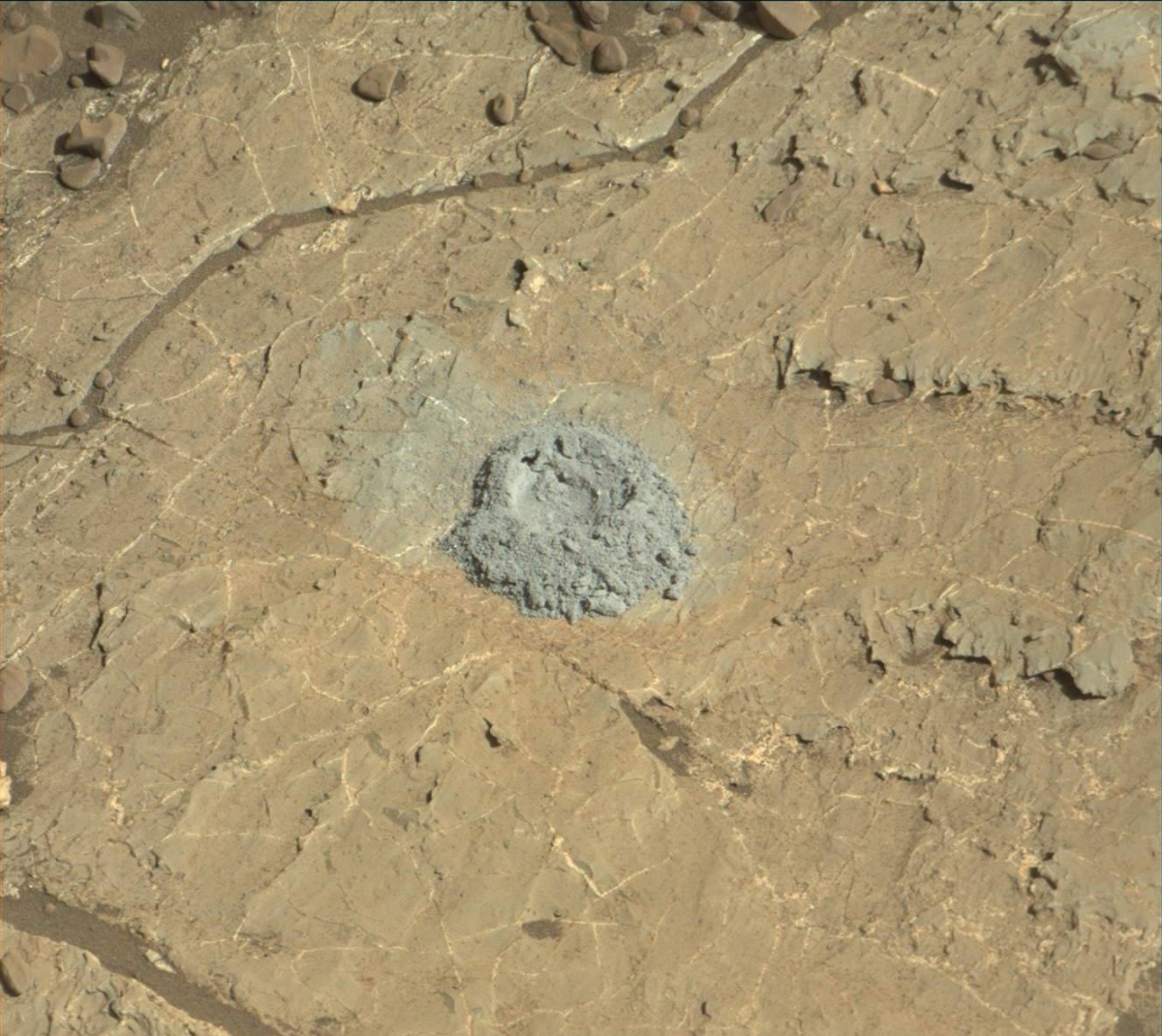
Curiosity Mastcam Right image taken on Sol 1979, March 1, 2018.
Credit: NASA/JPL-Caltech/MSSS
“Vera Rubin Ridge is as hard as a rock!”
That’s the call from Scott Guzewich, an atmospheric scientist at NASA’s Goddard Space Flight Center in Greenbelt, Maryland.
“After two drilling attempts, Curiosity’s drill was not able to dig into the bedrock sufficiently to collect a sample of rock at this location,” Guzewich reports.
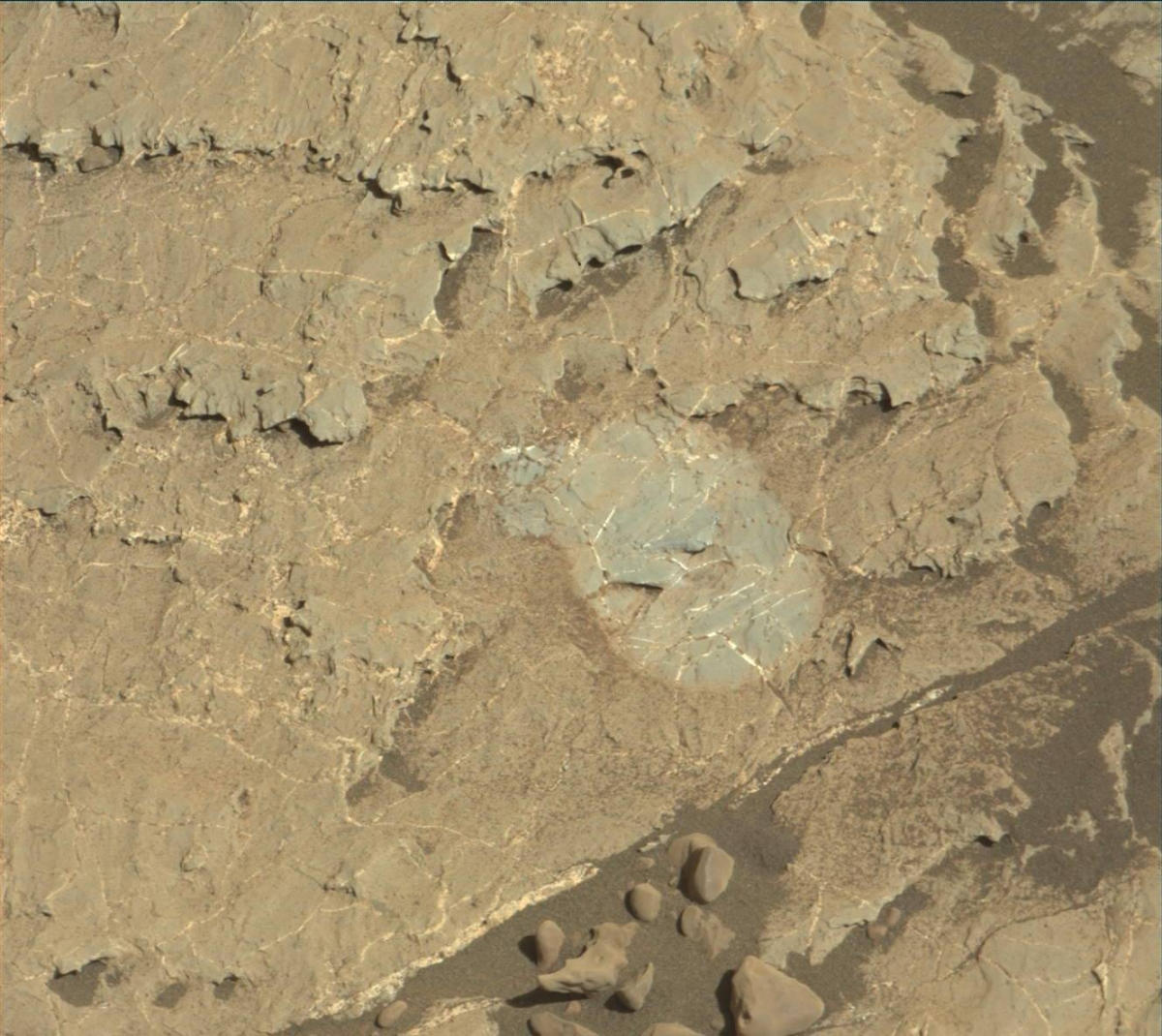
Curiosity Mastcam Right photo acquired on Sol 1980, March 3, 2018.
Credit: NASA/JPL-Caltech/MSSS
Engineers for the robot are continuing to refine the rover’s new drilling method. “In the future, this might include adding percussion, which could enable drilling into harder rock,” Guzewich adds.
Drill tailings
Curiosity is currently carrying out Sol 1984 science duties.
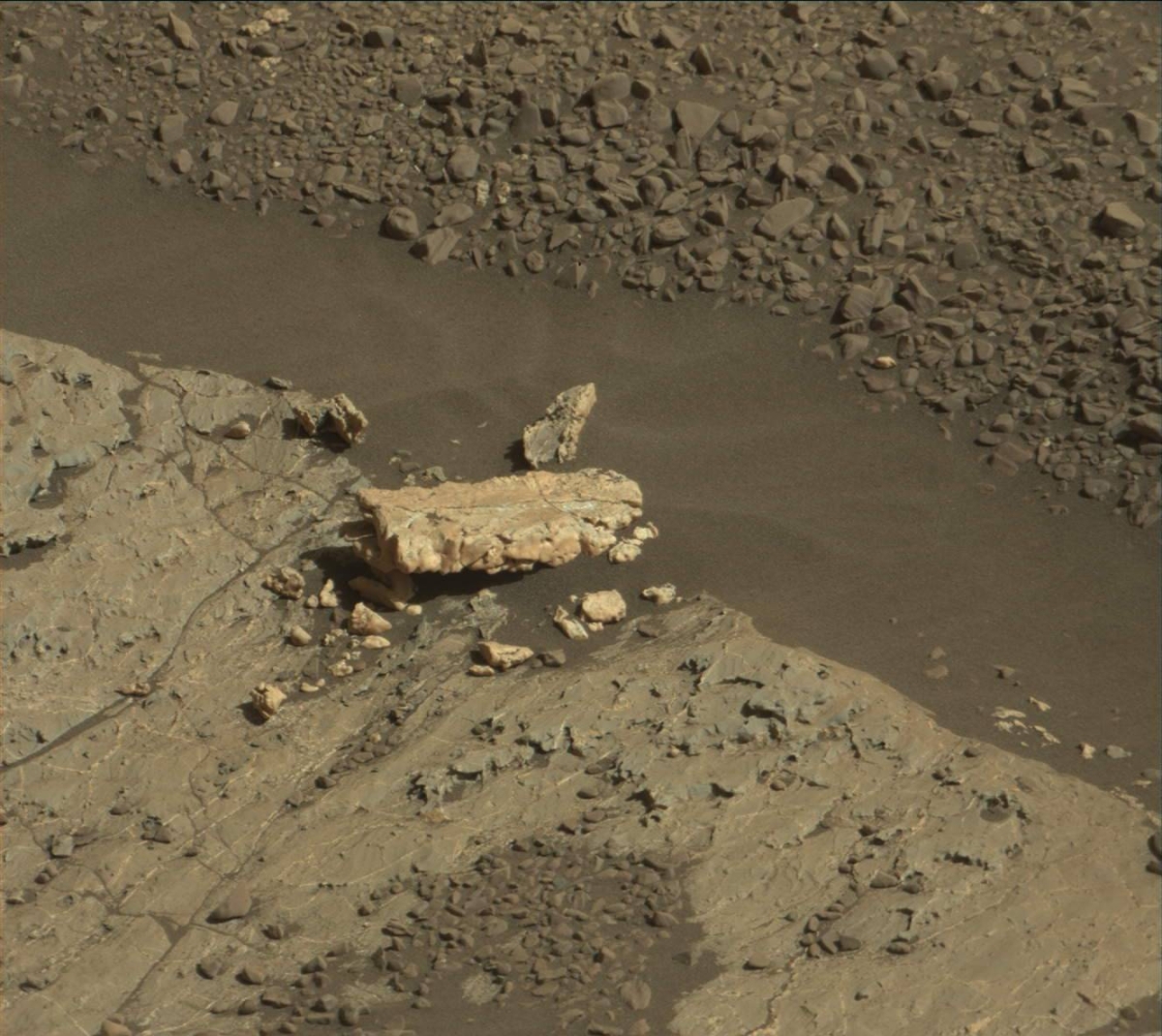
Curiosity Mastcam Right image taken on Sol 1981, March 3, 2018.
Credit: NASA/JPL-Caltech/MSSS
Meanwhile, the Curiosity science team scoped out a series of Mastcam and Chemistry and Camera (ChemCam) “passive” observations that included scans by the instrument’s laser-induced breakdown spectroscopy (LIBS) device of the attempted drill hole at “Lake Orcadie 2.”
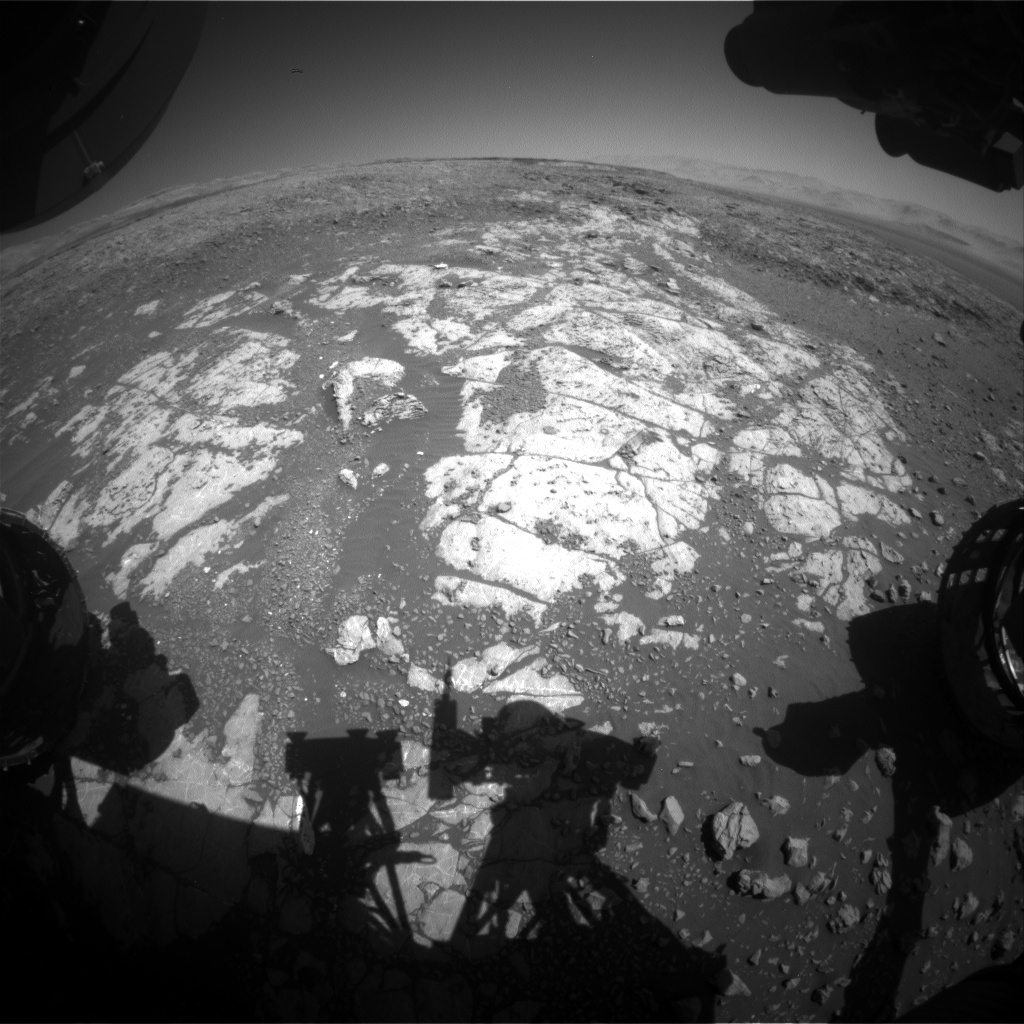
Curiosity Front Hazcam Right B image taken on Sol 1983, March 5, 2018.
Credit: NASA/JPL-Caltech
In addition, the plan called for contact science on the drill “tailings” (the powdered bits of rock ground up by the drill) with the rover’s Mars Hand Lens Imager (MAHLI) and Alpha Particle X-Ray Spectrometer (APXS).
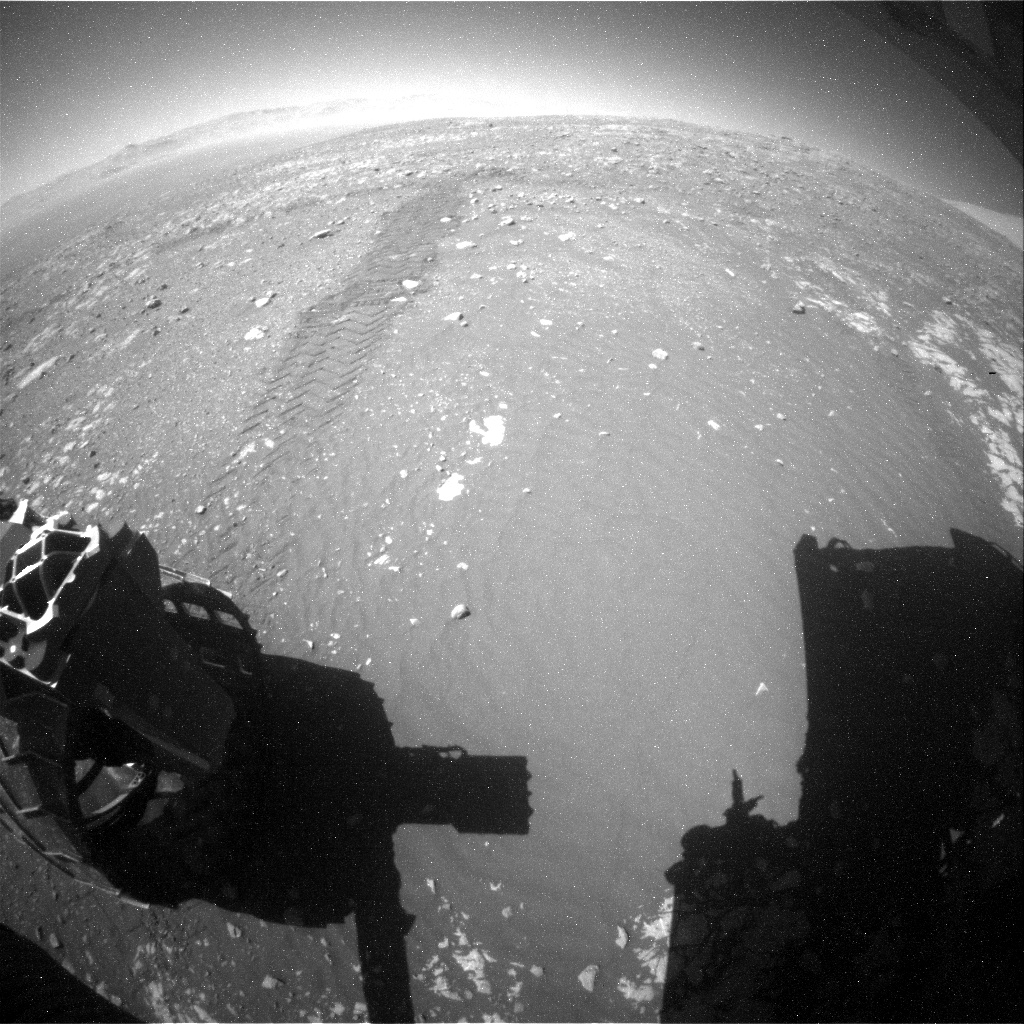
Curiosity Rear Hazcam Right B photo acquired on Sol 1983, March 5, 2018.
Credit: NASA/JPL-Caltech
“A ChemCam passive observation uses the instrument’s ability to detect different wavelengths of light to get a sense of a rock’s composition without using the laser to vaporize tiny bits of the rock surface,” Guzewich points out.
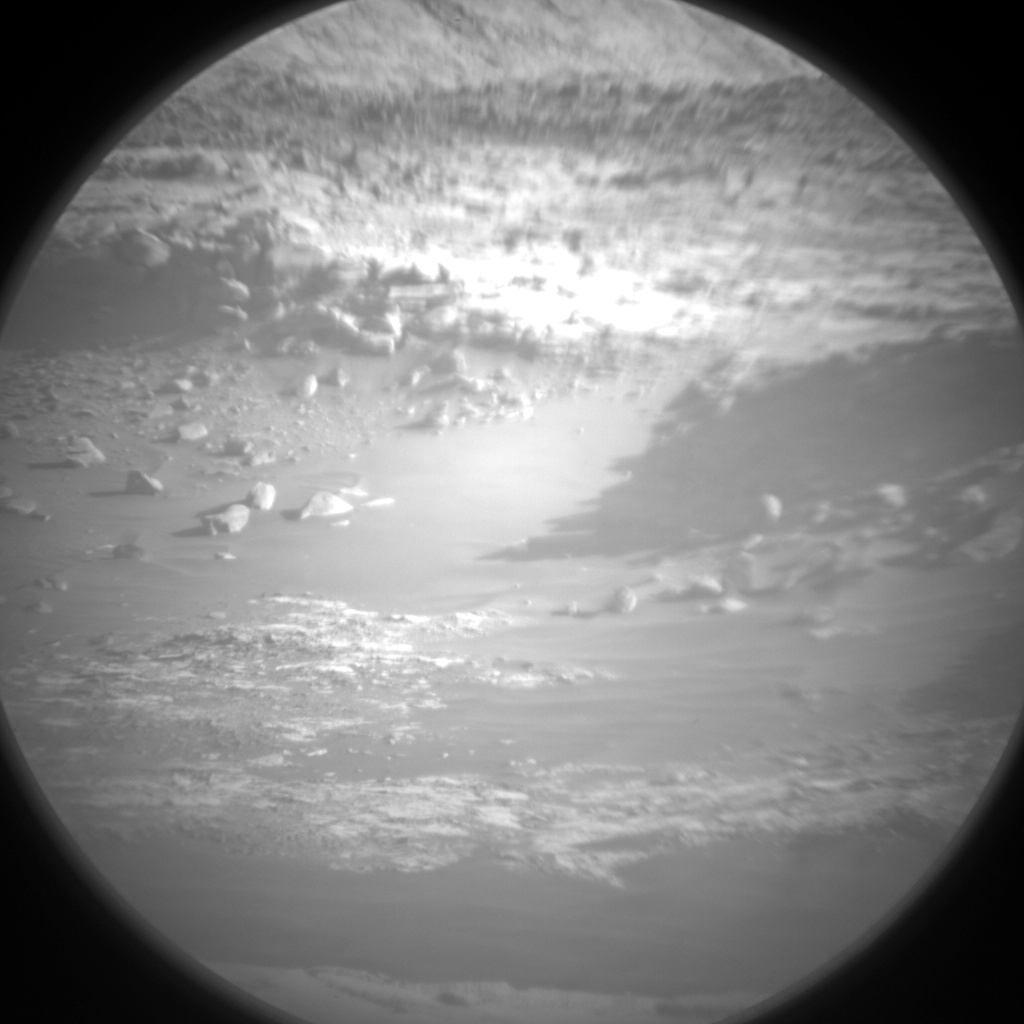
Curiosity ChemCam Remote Micro-Imager photo acquired on Sol 1981, March 3, 2018.
Credit: NASA/JPL-Caltech/LANL
The team also planned another trick with ChemCam, Guzewich concludes: taking long-distance image sequences of Peace Vallis on the far side of Gale Crater and a portion of the clay unit that represents part of Curiosity’s future agenda.

Artist’s view of the James Webb Space Telescope (JWST) in space, up and operating tackling a full agenda of space science conquests.
Credit: Northrop Grumman
The U.S. Government Accountability Office (GAO) has issued JAMES WEBB SPACE TELESCOPE: Integration and Test Challenges Have Delayed Launch and Threaten to Push Costs Over Cap.
The James Webb Space Telescope, the planned successor to the Hubble Telescope, is one of NASA’s most complex and expensive projects.
NASA recently announced that JWST’s launch would be delayed several months, from October 2018 to no later than June 2019, because components of the telescope are taking longer to integrate than planned.
Delayed again
Based on the amount of work NASA has to complete before JWST is ready to launch, the GAO report explains that it’s likely the launch date will be delayed again. If that happens, the project will be at risk of exceeding the $8 billion cost cap set by Congress.
The project’s Standing Review Board will conduct an independent review of JWST’s schedule status in early 2018 to determine if the June 2019 launch window can be met.

JWST’s combined science instruments and optical element recently completed 100 days of thermal vacuum testing inside NASA Johnson Space Center’s Chamber A. Engineers are seen by the hardware shortly after it emerged from the huge test facility on December 1, 2017.
Credit: NASA/Chris Gunn
To read the GAO Highlights Page on this new JWST report, go to:
https://www.gao.gov/assets/700/690412.pdf
The Full Report can be found at:
https://www.gao.gov/assets/700/690413.pdf
Too big to fail?
Take a look at my new Scientific American story for details about the JWST:
Is the James Webb Space Telescope “Too Big to Fail?”
Backers of NASA’s next great observatory contemplate its worst-case scenarios
By Leonard David on December 29, 2017
https://www.scientificamerican.com/article/is-the-james-webb-space-telescope-too-big-to-fail/
For a video look at JWST, go to Northrop Grumman overview published on Jan 24, 2017 at:
https://www.youtube.com/watch?v=v6ihVeEoUdo
Witness testimony
Lastly, a U.S. House of Representatives Space Subcommittee hearing, “NASA’s Next Four Large Telescopes, was held on Wednesday, December 6, 2017 with witnesses spotlighting the JWST and other space telescope projects:

“The current assessment of JWST’s status is
that integration and test will take significantly longer than
planned. The result is a launch schedule delay and the
consumption of most of the remaining funding reserves. In my
opinion, the launch date and required funding cannot be
determined until a new plan is thoughtfully developed and
verified by independent review.” – Thomas Young
Credit: Inside Outer Space
— Thomas Zurbuchen, Associate Administrator, Science Mission Directorate, National Aeronautics and Space Administration
— Cristina Chaplain, Director, Acquisition and Sourcing Management, U.S. Government Accountability Office
— Thomas Young, Former Director, Goddard Space Flight Center, NASA; Former President and Chief Operating Officer, Martin Marietta Corporation
— Matt Mountain, President, Association of Universities for Research in Astronomy
— Chris McKee, Professor Emeritus of Astronomy, Physics, University of California, Berkeley, on behalf of the National Academies of Sciences, Engineering and Medicine
To view that hearing, go to:
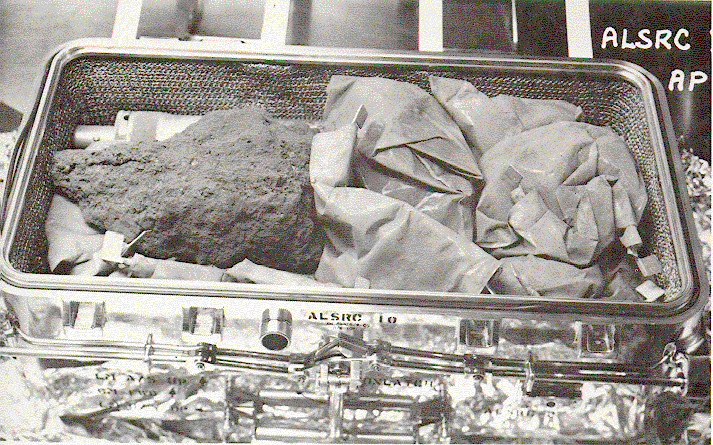
One of the Apollo 16 sample boxes being opened in the Lunar Receiving Laboratory on Earth. The box contains a large rock and many small sample bags.
Credit: NASA/Johnson Space Center
Apollo moonwalkers between 1969 and 1972 brought back to Earth a total of nine containers of lunar materials that were sealed on the lunar surface. Two of the larger sealed samples were collected from Apollo 17.
Three sealed samples from Apollo 15, 16, and 17 remain unopened.
According to several key lunar researchers, now is the right time to consider opening at least one of the still sealed sample containers.
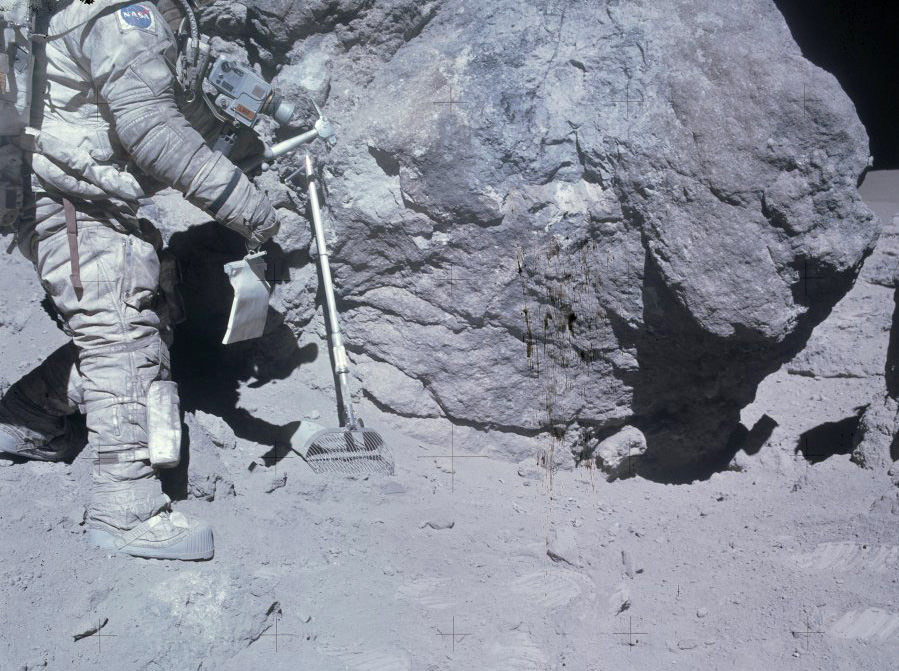
Apollo 16 astronaut Charlie Duke collects lunar samples during moon walk.
Credit: NASA/Johnson Space Center
Pristine and unstudied
Apollo’s set of unopened samples contain pristine and unstudied lunar material.
Moreover, given that the total sample mass within the unopened containers of moon specimens exceeds projected masses returned by future robotic missions, each of the unopened samples should be treated as an individual lunar mission, lunar experts contend.

Apollo 17 mission in December 1972 surveyed the Taurus-Littrow highlands and valley area. This site was picked as a location where rocks both older and younger than those previously returned from other Apollo missions might be found.
Credit: NASA/Johnson Space Center
For more information on this idea, please go to my new Space.com story at:
Should We Open Some Sealed Apollo Moon Samples?
March 5, 2018 07:15am ET
https://www.space.com/39870-should-we-open-sealed-apollo-moon-samples.html
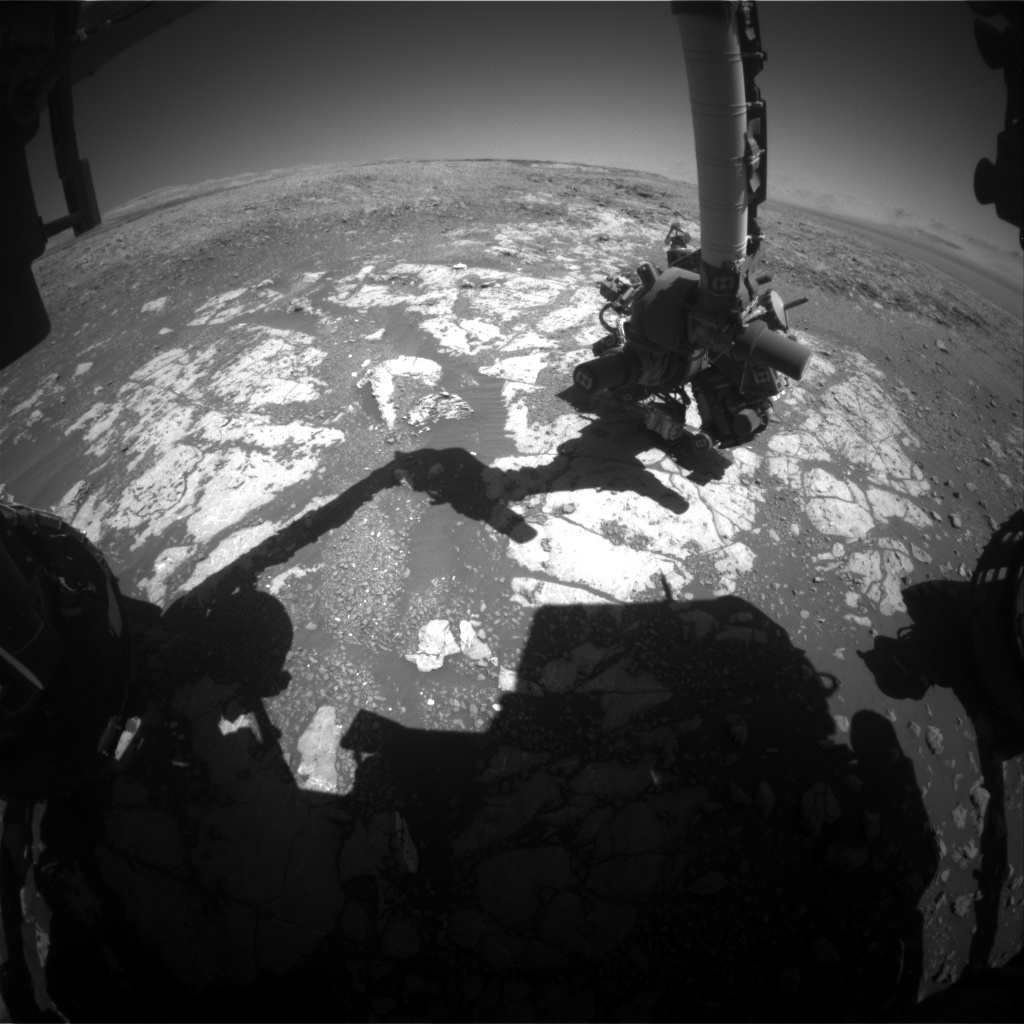
Curiosity Front Hazcam Left B image taken on Sol 1980, March 2, 2018.
Credit: NASA/JPL-Caltech
NASA’s Curiosity Mars rover is now carrying out Sol 1982 science duties.
The Red Planet robot is getting back in gear in terms of reactivating drilling operations reports Ken Herkenhoff, a planetary geologist at the USGS in Flagstaff, Arizona.
Feed-extended drilling
“All of the data returned for the second drill target, called “Lake Orcadie 2,” support the decision to attempt to acquire sample at that location using ‘feed-extended’ drilling,” Herkenhoff notes. “So the weekend plan is focused on drilling, which is planned for the second sol (1982).”
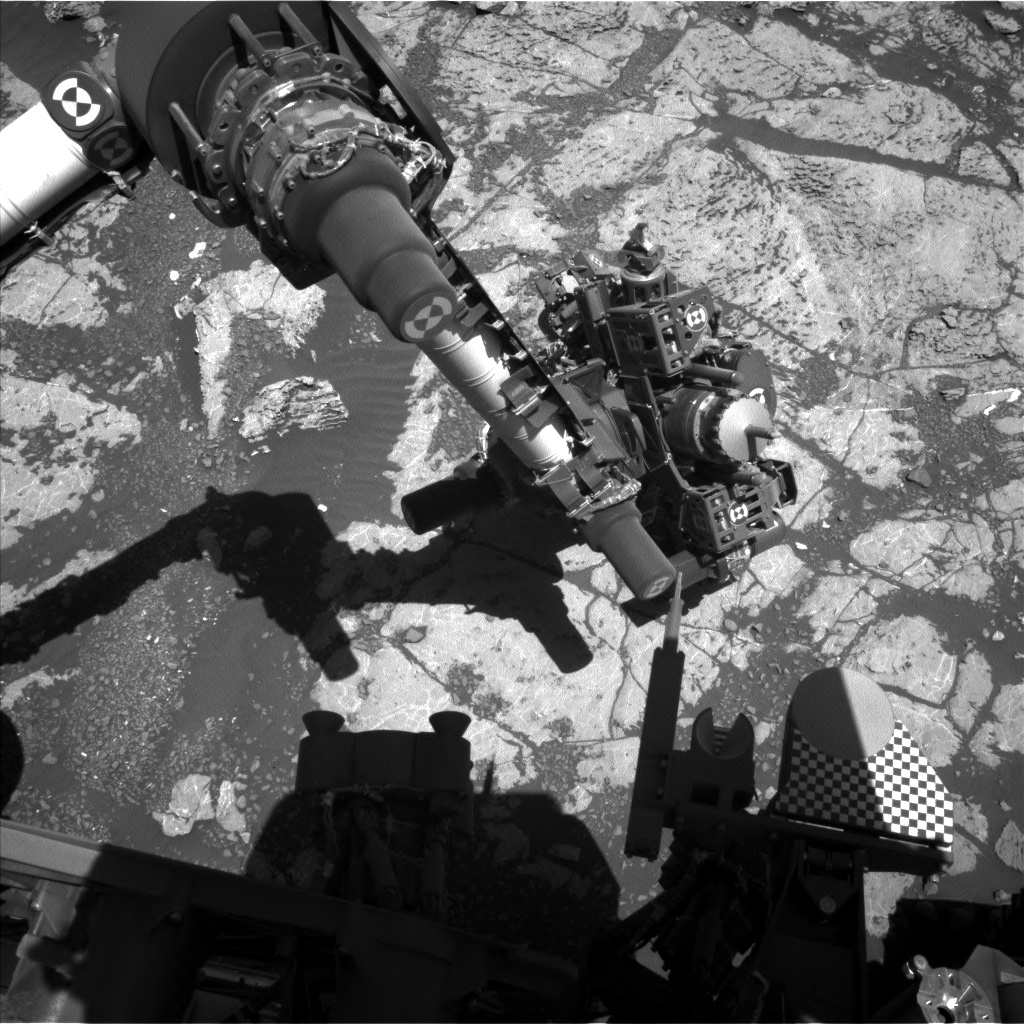
Curiosity Navcam Left B photo taken on Sol 1980, March 2, 2018.
Credit: NASA/JPL-Caltech
But first, on Sol 1981, the rover’s Chemistry and Camera (ChemCam) and Right Mastcam were to observe a potential location for dropping sample in the future as well as observe targets named “Ben Nevis” and “Moray.”
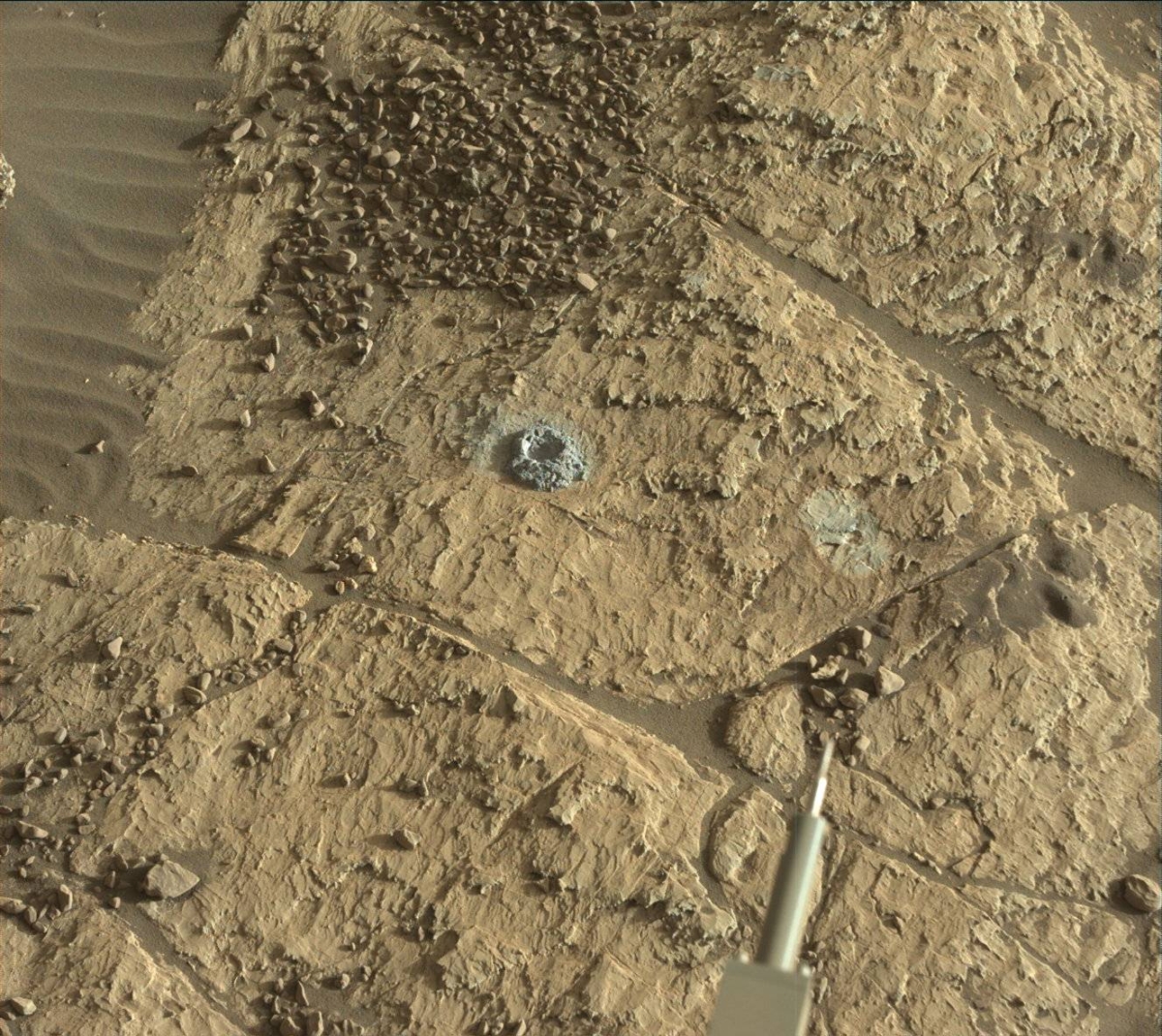
Curiosity Mastcam Left image acquired on Sol 1979, March 1, 2018.
Credit: NASA/JPL-Caltech/MSSS
Alluvial fan mosaics
“Mastcam will then measure dust in the atmosphere and Navcam will search for dust devils. Later that afternoon, Right Mastcam will look for changes in the sieved and unsieved Ogunquit Beach dump piles,” Herkenhoff adds, and the ChemCam Remote Micro-Imager (RMI) and Right Mastcam will acquire mosaics of the alluvial fan near the north rim of Gale Crater.
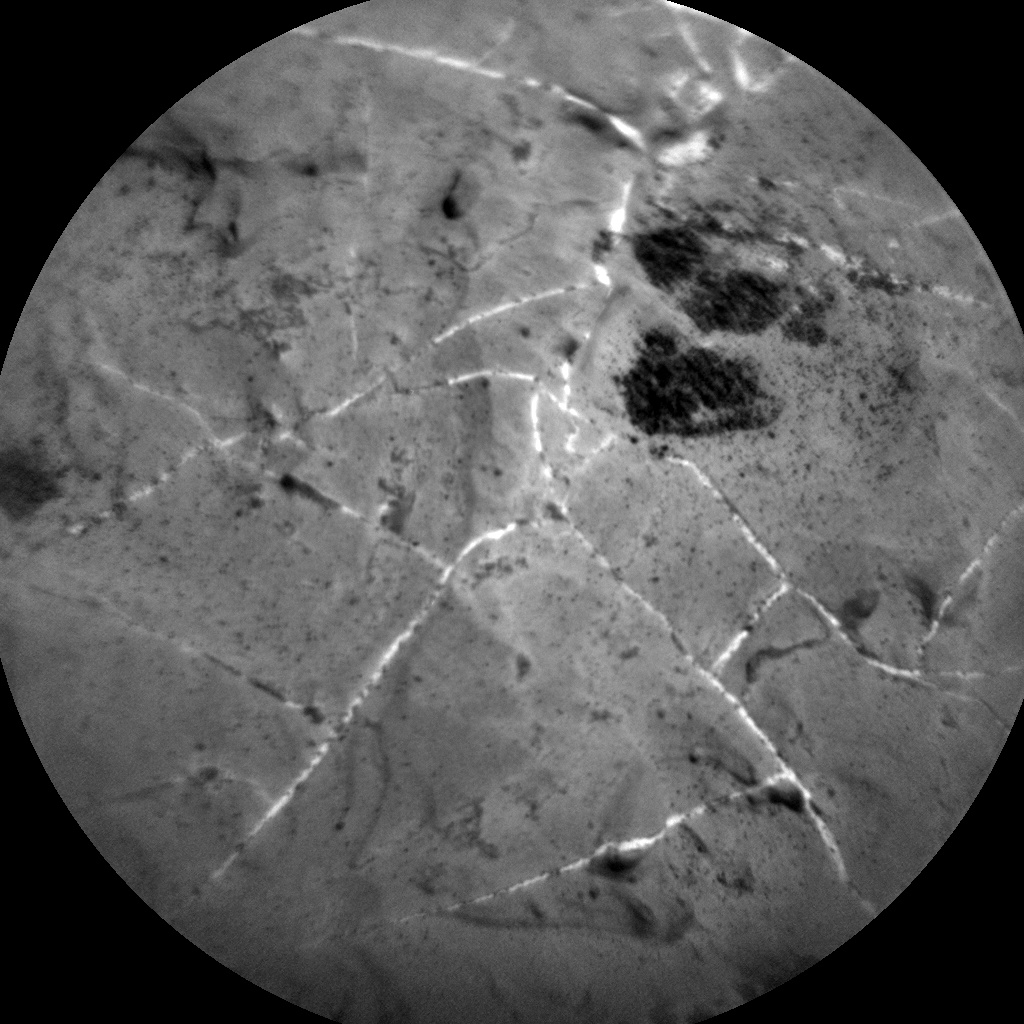
Curiosity ChemCam Remote Micro-Imager photo taken on Sol 1981, March 3, 2018.
Credit: NASA/JPL-Caltech/LANL
Argon measurement
Overnight, the robot’s Alpha Particle X-Ray Spectrometer (APXS) will integrate on air rather than surface materials to measure the amount of argon in the atmosphere, which is known to vary seasonally, based on older Mars Exploration Rover (MER) APXS data.
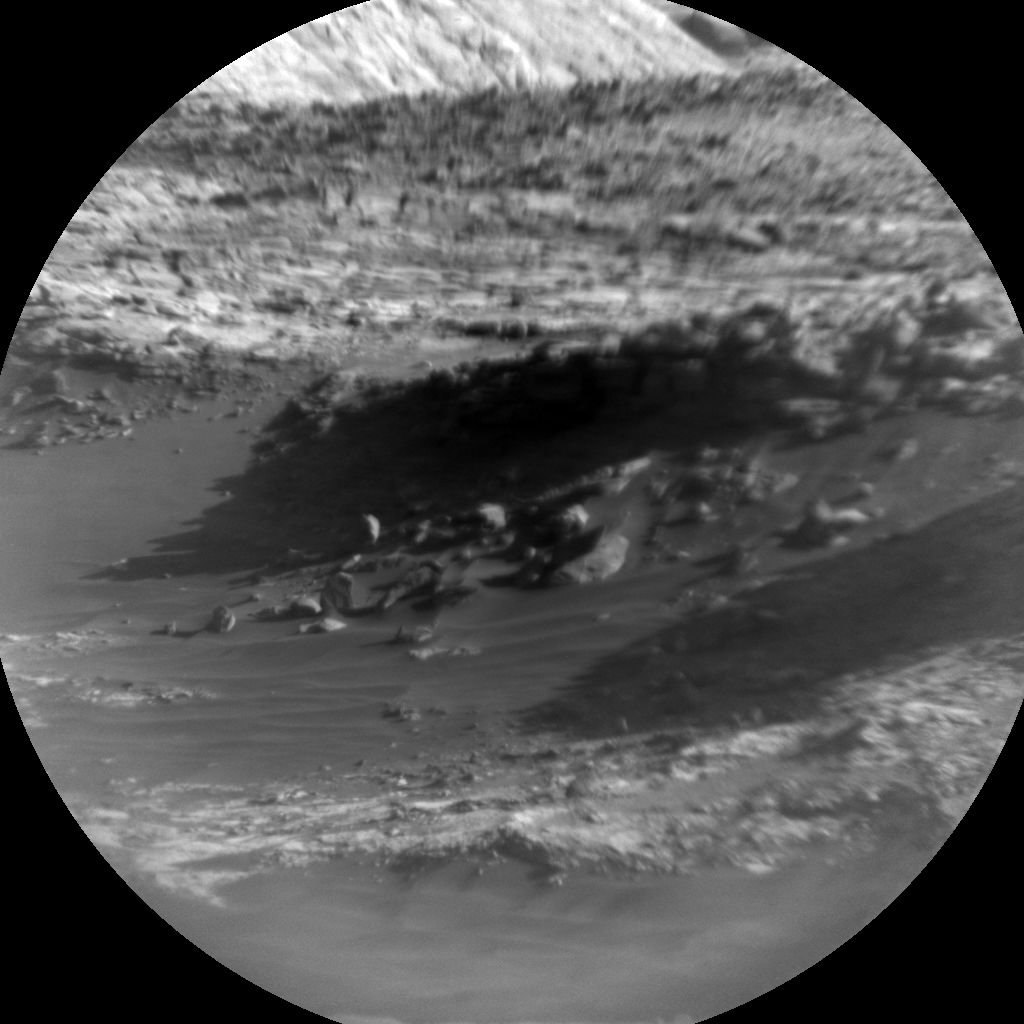
Curiosity ChemCam Remote Micro-Imager photo taken on Sol 1981, March 3, 2018.
Credit: NASA/JPL-Caltech/LANL
The feed-extended drilling dominates the Sol 1982 plan, with only Rover Environmental Monitoring Station (REMS) and Dynamic Albedo of Neutrons (DAN) activities running in parallel.
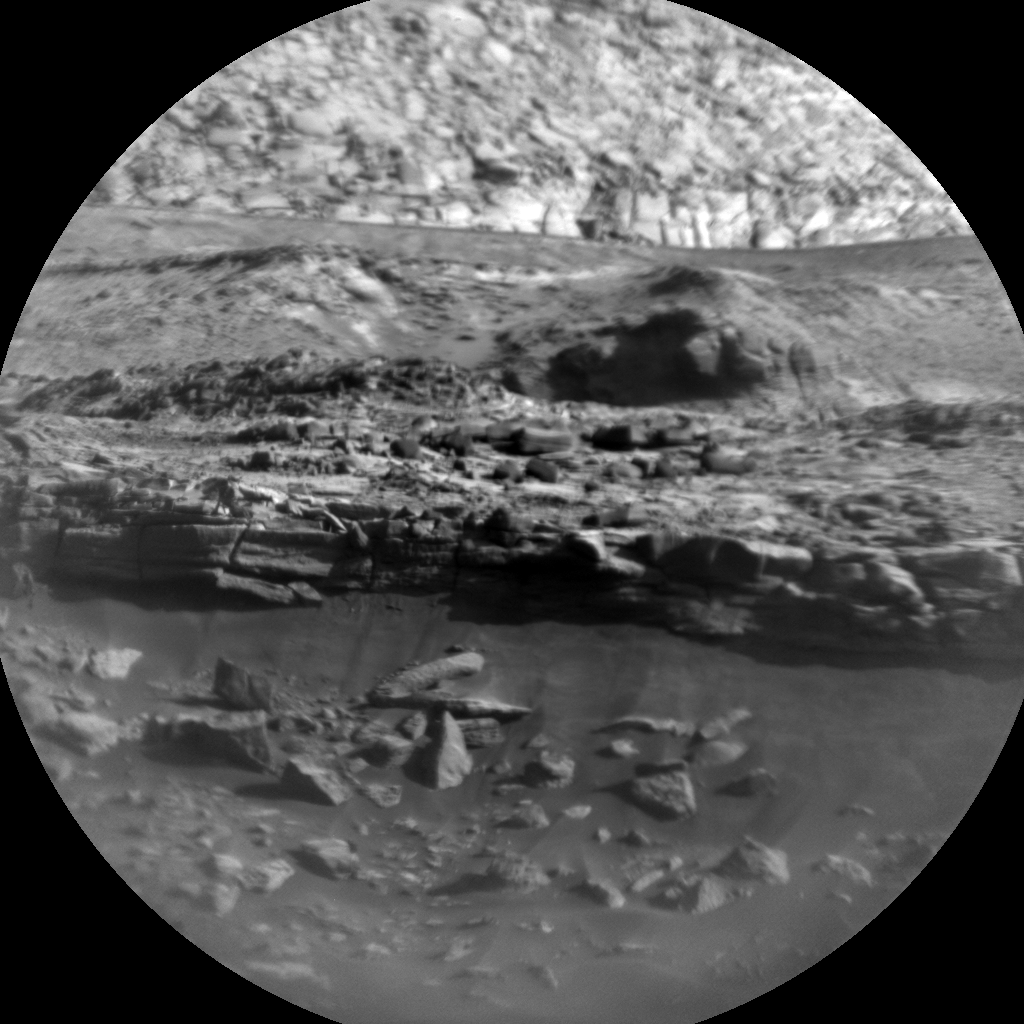
Curiosity ChemCam Remote Micro-Imager photo taken on Sol 1981, March 3, 2018.
Credit: NASA/JPL-Caltech/LANL
“The drill will be retracted from the hole, and Mastcam will take pictures of the hole and the drill bit on Sol 1983. Then the rover will sleep in preparation for more work on Monday,” Herkenhoff points out. “Of course we are all hoping that the drilling goes well…we’re looking forward to studying the drill hole and sample!”
Troubleshooting
After more than a year without the use of the Curiosity Mars rover’s drill, engineers have devised a workaround and tested it for the first time on the Red Planet. More testing of the drill method is planned for the future. The new drill method produced a hole on February 26 in a target named Lake Orcadie. The hole marks the first operation of the rover’s drill since a motor problem began acting up more than a year ago.
For an informative video on Curiosity’s workaround drill method, go to:

