Archive for February, 2018
 Author:
  February 14th, 2018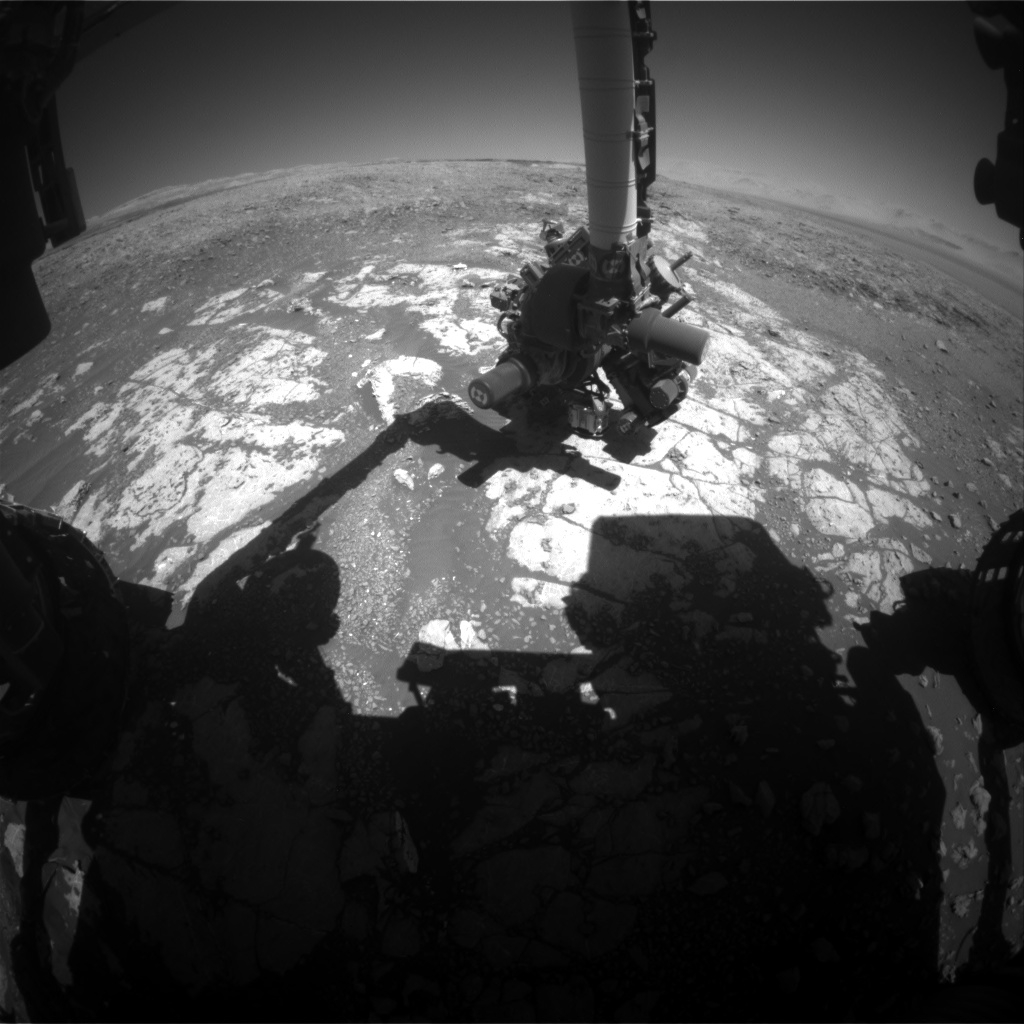
Curiosity Front Hazcam Left B image taken on Sol 1964, February 14, 2018.
Credit: NASA/JPL-Caltech
Now deep into Sol 1965 operations, the NASA Curiosity Mars rover is checking out a site where the robot will restart drilling duties.
Mark Salvatore, a planetary geologist from the University of Michigan in Dearborn, reports that plans for the rover have been “a bit on the thin side.”
The reason is that Curiosity’s power allotment is being dedicated to activities associated with the Sample Analysis at Mars (SAM) instrument. “As a result, Curiosity only has about 50 minutes to make observations and measurements of the surrounding workspace,” Salvatore adds, “but the team did a great job in packing it full of great observations!”
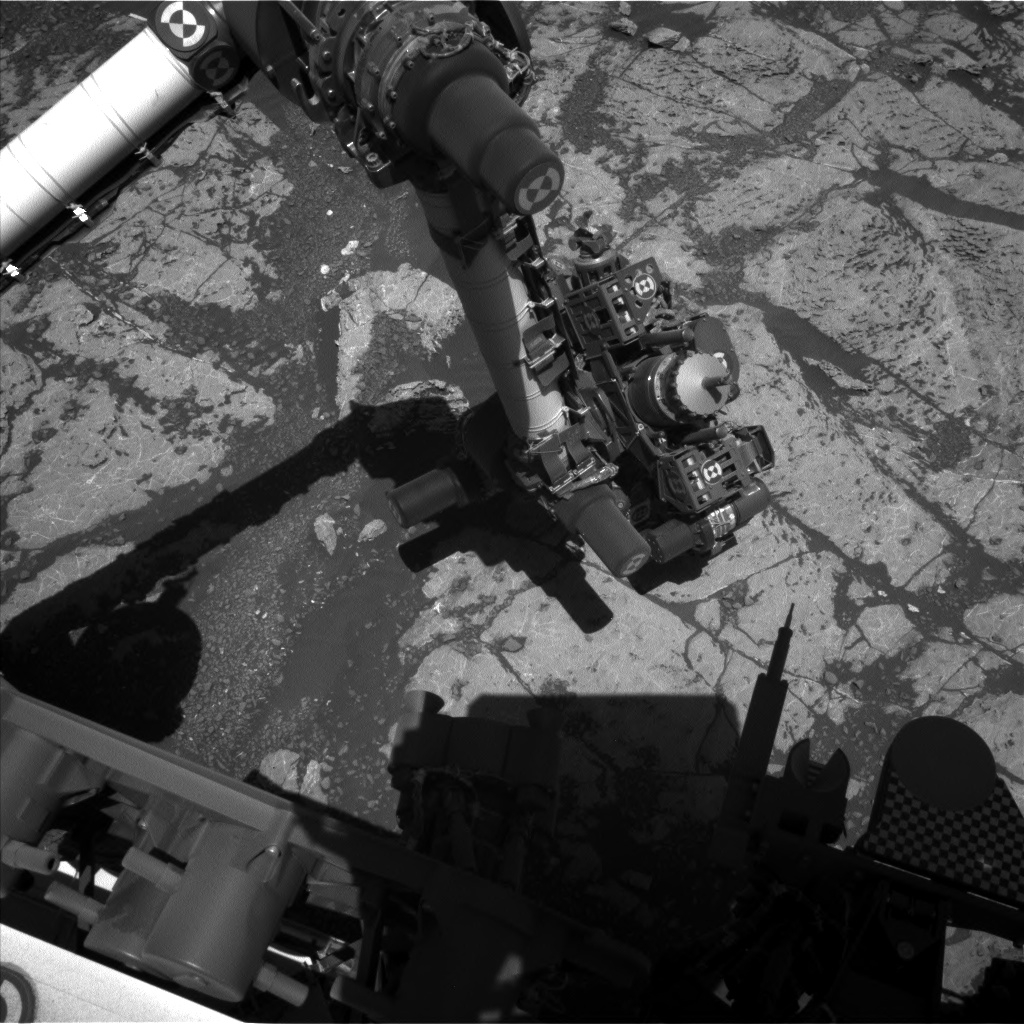
Curiosity Navcam Left B image acquired on Sol 1964, Feburary 14, 2018.
Credit: NASA/JPL-Caltech
Safe to drill
A to-do list of Sol 1964 tasks included: Mastcam’s multispectral imaging capabilities to image a recently brushed and analyzed target named “Newmachar,” followed by a calibration image, and then two additional multispectral observations of two vein targets named “St. Kilda” and “Benbecula.”
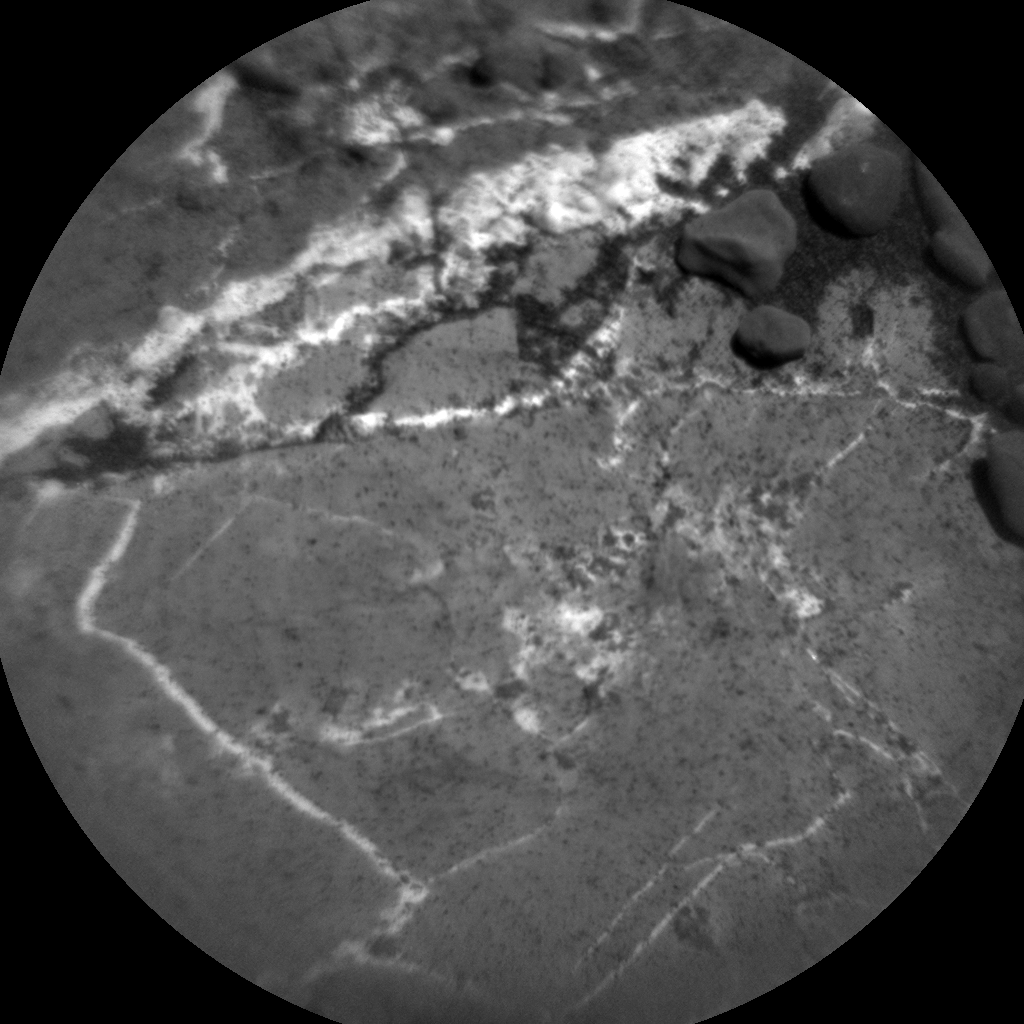
Curiosity ChemCam Remote Micro-Imager photo taken on Sol 1964, February 14, 2018.
Credit: NASA/JPL-Caltech/LANL
Salvatore notes that Mastcam was slated to then perform some additional stereo imaging to assess the rover’s workspace “and to acquire enough data for the rover engineers to determine whether this area is safe for our first use of the drill since the Fall of 2016!”
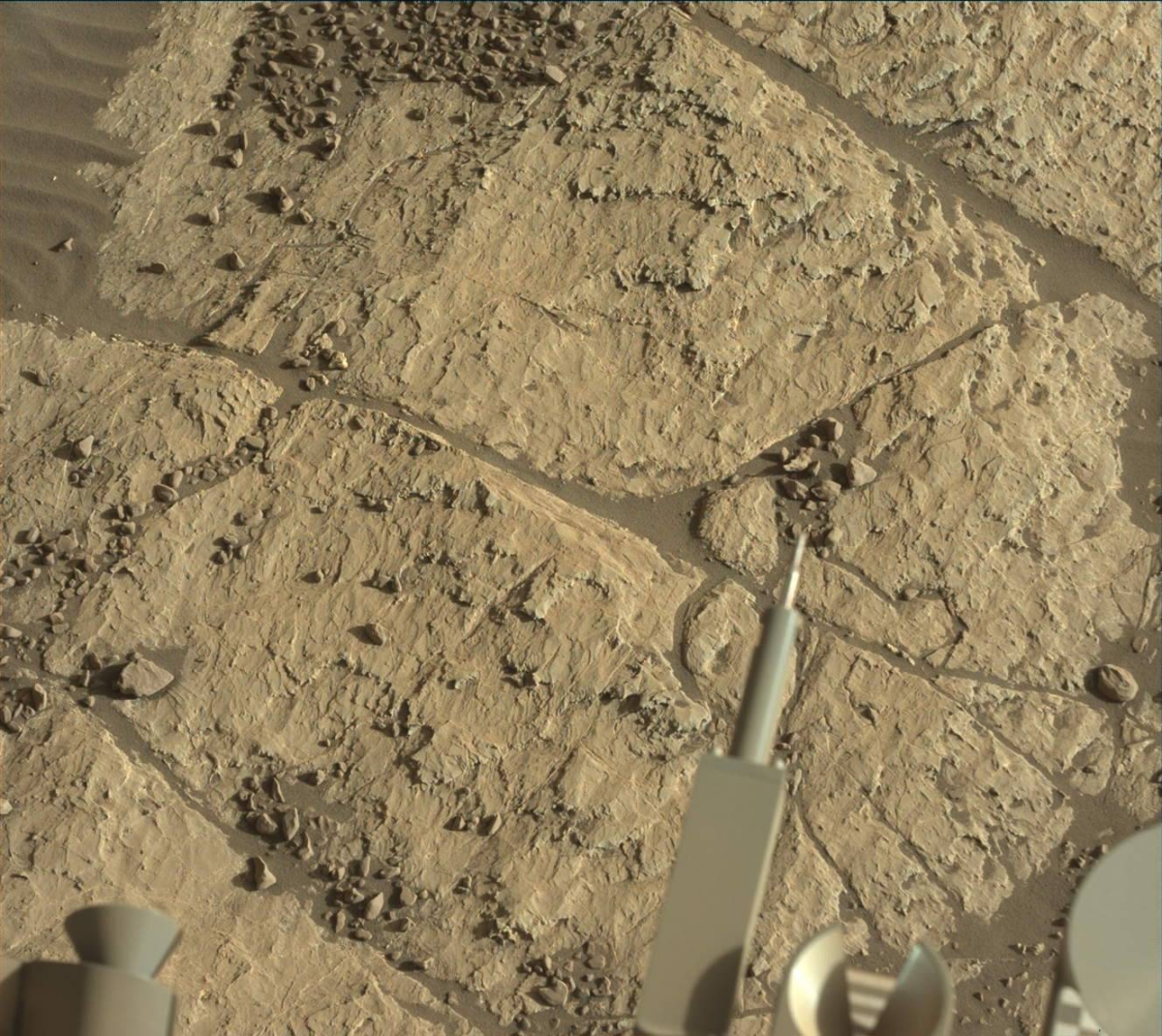
Curiosity Mastcam Left image taken on Sol 1963, February 13, 2018.
Credit: NASA/JPL-Caltech/MSSS
Workspace workout
Following these engineer-requested Mastcam mosaics, Curiosity was scheduled to also use the Chemistry and Camera (ChemCam) Remote Micro-Imager (RMI) high-resolution camera to investigate some interesting targets in our workspace,” Salvatore concludes.
Credit: NASA/JPL-Caltech/Univ. of Arizona
Road map
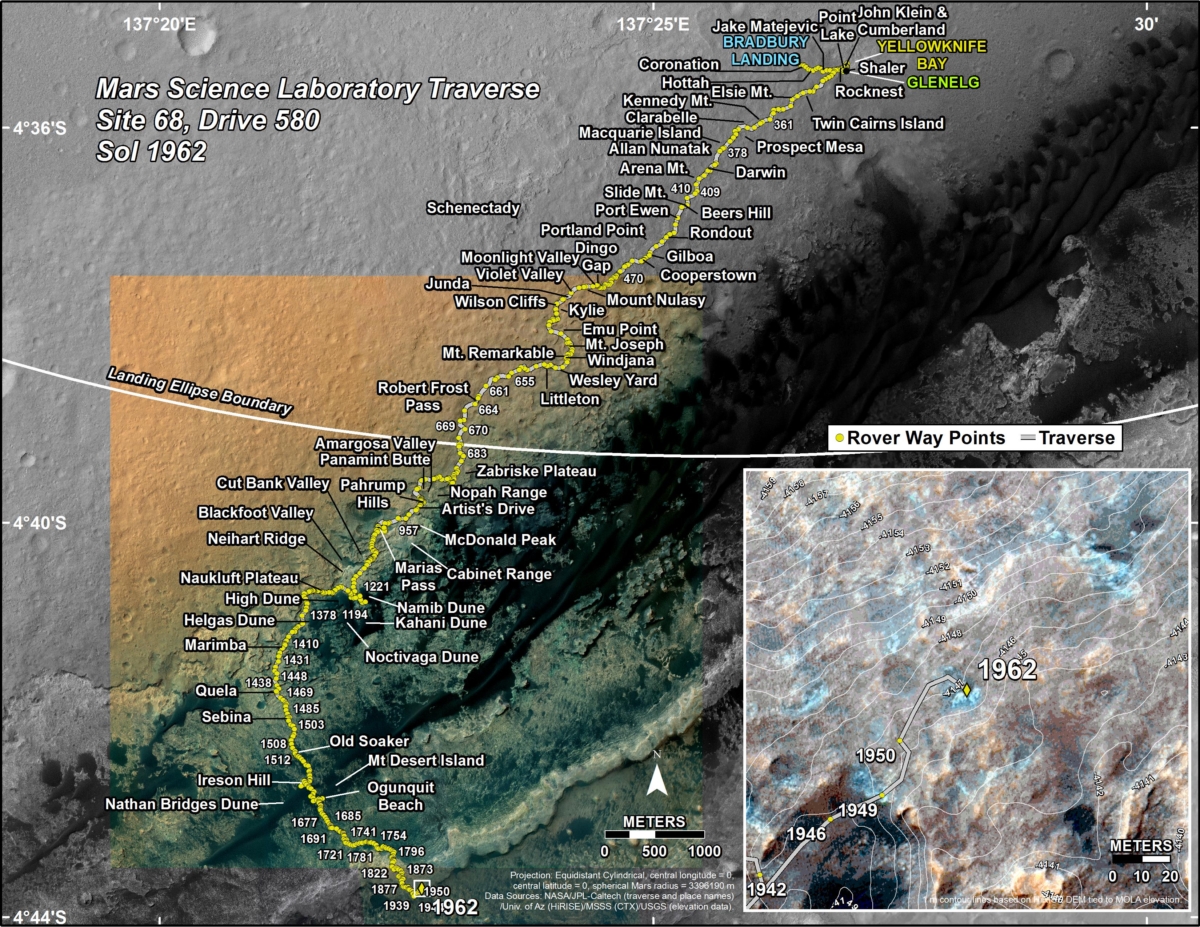
Meanwhile, a new Curiosity traverse map through Sol 1962 has been issued.
The map shows the route driven by NASA’s Mars rover Curiosity through the 1962 Martian day, or sol, of the rover’s mission on Mars (February 12, 2018).
Numbering of the dots along the line indicate the sol number of each drive. North is up. The scale bar is 1 kilometer (~0.62 mile).
From Sol 1950 to Sol 1962, Curiosity had driven a straight line distance of about 96.32 feet (29.36 meters), bringing the rover’s total odometry for the mission to 11.31 miles (18.20 kilometers).
The base image from the map is from the High Resolution Imaging Science Experiment Camera (HiRISE) in NASA’s Mars Reconnaissance Orbiter.
 Posted in

Credit: SpaceX
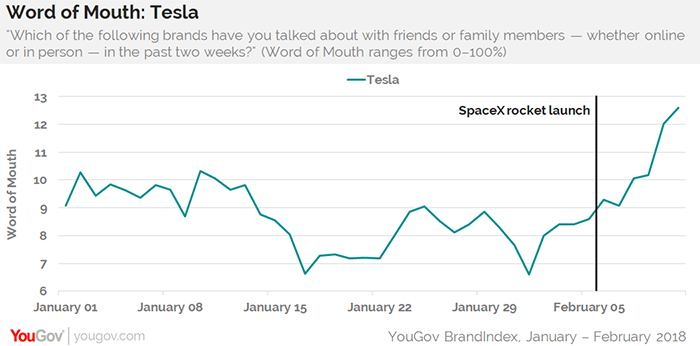
Hurling into space the red Tesla Roadster’s via the SpaceX Falcon Heavy rocket boosted talk about the car brand, but didn’t budge potential sales metrics, according to YouGov BrandIndex. The group measures public perception of thousands of brands across dozens of sectors.
According to London-based YouGov BrandIndex, Tesla’s Word of Mouth score started rising several days before the huge booster’s liftoff, when 7 percent of Americans aged 18 and over said they spoke about the car brand with family or friends in the past two weeks.
Furthermore, by the launch date, February 6, that percentage increased to 9 percent, and by this past Sunday, it climbed another four percentage points to 13 percent.

Credit: SpaceX
Other metrics
Three other metrics rose for Tesla, but to smaller degrees:
- Impression (“Do you have a positive or negative impression of this car maker?”)
- Quality (“Does this car maker represent good or poor quality?”), and
- Buzz (“If you’ve heard anything about the brand in the last two weeks, through advertising, news, or word of mouth, was it positive or negative?”).
Credit: YouGov BrandIndex
Word of mouth surge
“Tesla’s Word of Mouth surge, however, barely moved its Purchase Consideration score, a meter for potential sales,” the marketing group explains in a story written by Ted Marzilli.
“Purchase Consideration actually dropped one percentage point following the SpaceX launch – from 9 percent of consumers reporting that they’d consider buying a Tesla when next shopping for a car to 8 percent – before climbing back to pre-launch numbers.”
Between January 1 and February 11, 2018, YouGov BrandIndex conducted approximately 3,300 interviews to generate this report, with a Margin of Error = ±3 percent.

Virgin Spaceship Unity is unveiled in Mojave, California February 19th, 2016. VSS Unity is the first vehicle to be manufactured by The Spaceship Company, Virgin Galactic’s wholly owned manufacturing arm, and is the second vehicle of its design ever constructed. VSS Unity was unveiled in FAITH (Final Assembly Integration Test Hangar), the Mojave-based home of manufacturing and testing for Virgin Galactic’s human space flight program.
Credit: Mark Greenberg/Virgin Galactic
Discover the possibilities of space through a new innovative web experience created by Microsoft Edge and Virgin Galactic.
“The website is built to create a deeper connection between the global population and space travel by demonstrating how space exploration, research and transportation has the potential to improve life for everyone,” according to a press statement.

Virgin Spaceship Unity (VSS Unity) touches down after flying freely for the first time after being released from Virgin Mothership Eve (VMS Eve) on December 3, 2016 in the Mojave Desert.
Credit: Virgin Galactic
Website story
The website tells the story of Virgin Galactic and a new wave of astronauts as they pioneer space access for all.
“It also honors the beginning of a new era, where spaceflight discoveries are open to more people than ever before with modern web technologies, making that vision accessible through Microsoft Edge.”
To check out the new website, go to:
Curiosity Mastcam Left image taken on Sol 1962, February 12, 2018.
Credit: NASA/JPL-Caltech/MSSS
NASA’s Curiosity Mars rover is performing Sol 1964 activities.
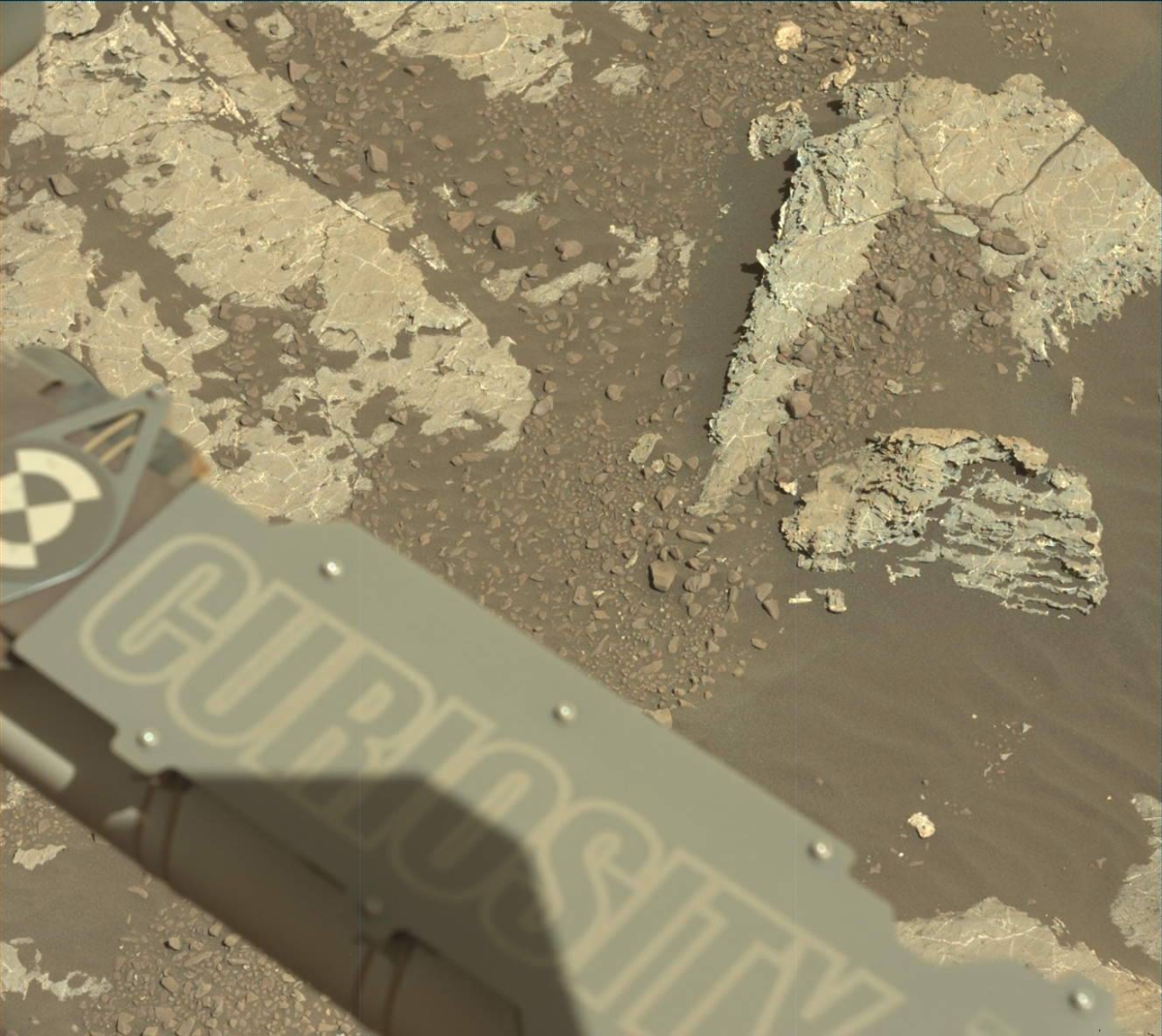
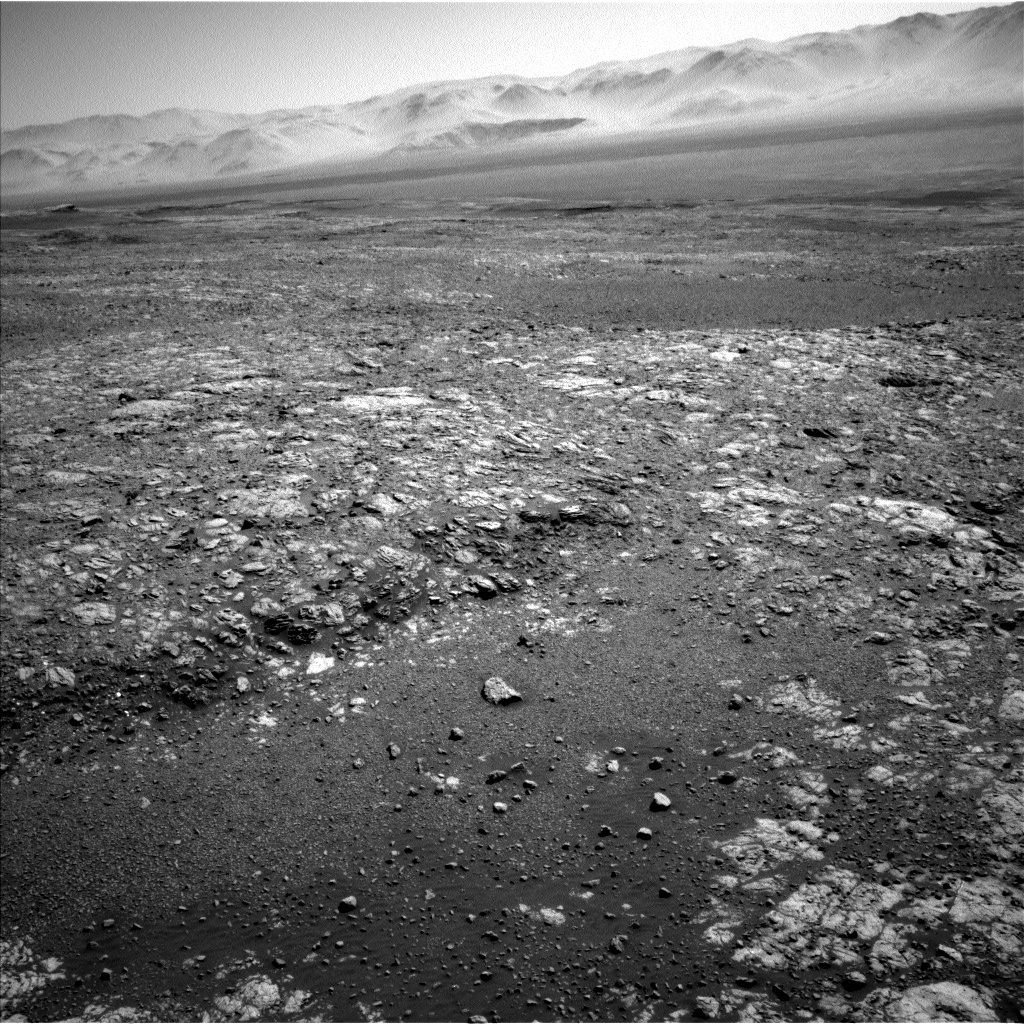
Over last weekend Curiosity drove roughly 170 feet (52 meters) to the northeast to another patch of gray bedrock.
“The team is interested in characterizing the gray bedrock to determine if we might want to drill here,” reports Lauren Edgar, a planetary geologist at the USGS in Flagstaff, Arizona. “But before we can think about drilling again, we need to wrap up our analyses of the cached Ogunquit Beach sample.”
Power-hungry activity
This means that there is need for preconditioning of the Sample Analysis at Mars (SAM) Instrument Suite which is a very power-hungry activity. “That also means that there’s not a lot of power for other science activities,” Edgar notes, “but we did manage to squeeze in a few contact science activities.”
The one sol plan that was scripted starts with the SAM preconditioning activity, which heats up a sample cup in order to prepare for solid sample analysis.
Curiosity Navcam Left B photo acquired on Sol 1962, Februry 12, 2018.
Credit: NASA/JPL-Caltech
Dust removal
In the afternoon, the rover was slated to use its Dust Removal Tool (DRT) to clear a fresh patch of gray bedrock to analyze with the robot’s Mars Hand Lens Imager (MAHLI) and use the Alpha Particle X-Ray Spectrometer (APXS) at the target “Newmachar,” followed by MAHLI imaging of the target “Yesnaby” to investigate a dark gray vein.
Additional workspace imaging to supplement the current coverage is also planned.
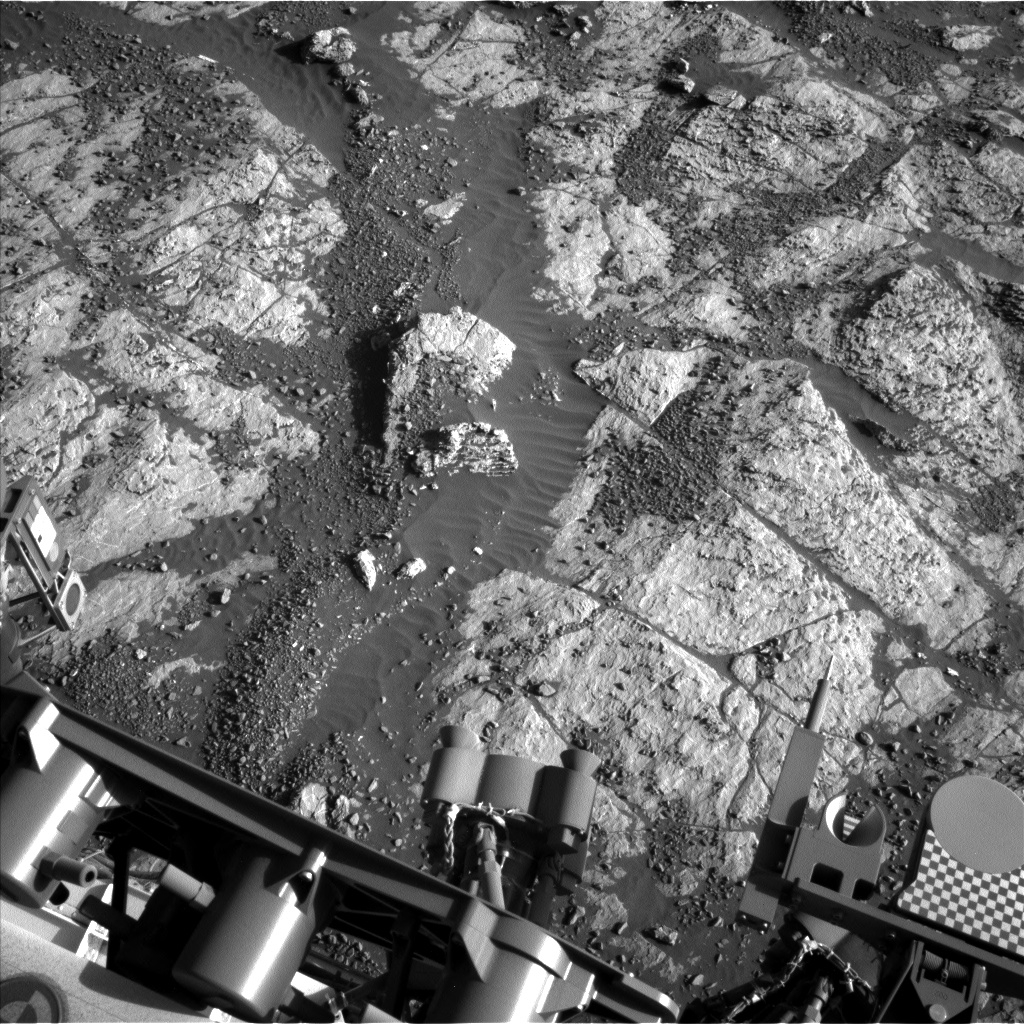
Curiosity Navcam Left B image acquired on Sol 1963, February 13, 2018.
Credit: NASA/JPL-Caltech
Drill again!
The plan also includes routine Dynamic Albedo of Neutrons (DAN) passive and Rover Environmental Monitoring Station (REMS) activities.
“While it was a relatively light plan in terms of science, it’s exciting to think about being able to drill again,” Edgar concludes, “so we’re looking forward to accomplishing the SAM analyses!”

Credit: NASA
President Trump’s Fiscal Year 2019 budget request for NASA is $19.9 billion.
“It reflects the Administration’s confidence that through NASA leadership, America will lead the way back to the Moon and take the next giant leap from where we made that first small step nearly 50 years ago,” explains NASA Acting Administrator Robert Lightfoot.
This budget codifies the President’s Space Policy Directive-1, which charges NASA to “lead an innovative and sustainable campaign of exploration that will lead the return of humans to the Moon for long-term exploration and use followed by human missions to Mars and other destinations.”
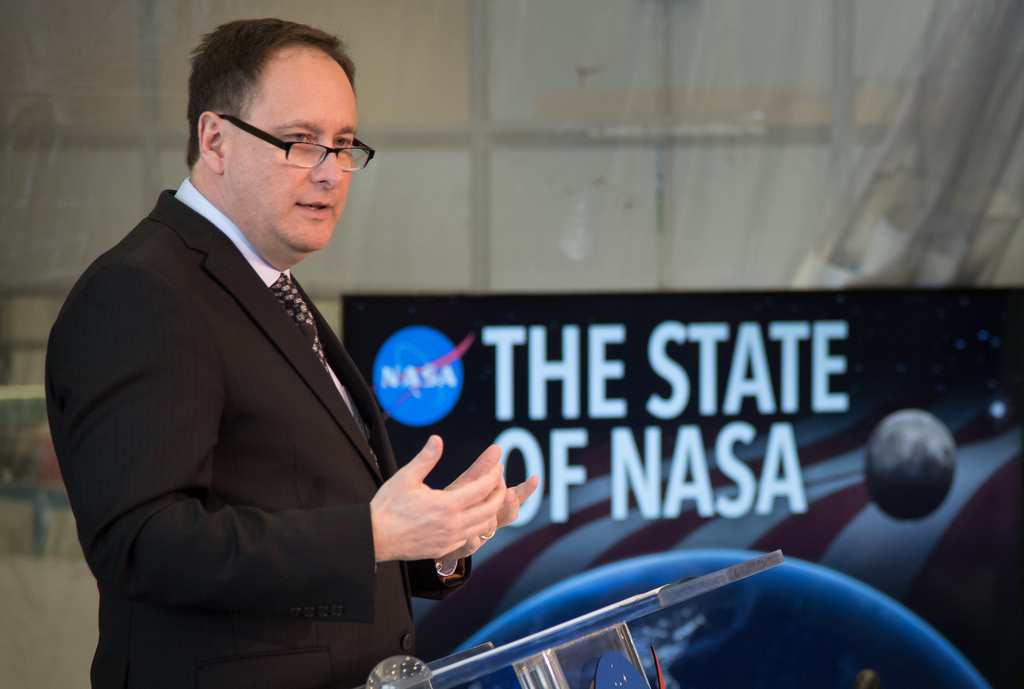
Acting NASA Administrator Robert Lightfoot discusses the fiscal year 2019 budget proposal during a State of NASA address Monday, Feb. 12, 2018 at NASA’s Marshall Space Flight Center in Huntsville, Alabama. Credit: NASA/Bill Ingalls

Notional Deep Space Gateway.
Credit: NASA
Lunar Orbital Platform-Gateway
“This budget also proposes we develop new opportunities on and around the Moon,” Lightfoot adds. “We will begin to build the in-space infrastructure for long-term exploration development of our nearest neighbor,” by launching the power and propulsion element to orbit the Moon in 2022 “as the foundation of a Lunar Orbital Platform-Gateway. This will give us a strategic presence in the lunar vicinity that will drive our activity with commercial and international partners and help us further explore the Moon and its resources and translate that experience toward human missions to Mars.”
Further, drawing on the interests and capabilities of NASA’s industry and international partners, the space agency intends to develop progressively complex robotic missions to the surface of the Moon with scientific and exploration objectives in advance of human return there, Lightfoot explains.

International Space Station.
Credit: NASA
Space station/commercial sector
Lightfoot also notes that this budget proposes for NASA to ramp up efforts to transition low-Earth activities to the commercial sector and end direct federal government support of the ISS in 2025 and begin relying on commercial partners for our low Earth orbit research and technology demonstration requirements.
To view: “Budget Documents, Strategic Plans and Performance Reports” go to:
https://www.nasa.gov/news/budget/index.html
and to view a NASA video, go to:

Credit: Paradox Interactive/Haemimont Games
“Colonize Mars and discover its secrets, with minimal casualties.”
That’s an opening premise behind Surviving Mars, a sci-fi settlement builder all about colonizing Mars and surviving the process.
- Choose a space agency for resources and financial support before determining a location for your colony.
- Build domes and infrastructure, research new possibilities and utilize drones to unlock more elaborate ways to shape and expand your settlement.
- Cultivate your own food, mine minerals or just relax by the bar after a hard day’s work.
- Most important of all, though, is keeping your colonists alive. Not an easy task on a strange new planet.
Management strategy game
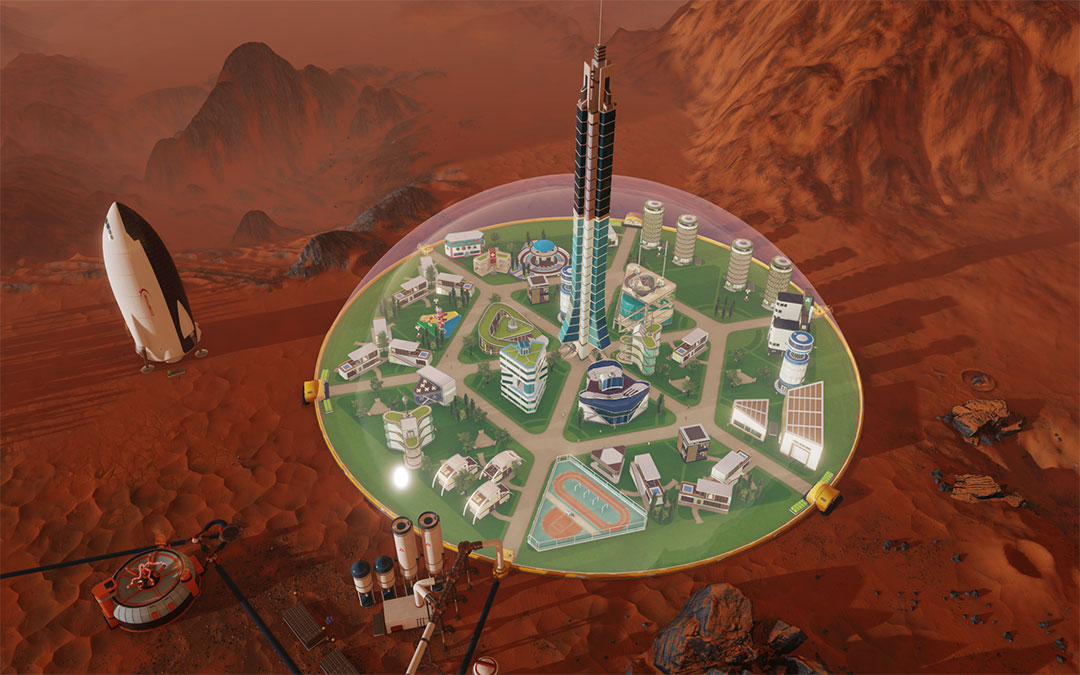
Credit: Paradox Interactive/Haemimont Games
Paradox Interactive, a publisher of games, has announced that Surviving Mars, the upcoming management strategy game from Haemimont Games, will launch for all systems on March 15, 2018.
Surviving Mars will put players in charge of planning, designing, and maintaining a sustainable colony on the red planet, and players will be able to undertake this mission on the Xbox One, on the PlayStation®4 console, and on Linux, MacOS, and Windows PCs.
This game will be available starting at a suggested retail price of $39.99 on all platforms.
Resources
For more information, go to:
https://www.survivingmars.com/
https://www.youtube.com/watch?v=u3swV4JJKAc
For a review of this product, go to:
“Let’s Try: Surviving Mars — Sci-Fi City Builder!”

Navy’s Laser Weapon System.
Credit: John F. Williams
A recently released report forecasts the maturing nature of high energy laser weapons, high power microwave weapons and particle beam weaponry.
Apart from the U.S., China, Russia, Germany and India have stepped up efforts to design directed energy weapons, military hardware that can be used in the battlefield. These include high power radio frequency weapons, high energy lasers, and particle beam weapons, with effects ranging from satellite jamming to target damage.
The estimate is that the global directed energy weapons market will be valued at about $1.67 billion in 2017, growing to more than $4 billion in 2025.
Steadily and quietly matured
ASD Reports, based in Amsterdam, the Netherlands explains: “Since the 1960s few weapons have held as much promise and have consistently failed to live up to that promise as Directed Energy Weapons (DEW). Over the past few years, however, even as most countries have scaled back their expectations and endowment from the highs of decades past, DEWs have steadily and quietly matured.”
Furthermore, while more moderate in power than the ambitious Airborne and Space-Based Laser programs of the U.S. and the Soviet Union, today’s DEWs have reached a point of operational maturity, ASD Reports points out.

Credit: ASD Reports
Major findings
According to a press statement from ASD Reports, their assessment points to:
- The most significant benefit is fielding these nascent directed-energy capabilities is that they will start the crucial process of integrating a new technology into operations, with the attendant innovations required in organization, training, concepts of operation and doctrine.
- New electrically powered, solid-state lasers (SSLs) may be the most promising alternatives for laser weapons that can be mounted on large mobile platforms such as surface naval vessels
- Previous high-profile DE programs failed to deliver on promises of game changing capabilities. These failures have increased the military’s reluctance to adopt a new generation of DE weapons concepts that are based on significantly more mature technology.
- DEWs will have to be proven in combat before militaries around the world grasps their full potential.
Full report
The full ASD Reports document examines, analyzes, and predicts the evolution of technologies, markets, and expenditures of Directed Energy Weapons from 2017 until 2025. The report examines each of these markets geographically, focusing on the top 95% of global markets, in the United States, Europe, and Asia.
For more information, go to:
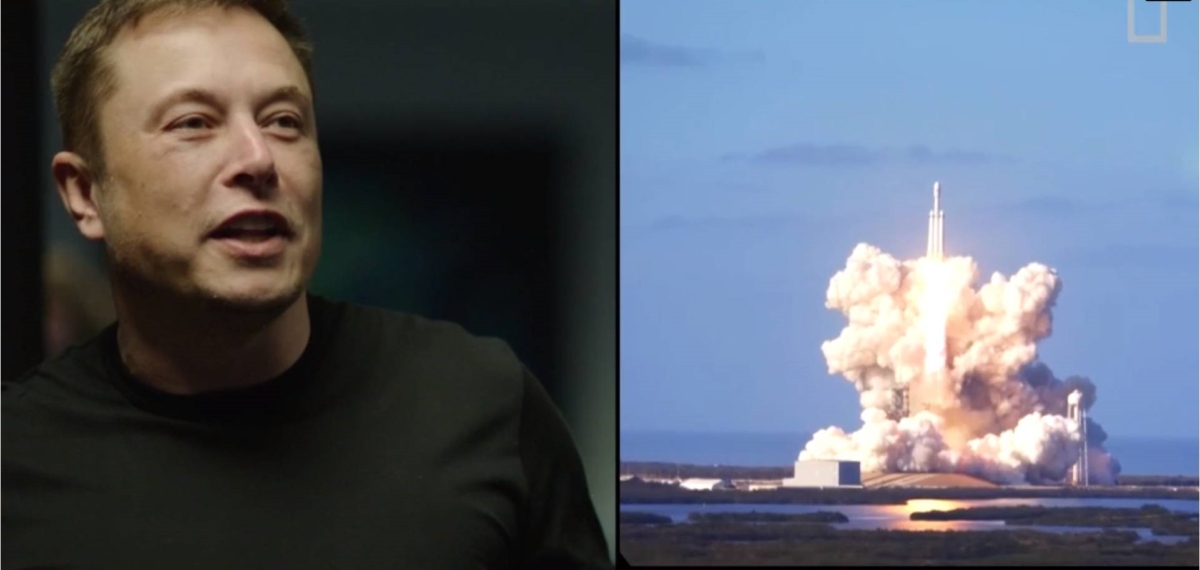
Credit: National Geographic
National Geographic has issued an exclusive behind-the-scenes clip that follows the SpaceX CEO, Elon Musk, and his team as they witness and celebrate the first launch of Falcon Heavy.
On February 6, SpaceX made history with the first launch of its Falcon Heavy rocket—and National Geographic was there, right alongside SpaceX CEO Elon Musk.
The Falcon Heavy booster flew on February 6 and National Geographic was there, right alongside Musk.
This film clip – with more to come — is in preparation for the second season of MARS, which is returning to National Geographic in Fall 2018.
To watch the video, go to:
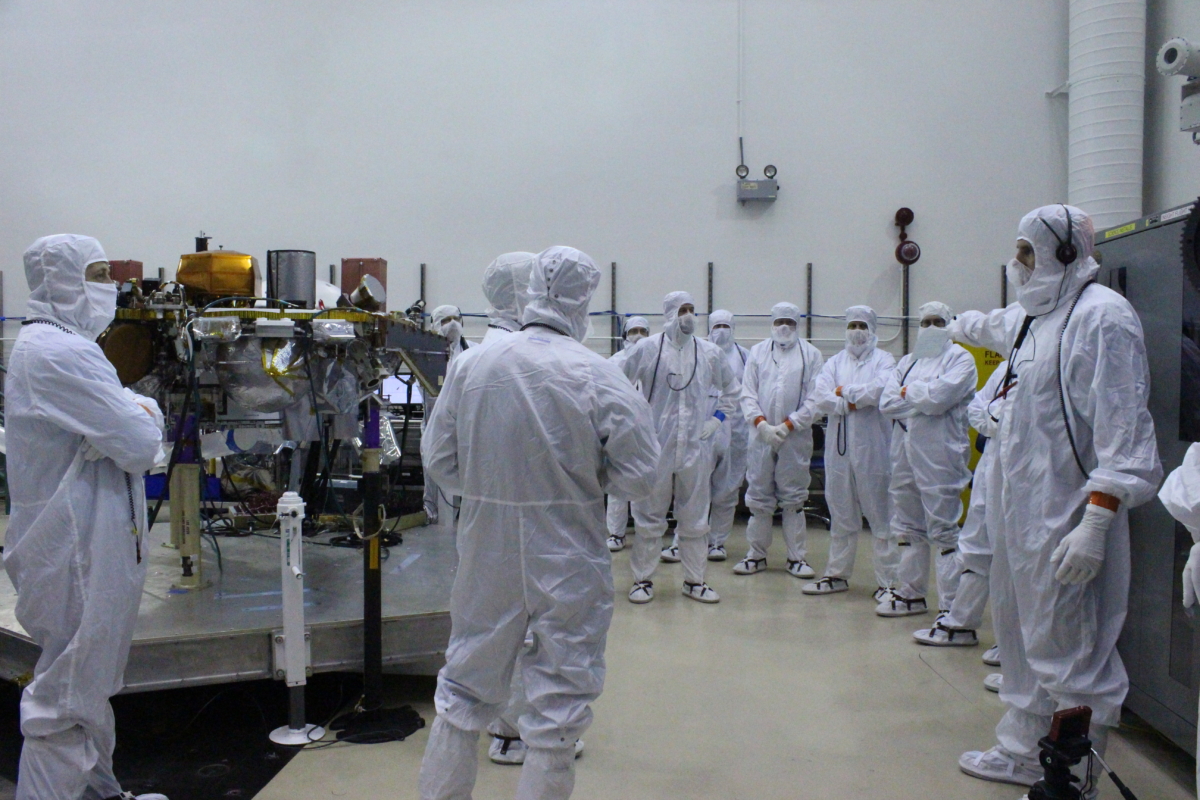
Technicians huddle near NASA’s InSight Mars lander to give the go for testing of the craft’s solar arrays.
Credit: Barbara David
Littleton, Colorado – NASA’s next Mars lander is in the final “ship and shoot” phases from California’s Vandenberg Air Force Base – the first interplanetary mission to rocket from that site.
The Interior Exploration using Seismic Investigations, Geodesy and Heat Transport (InSight) is undergoing last checkouts here at Lockheed Martin Space Systems Company – builder of the Mars-bound vehicle.
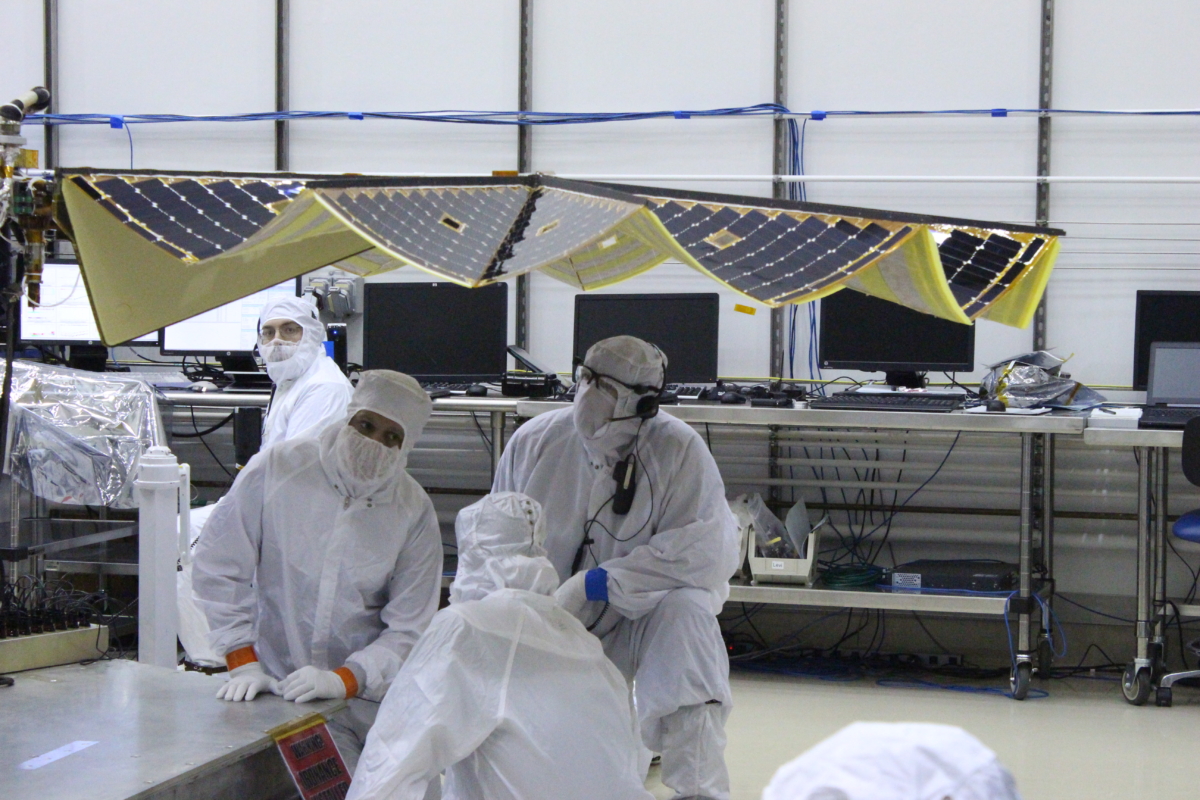
As InSight’s solar arrays unfurl, test engineers carefully inspect their deployment.
Credit: Barbara David
If all stays on track, InSight is to be shipped to the California launch site on February 28.
For a detailed look at final Mars lander preparations, go to my new Space.com story:
Meet the Next Mars Lander: Getting Insight on NASA’s InSight
https://www.space.com/39653-nasa-mars-lander-insight-up-close.html
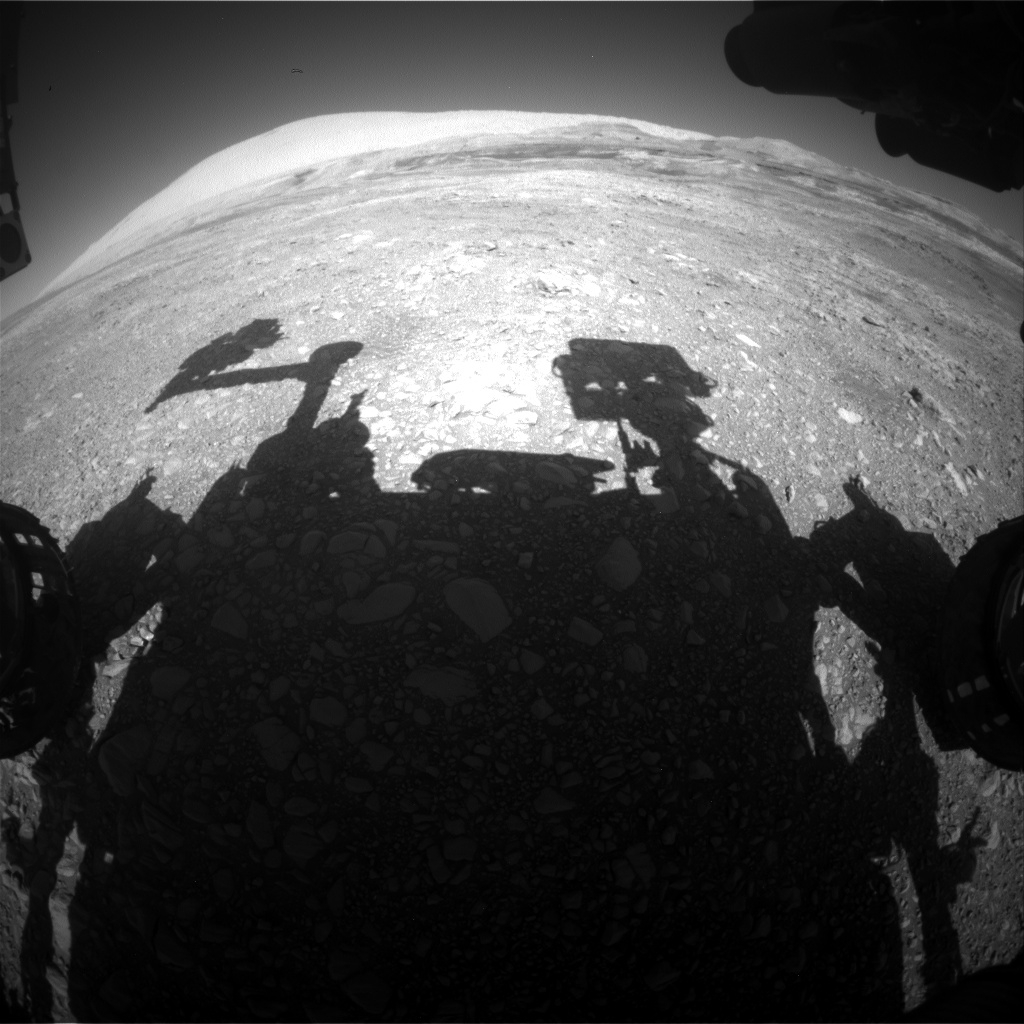
Curiosity Front Hazcam Right B image taken on Sol 1960, February 10, 2018.
Credit: NASA/JPL-Caltech
NASA’s Curiosity Mars rover has just begun Sol 1961 operations and is to perform a weekend of activities at the same location it has been stationed at all week.
“While we’re ready and eager to see some new terrain, we had no shortage of interesting science targets to fill our plan,” reports Rachel Kronyak, a planetary geologist at the University of Tennessee in Knoxville.
Long science block
On the first sol of the weekend plan (Sol 1961), the robot is to carry out a long science block filled with a suite of Chemistry and Camera (ChemCam) observations: Laser-induced breakdown spectroscopy (LIBS) measurements on bedrock targets “Glenfinnan” and “Skara Brae,” a long-distance Remote Micro-Imager (RMI) photo of the lower slopes of Mount Sharp, and a passive measurement of “Bloodstone Hill.”
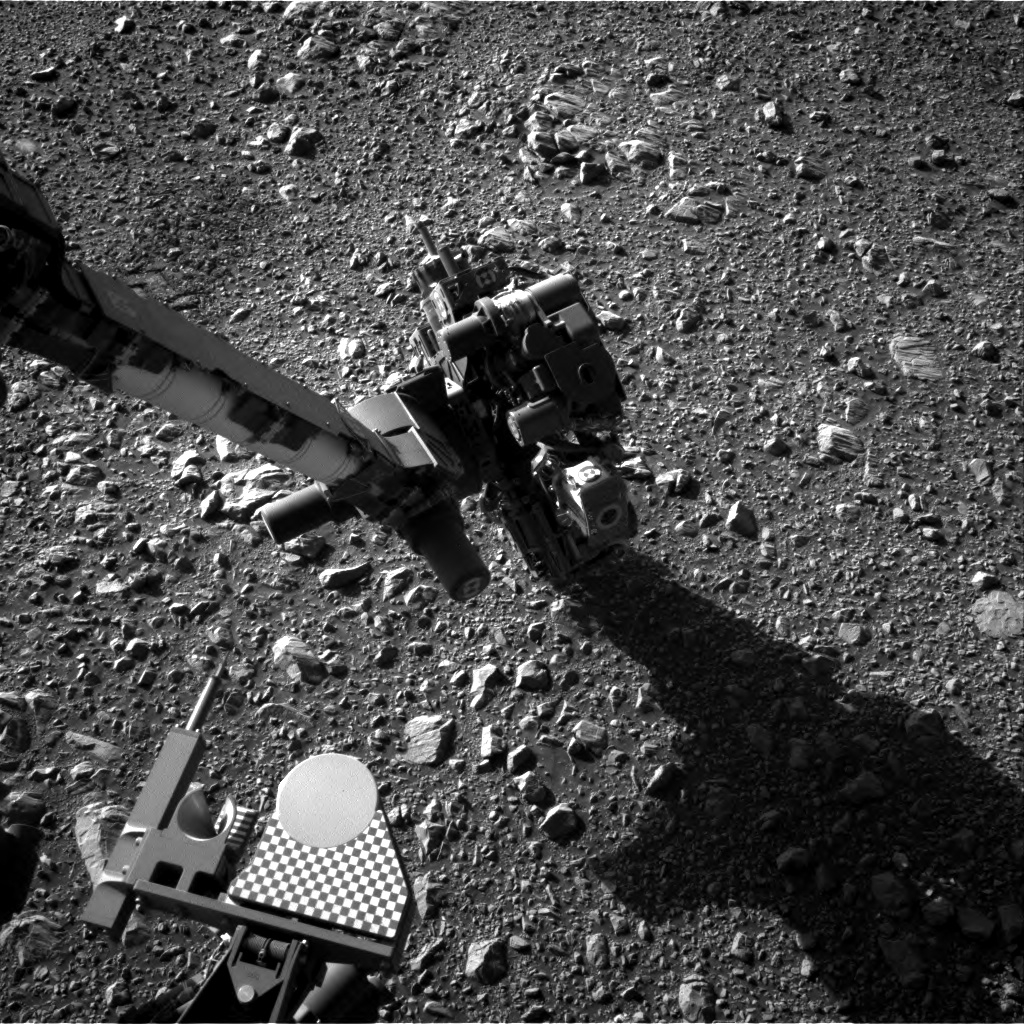
Curiosity Navcam Right B photo acquired on Sol 1960, February 9, 2018.
Credit: NASA/JPL-Caltech
Change detection imagery
Curiosity is also scheduled to take a Mastcam image to document the LIBS targets and an additional Mastcam image for change detection.
“When we’re at a single location for an extended period of time, we like to take repeat Mastcam images of the same target area across multiple sols. This allows us to compare the images and look for any changes or movement in the field of view,” Kronyak explains.
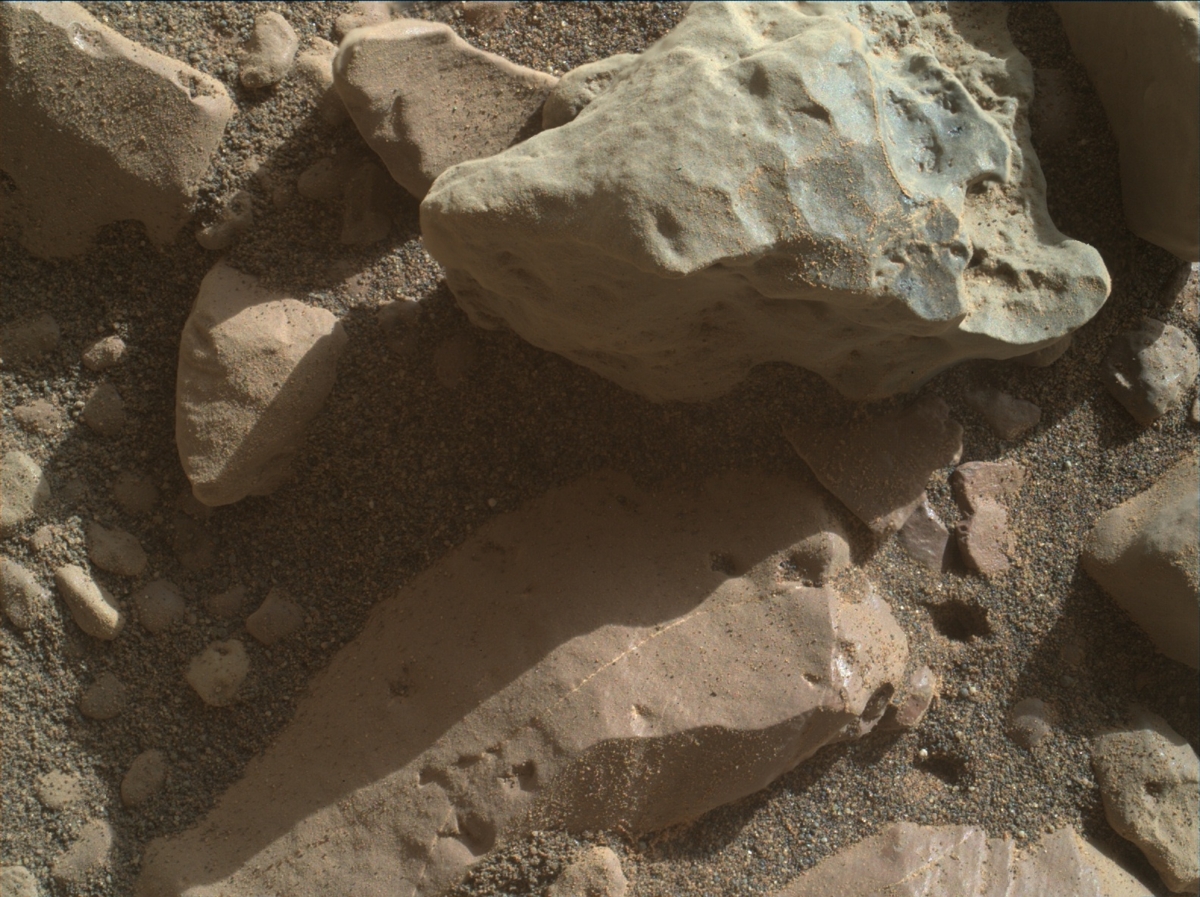
Curiosity Mars Hand Lens Imager (MAHLI) product from Sol 1960, February 10, 2018. MAHLI is located on the turret at the end of the rover’s robotic arm.
Credit: NASA/JPL-Caltech/MSSS
Also on tap, Curiosity will take a Navcam movie to look for dust devils.
Nighttime photos
In the evening, the rover will take Mars Hand Lens Imager (MAHLI) nighttime images of Glenfinnan and Skara Brae to take a closer look at some of the small-scale features within the rocks, with the additional benefit of some dust having been cleared by LIBS observations during the day.
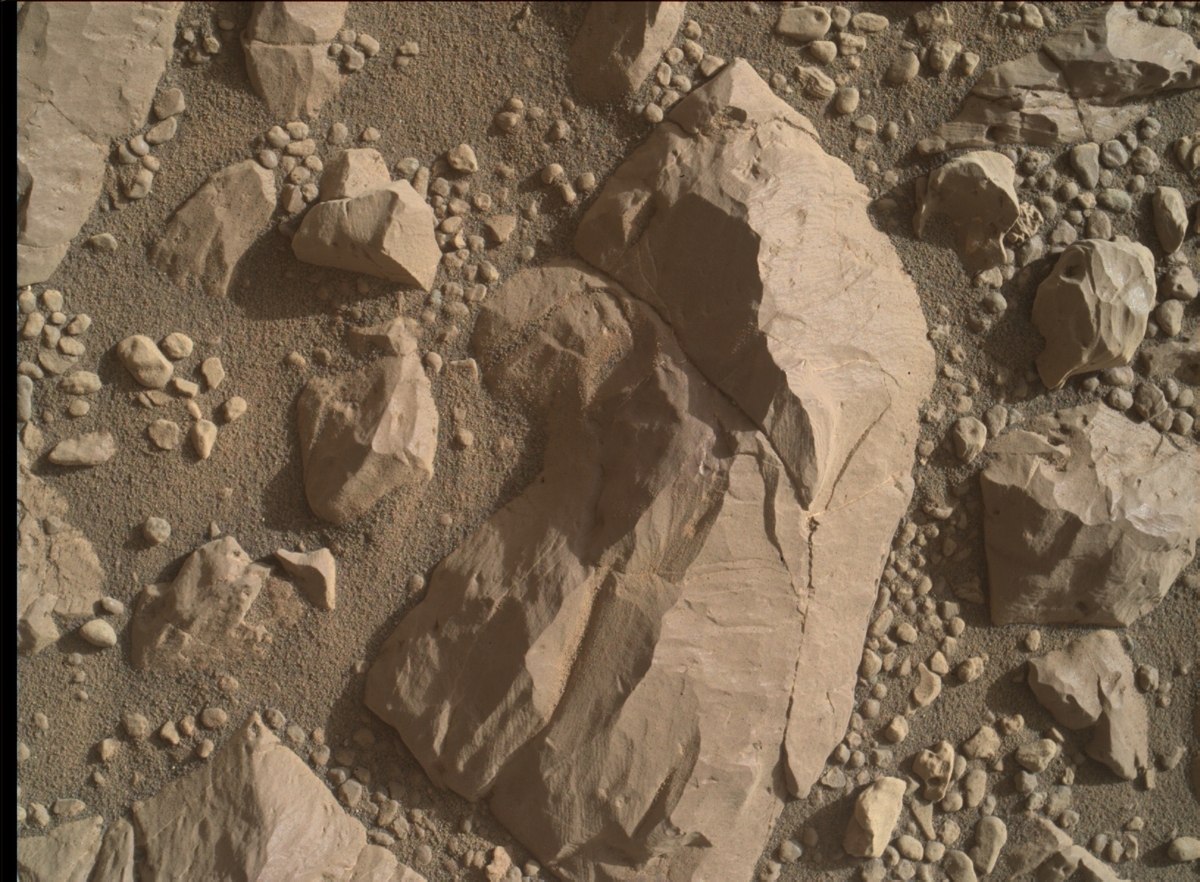
Curiosity Mars Hand Lens Imager (MAHLI) product from Sol 1960, February 10, 2018. MAHLI is located on the turret at the end of the rover’s robotic arm.
Credit: NASA/JPL-Caltech/MSSS
Kronyak notes that on the second sol, Sol 1962, the wheeled rover will drive to the next location at Vera Rubin Ridge, take some post-drive images, “and set ourselves up for an exciting week of contact and remote science!”

