Archive for March, 2017
 Author:
  March 3rd, 2017
Rocketeer Jeff Bezos.
Credit: Blue Origin
Amazon.com billionaire, Jeff Bezos, is detailing his plans to transform low Earth orbit and create an Amazon-like delivery system to support future human settlement of the Moon.
Blue Origin’s New Shepard Team is the winner of Aviation Week’s 60th Annual Space Laureate.

Liftoff of suborbital space tourism, backed by Amazon founder Jeff Bezos.
Credit: Blue Origin
New Shepard is only the first step in fulfilling Blue Origin owner Jeff Bezos’ vision of using ever larger reusable rockets to send an entire economy into Earth orbit and beyond.
The Bezos space business plans follow the recent Elon Musk SpaceX statements regarding their intention to lob two paying customers around the Moon in late 2018 via the company’s Dragon 2 space capsule.
Following the Laureate Award presentations held at Washington’s National Building Museum on March 2, Bezos talked to Aviation Week & Space Technology Editor-in-Chief Joe Anselmo and the audience at the awards dinner about the importance of expanding into the solar system.
Bezos is also slated to speak during SATELLITE 2017, being held March 6-9 in Washington, D.C.
Check out this video of Bezos at the March 2 awards dinner at:
https://www.youtube.com/watch?v=tjz2vP3zPhE
Meanwhile, here is an exclusive look at the Bezos plan to set up Amazon-like delivery for ‘future human settlement’ of the Moon, reported by the Washington Post:
 Posted in
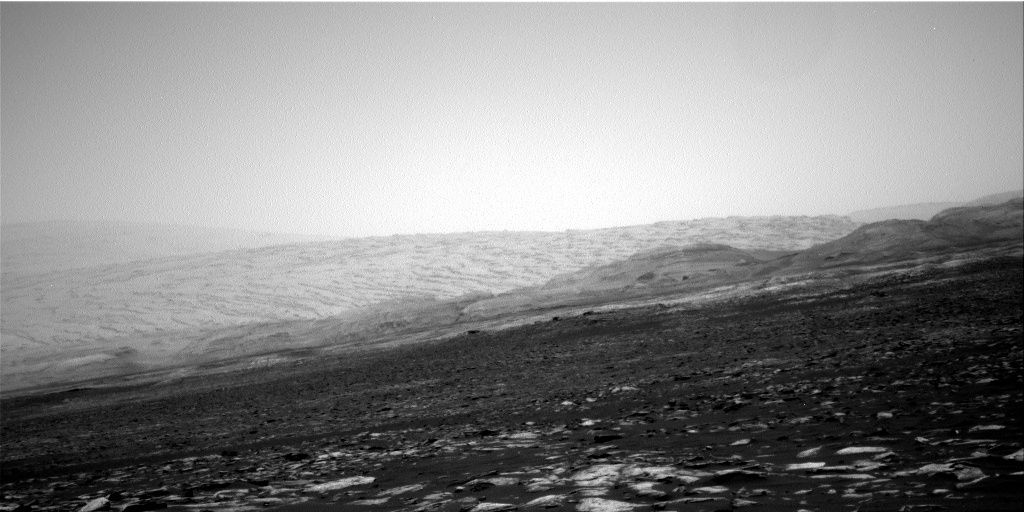
Curiosity Navcam Right B image taken on Sol 1624, March 1, 2017.
Credit: NASA/JPL-Caltech
NASA’s Curiosity Mars rover is now completing tasks during Sol 1625 operations.
Lauren Edgar, a research geologist at the USGS Astrogeology Science Center in Flagstaff, Arizona reports: “We’re still at the second stop of the Bagnold Dune campaign,” with the robot running a few more Mars Hand Lens Imager (MAHLI) diagnostics and focusing on targeted remote sensing.
Mt. Sharp observation
Curiosity has on the task list Chemistry and Camera (ChemCam) observation of a ripple crest and a long distance Remote Micro-Imager (RMI) look for changes on the slope of Mt. Sharp.
“We’ll also use Navcam to search for dust devils, and Mastcam will survey the color and opacity of the atmosphere,” Edgar reports.
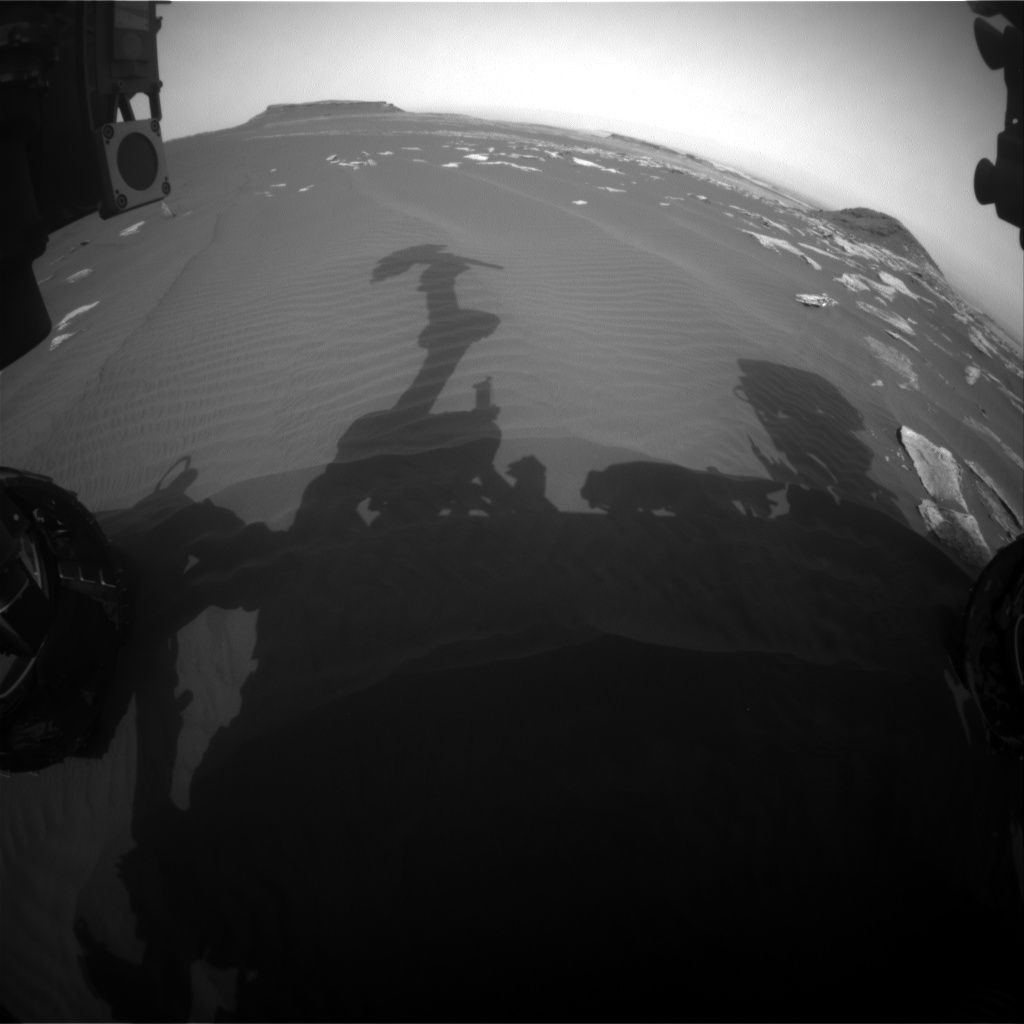
Curiosity Front Hazcam Left B image taken on Sol 1624, March 1, 2017.
Credit: NASA/JPL-Caltech
Also on tap are ChemCam observations of “Allagash” and “Hersey” to investigate some bedrock with interesting color variations.
Mastcam and Navcam will also be used to monitor the atmosphere and search for dust devils.
Ripple activity
On the schedule is use of the robot’s Alpha Particle X-Ray Spectrometer (APXS), continuing to collect data for thermal characterization.
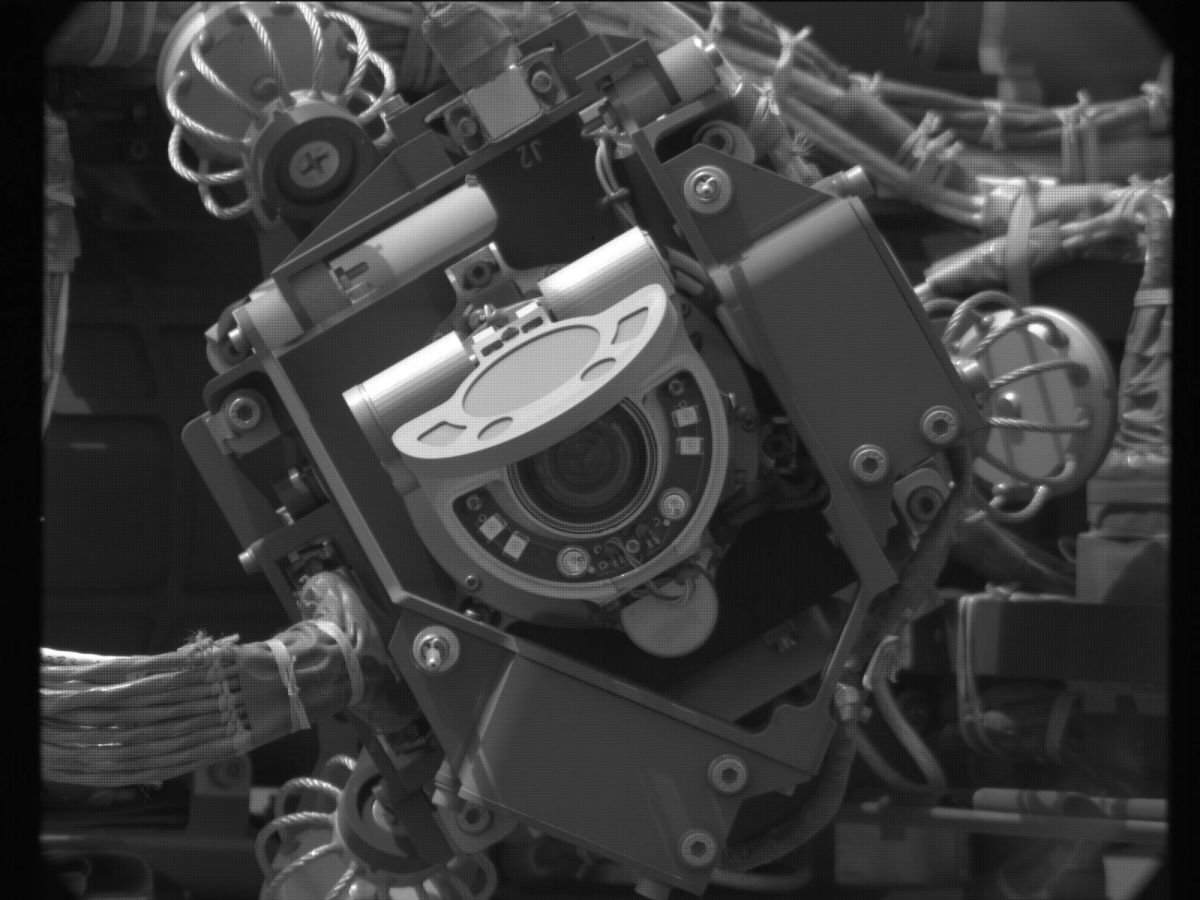
Curiosity Mastcam Right image taken on Sol 1623, February 28, 2017. Robot’s self-inspection of its Mars Hand Lens Imager (MAHLI) system.
Credit: NASA/JPL-Caltech/MSSS
Throughout the plan, Curiosity will repeat several Mastcam and Mars Descent Imager (MARDI) images to monitor changes in sand movement.
“These change detection observations have produced a great dataset that shows some awesome ripple activity,” Edgar concludes.
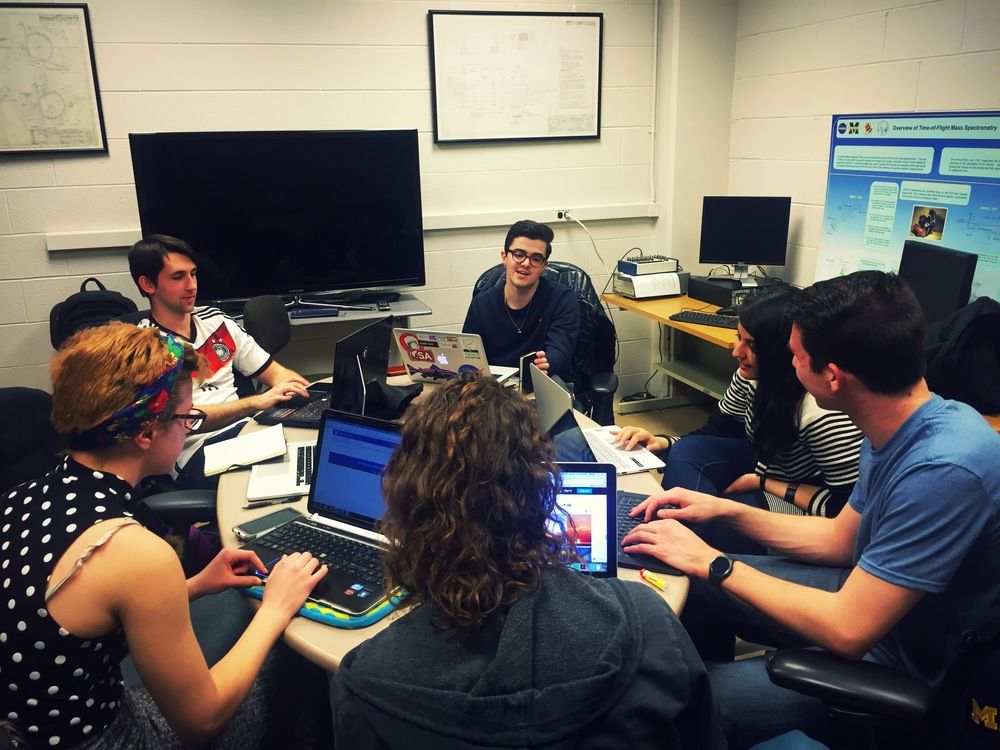
The Michigan Bicentennial Archive (M-BARC) team. Their CubeSat work is dedicated to designing, creating, and launching the first ever space time capsule.
Credit: M-BARC
A multi-disciplinary team at the University of Michigan (U-M) is scoping out a space time capsule.
Called the Michigan Bicentennial Archive (M-BARC) team, their CubeSat work is dedicated to designing, creating, and launching the first ever space time capsule.
It would be an artifact that commemorates the bicentennial of the University of Michigan. The CubeSat must survive the rigors of launch and space for 100 years.

Credit: M-BARC
Also, this small satellite would have its own propulsion system. The team is currently comparing electric and chemical thruster systems for use in the CubeSat.
Storing interviews
The student team is gathering content that will be sent up inside the spacecraft. A considerable amount of the project involves collecting representative media from throughout the University, providing the future recipients of the time capsule with an accurate representation of the University and state of Michigan in 2017.
The CubeSat would contain interviews from 1,000 members of the U-M community and an experiment to test DNA as a medium for storing data in space.

CubeSat design effort is geared to creating a time capsule for space.
Credit: U-M/M-BARC
Storing 1,000 interviews – and protecting this material from radiation – is not an easy task.
The team is working with the Lurie Nanofabrication Facility at the university to nanoprint 8 to 30 GB of data on a 1-inch silicon chip. At least ten chips will be placed at different orientations in the satellite to provide backups in case of cubesat collisions.
DNA experiment
According to a U-M story on the M-BARC effort, radiation also plays an important role in the team’s DNA radiation experiment which tests the genetic code’s ability to store information in space.
One microgram of DNA can hold 900 terabytes of data, equal to roughly 11,000 iPhones.
The team explains that sending physical packages of information out into the cosmos – like that onboard the Voyager spacecraft — it would be worth finding out if the DNA storage technique works. If so more information can be lobbed into space by this method, contrasted to the Voyager record, or even on solid state drives.

Record-toting Voyager spacecraft.
Credit: NASA/JPL
Multidisciplinary
As detailed on the M-BARC website, the multidisciplinary venture involves five distinct sub-teams:
- Bus team is designing the space vehicle itself, as well as the nanoprinting technology that will house our time capsule data.
- Orbit, Launch, and Propulsion team is investigating propulsion methods and determining where the time capsule will be located in space for 100 years.
- Tracking team is devising a way to locate the time capsule from Earth as it orbits for the next century.
- Public Relations team is crafting the content that will exist in the time capsule, managing donations and fundraising, and making sure this project gains momentum at the University of Michigan and beyond.
Location via laser
The team expects construction of at least the payload portion of the CubeSat to begin in the middle of the Winter 2017 semester. The payload includes the DNA experiment and data chips containing interviews.
In due course, say the next century, U-M hopes to retrieve the time-capsule by using a laser to locate the satellite via onboard reflectors.
Visit the M-BARC website at:
Go to this informative video of the project at:

This artist’s rendering depicts NASA’s Mars 2020 rover, with its robotic arm extended.
Credit: NASA/JPL-CALTECH
Deciding on where best to plunk down NASA’s Mars 2020 on the Red Planet rover is not an easy choice, and is spot-on with controversy.
On one hand, the scientific bonus of having a souped-up mega rover meet Martian real estate is one thing. But it turns out that the Mars 2020 stands as a watershed moment, perhaps a bridge to nowhere in Mars exploration planning for NASA.

Where will NASA’s next Mars rover explore? Artwork depicts meeting of Mars machinery: The Mars 2020 rover wheels up to the dead, stuck-in-sand Spirit rover in the Columbia Hills.
Credit: James Rice/Joel Hagen/NASA
Multi-Mars probes
Meanwhile, putting aside the tossing of America’s next rover onto the Red Planet, there are other similar efforts in that same time period heading for a Mars landing in 2021, expressly the European Space Agency’s ExoMars 2020 rover, a Chinese Mars lander, as well as Elon Musk’s entrepreneurial enterprise that now intends to lob its first uncrewed Dragon capsule to the Martian surface that same year.
For more details on the NASA Mars 2020 rover mission, discussion and debate, please go to my new Space.com story:
Should NASA’s Next Mars Rover Tread New Ground?
March 1, 2017 07:00am ET
http://www.space.com/35866-nasa-mars-2020-rover-landing-site.html

