Archive for March, 2017
 Author:
  March 11th, 2017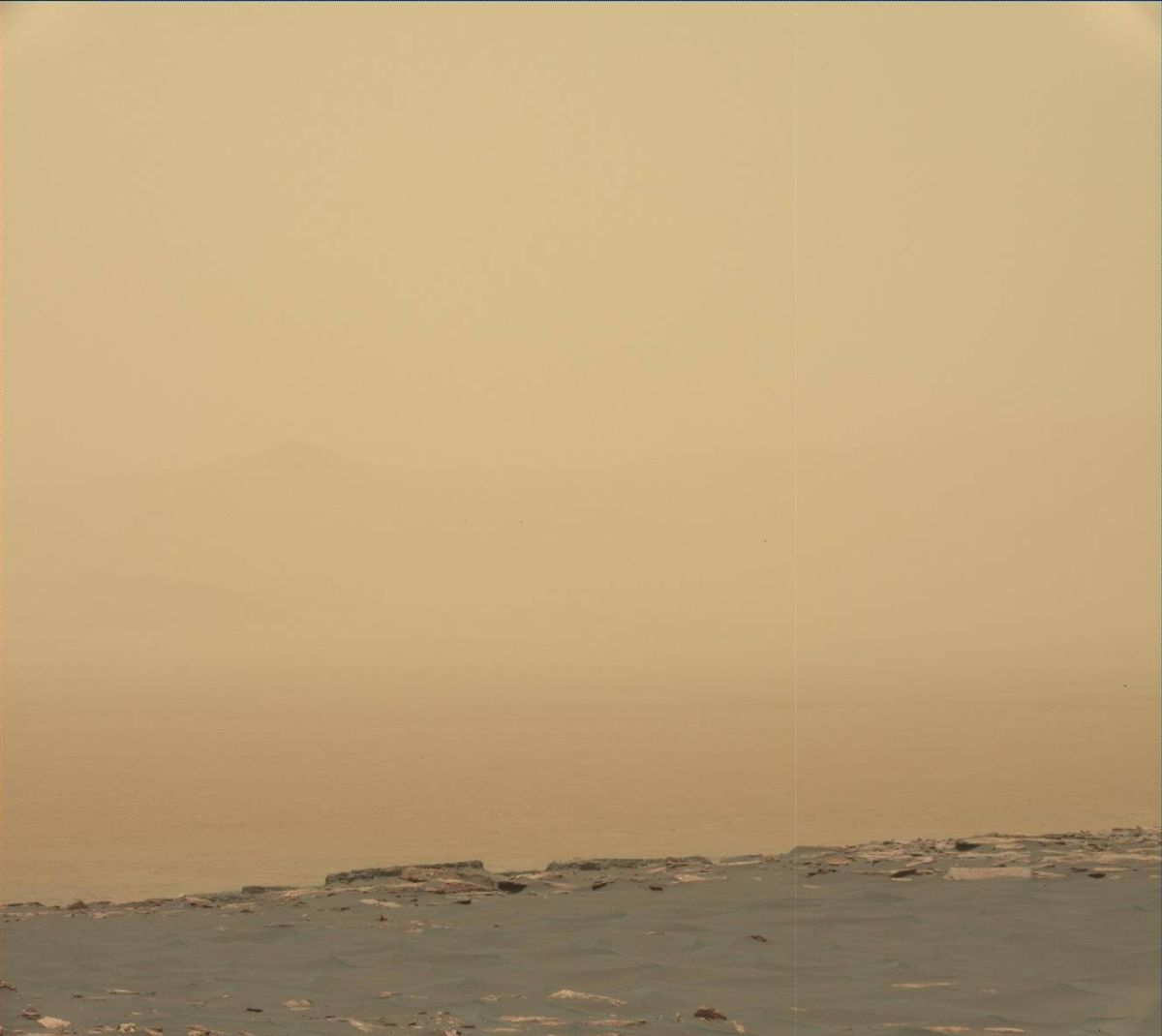
Curiosity Mastcam Left image taken on Sol 1631, March 8, 2017.
Credit: NASA/JPL-Caltech/MSSS
Now performing Sol 1634 duties, NASA’s Curiosity Mars rover wheeled roughly 95 feet (29 meters) to the south on Sol 1632.
The robot is in good position for weekend tasks, reports Ken Herkenhoff of the USGS Astrogeology Science Center in Flagstaff, Arizona.
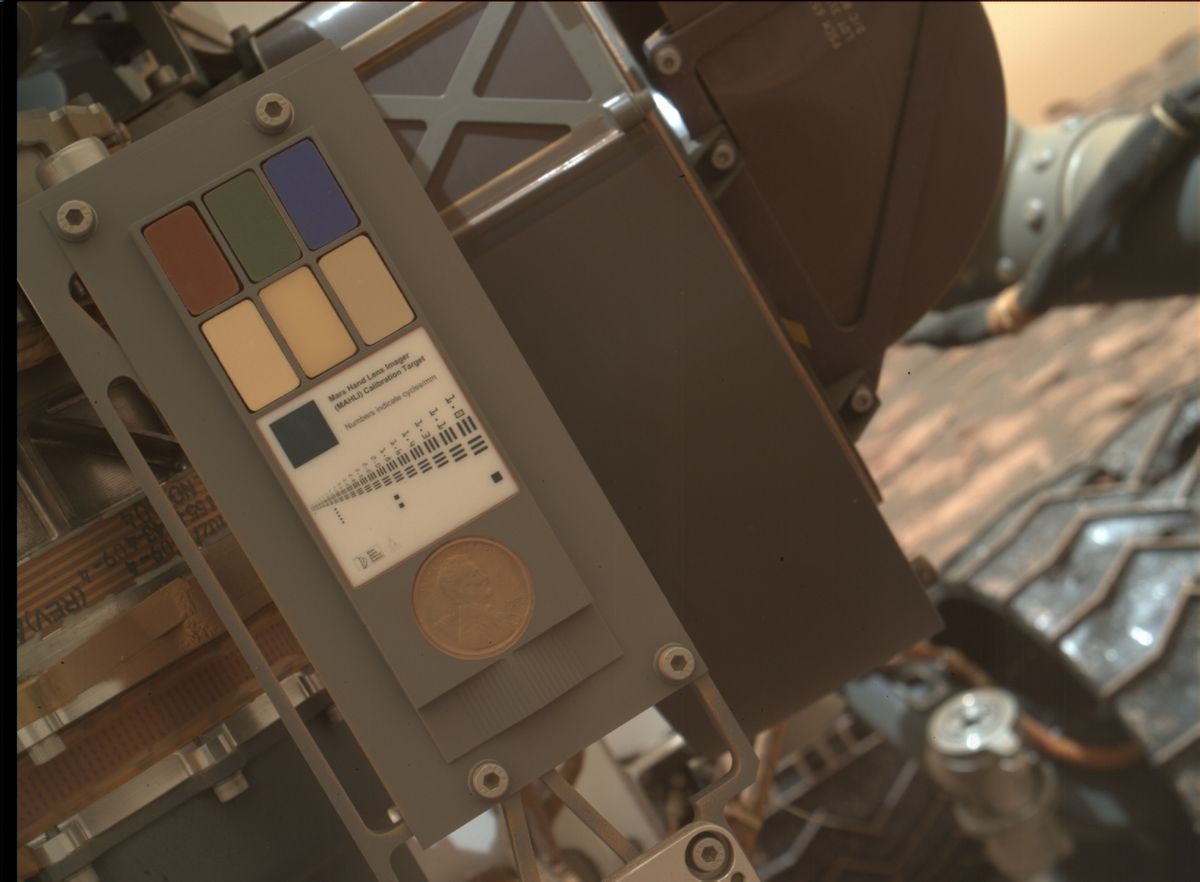
Mars Hand Lens Imager (MAHLI) calibration testing. Image taken on March 9, 2017, Sol 1632.
Credit: NASA/JPL-Caltech/MSSS
Dust cover issues resolved
The Mars Hand Lens Imager (MAHLI) images taken on Sol 1632 looked good, Herkenhoff adds, “and the dust cover is working properly, so MAHLI is ready to return to nominal operations!”
Contact science targets in front of the rover show interesting color variations.
This bedrock is too close to the rover to allow Chemistry & Camera (ChemCam) data to be safely acquired, so a nearby exposure was selected for an analogous measurement and named “Hurricane Mountain.”
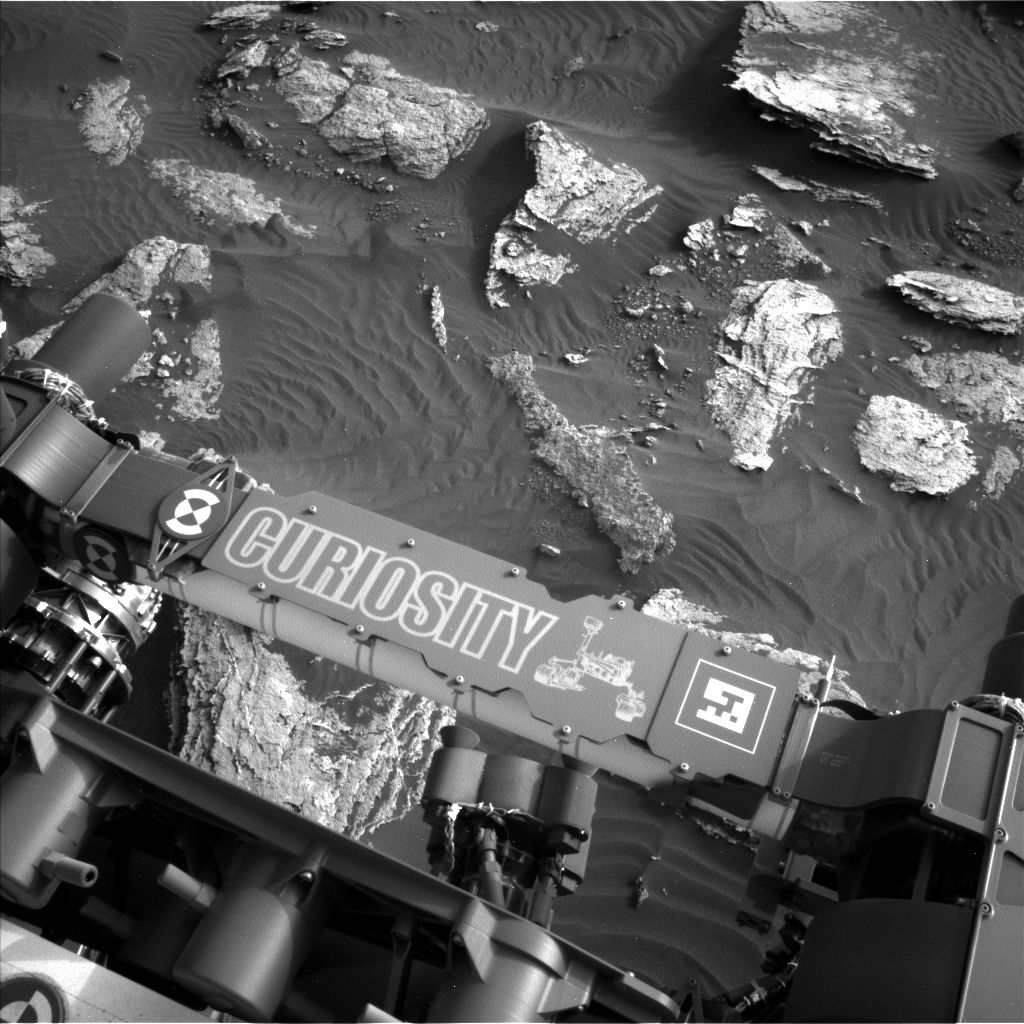
Curiosity Navcam Left B image taken on Sol 1632, March 10, 2017.
Credit: NASA/JPL-Caltech
Bedrock target
A ChemCam observation was planned of a nearly-vertical layered bedrock target that is tagged “Hardwood Mountain.”
Curiosity’s Right Mastcam is slated to image selected targets and take a 4×3 mosaic of another bedrock block dubbed “Rocky Mountain.”
Also on tap, the robot’s Mastcam was to acquire a multispectral set of images of “North Haven,” a collection of pebbles near Hurricane Mountain, and survey the sky in the afternoon.
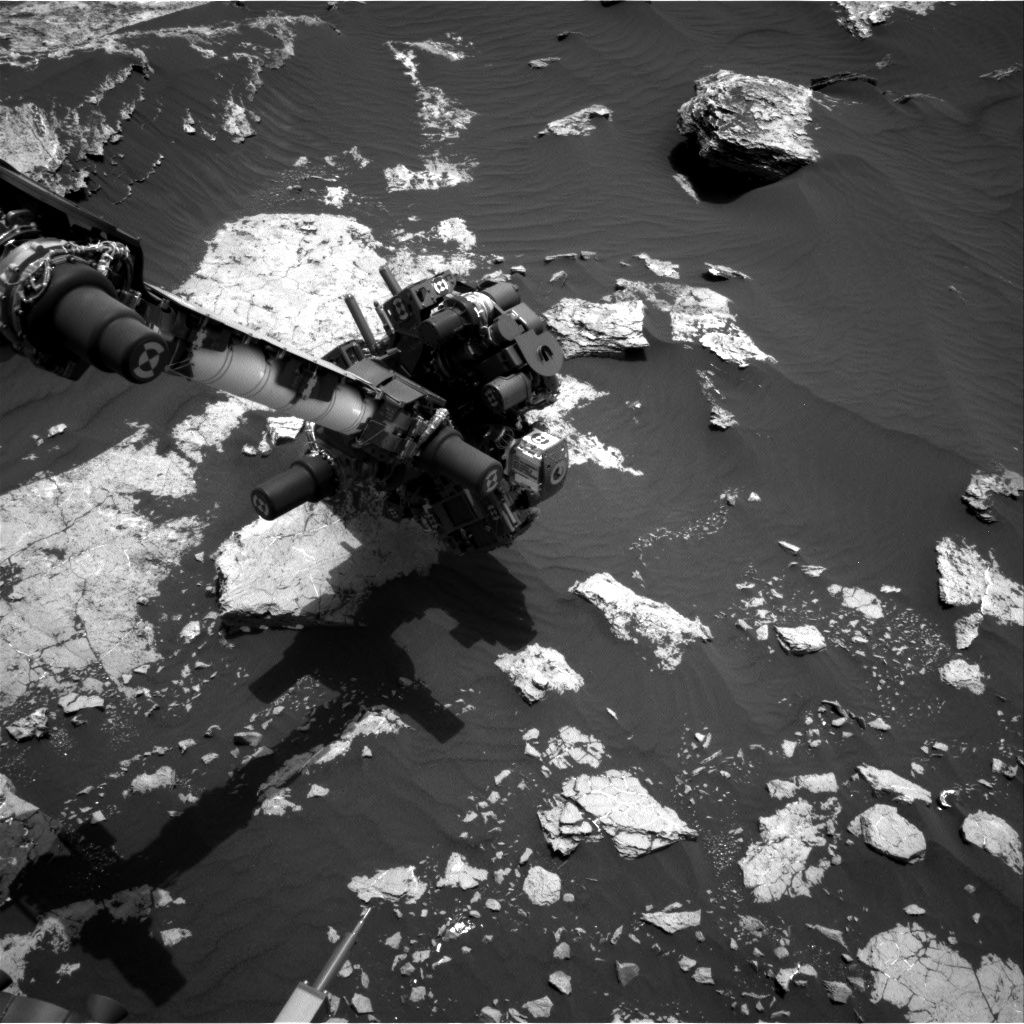
Curiosity Navcam Right B image taken on Sol 1632, March 9, 2017.
Credit: NASA/JPL-Caltech
Canada Falls
In the weekend plan, MAHLI is scheduled to take five images of “Canada Falls” from various distances before the Alpha Particle X-Ray Spectrometer (APXS) is to be placed on the first of three closely-spaced Canada Falls targets.
“After sunset, APXS data will be gathered on all three spots, using the arm to reposition the instrument between integrations,” Herkenhoff notes.
Then the plan for early Sol 1635 is for the rover’s Navcam to search for clouds and the robot’s Mastcam will measure the dust in the atmosphere.
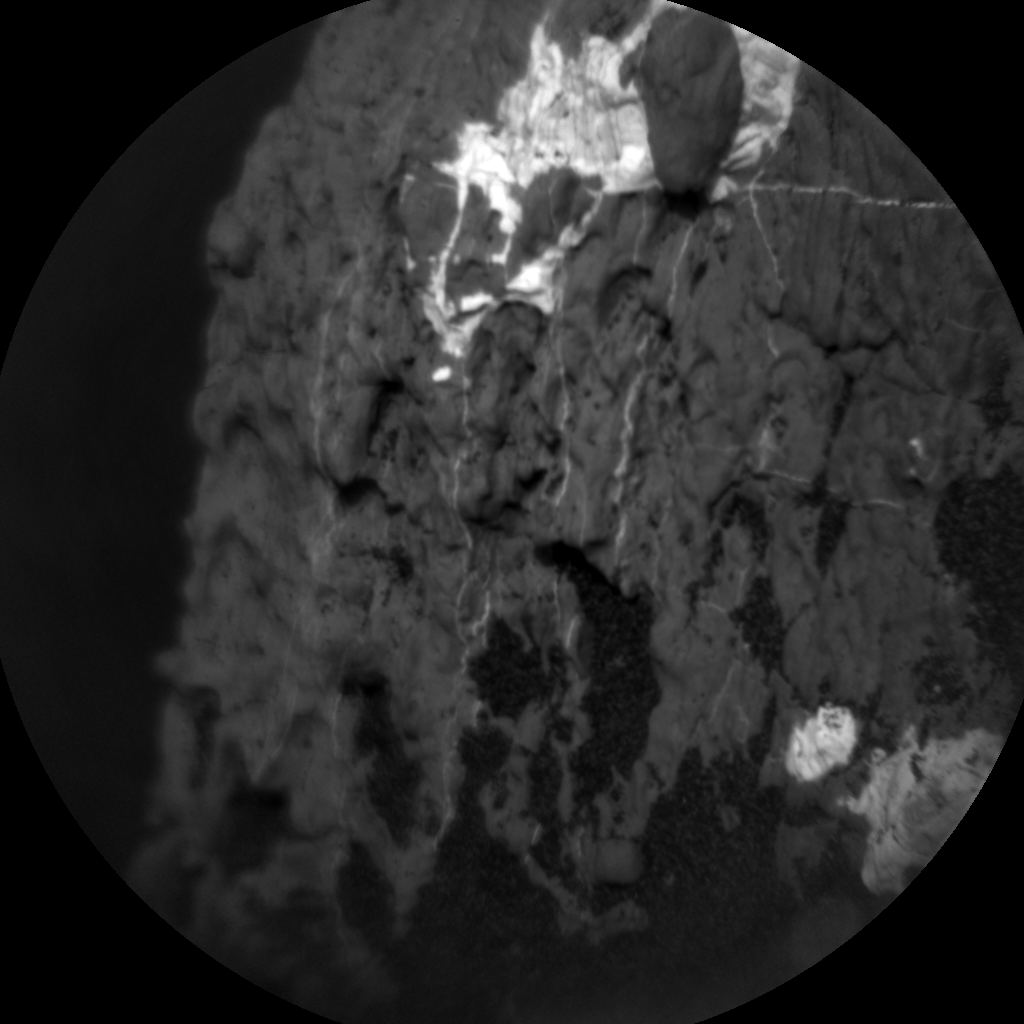
This image was taken by ChemCam: Remote Micro-Imager photo taken on Sol 1633, March 10, 2017.
Credit: NASA/JPL-Caltech/LANL
Drill diagnostic tests
“Later in the day, more drill diagnostic tests are planned, followed by another set of Mastcam dust observations,” Herkenhoff explains.
“Then the rover will drive toward the nearby dune and acquire data that will be used to select a target for the next drive,” Herkenhoff concludes, “which will hopefully position the rover well for contact science on the dune sand.”
Travel map
Meanwhile, a new Curiosity traverse map through Sol 1632 has been issued.
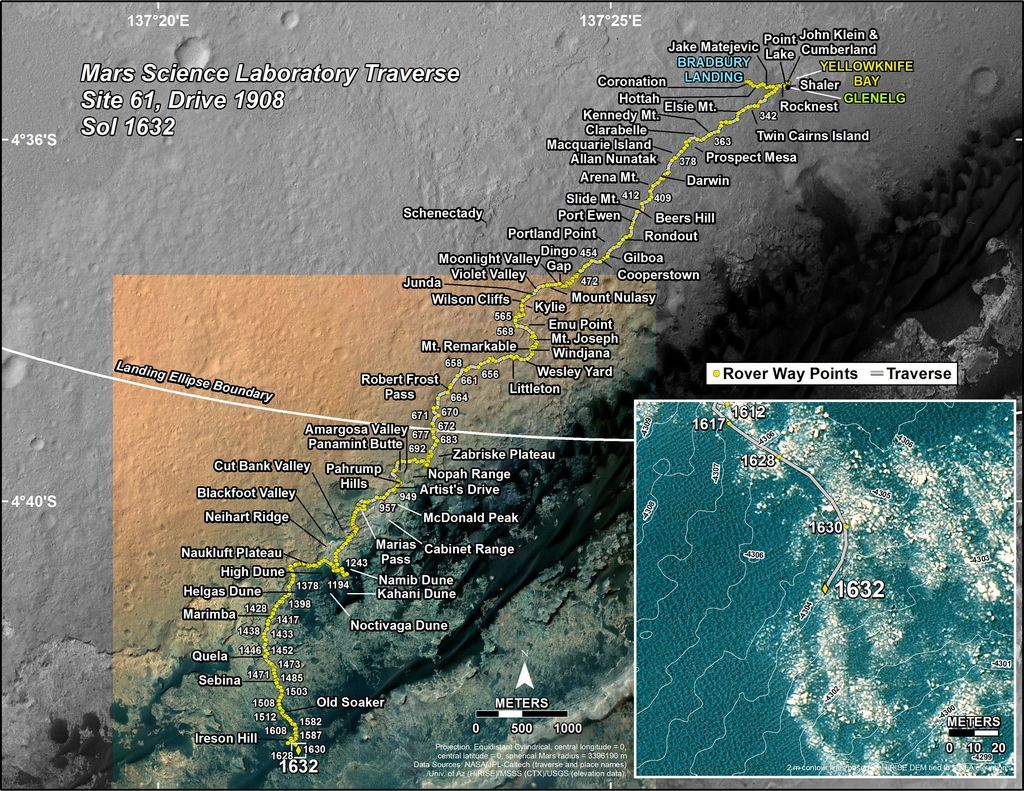
The base image from the map is from the High Resolution Imaging Science Experiment Camera (HiRISE) in NASA’s Mars Reconnaissance Orbiter.
Credit: NASA/JPL-CalTech/Univ. of Arizona
This map shows the route driven by NASA’s Mars rover Curiosity through the 1632 Martian day, or sol, of the rover’s mission on Mars as of March 10, 2017.
From Sol 1630 to Sol 1632, Curiosity has driven a straight line distance of about 87.96 feet (26.81 meters).
Since landing on Mars in August 2012, Curiosity’s total odometry for the mission is 9.77 miles (15.73 kilometers).
 Posted in

Credit: “The Martian”/Giles Keyte/20th Century Fox
Yes, Mark Watney in “The Martian” would be potato proud.
Indicators show potatoes can grow on Mars according to The International Potato Center (CIP).
The Potatoes on Mars project was conceived by CIP to both understand how potatoes might grow in Mars conditions and also see how they survive in the extreme conditions similar to what parts of the world already suffering from climate change and weather shocks are now experiencing.
Cross-disciplinary
The Potatoes on Mars team is a cross-disciplinary group of CIP and NASA scientists representing the fields of agriculture, plant breeding, astrobiology, medicine, and physics. Together they are exploring how to grow potatoes on Mars while simultaneously benefiting farmers here on Earth.
According to a CIP press release, potato breeder Walter Amoros explains that researchers are breeding potato clones that tolerate conditions such as soil salinity and drought.
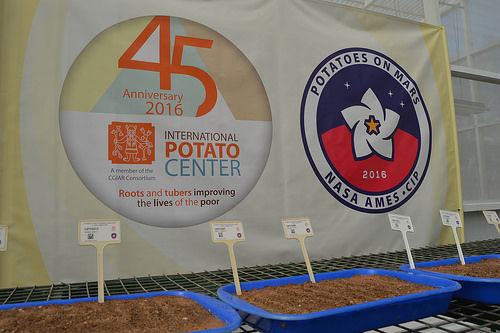
Credit: CIP
Dry, salty soil
In 2016, CIP brought Mars analog soil from the Pampas de La Joya desert in Southern Peru to its experimental station in La Molina, Lima. There CIP was able to show proof that potatoes could grow in this dry, salty soil with some help from fertilized Earth soil for both nutrition and structure.
“We have been looking at the very dry soils found in the southern Peruvian desert. These are the most Mars-like soils found on Earth,” says Chris McKay of NASA’s Ames Research Center. “This [research] could have a direct technological benefit on Earth and a direct biological benefit on Earth,” McKay adds.

Credit: CIP
CIP scientists have concluded that future Mars missions that hope to grow potatoes will have to prepare soil with a loose structure and nutrients to allow the tubers to obtain enough air and water to allow it to tuberize.
CIP is part of the CGIAR, a global partnership that unites organizations engaged in research for a food secure future. CGIAR research is dedicated to reducing rural poverty, increasing food security, improving human health and nutrition, and ensuring more sustainable management of natural resources.
Resources
For more information on this innovative research, go to:
Live streams of the experiment can be viewed at: http://potatoes.space/mars/
The CIP website is at: www.CIPotato.org
A video on the research can be found here:
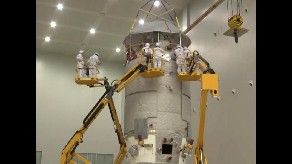
Tianzhou-1 supply ship is being readied for April launch.
Credit: CCTV-Plus
China’s state-run Xinhua news agency reports today that the final preparation for launching China’s first cargo spacecraft has begun.
The Tianzhou-1’s launcher has arrived at the Wenchang space complex.
Second phase
Tianzhou-1 is slated to be rocketed into Earth orbit atop a Long March-7, then dock with the now unoccupied Tiangong-2 space lab. A trio of dockings is planned between the space lab and the resupply vehicle.
Chinese space planners see the Tianzhou-1 mission, if successful, as moving into a second phase of their human space program.

China’s cargo ship will dock with the now-orbiting Tiangong-2 space lab and refuel that facility.
Credit: CMSE
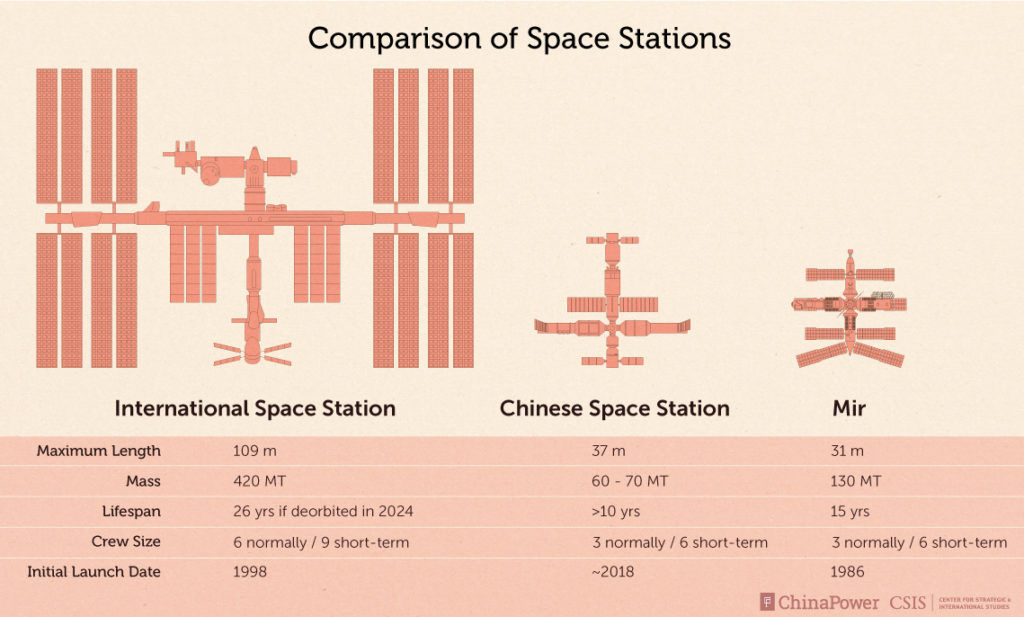
Adding resupply to China’s space abilities is crucial to the country establishing a larger space station in the 2022 time period.
Credit: CSIS
Piloted Moon vehicle
Meanwhile, word is that China is pressing forward on a new piloted spacecraft – a “multi-purpose” crew vehicle capable of supporting human flight to the Moon.
Zhang Bainan, a chief designer of China’s spacecraft systems, is quoted in China’s Science and Technology Daily that the new vehicle can support a crew of six in low Earth orbit and three to four for Moon landing scenarios.
Back in June of last year, the maiden flight of the CZ-7 launch vehicle carried a subscale re-entry capsule of the multi-purpose crew vehicle. The test capsule was recovered in Inner Mongolia after 19 hours of flight in Earth orbit.

China’s prototype test capsule for larger multi-crew vehicle flew last year.
Credit: js7tv.cn
Multi-purpose crew vehicle
As reported by ChinaSpaceReport.com, the China Academy of Space Technology (CAST) has been developing a new-generation multi-purpose crew vehicle for future manned spaceflight missions to low Earth orbit and beyond.
The not-yet-named spacecraft will be capable of carrying 2 to 6 crew members to Earth orbit, the Moon, Lagrange Points, Near Earth Asteroids, and Mars. Two versions of the spacecraft based on the same crew module but with different propulsion systems have been proposed: a 14-tonne mass version for LEO and deep space missions, and a 20-tonne mass version for manned lunar landing, ChinaSpaceReport.com reports.
The multi-purpose crew vehicle will be launched atop the man-rated CZ-7 or CZ-5B launcher. For lunar landing and deep space missions, the spacecraft will need to carry up to 4 crew members. For ferry flights to the LEO space station, the spacecraft is required to carry up to 6.
Based on the concepts of future lunar landing and deep space missions, the spacecraft is required to be capable of operating independently on orbit for at least 21 days, or 2 years if docked with the space station. Two types of service modules can be used by the spacecraft to meet different mission requirements.
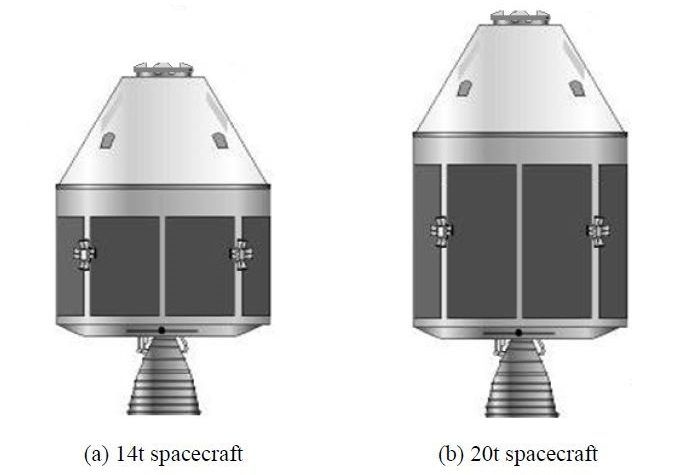
China’s multi-purpose piloted spacecraft, for low Earth orbit, the Moon…and beyond.
Courtesy: ChinaSpaceReport.com (used with permission)
Design features
ChinaSpaceReport.com drew from a Chinese Journal of Aeronautics paper, “Concept Definition of New-Generation Multi-Purpose Manned Spacecraft.”
Some of the proposed design features for China’s multi-purpose crew vehicle include:
— A two-module design, with a large habitable crew module at the front, and an uninhabitable cylindrical-shaped aft service module.
— The crew vehicle is twice the size of the Shenzhou re-entry module, capable of accommodating up to six astronauts.
— The spacecraft can be fitted with two different service modules, with different propulsion systems and propellant capacities.
— Instead of the bell-shaped re-entry module currently used by the Shenzhou spacecraft, the next-generation crew vehicle will have a blunt cone-shaped crew module, similar to that of the Boeing CST-100 or Orion CEV.
— The multi-purpose crew vehicle will be recovered at sea, at a location near the Earth equator off Chinese coast, while the land recovery capability is retained as backup.
Robotic moon mission
Zhang’s comments are prelude to an ambitious robotic lunar landing mission set for later this year.
Chang’e-5 is being readied for liftoff by a Long March-5 boost from Wenchang, a mission focused on landing, then gather lunar materials for return to Earth.

Hu Hao, the chief designer of the third phase of China’s lunar exploration program.
Credit: CCTV-Plus
According to Chinese news services, the over 8-ton Chang’e-5 is comprised of four parts: the “orbiter” “lander” “ascender” and a “returner” – an Earth reentry module.
If successful, the Chang’e-5 mission would be the first lunar sample return to Earth in over 40 years.

Credit: Bob Sauls – XP4D/Explore Mars, Inc. (used with permission)
Between the close of the Cold War and the more recent retirement of the U.S. shuttle fleet, we’ve long since left the first space age behind. But now it seems there’s a new space race brewing—one that may take humans out of our planet’s orbit.
At the height of the Cold War, the first space age was a geopolitical race between superpowers eager to outreach each other.
Today’s space race is a more complex interplay of networked nations and private players alternatively competing against, and collaborating with, each other.
New global players
Once the exclusive provenance of old power nations, space exploration has increasingly opened to new global players with India, China, Nigeria, Japan, the EU, and the UAE getting in the race.
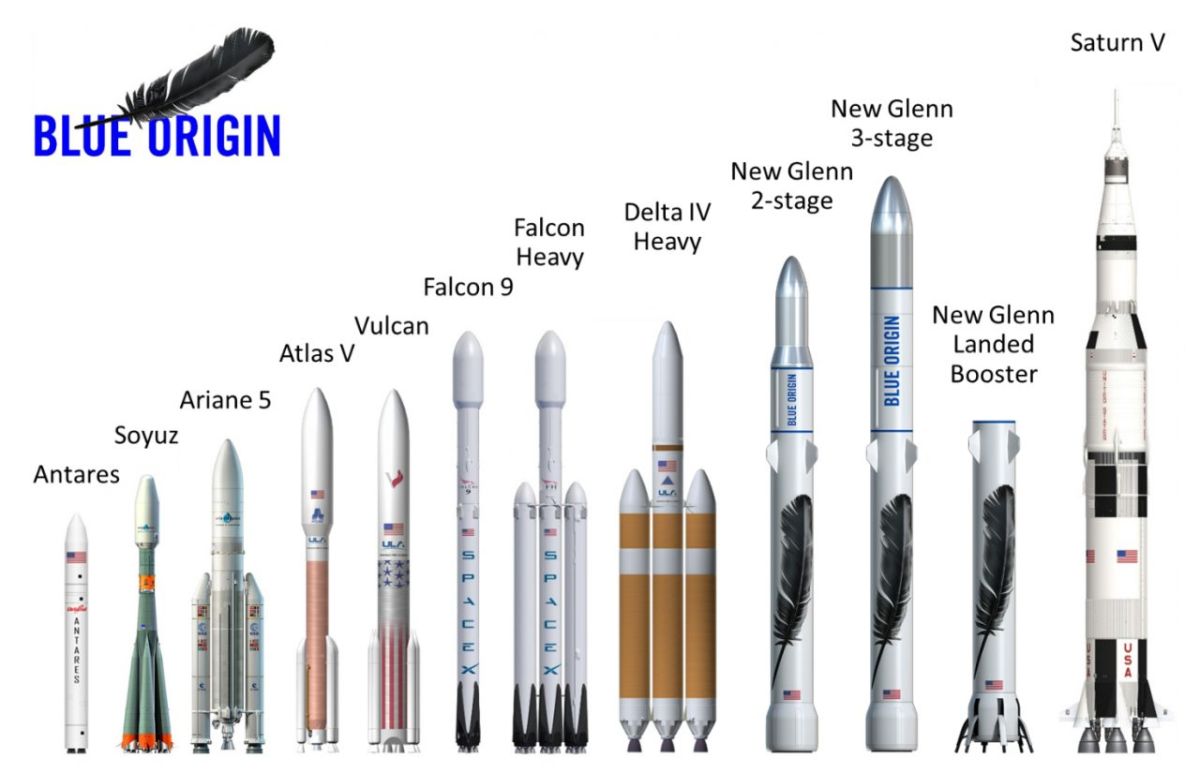
Private enterprises are also playing an increasingly prominent role in our interplanetary yearnings, as evidenced by the ventures backed by Jeff Bezos, Elon Musk, and Richard Branson.
Credit: Blue Origin
NASA is still very much in the game but without a moonshot-like commitment for Mars, their projected 2040 piloted mission seems far off. A start-up company, or an upstart country, may beat us there—or perhaps help us all get there together as partners.
Check out this Wednesday, March 8th discussion sponsored by New America in Washington, D.C. to consider whether it will be competition or cooperation that finally gets us to Mars and beyond.
Check out this video of today’s gathering at:
https://www.youtube.com/watch?v=Z4Q2OOADaTc
 A House Space Subcommittee held a hearing today on regulating space, airing issues that touch on innovation, liberty, and international obligations.
America’s future in outer space — from asteroid mining, to private moon missions, to satellite servicing — there is great promise that American commercial space companies could enjoy profits and discover scientific benefits to being in outer space.
This hearing explores an opportunity for Congress to streamline processes and enhance the strength of private sector space activities. For instance, stakeholders continue to raise concerns that they need certainty to attract investments and that they face pressing short-term launch dates and regulatory risks.
Written testimony:
Laura Montgomery, attorney and sole proprietor, Ground Based Space Matters, LLC
Dr. Eli Dourado, senior research fellow and director, Technology Policy Program, Mercatus Center, George Mason University
Mr. Douglas L. Loverro, former deputy assistant secretary of defense for space policy, U.S. Department of Defense
Mr. Dennis J. Burnett, adjunct professor of law, University of Nebraska-Lincoln, College of Law
Dr. Henry B. Hogue, specialist in American national government, Congressional Research Service
Letters for the record:
The Heritage Foundation
The Competitive Enterprise Institute
TechFreedom
The Niskanen Center
Go to hearing video at:
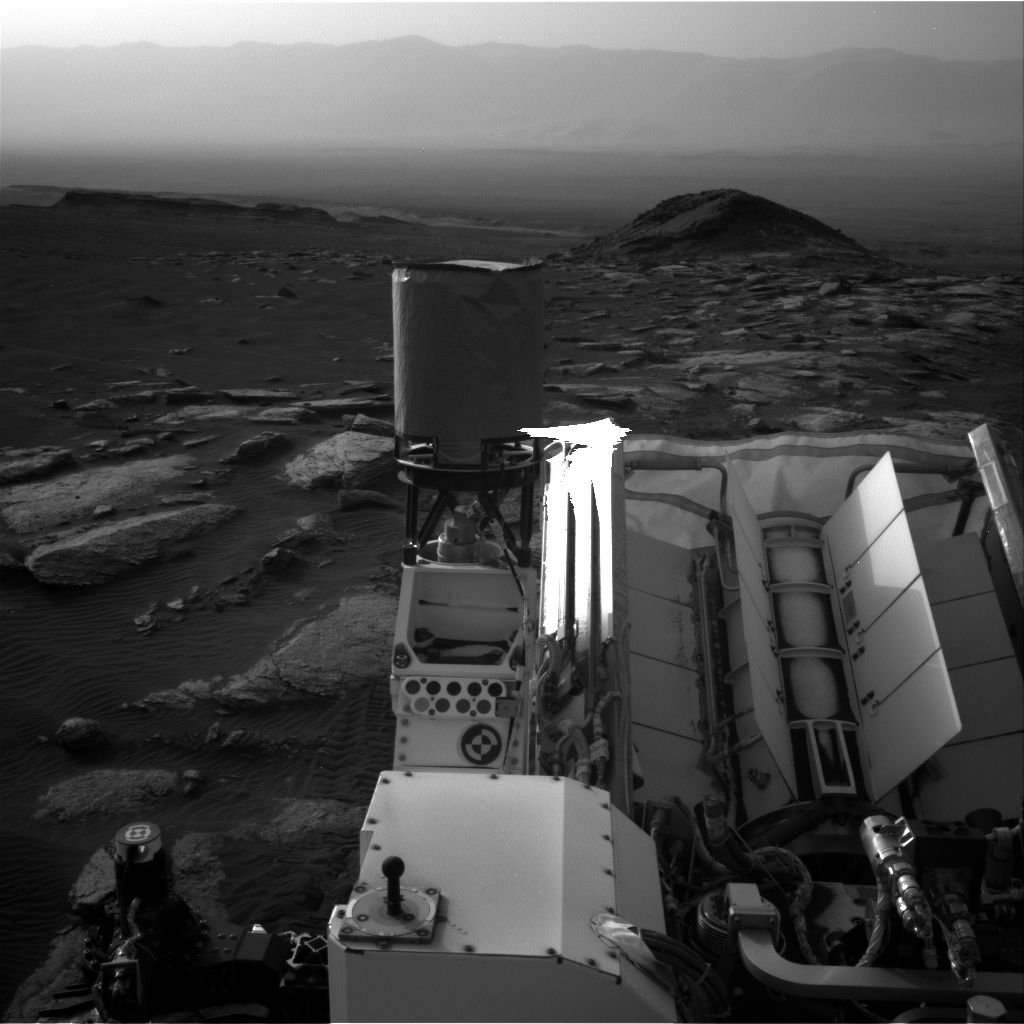
Curiosity Navcam Right B image taken on Sol 1628, March 6, 2017.
Credit: NASA/JPL-Caltech
NASA’s Curiosity rover on Mars is busy at work performing Sol 1631 duties.
Ryan Anderson, a planetary scientist at the USGS Astrogeology Science Center in Flagstaff, Arizona, reports that exciting news from a weekend plan is that the Mars Hand Lens Imager (MAHLI) dust cover closed as planned, “so we’re back in business with MAHLI.”
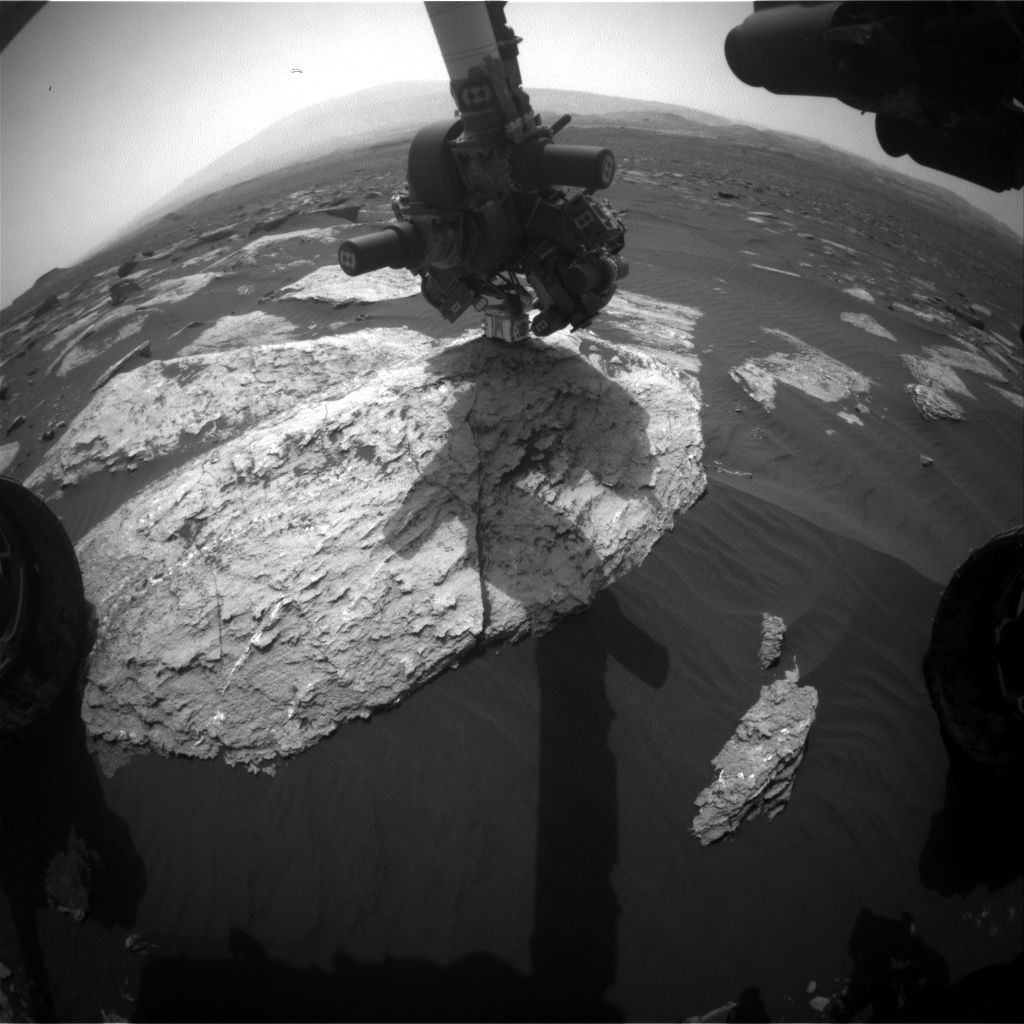
Curiosity Front Hazcam Right B image taken on Sol 1630, March 7, 2017.
Credit: NASA/JPL-Caltech
Vein observations
The Sol 1630 plan was slated to start with Chemistry & Camera (ChemCam) observations of a vein called “Temple Stream”, a soil target called “Mattawamkeag”, and the bedrock target “Vassalboro” to coordinate with an Alpha Particle X-Ray Spectrometer (APXS) observation of “Sangerville.”
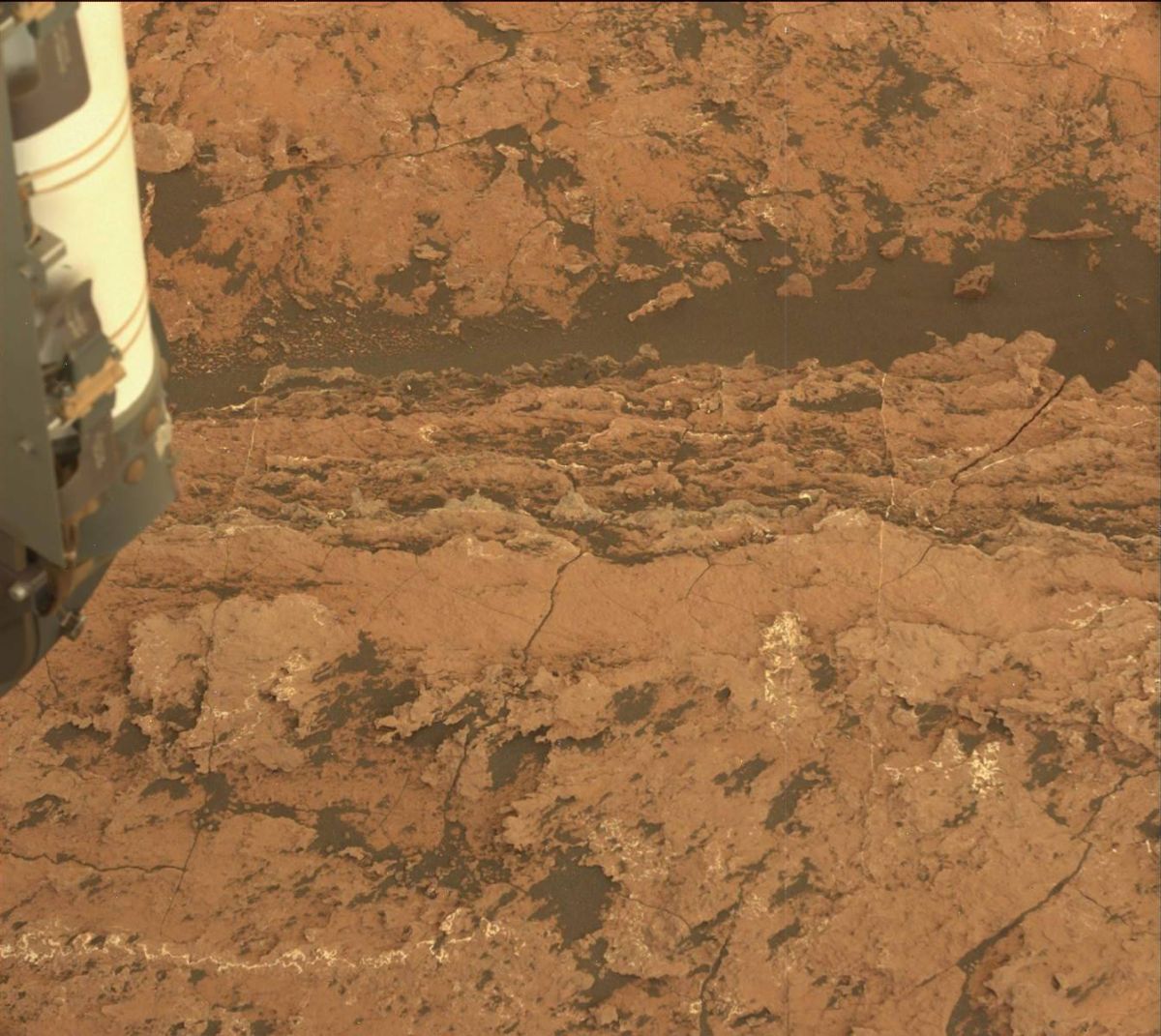
Curiosity Mastcam Left image taken on Sol 1628, March 6, 2017.
Credit: NASA/JPL-Caltech/MSSS
MAHLI was slated to also observe Sangerville, and Mastcam will document each of these targets. After that, the plan is to drive roughly 130 feet (40 meters) and collect post-drive imaging.
Untargeted science
“Since we’re driving on Sol 1630, Sol 1631 will be dedicated to untargeted science,” Anderson explains.
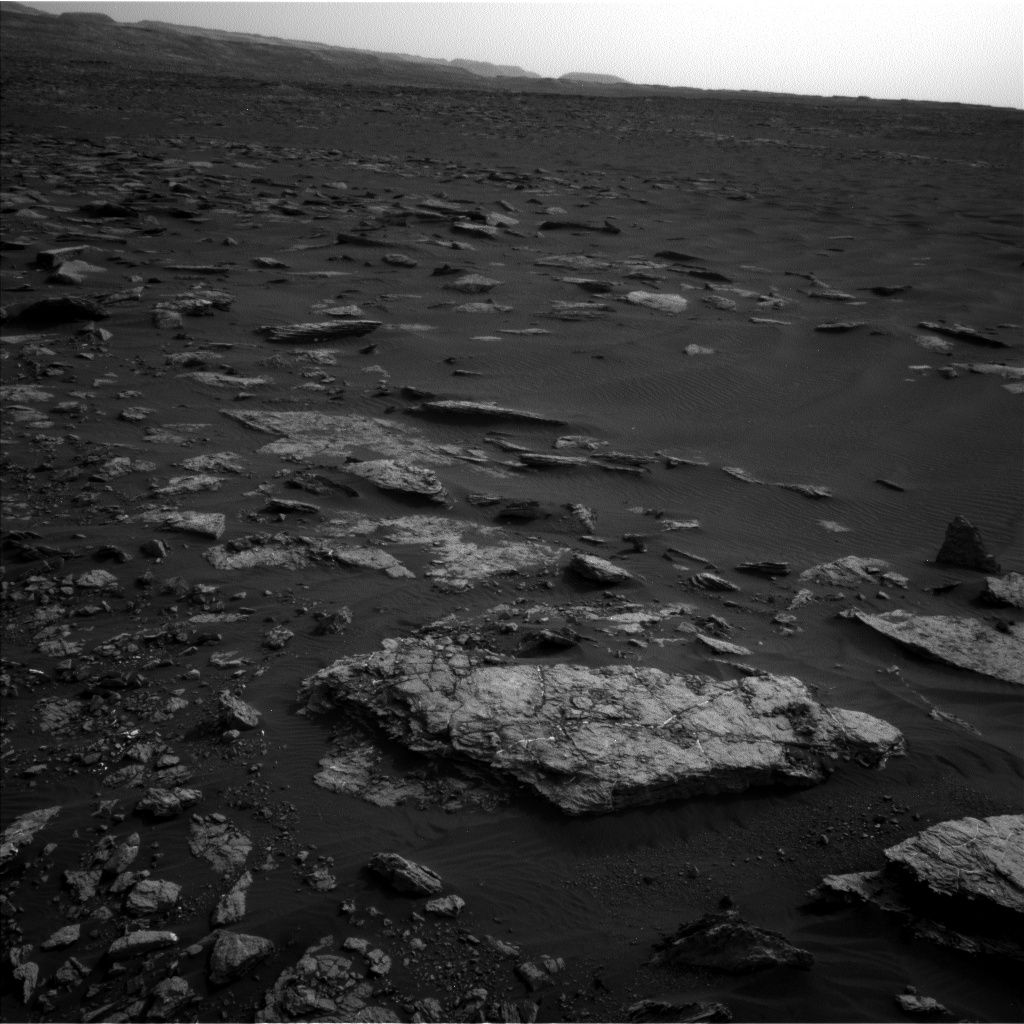
Curiosity Navcam Left B image taken on Sol 1630, March 8, 2017.
Credit: NASA/JPL-Caltech
Curiosity’s ChemCam has an Autonomous Exploration for Gathering Increased Science (AEGIS) observation, as well as some calibration observations. AEGIS software analyzes images from a wide-angle camera as the basis for autonomously selecting rocks to photograph with a narrower-angle camera.
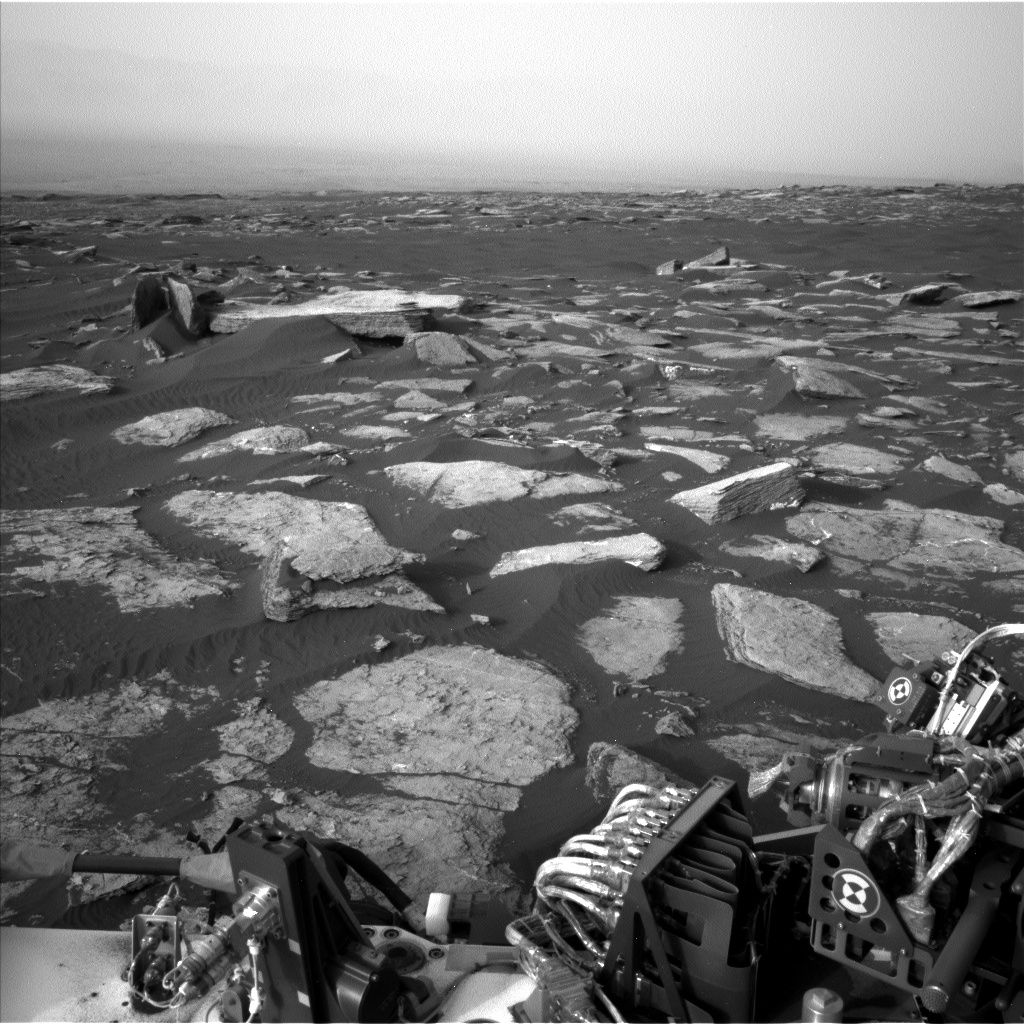
Curiosity Navcam Left B image taken on Sol 1628 March 6, 2017.
Credit: NASA/JPL-Caltech
This activity will be followed by Navcam and Mastcam atmospheric observations, including several observations to watch for dust devils, Anderson concludes.
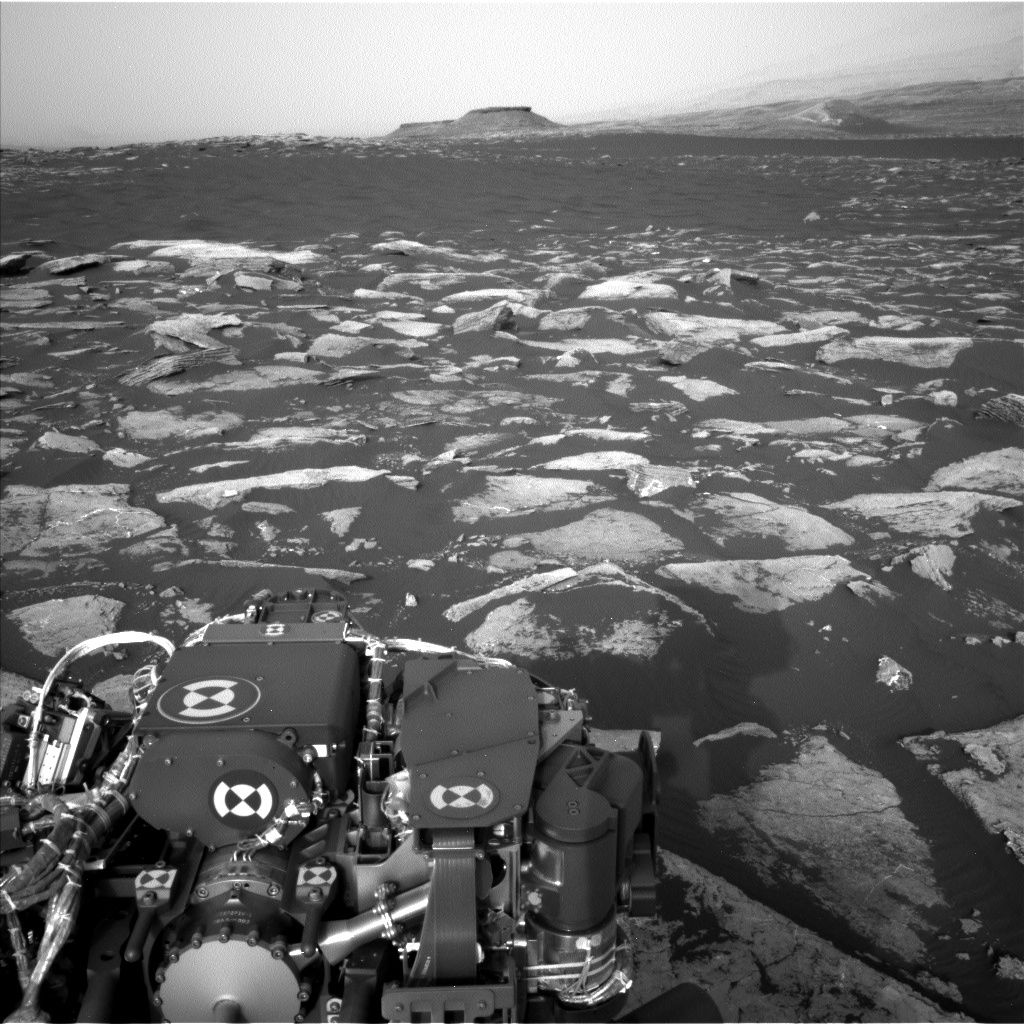
Curiosity Navcam Left B Image taken on Sol 1628, March 6, 2017.
Credit: NASA/JPL-Caltech
Now in Sol 1629, NASA’s Curiosity Mars rover continues its Bagnold Dunes Campaign.
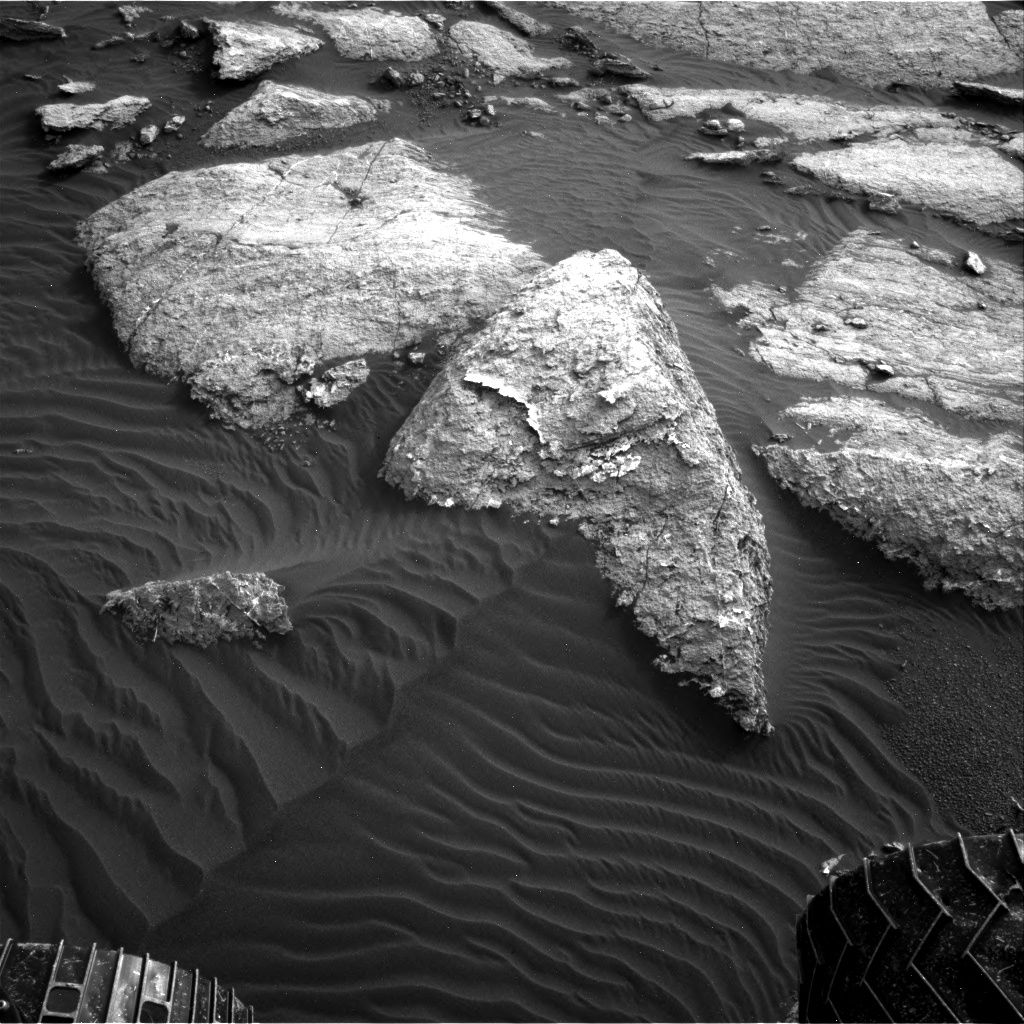
Curiosity Navcam Right B image taken on Sol 1628, March 6, 2017.
Credit: NASA/JPL-Caltech
This week promises more stunning views of surrounding scenery, assessing dune ripples and changes in sand movement, as well as batches of bedrock imagery.
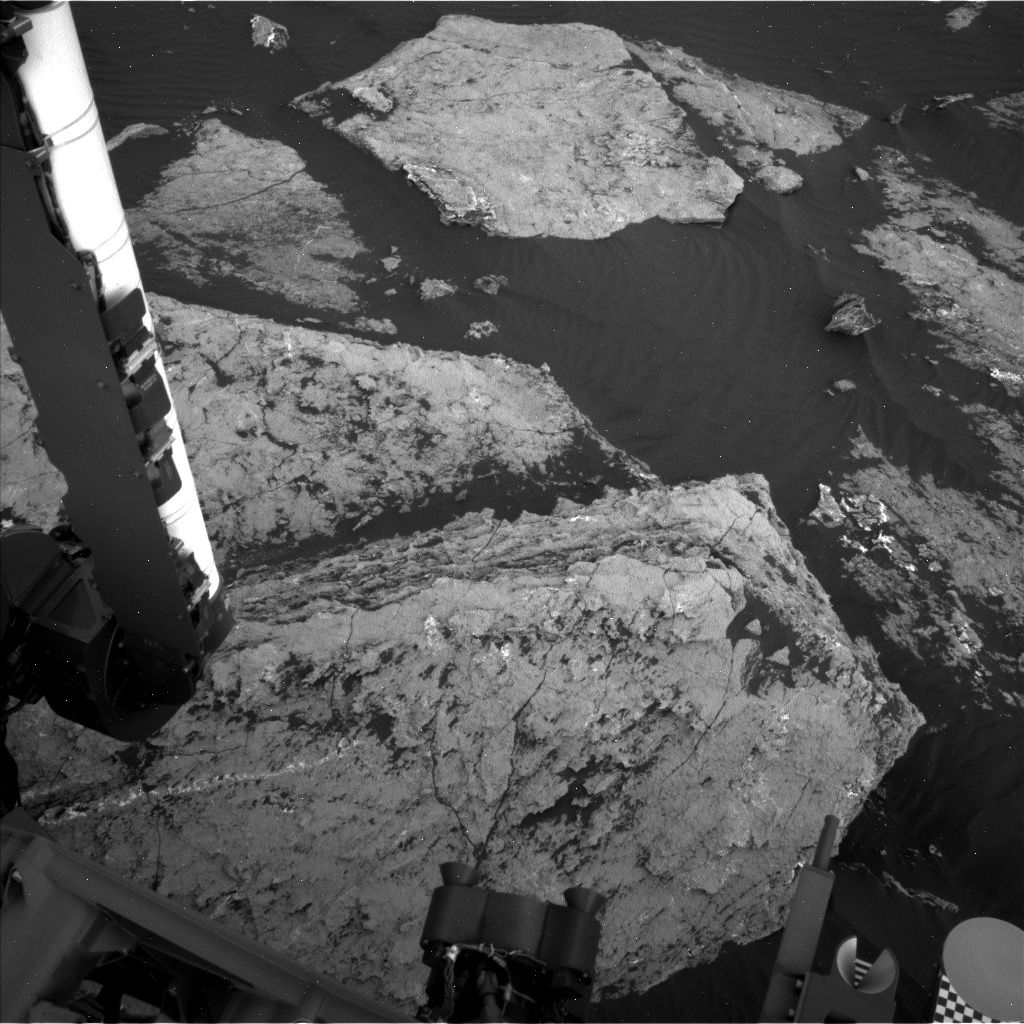
Curiosity Navcam Left B Image taken on Sol 1628, March 6, 2017.
Credit: NASA/JPL-Caltech
Rover imagery just in shows new views from the robot…including a little “rock climbing.”
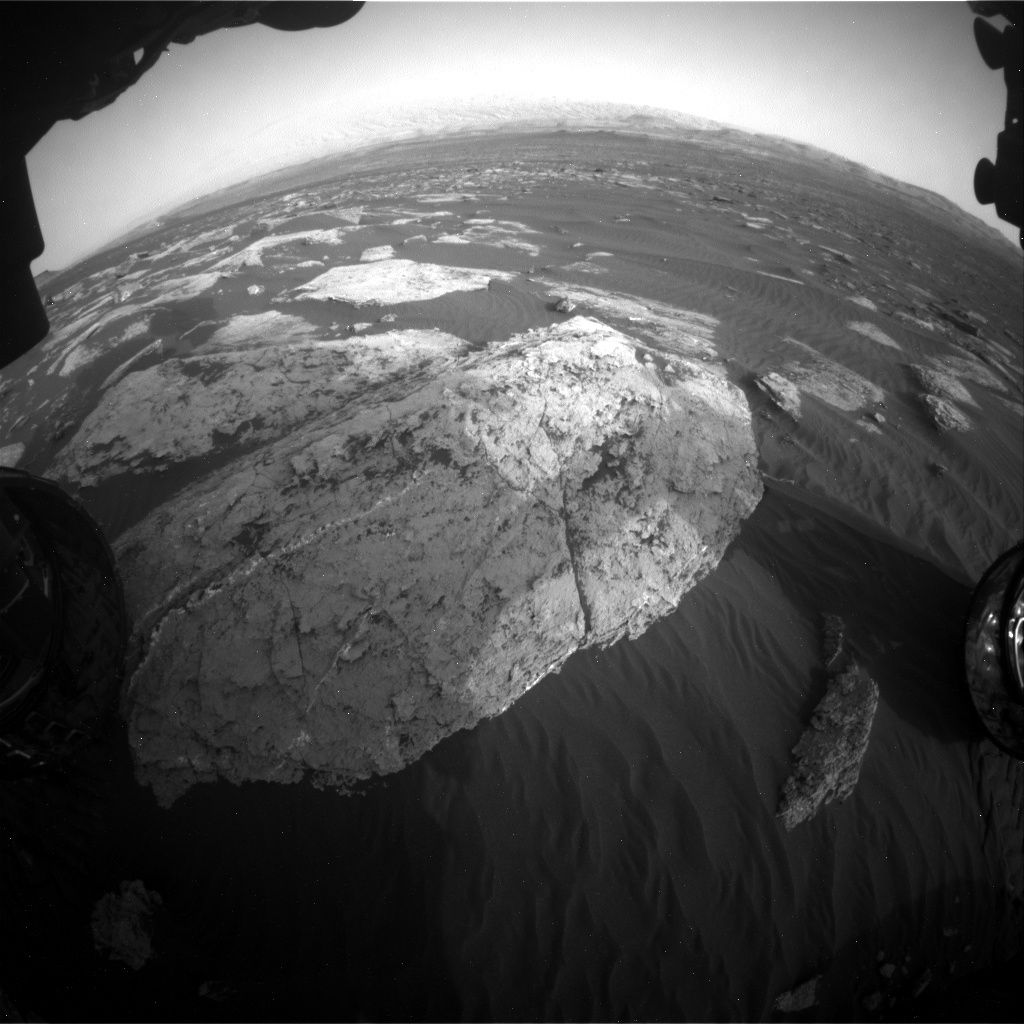
Curiosity Front Hazcam Left B image taken on Sol 1628, March 6, 2017.
Credit: NASA/JPL-Caltech
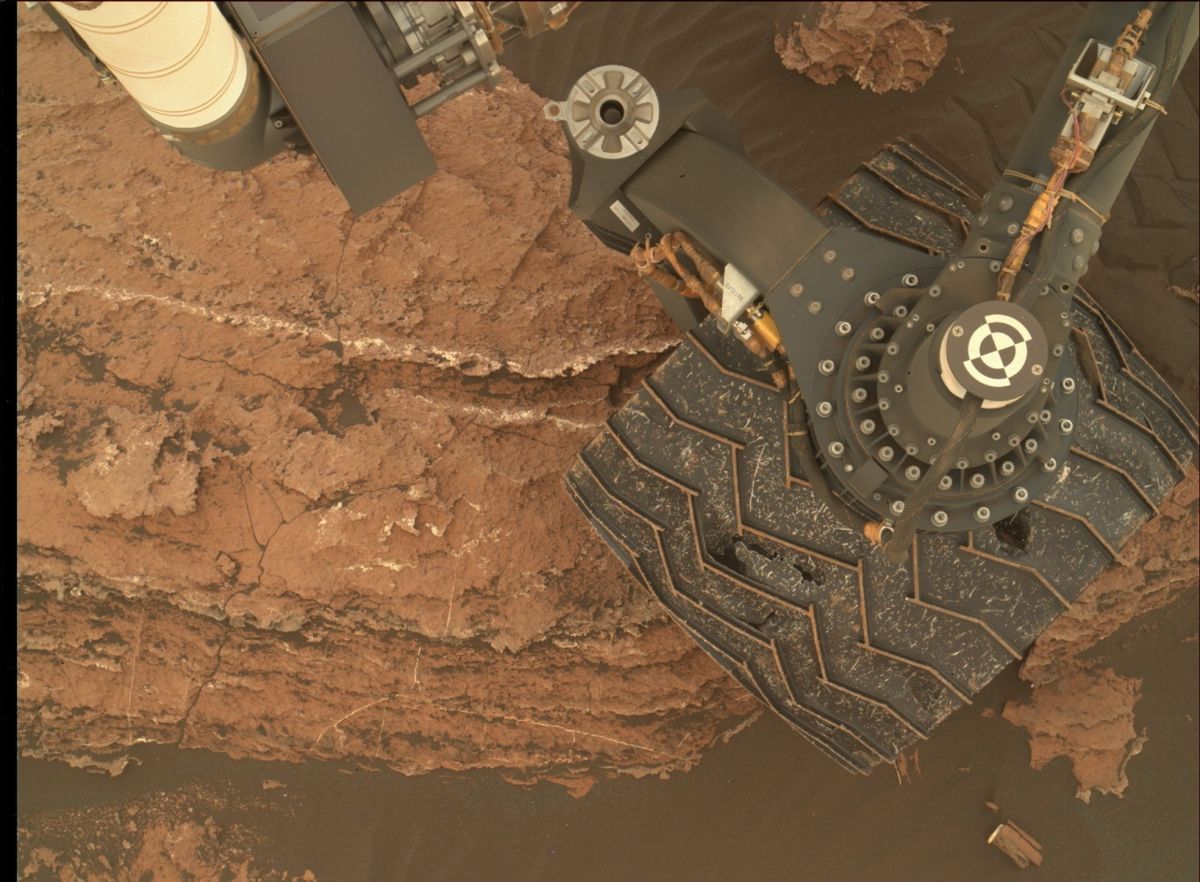
NASA’s Mars rover Curiosity acquired this image using its Mars Hand Lens Imager (MAHLI), located on the turret at the end of the rover’s robotic arm, on March 6, 2017, Sol 1628.
Credit: NASA/JPL-Caltech/MSSS

China presses forward on its space station work.
Credit: CMSE
China is pushing forward on its plans to establish a space station in the 2020s.
A first step is flying its cargo resupply spacecraft, the Tianzhou-1, set for liftoff next month.
Meanwhile, China is readying a space station core module for flight in 2018, one of many segments that will comprise the orbiting complex due for completion around 2022.
Assembly of that central module — named “Tianhe-1” — has already been completed and tests are currently under way, reports Bao Weimin of the China Aerospace Science and Technology Corp. (CASC).
Outpost longevity
The Chinese space station will initially be much smaller than the current International Space Station (ISS), but could be expanded for future scientific research and international cooperation, according to the country’s space officials.

Wenchang Space Launch Center in south China’s Hainan Province.
Credit: CCTV
Given present plans to retire the ISS in 2024, China’s space station will be the only country with a permanent space station.
According to Bao, as reported by the state-run Xinhua news agency, the Chinese outpost will function in orbit for “dozens of years,” adding that all key parts of the facility are designed to be serviceable and replaceable.
China’s cargo ship will dock with the now-orbiting Tiangong-2 space lab and refuel that facility.
Credit: CMSE
In-orbit re-fueling
In mid- or late April, the Tianzhou-1 supply ship will depart from the Wenchang Space Launch Center in south China’s Hainan Province – launched atop a Long March-7 Y2 carrier rocket. If successfully placed into orbit, it will dock with the now-orbiting Tiangong-2 space lab three times and carry out experiments and tests.
Xinhua reports that, during the journey, Tianzhou-1 will orbit on its own for about three months and together with Tiangong-2 for about two months after their rendezvous.
Tianzhou-1’s flight will check and verify such technologies as supply of goods, in-orbit re-fueling and fast automated rendezvous and docking.
With tasks completed, the autopiloted Tianzhou-1 will fall back to Earth while Tiangong-2 is to remain in orbit and continue conducting experiments.

China’s Chang’e 3 Moon lander and Yutu rover. Next step is returning lunar samples back to Earth via the Chang’e-5.
Credit: Chinese Academy of Sciences
Moon lander
Also on China’s active space agenda for this year is a Long March-5 boost in November from Wenchang of the Chang’e-5 robotic Moon lander, a mission focused on landing, gathering select lunar materials for return to Earth.
According to Chinese news services, the over 8-ton Chang’e-5 is comprised of four parts: the “orbiter” “lander” “ascender” and a “returner” – an Earth reentry module.
If successful, the Chang’e-5 mission would be the first lunar sample return to Earth in over 40 years.
The former Soviet Union successfully executed three robotic sample return missions: Luna 16 returned a small sample (101 grams) from Mare Fecunditatis in September of 1970; February 1972, Luna 20 returned 55 grams of soil from the Apollonius highlands region; Luna 24 retrieved 170.1 grams of lunar samples from the Moon’s Mare Crisium (Sea of Crisis) for return to Earth in August 1976.
To view a video on readying the Chang’e-5 for its Mon mission, go to:
https://www.youtube.com/watch?v=oishjEeEcZE
Watch a video on Tianzhou-1 preparation at:
http://cd-pv.news.cctvplus.com/2017/0304/8044541_Preview_8570.mp4
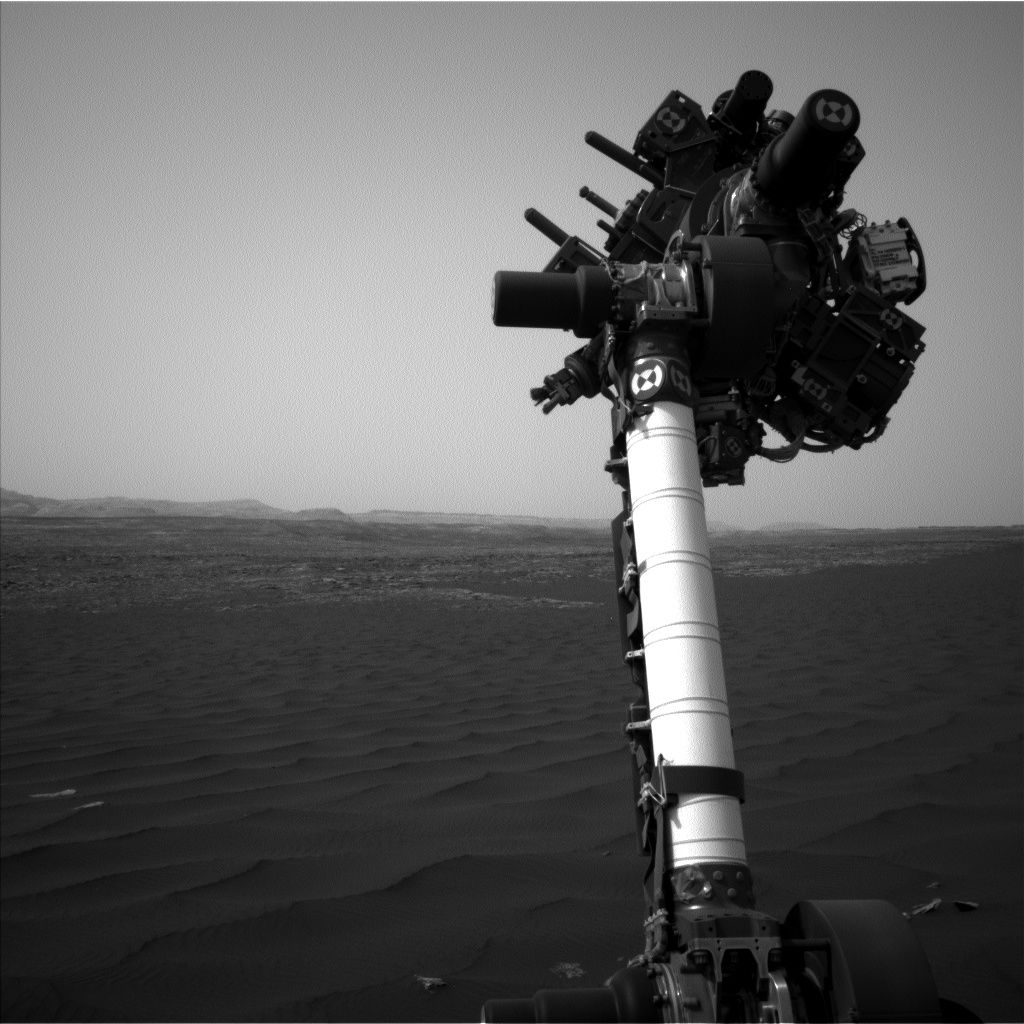
Curiosity Navcam Left B image taken on Sol 1625, March 2, 2017.
Credit: NASA/JPL-Caltech
NASA’s Curiosity Mars rover is now performing Sol 1627 science duties.
There is good news, explains Lauren Edgar, a research geologist at the USGS Astrogeology Science Center in Flagstaff, Arizona.
The Mars Hand Lens Imager (MAHLI) cover was successfully opened and the instrument is marked healthy again.
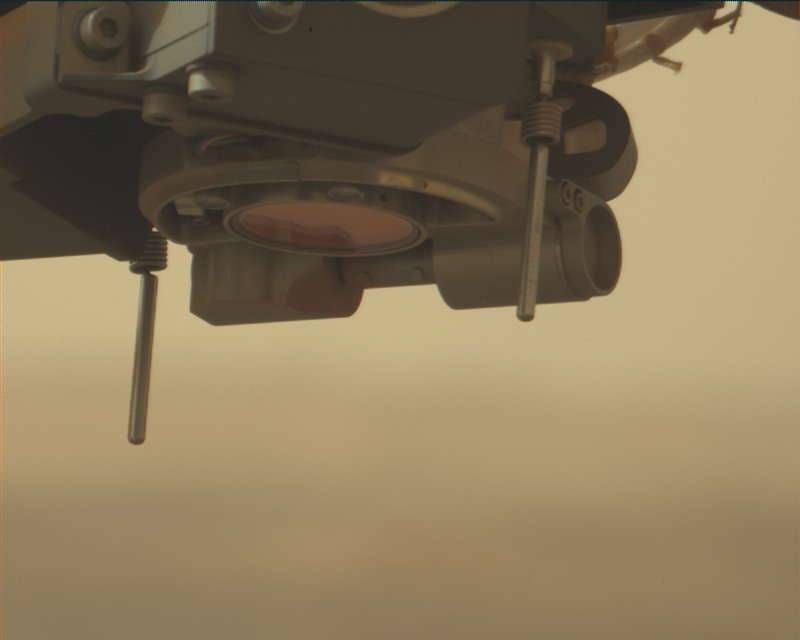
Curiosity Mastcam Right image of Mars Hand Lens Imager (MAHLI) dust cover taken on Sol 1625, March 2, 2017.
Credit: NASA/JPL-Caltech/MSSS
“That means it’s time to close the cover, and if that’s successful, drive away toward the next stop in the Bagnold Dunes Campaign,” Edgar adds.
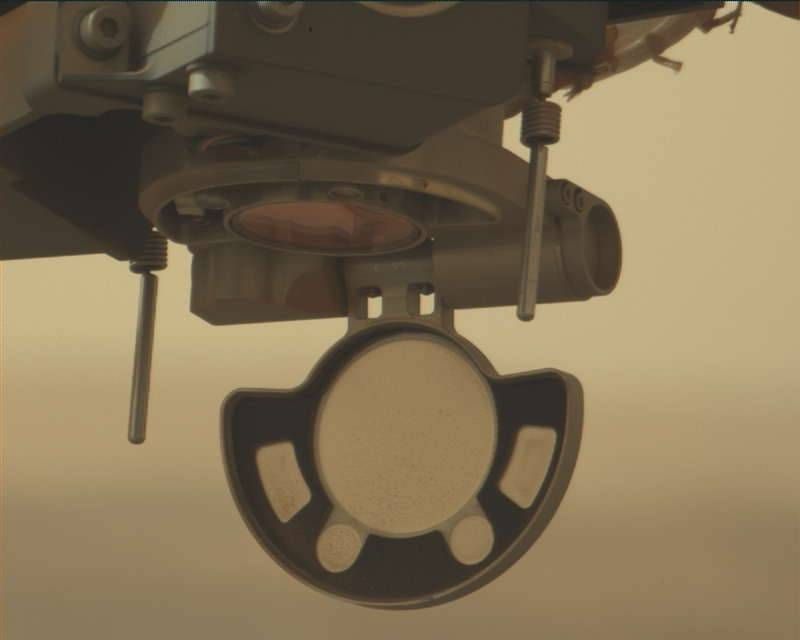
Curiosity Mastcam Right image of Mars Hand Lens Imager (MAHLI) dust cover taken on Sol 1625, March 2, 2017.
Credit: NASA/JPL-Caltech/MSSS
Ripple and bedrock observations
Curiosity is to acquire Chemistry & Camera (ChemCam) observations on “Swanback” and “Rangely” to assess the composition of a ripple crest and a bright patch of bedrock.
“We’ll also use Mastcam to image the rover deck to monitor the movement of fines. In the afternoon, we’ll close the MAHLI cover and run a few more diagnostics,” Edgar reports.
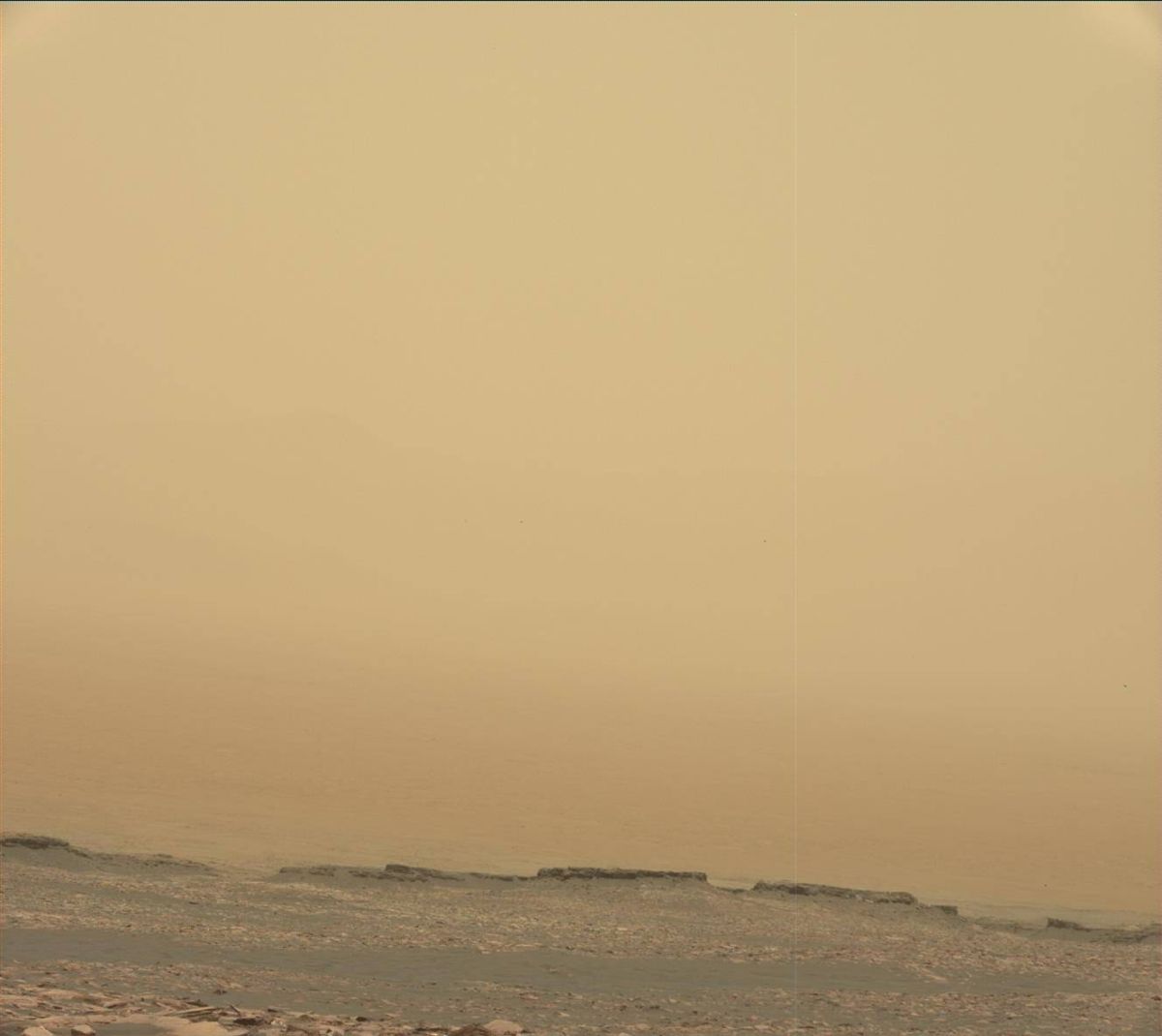
Curiosity Mastcam Left image taken on Sol 1625, March 2, 2017.
Credit: NASA/JPL-Caltech/MSSS
Monitor atmospheric dust
Also on tap for the rover on the weekend is an early science block for environmental monitoring, including Navcam and Mastcam observations to look for clouds and monitor the amount of dust in the atmosphere.
Additionally, the robot’s Navcam will search for dust devils.
Plans call for Mastcam to acquire a large mosaic of the stratigraphy exposed beneath a hematite ridge, and ChemCam will target “Thorofare” to assess the composition of veins in the local bedrock.
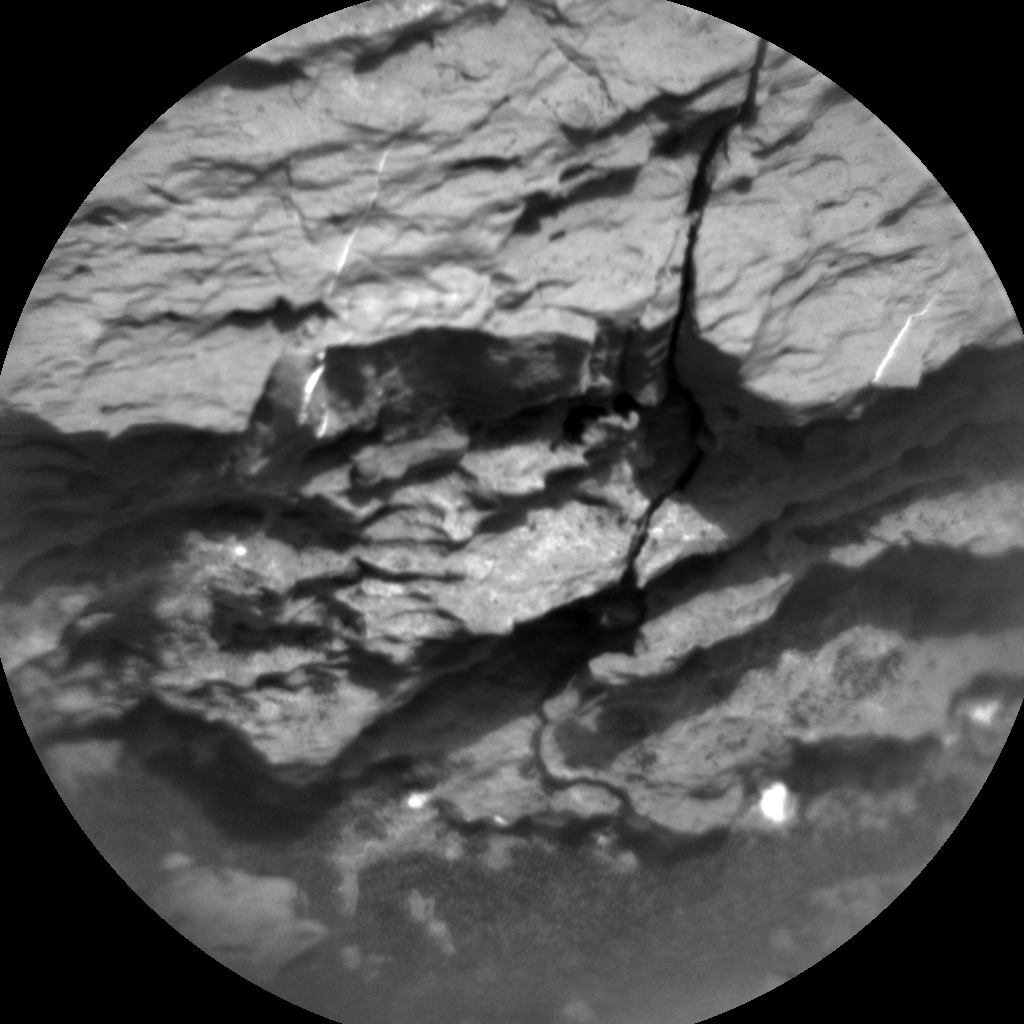
Curiosity ChemCam Remote Micro-Imager photo acquired on Sol 1626, March 3, 2017.
Credit: NASA/JPL-Caltech/LANL
Next up: new views!
“We’ll also acquire a long distance ChemCam RMI mosaic to monitor the slope of Mt. Sharp and look for changes,” Edgar says, and the rover’s Mastcam will continue to image and monitor changes in sand movement.
The plan also calls for Curiosity to drive further to the south, and take post-drive imaging to prepare for targeting next week.
Curiosity planners have also scheduled more environmental monitoring activities, follow-up to an autonomously-selected ChemCam target, and carry out ChemCam calibration activities.
“Looking forward to driving again,” Edgar concludes, “and getting a new view!”
Hu Hao, the chief designer of the third phase of China’s lunar exploration program.
Credit: CCTV-Plus
China space officials are underscoring the attributes of its Chang’e-5 lunar lander and return sample project.
Chang’e-5 is slated to become the country’s first lunar probe to automatically collect samples, launch on the Moon, and engage in an auto-pilot docking in lunar orbit, according to Hu Hao, the chief designer of the third phase of China’s lunar exploration program.
“The preparation of Chang’e 5 lunar probe is advancing steadily according to schedule,” Hu explains.
Challenges and breakthroughs
As reported by CCTV-Plus, the Chinese craft is scheduled for shipping to the Wenchang launch complex in August, then prepped for launch atop a Long March 5 carrier rocket around November.

Credit: CCTV-Plus
Hu notes that there are several challenges and breakthroughs the Chang’e-5 is going to make.
As for the primary task of collecting samples on the Moon, Hu said “one is using a drill. After the probe lands on the Moon, the drill will be used to collect samples beneath the surface. The other is to use a mechanical arm to collect samples on the surface, which contains unique information of the Moon.”
Return leg
Then there’s the return leg from the Moon back to Earth.
“We also have to design a docking in lunar orbit,” Hu added. “After the docking, the samples will be transferred, from the ascending part to the reentry capsule. This is also a complicated process.”

China’s Moon program intends to support a lunar sample return in 2017.
Credit: Chinese Academy of Sciences
En route from lunar orbit, the reentry capsule is to fly back to Earth at roughly 11.2 kilometers per second.
Important link
Chang’e-5 is an important link in the whole lunar exploration project, Hu notes, a three-step initiative of flying around the Moon, landing on the Moon and returning to Earth.
Chang’e-1 and Chang’e-3 completed the first two steps, with Chang’e-5 set to complete the last step of returning to Earth.
China is readying a Long March-5 rocket for liftoff in the first half of this year. Following that launch, the timing of Chang’e-5’s flight will be determined.

Following a circumlunar voyage in 2014, a return capsule parachuted to Earth. This test was a prelude to China’s Chang’e-5 lunar mission being readied for its return sample mission later this year.
Courtesy: China Space
Technology roadmap
“To be realistic, [the lunar probe] will provide our scientists with qualified lunar samples for research, which will enable us to have a deeper understanding of the Moon,” Hu points out. “Technologically, a technology roadmap is necessary because it will be a good technological basis for our following deep space explorations and manned space travels to the Moon and other planets.”
Also on China’s Moon exploration agenda, Chang’e-4 — a backup probe for the Chang’e-3 — is slated to be launched in 2018. That probe is targeted to achieve the first ever soft-landing on the far side of the Moon.
For a view of Chang’e-5 preparations, go to these CCTV-Plus videos:
http://cd-pv.news.cctvplus.com/2017/0301/8044288_Preview_6255.mp4
http://pv.news.cctvplus.com/2017/0303/8044438_Preview_3189.mp4
http://pv.news.cctvplus.com/2017/0303/8044462_Preview_8867.mp4

