Archive for May, 2016
 Author:
  May 4th, 2016
SpaceX Dragon makes use of Supersonic Retro-Propulsion (SRP) to land on Mars.
Credit: SpaceX
One small tweet for humankind…a giant leap to Mars?
A lot of high fives have been flying since Elon Musk and his fellow Musketeers tweeted April 27: “Planning to send Dragon to Mars as soon as 2018. Red Dragons will inform overall Mars architecture, details to come.”
Details aside, at SpaceX they’ve never been secretive about future intentions, as noted on the company’s website.
“SpaceX designs, manufactures and launches advanced rockets and spacecraft. The company was founded in 2002 to revolutionize space technology, with the ultimate goal of enabling people to live on other planets.”
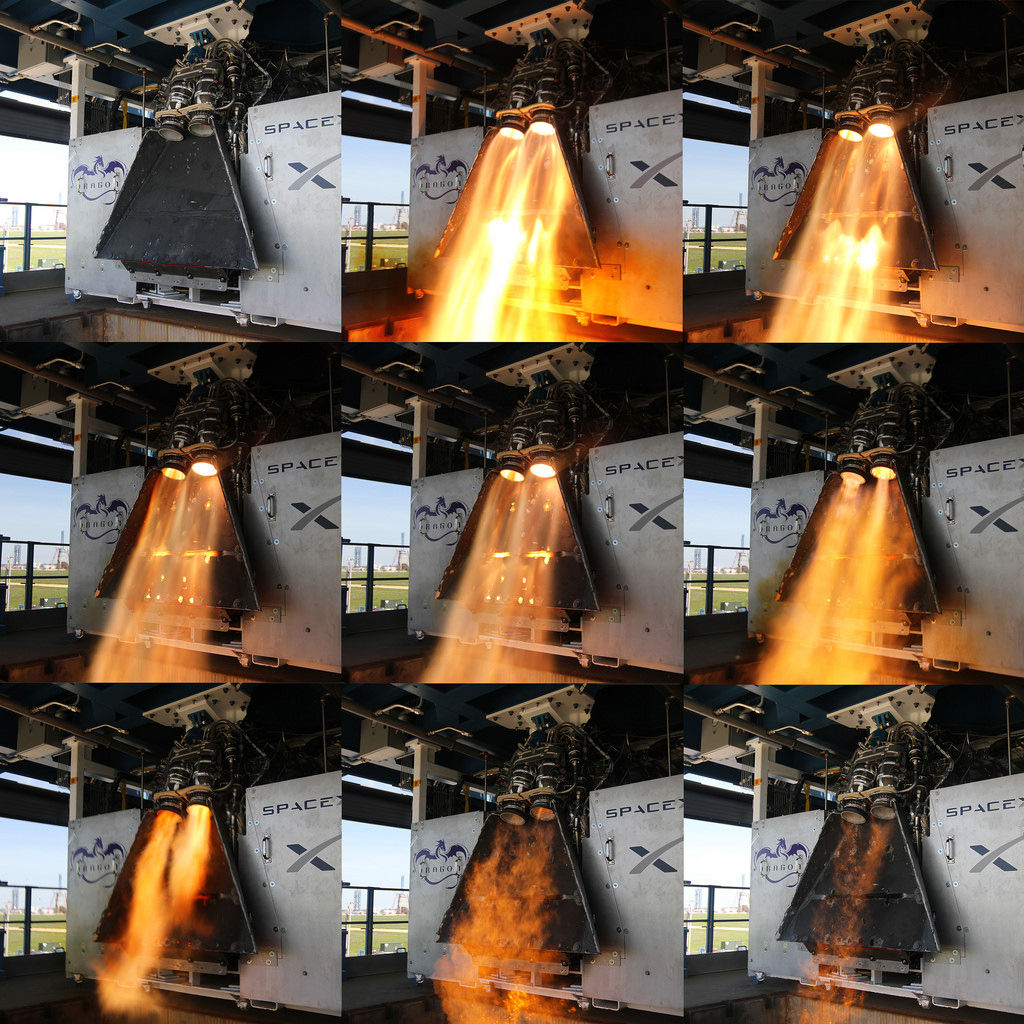
SpaceX testing of SuperDraco rocket engines is in full-blast mode.
Credit: SpaceX
To that end goal, enter the SpaceX SuperDraco – a hypergolic propellant liquid rocket engine. It is part of SpaceX’s Draco family of rocket engines. A redundant array of eight SuperDraco engines provides fault-tolerant propulsion for use as a launch escape system and propulsive-landing thrust for the Dragon V2 passenger-carrying space capsule.
Dealing with Deceleration
The other key to the kingdom of Mars is Supersonic Retro-Propulsion (SRP).
Human-scale Mars landers require the delivery of much heavier payloads to the surface of Mars than previously attempted. Most current concepts for large Mars landers are not able to passively achieve subsonic velocities and must use SRP to perform the final deceleration and a soft landing on the Martian surface.
“We have been studying SRP-based entry, descent and landing systems for both human and robotic scale for a few of years now. I am hopeful,” explains Rob Manning, chief engineer and a Mars authority at the Jet Propulsion Laboratory on getting big payloads down safe and sound on the Red Planet.
Parachutes are still in the future for Mars Science Laboratory/Curiosity rover-scale missions and smaller, Manning told Inside Outer Space. “SRP has a big overhead in cost and mass that the big launch vehicles can help overcome,” he adds.
Building blocks
Bullish on Elon Musk’s march to Mars is Robert Braun of the Georgia Institute of Technology’s Daniel Guggenheim School of Aerospace Engineering.

Supersonic Retropropulsion profile.
Credit: Humphrey Price, Robert Manning, Evgeniy Sklyanskiy, Robert Braun
“SpaceX’s plan to land a robotic mission on Mars is inspiring, ground-breaking, and a testament to the innovative culture that is alive and well in the U.S. space industry,” Braun tells Inside Outer Space.
“Once Falcon Heavy and Dragon 2 are flying on Earth, SpaceX will have the building blocks needed to land on Mars,” Braun adds.

First stage landing taken by remote camera photo from “Of Course I Still Love You” droneship on April 8, 2016.
Credit: SpaceX
Mars-relevant
Braun points out that SpaceX utilizes supersonic retropropulsion technology in Mars-relevant conditions each time they return their first-stage booster to Earth.
“Having reviewed this data, I don’t believe there are any SRP showstoppers on the path to the Mars surface,” Braun says. Because this entry, descent and landing approach — blunt-body entry followed by SRP to the surface — is scalable to larger payloads “this EDL architecture has promise for one day landing humans on Mars,” he advises.
“Don’t get me wrong, any landing on Mars, particularly a new architecture, is a risky proposition,” Braun points out. “But, you’ve got to give them credit. Their plan relies extensively on systems they will be flying on Earth over the next few years. That certainly improves their chances of success at Mars,” he concludes.
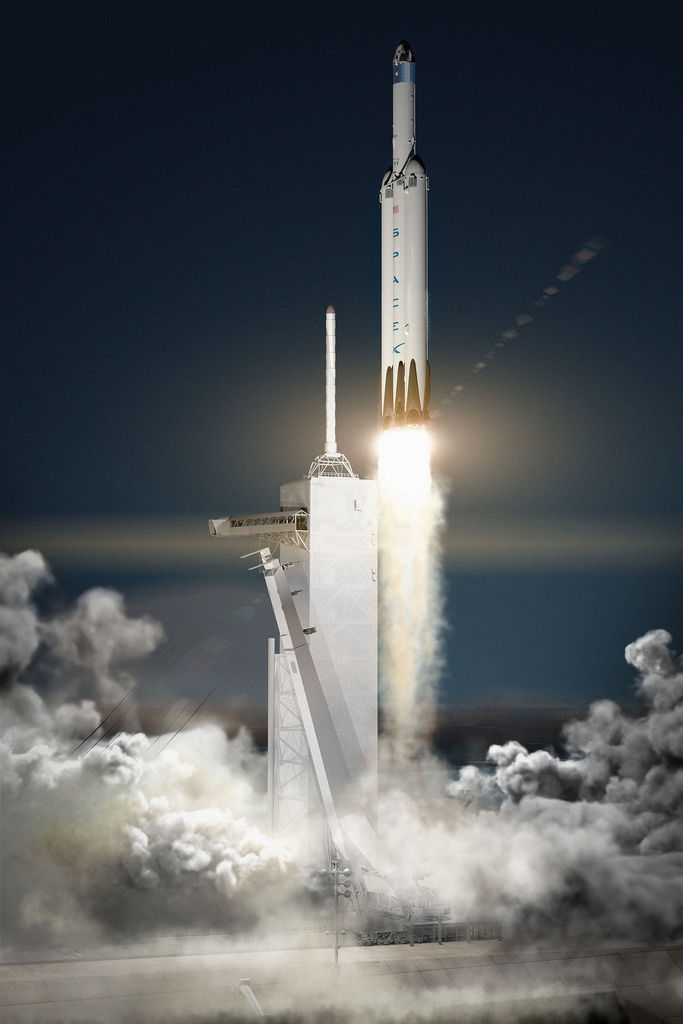
Artist’s view of still to fly SpaceX Falcon Heavy.
Credit: SpaceX
Details to follow
One of those details yet to follow is what possible payloads could Dragon ships plop down on Mars? Options include deployable science gear to look for life, trial-run oxygen and propellant production gear using local resources on Mars – perhaps even shoot back to Earth samples of the Red Planet.
For sure, NASA engineers are keen on instrumenting up the tail pipe any Mars-bound Dragon to gain more SRP data.
Musk has advised that he’ll roll out details on the SpaceX Mars plan during the International Astronautical Congress to be held September 26-30 this year in Guadalajara, Mexico.
 Posted in

Single Person Spacecraft (SPS) mock up.
Credit: Genesis Engineering
In space history, only a handful of Russian and American travelers have experienced single-person orbital flight.
That “you’re on your own” encapsulated feeling is palpable as you face your instrument panel.
A three month competition has led to some creative interiors for a single-person spacecraft. Genesis Engineering Solutions (GES) in Lanham, Maryland sponsored the contest as a way to integrate student creativity into the development of their Single-Person Spacecraft (SPS).
Shirtsleeve operations
According to GES, the SPS includes an inner pressure vessel for shirtsleeve (normal clothing) operations and an outer unpressurized cylinder for micrometeoroid/orbital debris and impact protection.
Subsystems are packaged in the space between and in the overhead crown leaving the interior open for control, displays and other outfitting.
An SPS astronaut will have rapid access to the work site to repair the aging International Space Station…or to an asteroid for sample collection, for example.

WHISPS Team proposal, spotlighting usability testing using full scale mock up.
Credit: FIT
Creature and stay-alive comforts
The contest involved students from engineering, industrial design, human factors, and space architecture.
They were encouraged to develop creative internal designs using only existing technologies. Furthermore, they had to provide controls for flying the SPS and operating robotic arms all while floating in zero-gravity.
The interior had to include displays and controls, warning lights and alarms, pilot restraints, creature comforts, and other accoutrements one might find in an automobile here on Earth.
Design prizes
Two prizes were awarded: a $2,500 Grand Prize and one $1,500 Superior Design Prize.
- The Grand Prize was awarded to The WHISPS Team from Florida Institute of Technology (FIT) whose submission addressed the challenges of working in the extreme environment of space and balanced new unproven technology in space like touch pads with old-school analog knobs. The WHISPS Team, including Ondrej Doule, Joseph Torkaman, De Vere – Michael Kiss, Kareim Elbaz, and Azeez Batcha from the Florida Institute of Technology (FIT) School of Human-Centered Design, Innovation, and Art.
- The Superior Design prize was awarded to Brett Montoya and Canaan Martin from the University of Houston (UH). Their entry paid careful attention to ensuring a common viewpoint across the anthropometric scale and augmented control using a clear canopy.

University of Houston Team proposal.
Credit: Brett Montoya/Canaan Martin
“We didn’t know what to expect and now we have an excess of great ideas to choose from,” said Robert Rashford, GES President & CEO in a press statement.
The winners of the SPS internal design competition were selected by a panel of experienced space experts. In addition to GES personnel, jurors included a former NASA Astronaut, NASA human factors engineers, and specialists in robotics.
Genesis Engineering Solutions has supported NASA projects since 1993, including the Hubble Servicing Missions and the James Webb Space Telescope.
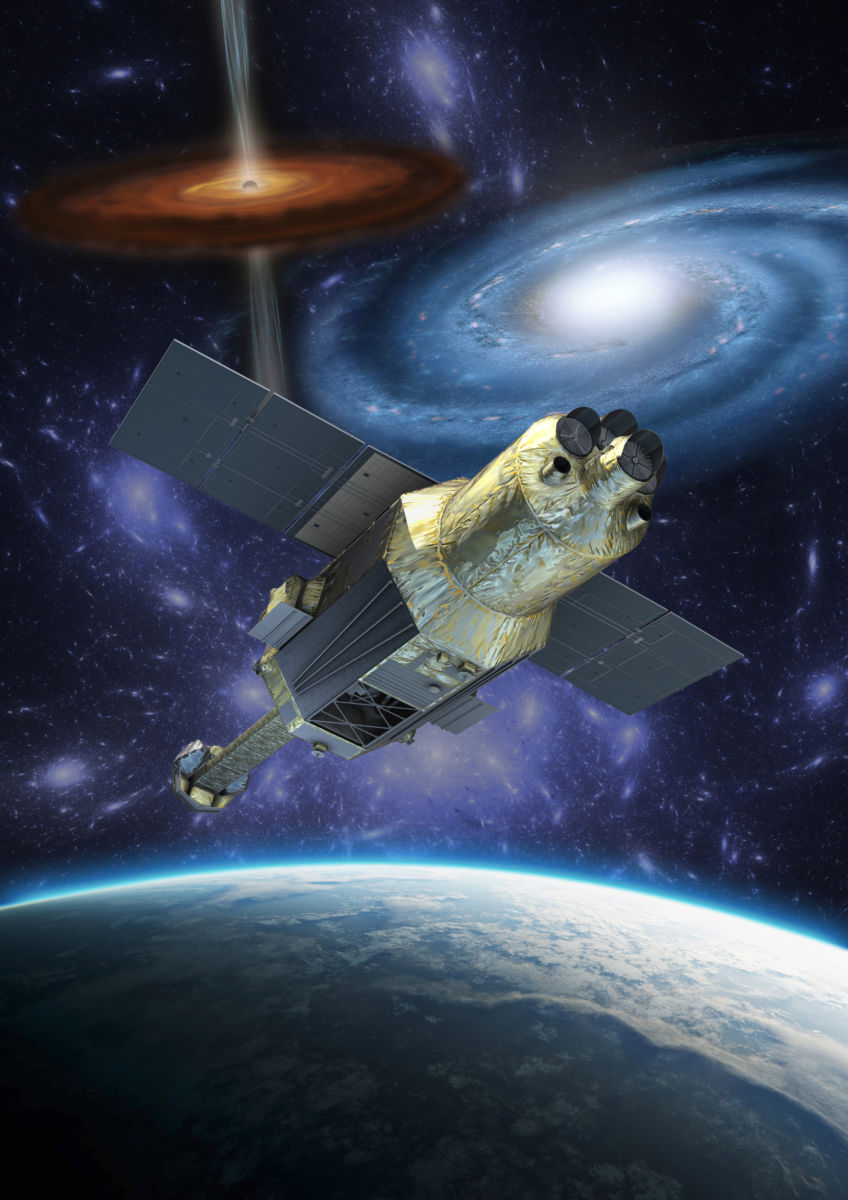
Japan’s X-ray Astronomy Satellite ASTRO-H (Hitomi).
Credit: JAXA
The recent loss of Japan’s X-ray Astronomy Satellite ASTRO-H (Hitomi) is a blow to acquiring new space-based views of the universe – but also adds to the growing issue of Earth orbiting debris.
Furthermore, some of the errant 2.7 ton spacecraft is expected to reach terra firma when it eventually makes it fiery fall through the atmosphere.
Castaway panels
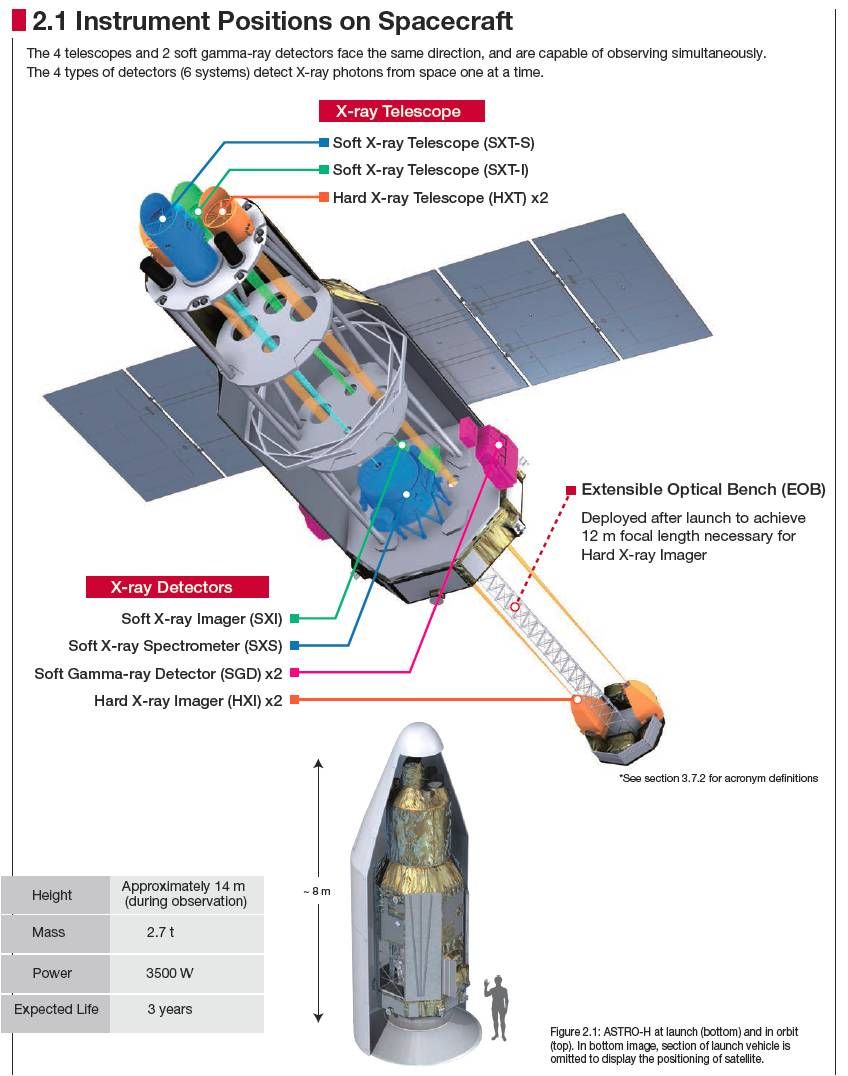
Credit: JAXA
The Japan Aerospace Exploration Agency’s (JAXA) ASTRO-H was boosted into space on February 17, 2016 (JST) from the Tanegashima Space Center. But late last month, after emergency attempts to salvage the craft, JAXA declared the mission lost to space.
“Most of our analyses including simulations on the mechanisms of object separation, it is highly likely that both solar array paddles had broken off at their bases where they are vulnerable to rotation,” a JAXA statement notes.
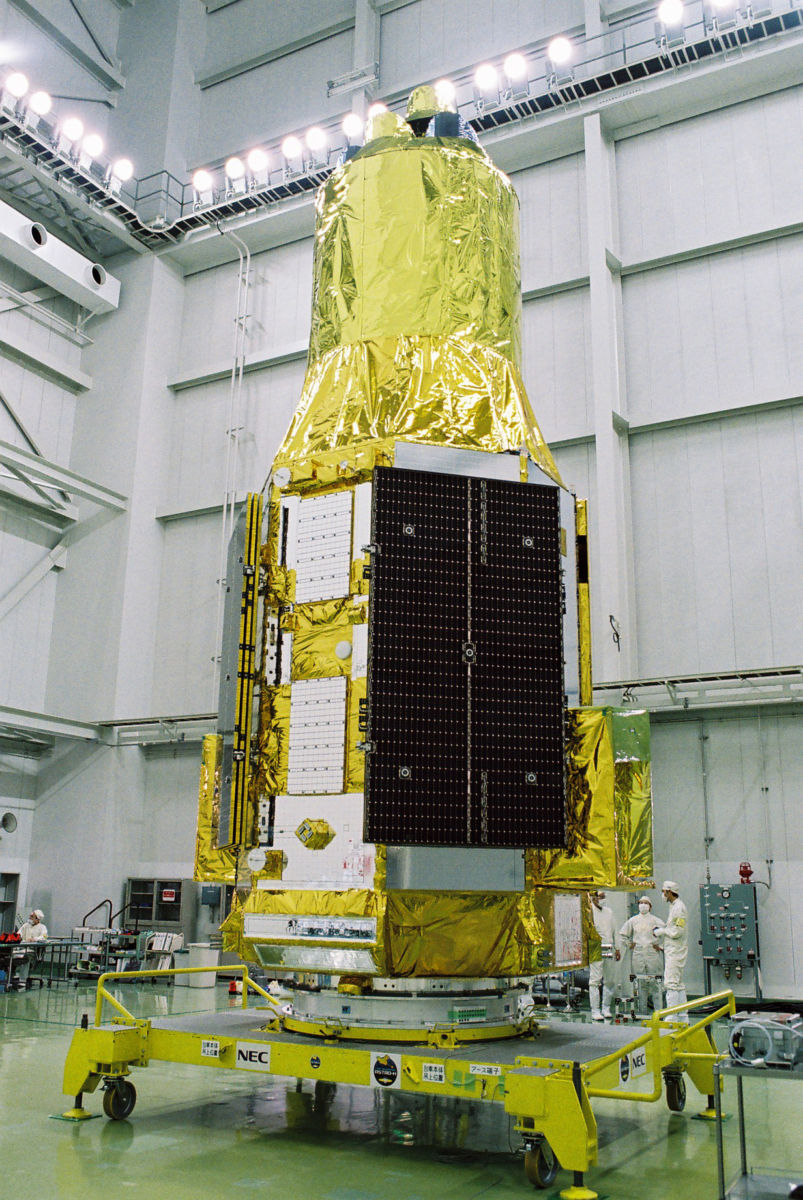
Pre-launch photo of ASTRO-H.
Credit: JAXA
“Accordingly, JAXA will cease the efforts to restore ASTRO-H and will focus on the investigation of anomaly causes. We will carefully review all phases from design, manufacturing, verification, and operations to identify the causes that may have led to this anomaly including background factors,” JAXA states.
State of the art instruments
Equipped with four state of the art instruments, ASTRO-H was built to eye the hot and energetic universe.
The word “Hitomi” generally means “eye” — and specifically the pupil, or entrance window of the eye — the aperture, according to JAXA background information on the spacecraft.
ASTRO-H was the sixth satellite in a series of highly successful X-ray astronomy missions initiated by the Institute of Space and Astronautical Science (ISAS) JAXA.
Debris survival
So round and round it goes, and where Hitomi will fall is far from predictable.
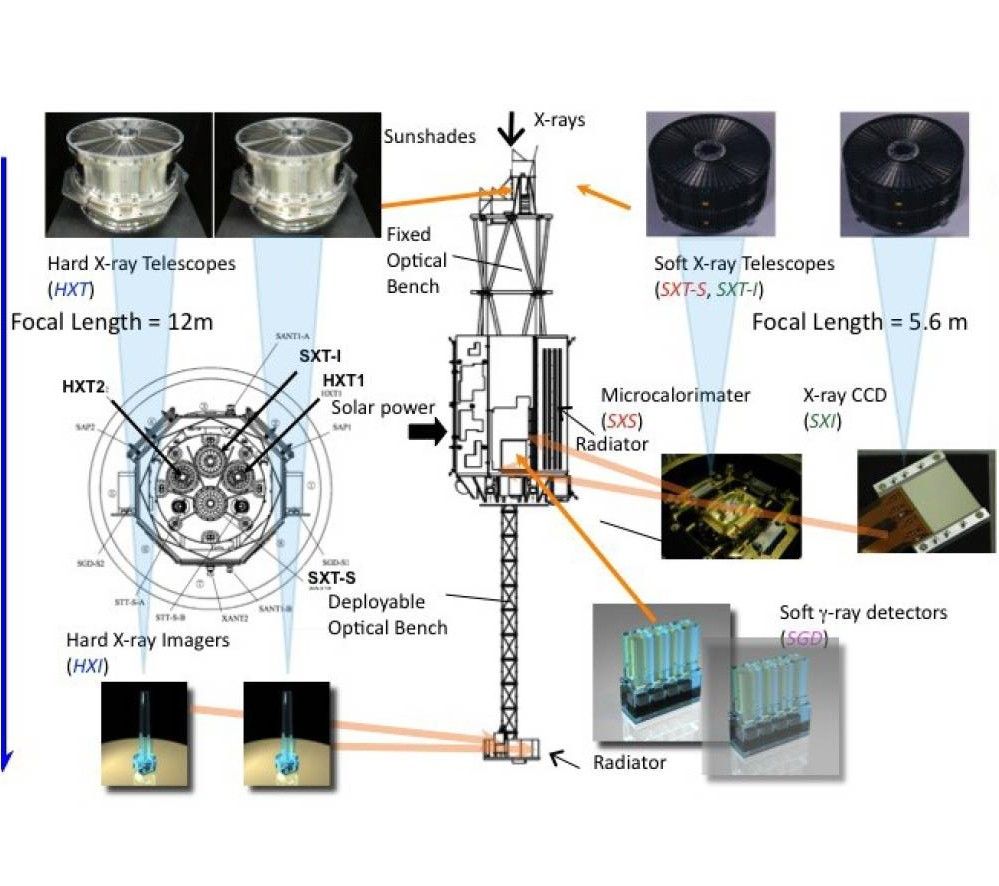
Credit: JAXA
Inside Outer Space asked JAXA for a statement on when the spacecraft will plunge to Earth – and any expected debris survival.
“The reentry time period for X-ray Astronomy Satellite ASTRO-H
(Hitomi) is expected within 25 years,” responded Izumi Yoshizaki of JAXA’s Public Affairs Department.
“Pre-launch analysis/modeling of the spacecraft’s reentry and survivable hardware that could land on Earth was done,” Yoshizaki said. The RCS (Reaction Control System) tank made of titanium is expected to survive during the reentry.”
Reentry window?
However, the “within 25 years” means more analysis of the object’s reentry time would be helpful.
According to satellite tracker extraordinaire, Ted Molczan of Canada, he estimates that ASTRO-H will remain in orbit for at least a few years.
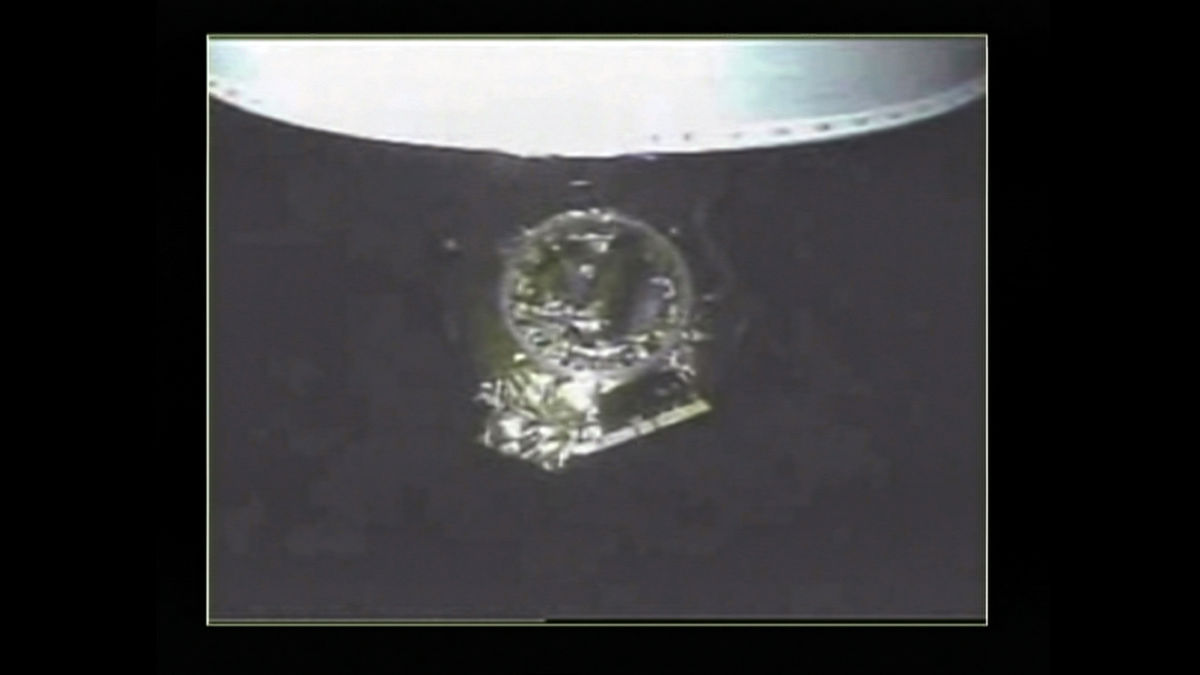
Shortly after launch, ASTRO-H is cast off into Earth orbit.
Credit: JAXA
Scott Hull, an orbital debris engineer at NASA’s Goddard Space Flight Center adds that, in addition to the very unfortunate loss of a valuable science asset, any breakup is of concern to the orbital debris community as potential threat to other spacecraft.
“It is somewhat fortunate that most of the secondary objects from this breakup are considered relatively small, and in general their orbits are already decaying, reducing the duration of any threat. Apparently one debris object has already reentered,” Hull told Inside Outer Space.
One arguable question is whether the dead hulk of Hitomi might make it a candidate for a debris removal experiment?

Credit: National Geographic
The next frontier in space exploration is Mars, the red planet—and human habitation of Mars isn’t much farther off.
In October 2015, NASA declared Mars “an achievable goal;” that same season, Ridley Scott and Matt Damon’s The Martian drew crowds into theaters, grossing nearly half a billion dollars in the first two months. Now the National Geographic Channel goes years fast-forward with “Mars,” a six-part series documenting and dramatizing the next 25 years as humans land on and learn to live on Mars.
Following on the visionary success of Buzz Aldrin’s Mission to Mars and the visual glory of Marc Kaufman’s Mars Up Close, this companion book to the Nat Geo series shows the science behind the mission and the challenges awaiting those brave individuals. The book combines science, technology, photography, art, and story-telling, offering what only National Geographic can create. Clear scientific explanations, gorgeous photography from outer space and the planet itself, and dramatic scenes from the TV series featuring exquisitely constructed sets made to replicate Mars make the Mars experience real and provide amazing visuals to savor and return to again and again.
Hardcover
304 pages; 200 color illustrations
9 1/8″ x 10 7/8″
© 2016
Author Bio
Ron Howard has made a lifelong career in television and film, winning numerous accolades and awards as actor, director, and producer. He is co-chair with Brian Grazer of Imagine Entertainment, which has recently partnered with National Geographic on Breakthrough as well as Red Planet.
Leonard David is an award-winning space journalist who has been reporting on space activities for over 50 years. He frequently contributes to the website Space.com as their “Space Insider Columnist” and is the coauthor of Buzz Aldrin’s Mission to Mars. In 2015, he became the first recipient of the American Astronautical Society’s (AAS) “Ordway Award for Sustained Excellence in Spaceflight History” in the category of journalism, and in 2010 he received the National Press Club Award for his space journalism.
For more information on the book – Mars: Our Future on the Red Planet — to be released October 25th, go to:
https://shop.nationalgeographic.com/product/books/books/new-books/mars
Also go to Amazon at:
Credit: NASA
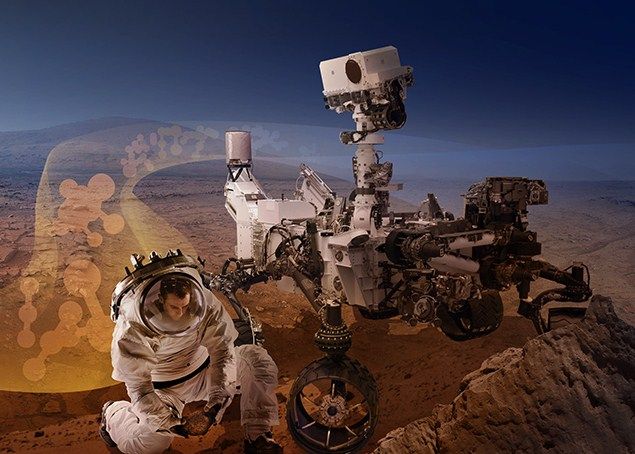
What kind of map is needed to best aide human explorers strutting about on Mars?
An international call is open to students, cartographers, and graphic artists from all countries to participate in planning the first human mission to Mars.
The International Cartographic Association (ICA) Commission on Planetary Cartography is organizing a competition for creating maps to find a suitable landing site for human explorers of Mars.
The contest is part of International Map Year activities.
Exploration zones
NASA’s march to Mars centers on a 2035 target date for the first human touchdown on the Red Planet.

Overview map shows all proposed Exploration Zones (EZ)/human landing sites for NASA’s 2035 Mars mission.
Credit: ICA/NASA
Last year, nearly 50 landing sites or Exploration Zones (EZ) — each some 120 miles (200 kilometers) in diameter – were proposed by the planetary science community. These should be mapped in high detail in the forthcoming years to enable proper comparison of the sites and the selection of a final spot to be visited by an expeditionary crew.
Creativity required
The ICA initiative is to select one candidate landing site and design an actual map that a competition participant envisions will be useful in surface operations. Not wanted is just creating a simple geologic map.
Rather, what ICA is looking for is a product that can be used by Marswalkers during their approximately one-year long mission within the Exploration Zone. This requires creativity, and it is also useful to have a good knowledge of surface features, surface hazards, science goals and the use of the proper cartographic tools.
“Our goal is to develop maps that could ultimately be used by the astronauts during their daily field works,” explains the ICA website. “Technology can change a lot between now and 2035. The field maps will most likely be digital maps, shown on display, VR glasses, projected onto the helmet or made visible by a yet-to-discover technology. We can’t know the future mapping technology so what we ask is to make a map that you would find it useful to orient yourself in the chosen EZ, document future plans and already visited sites, mark the locations of the landmarks and habitat units.”
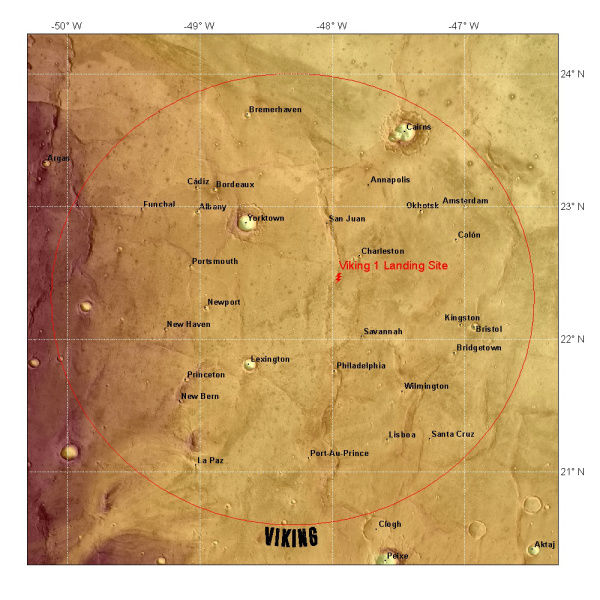
Example of one proposed landing site for humans near America’s Viking 1 lander.
Credit: H Hargitai/coordinates from JMARS2035
Deadline of submission of maps and papers: September 1, 2016. Submission can be electronic or paper (paper submissions must arrive at NASA Ames Research Center in California no later than September 15, 2016).
For detailed information on the competition, go to:
https://planetcarto.wordpress.com/2016/04/22/mars-exploration-zone-map-competition/

