Archive for January, 2016
 Author:
  January 5th, 2016
The ExoMars 2016 Schiaparelli module in Baikonur.
Credit: TsENKI via ESA
The European Space Agency’s ExoMars 2016 mission has drawn closer to the Red Planet – both the Trace Gas Orbiter and Schiaparelli entry, descent and landing craft are now at the Baikonur cosmodrome in Kazakhstan.
ExoMars 2016’s launch window via Russian Proton booster is approaching, opening on March 14th until March 25th.
The 1,323 pound (600 kilograms) Schiaparelli will ride to Mars attached to the Trace Gas Orbiter.
Landing module
Three days before the space mission reaches the Red Planet, Schiaparelli will separate from the orbiter that’s equipped to carry out a five-year tour-of-duty circling the Red Planet. The orbiter is equipped to study atmospheric gases potentially linked to present-day biological or geological activity.
The landing module is named in honor of the Italian astronomer Giovanni Schiaparelli, who mapped the Red Planet’s surface features in the 19th century.
Schiaparelli will enter the Martian atmosphere slowing in speed by aerobraking, then deploying a parachute, followed by liquid-propellant thrusters that will brake the craft further just above the surface of Mars.
At that moment, the vehicle’s thrusters turn off and Schiaparelli will drop to the ground. Its impact will be cushioned by a built-in crushable structure.

The entry, descent and landing demonstrator module, Schiaparelli, is part of ESA’s ExoMars 2016 mission. Schiaparelli is shown in its surface configuration after descent through the Martian atmosphere.
Credit: ESA/ATG medialab
Meridiani Planum targeted
Entry to landing is less than eight minutes, with Schiaparelli targeted for touchdown in the Meridiani Planum region of Mars.
Scientific sensors on Schiaparelli will collect data on the atmosphere during entry and descent, and others devices are to make local measurements at the landing site for a short period determined by its battery capacity.
Schiaparelli will remain a target for laser ranging from orbiters using a reflector carried onboard the landing module.
 Posted in

Credit: U.S. Air Force
Put away your movie popcorn and think of it as “Star Wars: The Force Awakens” – but for real.
The Air Force Space Command carried out the ninth Schriever Wargame at Schriever Air Force Base, Colorado. Taking place December 11-17, the Wargame was set in the year 2025 and explored critical space issues and use of space systems and services.
Here’s a look at what took place, as noted in my new Space.com story up today:
‘Star Wars’ for Real: US Military Wraps Up Space War Games
by Leonard David, Space.com’s Space Insider Columnist
January 04, 2016 06:00 am ET
http://www.space.com/31504-us-military-space-star-wars-games.html
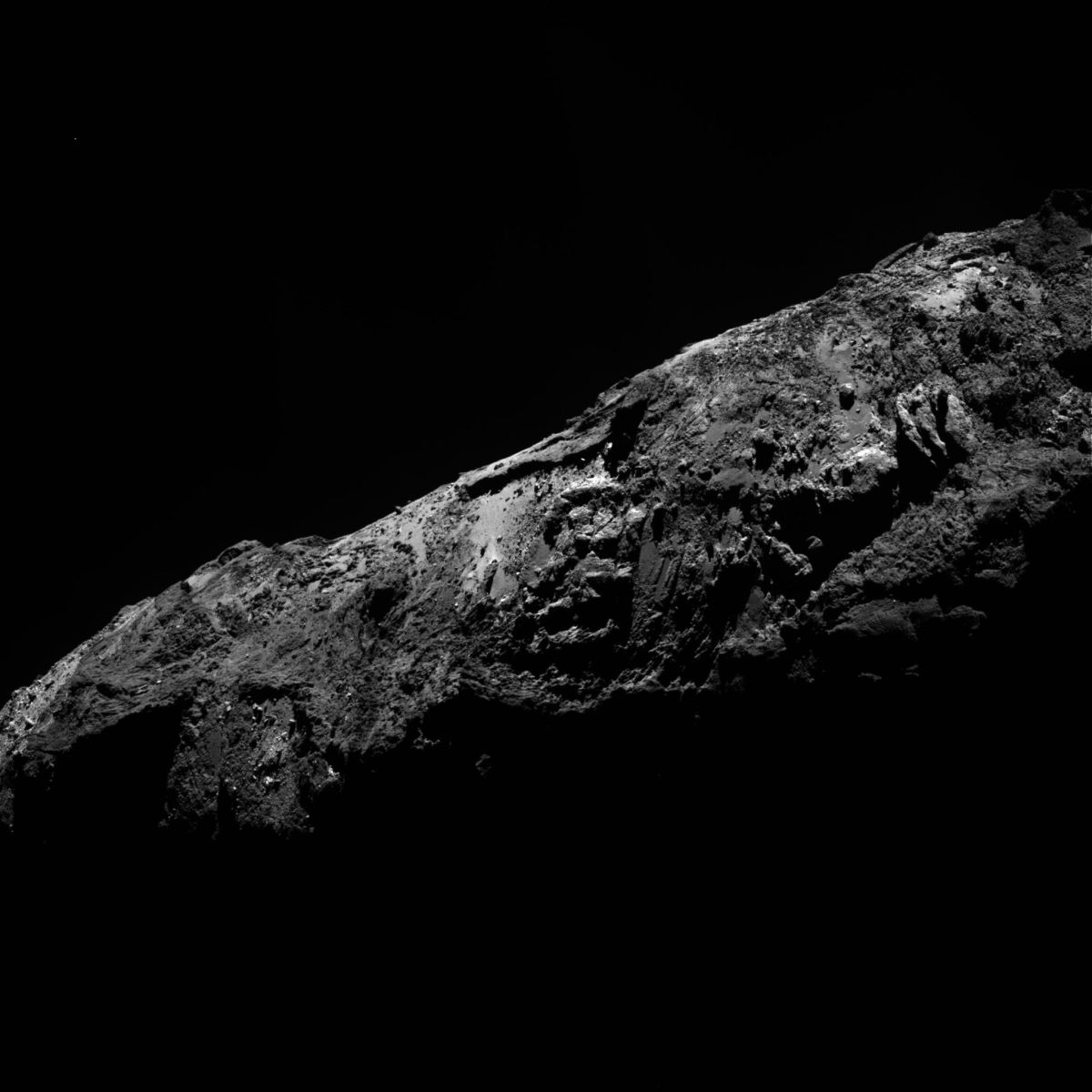
Rosetta image of comet taken on December 31, 2015 by the spacecraft’s OSIRIS narrow-angle camera from a distance of roughly 49 miles (79.6 kilometers) from the object.
Credits: ESA/Rosetta/MPS for OSIRIS Team MPS/UPD/LAM/IAA/SSO/INTA/UPM/DASP/IDA
The European Space Agency’s (ESA) Rosetta arrived at Comet 67P/Churyumov–Gerasimenko back in August 2014. After an initial survey and selection of a landing site, Rosetta unleashed the Philae probe on November 12 that bounced to a full-stop on the comet.
Still cruising along with the comet, ESA’s Rosetta spacecraft continues to produce outstanding images of the object, riding along with the celestial traveler through the Solar System.
“Now that we’re closer to the comet again we’re looking forward to seeing its surface in more detail. We’re also looking forward to sharing a fantastic view as Rosetta descends to the surface of the comet next September,” says Matt Taylor, ESA’s Rosetta project scientist.
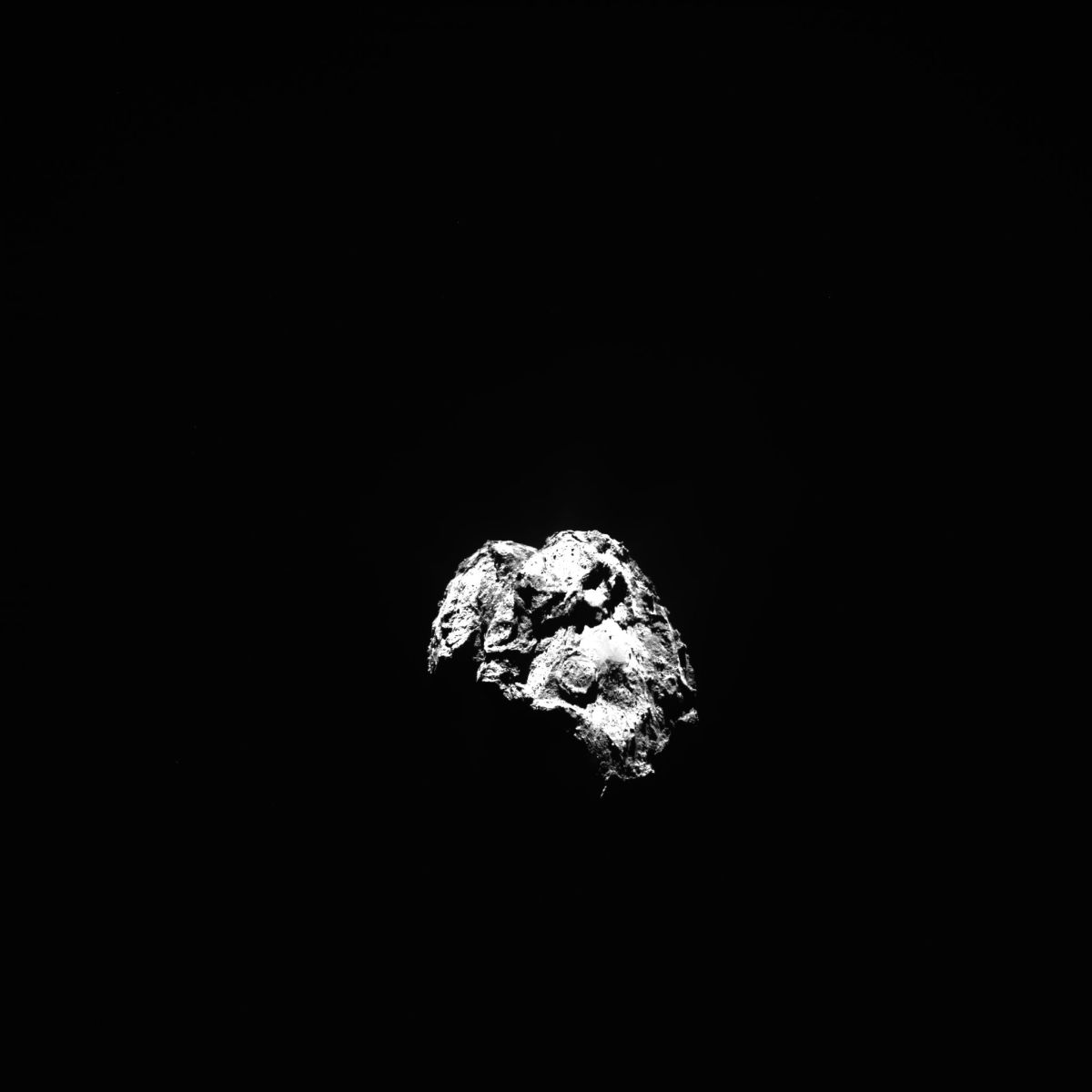
January 1, 2016 image of Comet 67P/ Churyumov–Gerasimenko taken by Rosetta’s Wide Angle Camera at roughly 50 miles (80 kilometers) distance from the object.
Credits: ESA/Rosetta/MPS for OSIRIS Team MPS/UPD/LAM/IAA/SSO/INTA/UPM/DASP/IDA
Rosetta was launched on March 2, 2004 by an Ariane-5 from Europe’s Spaceport in Kourou, French Guiana.
Check out this new video that pulls together details about Philae’s fall onto the comet at:
http://www.esa.int/spaceinvideos/Videos/2015/11/Reconstructing_Philae_s_flight
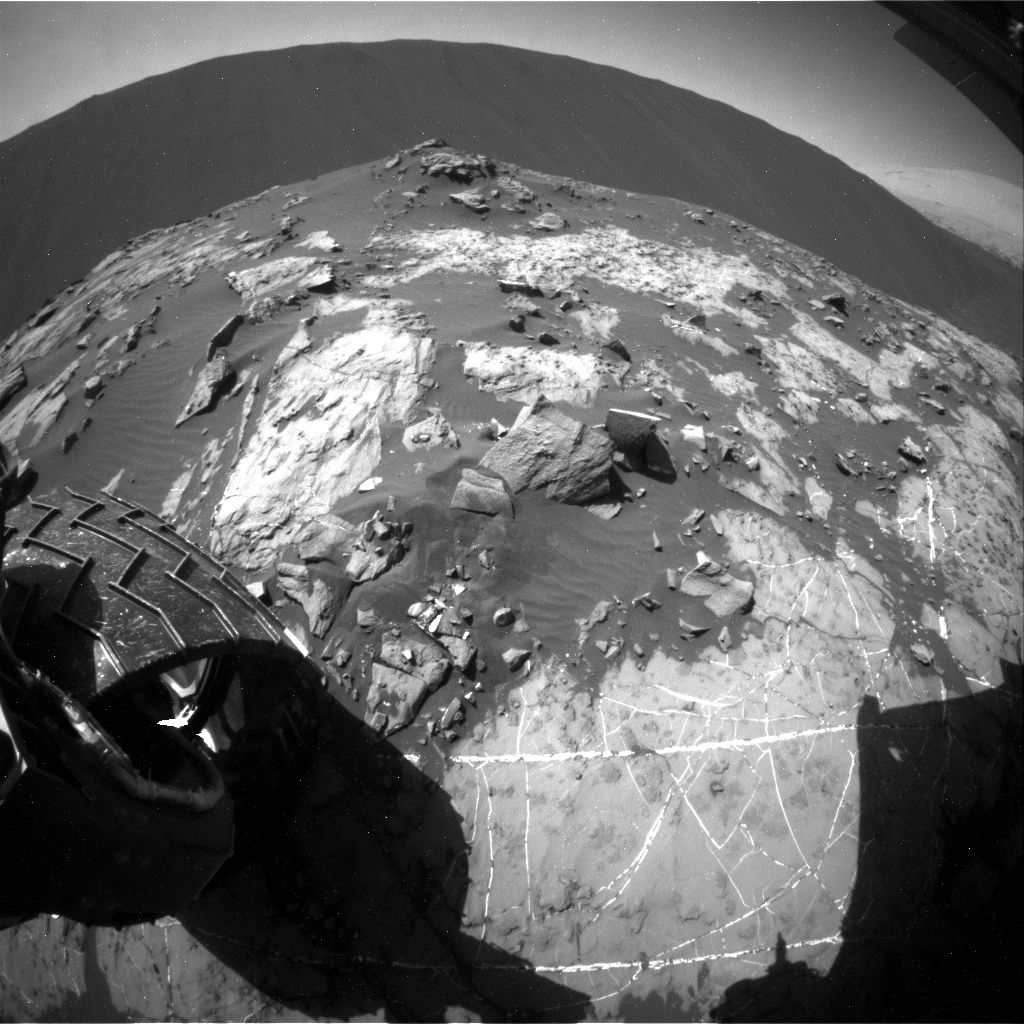
Rear Hazcam Left B image taken by NASA’s Mars rover Curiosity on Sol 1212, January 3, 2016
Credit: NASA/JPL-Caltech
NASA’s Curiosity Mars rover has entered Sol 1212 and has begun to transmit imagery in the New Year, 2016.
The machine continues to survey nearby dunes and ripples that are part of “Bagnold Dunes,” a band along the northwestern flank of Mount Sharp inside Gale Crater.
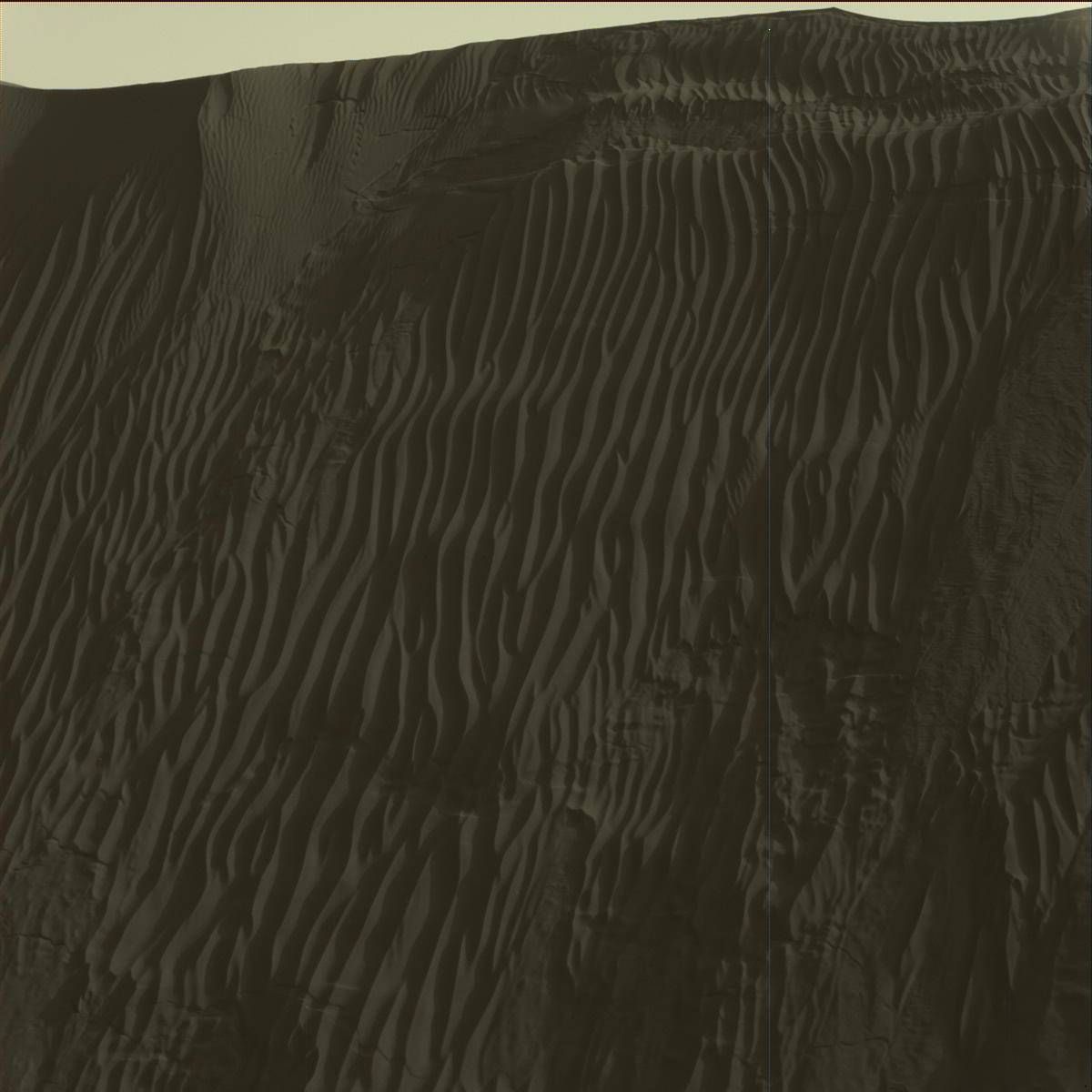
Curiosity Mastcam image taken on Sol 1211, January 2, 2016.
Credit: NASA/JPL-Caltech/MSSS
Landing on the Red Planet in August 2012, Curiosity’s long-term mission is to assess whether Mars ever had an environment able to support small life forms called microbes – to determine the planet’s “habitability.”
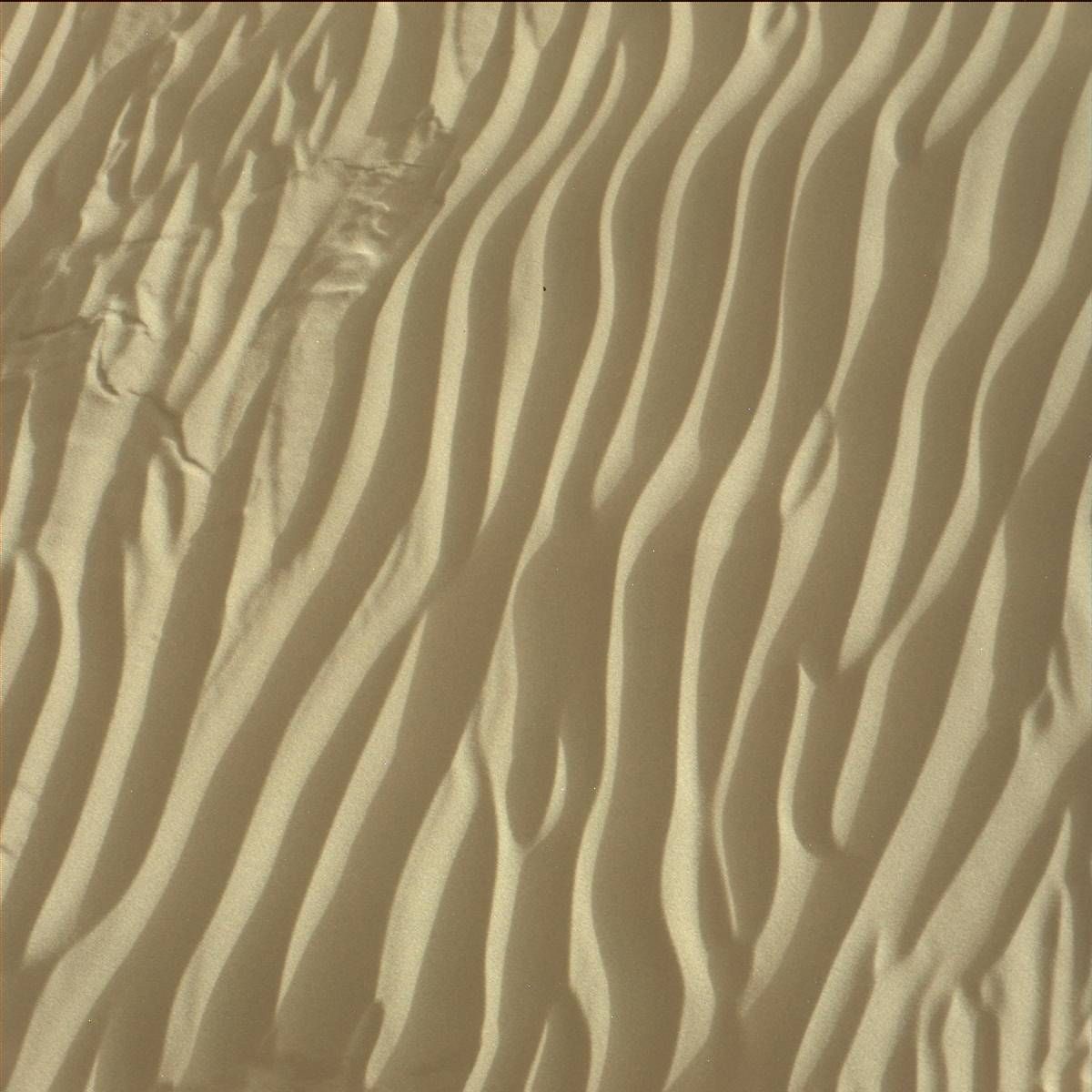
Curiosity’s Mastcam camera snagged this Sol 1211 image on January 2, 2016.
Credit: NASA/JPL-Caltech/MSSS
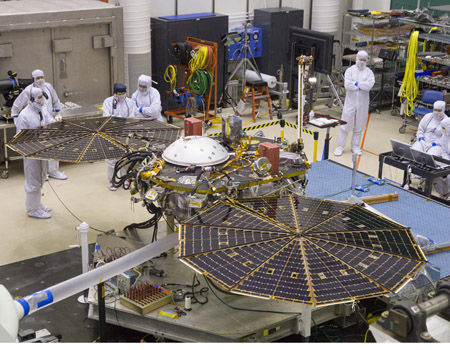
InSight Mars lander undergoing a solar array deployment test in the MTF clean room at Lockheed Martin.
Credit: Lockheed Martin
The recent decision by NASA to suspend the planned March 2016 launch of the Discovery-class InSight mission to Mars was due to unsuccessful attempts to repair a leak in a section of the prime instrument in the science payload.
That instrument was the sensitive Seismic Experiment for Interior Structure (SEIS).
The spacecraft’s name, InSight, says it all: Interior exploration using Seismic Investigations Geodesy and Heat Transport.
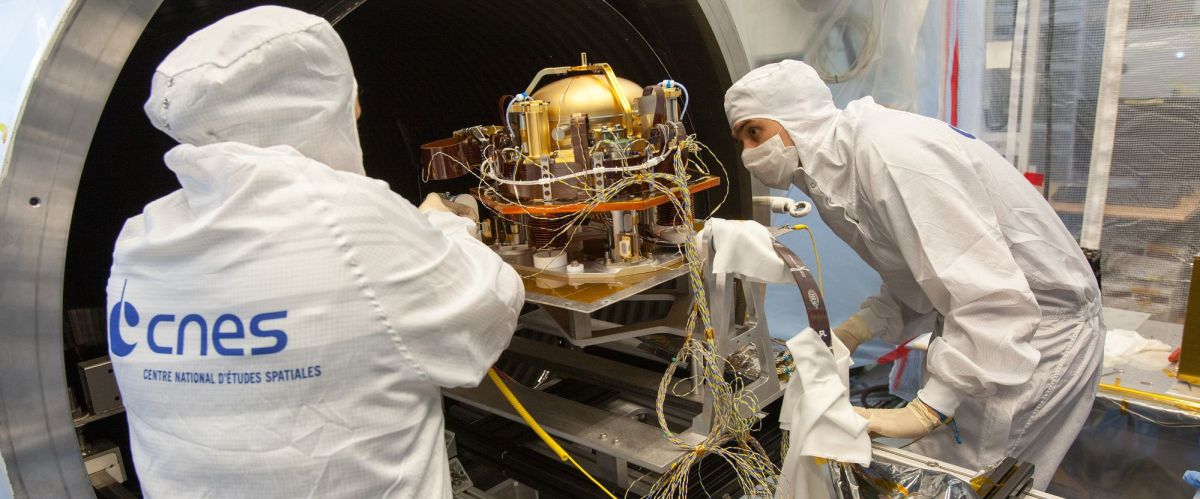
Preparing the SEIS instrument for thermal vacuum testing.
Credit: CNES /MALIGNE Frederick, 2015
Taking the pulse
SEIS is designed to capture the “pulse” of the Red Planet — its internal activity — by taking precise measurements of quakes and other internal commotion. Doing so equates to a better understand the planet’s history and structure.
Testing troubles
The sphere-shaped device itself is made of a series of measurement instruments, mainly composed of three French seismometers called VBB (Very Broad Band) and designed by the Institut de Physique du Globe de Paris (IPGP).
Overall, SEIS is an instrument provided by four European countries: France, Switzerland, United Kingdom and Germany.
The troubled SEIS had previously failed to retain vacuum conditions – a problem that was fixed. But during follow-up tests in extreme cold temperature (-49 degrees Fahrenheit/-45 degrees Celsius) another leak was detected.
Despite the repairs and the significant efforts of the teams, a cold pressure build-up, probably caused by a new leak, was detected on the sphere including the three low frequency seismometers of the IPGP and Sodern, a French company based in Limeil-Brévannes, near Paris, that specializes in space instrumentation.
NASA officials determined there was insufficient time to resolve another leak, and complete the work and thorough testing required to ensure a successful mission.
Finding a solution
“This is the first time a sensitive instrument is realized. We were very close to the result, a fault has occurred, requiring further investigations. Our teams will find a solution, but unfortunately not in time for the flight in 2016,” said Marc Pircher, Director of the Toulouse Space Center.
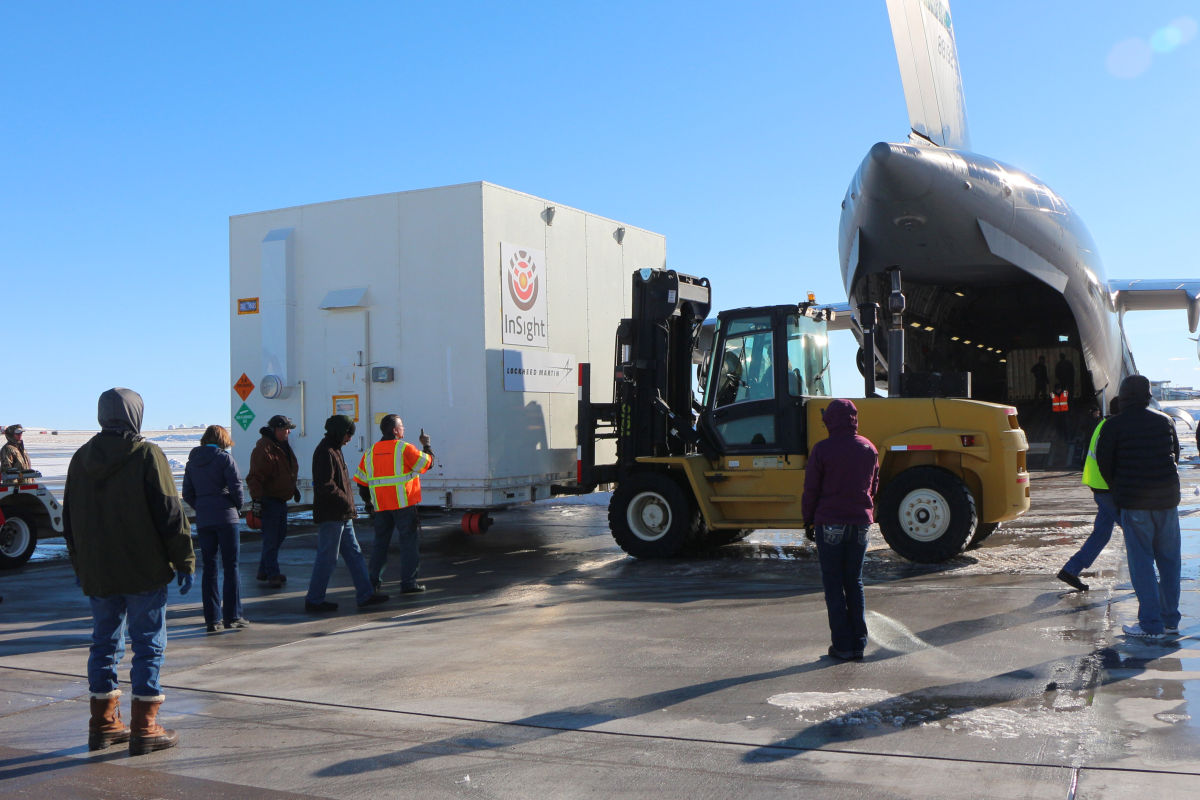
A Lockheed Martin team shipped NASA’s InSight Mars lander from Colorado where it was built to Vandenberg Air Force Base, California where it was slated for launch in March 2016.
Credit: Lockheed Martin
InSight was built by Lockheed Martin and delivered on December 16 to Vandenberg Air Force Base in California for its projected launch. With the 2016 launch canceled, the spacecraft is being returned from Vandenberg to Lockheed’s facility in Denver.
While at Vandenberg, within the Astrotech Space Operations facility, InSight was slated to undergo final processing including the installation and testing of the SEIS instrument, system-level checkout, propellant loading and a spin balance test.
“Our team worked hard to get the InSight spacecraft built, tested and shipped to the launch site on schedule. Although InSight won’t launch in March as planned, we will work closely with NASA, JPL and their partners to map out the path forward for the spacecraft and its important mission,” Lockheed Martin said in a statement provided to Inside Outer Space.
What next?
So what next for InSight…and getting its legs firmly down on Mars?
For legal and policy reasons, NASA can’t go any further than saying that the launch is suspended, explains W. Bruce Banerdt, Principal Investigator for the InSight Mission to Mars at the Jet Propulsion Laboratory in Pasadena, California.
“They have explicitly stated that the mission is not canceled, but there is a process they have to follow to decide whether and how they can extend us,” Banerdt told Inside Outer Space.
Cost cap
“Legally, there is a cost cap on a Discovery mission, and, as I understand it, they [NASA] have to go to Congress to get authorization to exceed that cap,” Banerdt said.

This artist’s concept depicts NASA’s InSight Mars lander fully deployed for studying the deep interior of Mars. Robot arm would deploy the sensitive Seismic Experiment for Interior Structure (SEIS) device, white object in foreground.
Credit: NASA/JPL-Caltech
NASA managers have expressed strong support for both the science of InSight and the mission itself, Banerdt said, “so I am optimistic that we will eventually get the go-ahead.”
Banerdt said that the InSight team is in the beginning stages of putting together a plan, with schedule and budget, to present to NASA for launching in 2018. “It will likely be at least a couple of months before any decision can be made, even provisionally,” he said.
For more information on the SES go to this video in French at:
https://www.youtube.com/watch?v=k3IOKszmnyo
For an English video on InSight, go to:
https://www.youtube.com/watch?v=7VVKyYhwfBk
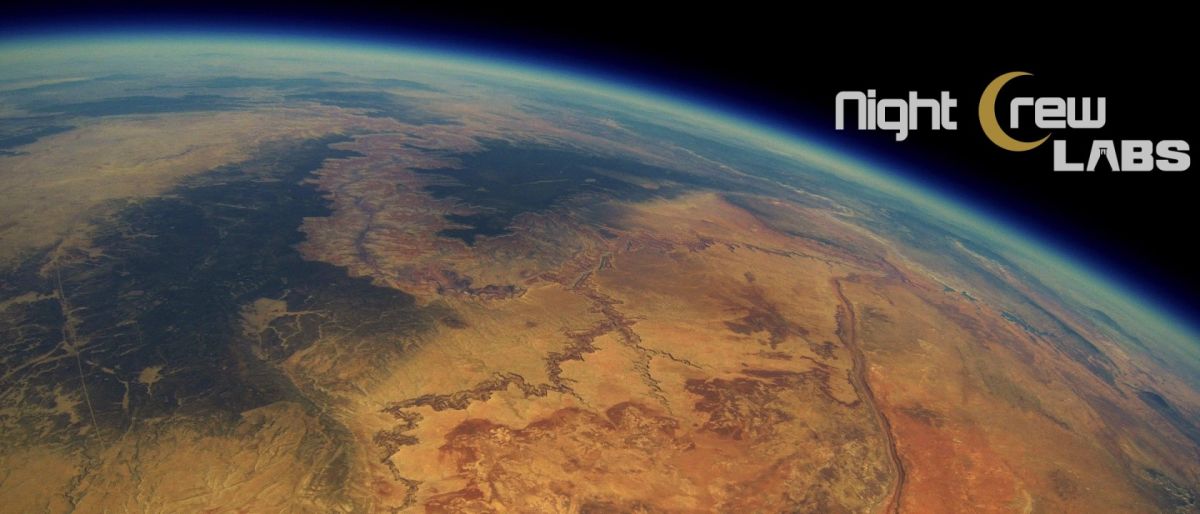
Credit: Night Crew Labs
Thanks to an Arizona hiker, a high-altitude balloon experiment has been reclaimed last year – missing for some two years.
Launched via weather balloon in June 2013, the soaring science payload included a GoPro Hero3, Sony Camcorder, Samsung Galaxy Note II phone.
The GoPro and camcorder were recording video footage, while the phone was taking still images.
The balloon carried the payload to a maximum altitude of 98,664 ft (30.1 km). Time of flight lasted one hour, 38 minutes.
Beauty of Earth
Headquartered at Stanford University, Night Crew Labs is on a mission to captivate viewers by showcasing the beauty of Earth from unique, rarely-seen perspectives.
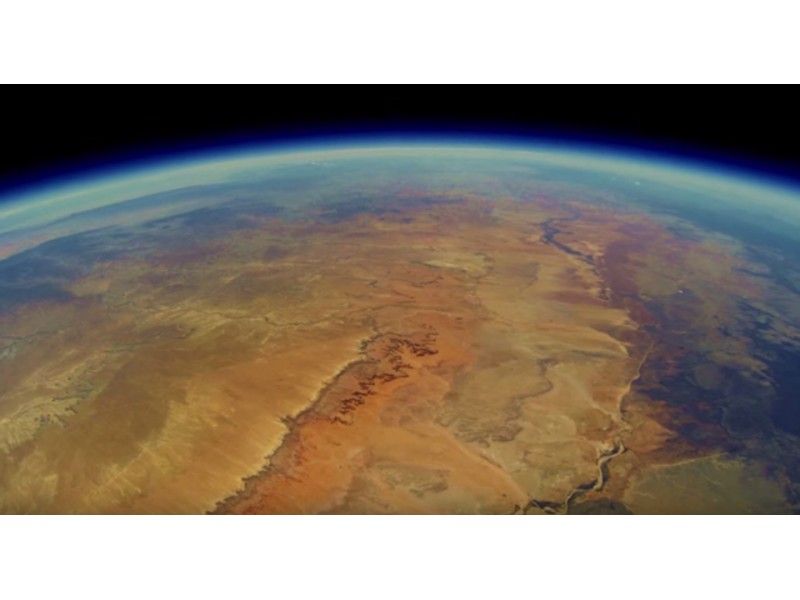
Credit: Night Crew Labs
In addition, Night Crew Labs conducts scientific research, and promotes STEM outreach as well as worldwide nature conservation efforts.
Exposures and composure
“Our high altitude balloon mission over the Grand Canyon…this mission tested principles of fluid lensing as well as the capability of smartphones to perform GPS navigation at high altitudes,” notes the website of the Night Crew Labs. “Due to some unforeseen events, we lost track of our balloon and didn’t get back until a hiker came across it two years later.”
The upshot of regaining their exposures and composure is that their first video feature — “Grand Canyon from the Stratosphere!” — has reached over 6 million viewers, captivated audiences around the world.
Next up
The success of the Grand Canyon Balloon Mission has motivated Night Crew Labs to aim higher with a more go-getting mission: to capture the northern lights from a high-altitude balloon in Alaska.
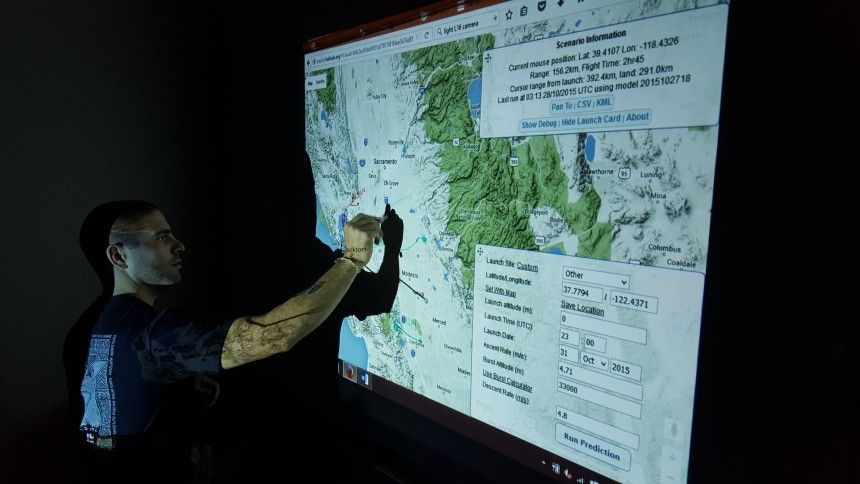
Credit: Night Crew Labs
“To accomplish this, we are now pursuing an aggressive timeline which will require a more complex, and technologically advanced build,” the team reports.
Resources
To take a stratospheric ride above Earth, check out this video of the launch preparations, video footage, and some data analysis of the flight, go to:
https://www.youtube.com/watch?v=EABQ5psUz70
To keep up to date with future projects of the Night Crew Labs, go to:

