Archive for 2015
 Author:
  May 4th, 2015
This image was taken by Curiosity’s Navcam Left B on May 3, 2015 during Sol 974.
Credit: NASA/JPL-Caltech
According to Ken Herkenhoff of the U.S. Geological Survey (USGS) in Flagstaff, Arizona, NASA’s Curiosity rover on Mars is now in a good position for contact science observations on an interesting outcrop of sedimentary rock.
On Sol 973, the rover is using several instruments to observe nearby targets “Albert” and “Charity,” and a distant target named “Empire.”
Also, the rover will use its Navcam will search for Martian clouds and dust devils.

NASA’s Mars rover Curiosity acquired this image using its Mars Hand Lens Imager (MAHLI), located on the turret at the end of the rover’s robotic arm, on May 3, 2015, Sol 974 of the Mars Science Laboratory Mission.
Credit: NASA/JPL-Caltech/MSSS
NASA’s Curiosity rover is “factory loaded” with the biggest, most advanced suite of instruments for scientific studies ever sent to the Martian surface.
The record of the planet’s climate and geology is essentially “written in the rocks and soil” — in their formation, structure, and chemical composition.

This image was taken by Curiosity’s ChemCam: Remote Micro-Imager on May 2, 2015 during Sol 973.
Credit: NASA/JPL-Caltech/LANL
The rover’s onboard laboratory is dutifully studying rocks, soils, and the local geologic setting in order to detect chemical building blocks of life (e.g., forms of carbon) on Mars and is assessing what the Martian environment was like in the past.
 Posted in
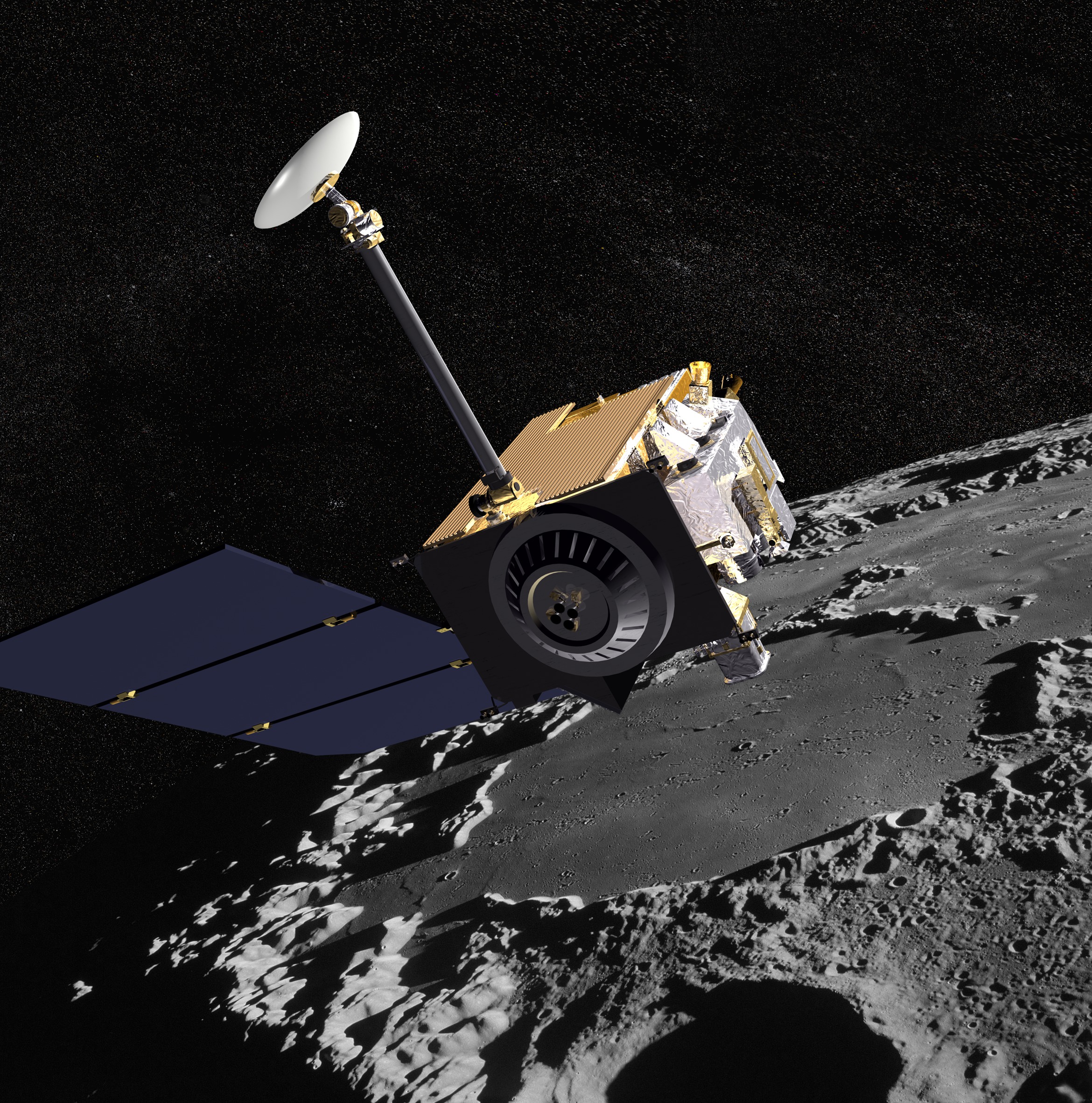
On the funding chopping block, NASA’s Lunar Reconnaissance Orbiter.
Credit: NASA/GSFC
A scientific and public campaign is underway to keep operating NASA’s Lunar Reconnaissance Orbiter (LRO) and the Opportunity Mars rover.
Both have been zeroed out in the President’s FY16 budget for NASA. This is despite LRO and Opportunity being highly ranked in a recent “Senior Review” of planetary missions.
LRO was launched in 2009; Opportunity has been on duty on Mars since its landing in early 2004.

Still beaming after all these years – NASA’s Opportunity Mars rover.
Credit: NASA/JPL
But there is an even deeper issue that is being expressed by the letter-writing campaign.
That is, the role of the independent review process within NASA’s budget decisions.
Furthermore, why have senior reviews in the first place, followed by the Office of Management and Budget (OMB) decisions to cut those missions anyway?
Recommendations rejected
“It is hoped that a strong show of support from the planetary — and specifically the lunar community — will demonstrate to our elected officials the backing these planetary missions have,” explains lunar researcher, Clive Neal of the Dept. of Civil & Environmental Engineering & Earth Sciences at the University of Notre Dame in Indiana.
In a letter to the scientific community, requesting signatures of support, the communiqué explains that “we were greatly surprised” by the President’s FY 2016 budget request for NASA, which proposed to defund continued operations of both Opportunity and the LRO.

On-duty eye on the Moon: Four different images taken by NASA’s Lunar Reconnaissance Orbiter of a lunar crater (18 meter diameter) recently formed on the Moon; each scene is 560 meters wide. Being able to get observations before, during and after the impact is a valuable opportunity to better understand impact events.
Credit: NASA/GSFC/Arizona State University
“This decision rejects the recommendations made by the planetary senior review process. These two missions were among the most highly ranked in the Report – only the Cassini mission at Saturn was judged as having a better science return,” the letter explains.
“We urge Congress to support the results of this independent review process and to augment NASA’s budget to continue operating its fleet of high-performing, scientifically valuable planetary spacecraft,” the letter concludes.

On-going research underway by NASA Opportunity rover, wheeling its way on the Red Planet in this Sol 4006 image.
Credit: NASA/JPL
Public outreach
Also engaged in activating a public response to these issues is The Planetary Society.
“Here at The Planetary Society, we’ve been gathering petitions from our members and the wider community for LRO/Opportunity since early March,” explains Casey Dreier, Director of Advocacy for the organization.
Dreier advised Inside Outer Space that the URL below is perfect for the public to get engaged about supporting these missions. It sends a message directly to representatives in Congress, he said, with a default letter (which can be modified) that contains a focus on the cancelled missions within the context of planetary exploration.
Letters will be sent to the congressional people that sit on the committees that oversee NASA’s budget.
NOTE: To have your voice heard on these issues, go to:
https://secure.planetary.org/site/Advocacy?cmd=display&page=UserAction&id=183

Rock embedded into wheel of NASA’s Mars rover Curiosity. The robot acquired this image using its Mars Hand Lens Imager (MAHLI), located on the turret at the end of the rover’s robotic arm, on April 30, 2015, Sol 971.
Credit: NASA/JPL-Caltech/MSSS
NASA’s Curiosity Mars rover has advanced through a sandy-floored valley, busily inspecting the lower slopes of a layered mountain, Mount Sharp.
The Mars machinery is busy investigating how the region’s ancient environment evolved from lakes and rivers to much drier conditions.

Sweeping view from Curiosity taken on April 23, 2015, Sol 964.
Credit NASAJPL-CaltechMSSS
New imagery shows the robot taking hits to its wheels, including a lodged rock in one wheel.
After landing on Mars Aug. 5, 2012 (California time), Curiosity spent much of its first 12 months on the Red Planet studying locations close to its landing site north of Mount Sharp.
Findings during that period and subsequent treks continue to gather evidence for ancient rivers and a lakebed environment that offer conditions favorable for microbial life – if Mars has ever hosted life.

Curiosity’s Front Hazcam: Left B image taken on April 30, Sol 971.
Credit: NASA/JPL-Caltech

Curiosity’s ChemCam: Remote Micro-Imager taken on April 30, Sol 971.
Credit: NASA/JPL-Caltech/LANL

Navcam: Left B image from NASA’s Mars rover April 30, on Sol 971.
Credit: NASA/JPL-Caltech

European Space Agency has been looking at what it takes to construct a moon outpost.
Credit: ESA/ Foster + Partners
A new story from me posted today on Space.com.
The in-coming leader of the European Space Agency is keen on establishing an international base on the moon – a next-step outpost beyond the International Space Station.

Next European Space Agency Director General, Johann-Dietrich Wörner, discusses farside moon station at the The Space Foundation’s recently held 31st National Space Symposium.
Credit: Tom Kimmell Photography
Johann-Dietrich Wörner expressed his lunar base views at The Space Foundation’s National Space Symposium, held here April 13-16 – a gathering of global, commercial, civil, military and newspace experts.
For the full story, go to:
Europe’s Next Space Chief Wants a Moon Colony on the Lunar Far Side
by Leonard David, Space.com’s Space Insider Columnist
May 01, 2015 06:00am ET
http://www.space.com/29285-moon-base-european-space-agency.html

Progress M-27M — was launched April 28 from Area 31 of the Baikonur launch site.
Credit: OAO RSC Energia
Word is that Russian ground controllers have had “no joy” in attempting to establish control of the tumbling Russian Progress 59 supply ship.
The logistics spacecraft — Progress M-27M — was launched April 28 from Area 31 of the Baikonur launch site at 10:09:50 Moscow Time.

Progress M-27M being readied for launch.
Credit: OAO RSC Energia
The spacecraft was to use a “quick” 4-orbit flight profile of 6 hours duration to rendezvous with the International Space Station (ISS).
After launch, however, the Progress suffered a control problem, with this onboard video showing the spin-rate of the spacecraft.
https://www.youtube.com/watch?v=YMiNjHjpunU
No word as yet on any solid prediction of a possible reentry of the Progress – if indeed the craft remains out-of-control.
There are reports of dozens of pieces of spacecraft debris associated with the Progress now in orbit – a meaningful suggestion that adds to the view the spacecraft is surely headed for an early, destructive reentry – negating its intended mission.
Onboard supplies
According to OAO RSC Energia, onboard the supply craft are propellant components, compressed oxygen, additional equipment needed to maintain the station in good working order, equipment for science experiments, medical supplies, personal belongings and food for the crew.
Altogether, more than 5,200 pounds (2,359 kg) of cargo is inside the Progress, including 3,075 pounds (1,395 kg) of dry cargo, 1,089 pounds (494 kg) of propellant, 925 pounds (420 kg) of water and 110 pounds (50 kg) of compressed gases.
The logistics spacecraft of the new series — Progress M-M — developed and built by RSC Energia is an upgraded version of the Progress M spacecraft.
OAO RSC Energia notes that the Progress is equipped with new devices for the motion control and navigation system and an improved onboard measurement system. All the devices are built around state-of-the-art electronic components and run the latest software. The upgrade made it possible to reduce the mass of the onboard equipment and thus enhance the capability to deliver payload to orbit.
Here is a video of the Progress launch:
https://www.youtube.com/watch?v=mYy19APPj_c#t=19

Photo of the first X-37B Orbital Test Vehicle waits in the encapsulation cell of the Evolved Expendable Launch vehicle April 5, 2010, at the Astrotech facility in Titusville, Fla. Half of the Atlas V five-meter fairing is visible in the background.
On the upcoming May flight of the space plane, a Hall thruster will be tested to provide significantly greater specific impulse, or fuel economy, and may lead to increased payload carrying capacity and a greater number of on-orbit maneuvers.
Courtesy photo via US Air Force
The United Launch Alliance (ULA) has announced that the Atlas V launch of the AFSPC-5 mission – the X-37B — has been confirmed on the Eastern Range for May 20, 2015.
The U.S. Air Force has confirmed the spacecraft is on track to meet this launch date.
Meanwhile, new details about an experiment onboard the 4th mission of the space plane program have been outlined by the Air Force Research Laboratory, Space and Missile Systems Center, and Rapid Capabilities Office.
Electric propulsion
Among other payloads, a Hall thruster experiment will fly on the X-37B.
The device is a modified version of the units that have propelled the Space and Missile Systems Center’s ( SMC) first three Advanced Extremely High Frequency military communications spacecraft.
What’s a Hall thruster?
It is a type of electric propulsion device that produces thrust by ionizing and accelerating a noble gas, usually xenon. While producing comparatively low thrust relative to conventional rocket engines, Hall thrusters provide significantly greater specific impulse, or fuel economy.
This results in increased payload carrying capacity and a greater number of on-orbit maneuvers for a spacecraft using Hall thrusters rather than traditional rocket engines, according to an update from the Air Force Materiel Command Wright-Patterson Air Force Base update.
Less fuel burn
Once in orbit, the X-37B toted experiment will include collection of telemetry from the Hall thruster operating in the space environment as well as measurement of the thrust imparted on the vehicle.
The resulting data will be used to validate and improve Hall thruster and environmental modeling capabilities. The in-space test will provide data to contrast ground test results to actual on-orbit performance.
Maj. Gen. Tom Masiello, AFRL commander said: “A more efficient on-orbit thruster capability is huge. Less fuel burn lowers the cost to get up there, plus it enhances spacecraft operational flexibility, survivability and longevity.”
The on-orbit test plans are being developed by AFRL and administered by the Rapid Capabilities Office.

NASA’s Orion spacecraft en route to Mars – what’s the radiation risk?
Credit: Lockheed Martin
One of the outcomes from a recent NASA Advisory Council (NAC) meeting is taking a hard look at radiation levels for those humans shipping out from Earth on a Mars mission.
The NAC held its discussions regarding a wide variety of issues on April 9-10 in Washington, D.C. The NAC advises NASA’s senior leadership on challenges and solutions facing the agency as it attempts to pioneer a new era of human exploration beyond low Earth orbit.
A NAC letter to NASA’s Bolden, dated April 16, issued by NAC chair, Steven Squyres, made a recommendation regarding radiation impact on astronauts headed outbound to Mars.
Open communications
First of all, the Council recommended that NASA “openly communicate the radiation risks while proceeding with preparations to send humans to Mars in the 2030s.”
NASA should continue its work to mitigate radiation risks through improved knowledge and technology, the Council observed.
The Council encouraged NASA to “initiate a long-term medical care program for astronauts which includes long-term astronaut health monitoring to mitigate long duration exposure health consequences, and build a baseline for future long-term health and engineering decisions.”
Serious issue
The Council underscored the fact that radiation for deep space flight “is indeed a serious issue to be addressed as technology and understanding evolve.”
It is also clear, the Council added, “that it is not likely we can mitigate all radiation risks to fully meet current radiation health standards.”
The Council concluded, in writing their recommendation on radiation risk — “Consequences of No Action on the Proposed Recommendation” — that accurate information regarding NASA’s planned approach to the critically important issue of radiation safety “will not be adequately provided to all the relevant stakeholders.”
Read the complete NAC statement on this issue:


Credit: CBS News
This Sunday, April 26, there is a CBS News 60 Minutes segment on Air Force Space Command set to air…or take to space.
Titled “The Battle Above” the program will review U.S. and China locked in a high stakes contest over satellites that are critical to national security and everyday life.
The U.S. Air Force’s Space Command is tasked with defending the satellites upon which our daily life and national security have come to depend. Now, says a general — USAF Gen. John Hyten, the head of Air Force Space Command –Chinese weapons could pose a threat to those satellites.
Correspondent David Martin anchors the report on Sunday April 26 at 7 p.m. ET/PT.
Defending spacecraft

USAF laser-guided telescope in Albuquerque, New Mexico.
Credit: CBS News
According to a CBS News statement on the show:
“Martin provides a rare look at Space Command, the branch of the U.S. Air Force charged with launching and protecting U.S. satellites. The report includes stunning images of a massive, laser-guided telescope in Albuquerque, New Mexico, that can be used to surveil the satellites of potential adversaries like China.”
USAF Gen. Hyten explains that he believes China will soon be able to threaten U.S. satellites in “every orbital regime that we operate in,” from low Earth orbit a few hundred miles above the Earth, to geosynchronous orbit more than 20,000 miles up – where some of the military’s most important satellites circle the Earth.
“Now we have to figure out how to defend those satellites, and we’re going to,” Hyten says.

USAF Gen. John Hyten, the head of Air Force Space Command, at 31st National Space Symposium held earlier this month in Colorado Springs.
Credit: The Space Foundation
Dealing with anti-satellites
General Hyten is asked whether a U.S. military satellite can maneuver itself out of the way of an upcoming anti-satellite weapon?
“The answer is maybe,” Hyten says. “It depends on the satellite…when it was built… how old it is…when we know the threat is coming.’”
Martin reports that the U.S. has tested anti-satellite weapons in the past and, by most accounts, spends 10 times more on space than the Chinese.
A White House document obtained by 60 Minutes estimates the Pentagon spends about $25 billion a year on space – more than NASA or any other space agency in the world. The estimate includes spy satellites and other classified spending.
In a statement, the Chinese embassy in Washington, DC, told 60 Minutes that China is “committed to the peaceful use of outer space.”
Right of self-defense
Gen. Hyten says the U.S. wants peace but must be prepared for conflict.
“It’s a competition that I wish wasn’t occurring, but it is,” says Hyten. “If we’re threatened in space…we have the right of self-defense… and we’ll make sure we can execute that right.”
A preview of the show can be viewed at:
http://www.cbsnews.com/news/preview-the-battle-above/
Note: Check your local listings for the broadcast on your CBS affiliate. If you miss the broadcast, 60Minutes will normally post their stories on-line soon after they air at:

NASA Advisory Council members have reviewed the space agency’s plans for human exploration of space, providing some surprising viewpoints.
Credit: NASA
As a result of a NASA Advisory Council meeting held on April 9-10 in Washington, D.C., several Council “findings” have been forwarded to NASA chief, Charles Bolden, regarding the space agency’s future agenda.
Findings concern NASA’s outward push to Mars, an Asteroid Redirect Mission (ARM) and solar electric propulsion, along with a “recommendation” on astronaut radiation risks, as well as other recommendations.
The NAC advises NASA’s senior leadership on challenges and solutions facing the agency as it unfolds a new era of exploration.
Here are selected details as noted in the NAC letter to NASA’s Bolden, dated April 16, from NAC chair, Steven Squyres:
Go to:

Credit: Project Aldrin-Purdue study
A Purdue University study has laid out a plan for human settlement of the Red Planet.
The School of Aeronautics and Astronautics AAE 450 Senior Spacecraft Design class at Purdue University held its final presentation on this plan, Thursday, April 23, 2015.
The study itself – over a 1,000 pages long – puts facts and figures to the vision as outlined by Buzz Aldrin in the book: Mission to Mars: My Vision for Space Exploration.
The mission concept includes all of the steps that must be taken to reach Mars and establish the first permanent colony by 2040.

Dr. Buzz Aldrin meets with Purdue students before the Aldrin-Purdue Cycler
Feasibility Study Presentation on April 23, 2015.
Photo by Christina
Korp
Feasibility study
Aldrin worked with Purdue professor James Longuski — along with a dedicated university research group of over 50 students — for nearly three months to blueprint a set of requirements that can be used to realize human settlement of the Red Planet.
“I believe this design team rose to Dr. Aldrin’s challenge to produce an important feasibility study,” said Purdue’s James Longuski, instructor and Professor of Aeronautics and Astronautics. Peter Edelman served as a teaching assistant for the work.
The final study report – the Aldrin-Purdue project – Mission to Mars – can be found here:
https://www.dropbox.com/s/lwxfbweuvsdwq3q/project%20aldrin-purdue%20final%20report.pdf?dl=0
An informative video that details the report findings can be found at:
Note: To take a hard look at Mars Exploration, check out the new Buzz Aldrin book in softcover — with a new special essay — available May 5th from National Geographic.
More information on the new release is available at:
https://www.leonarddavid.com/hard-look-at-mars-exploration-new-buzz-aldrin-book-in-softcover/

