 By
By  April 9th, 2020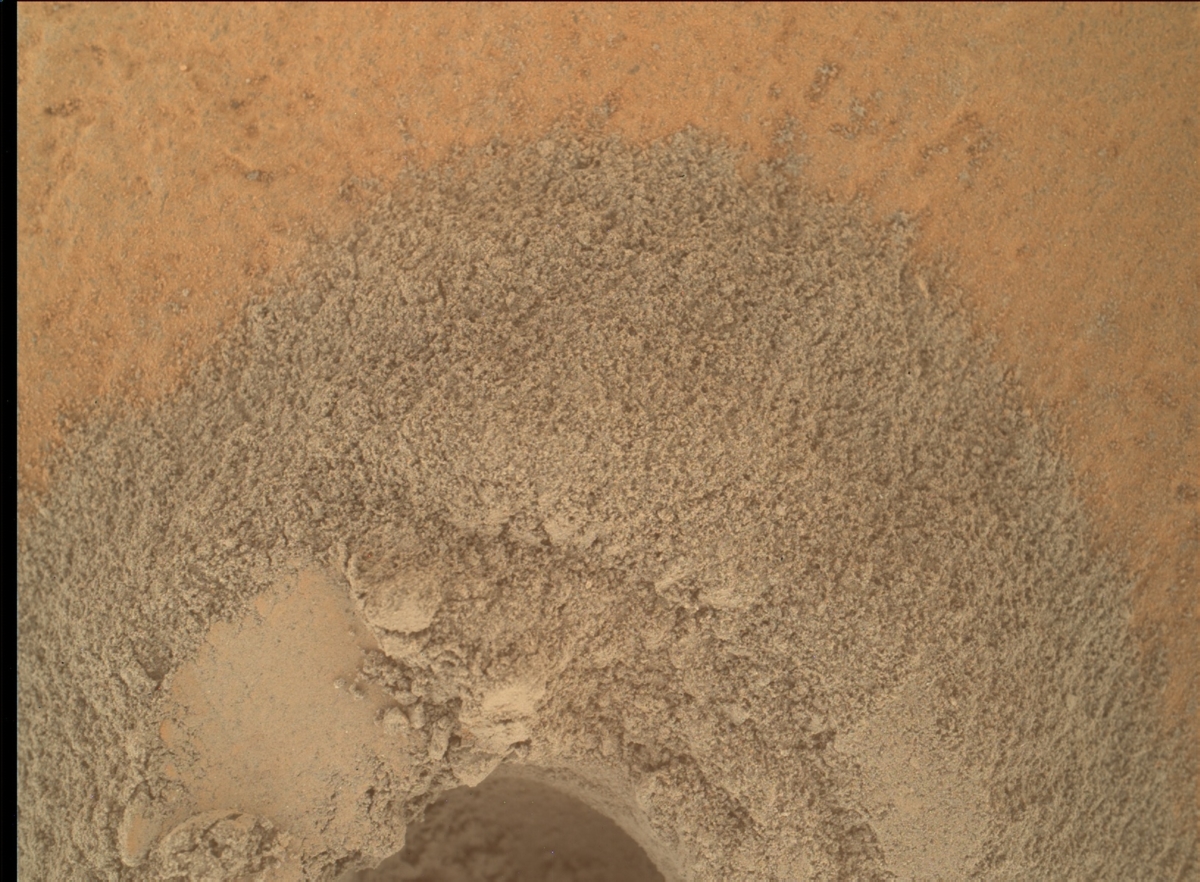
Curiosity Mars Hand Lens Imager photo produced on Sol 2728, April 9, 2020.
Credit: NASA/JPL-Caltech/MSSS
NASA’s Curiosity Mars rover is now carrying out Sol 2729 tasks.
“Many of us on Earth are being especially diligent lately about washing our hands for at least 20 seconds after touching a new surface,” reports Scott Guzewich, an atmospheric scientist at NASA’s Goddard Space Flight Center in Greenbelt, Maryland.
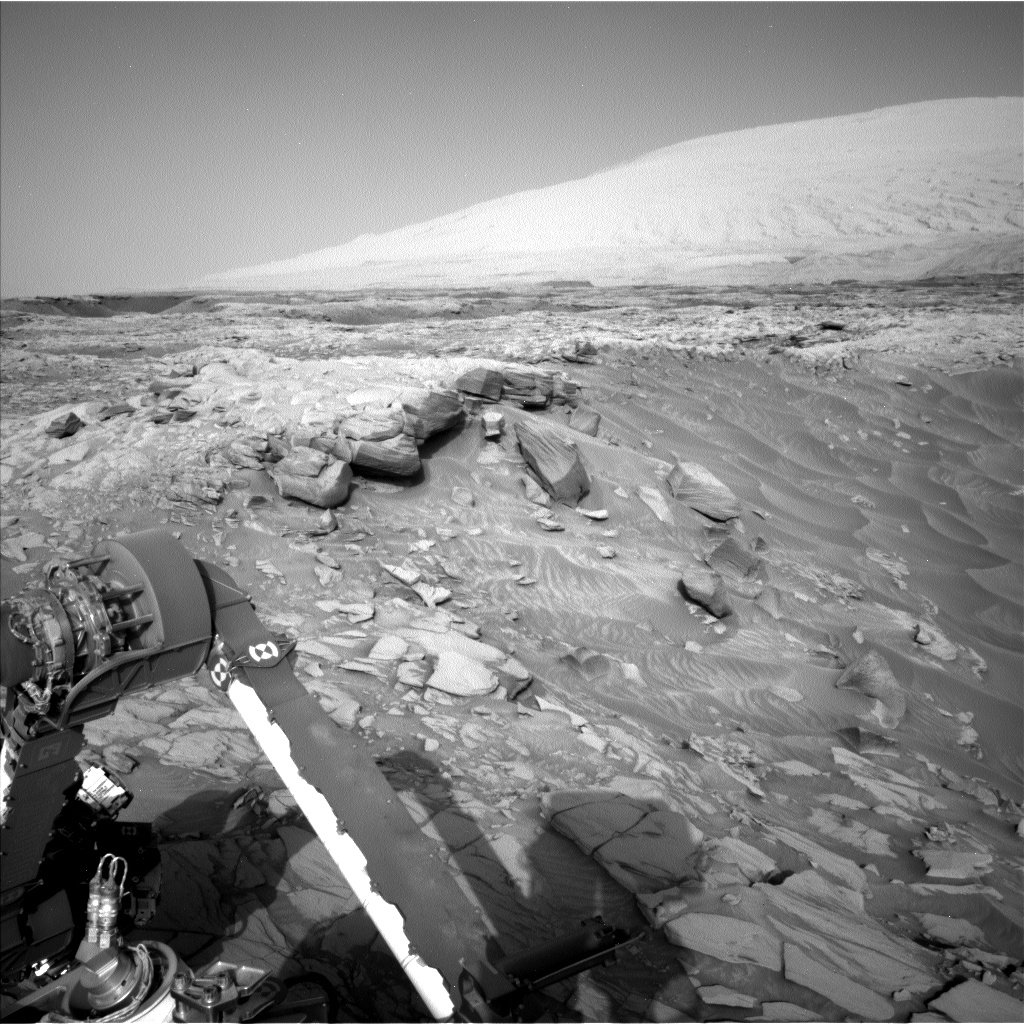
Curiosity Left B Navigation Camera photo acquired on Sol 2728, April 9, 2020.
Credit: NASA/JPL-Caltech
“On Mars, Curiosity is used to doing something a little bit similar, but for a very different reason: to prevent cross-contamination between samples taken at different locations,” Guzewich explains.
Of course, the lack of water and soap prevents the rover from “washing,” but scientists, still have to make sure the rover’s instruments stay as clean as possible after touching a new surface.
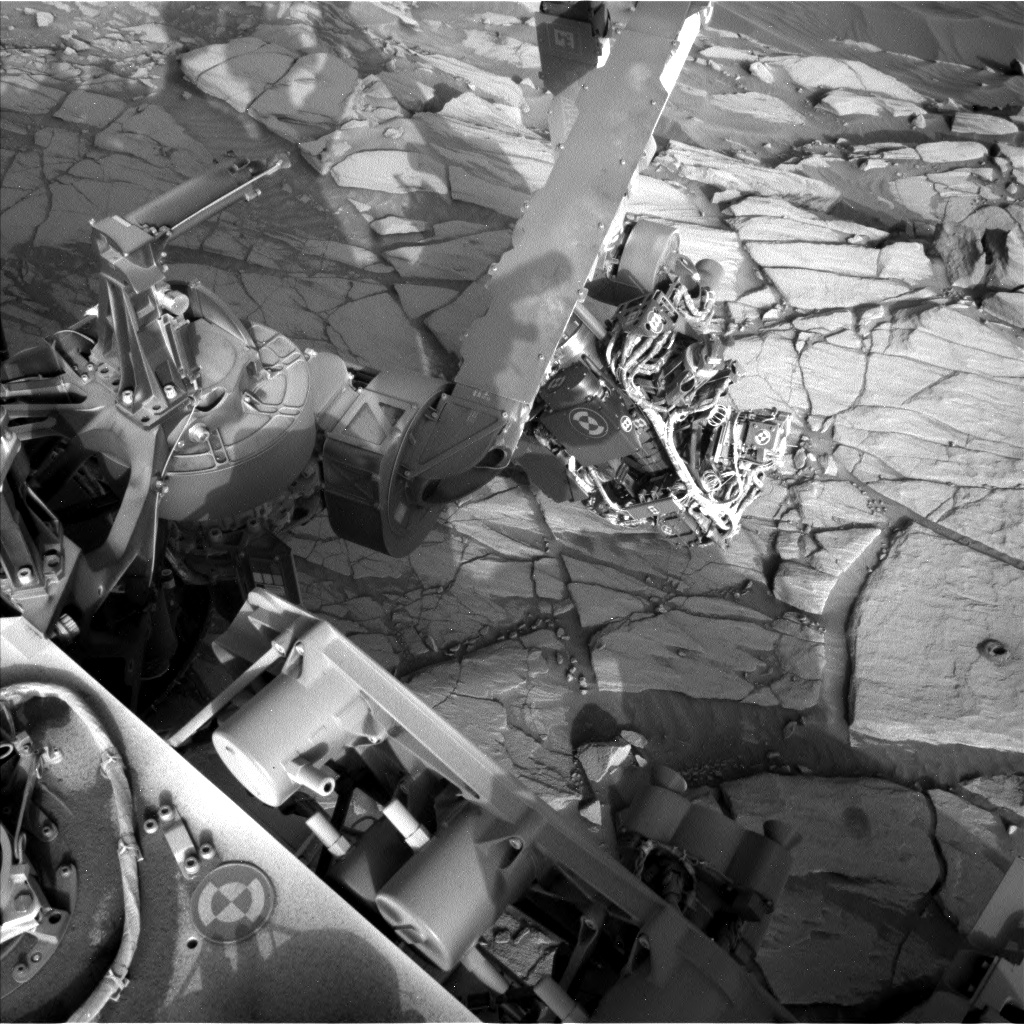
Curiosity Left B Navigation Camera photo acquired on Sol 2728, April 9, 2020.
Credit: NASA/JPL-Caltech
Arm retraction
During last Monday’s plan, the rover’s arm was placed over the drill tailings from the Edinburgh drill hole to study them with the robot’s Alpha Particle X-Ray Spectrometer (APXS) and the Mars Hand Lens Imager (MAHLI).
In a recent plan, the call is to retract the arm from that position and stow it so Curiosity can drive away.
“During that process, we swing the turret back-and-forth to shake off and remove any bits of sand or dust that may have been clinging to APXS so when we next use it, APXS only measures materials at the new location and nothing that came with us from Edinburgh,” Guzewich adds.
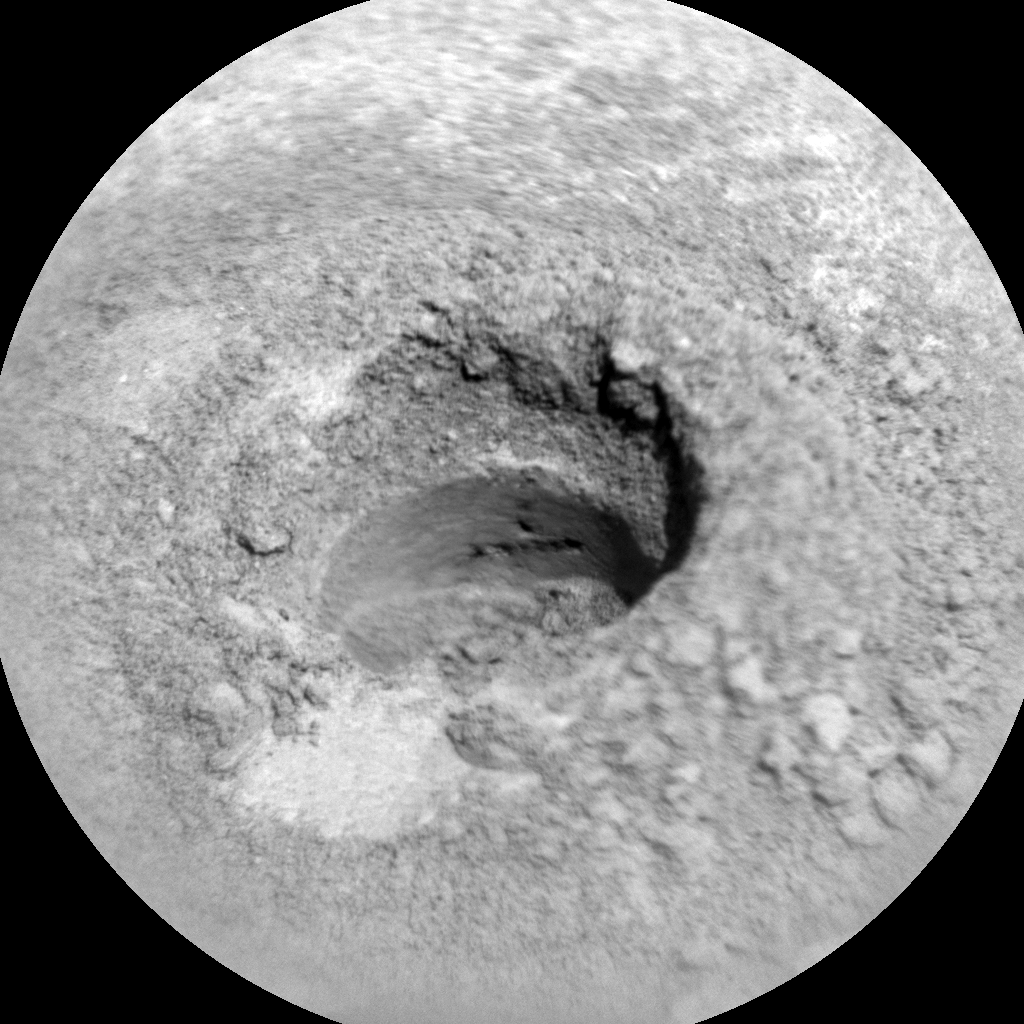
Curiosity Chemistry & Camera RMI photo taken on Sol 2728, April 9, 2020.
Credit: NASA/JPL-Caltech/LANL
Inside wall
After the robot’s arm is stowed, the plan calls for the Chemistry and Camera (ChemCam) to target the inside wall of the drill hole as well as take a long-distance mosaic of Gediz Vallis and the Greenheugh Pediment.
“Then we’ll conduct a short drive to a nearby patch of soil that we hope to study over the weekend,” Guzewich explains.
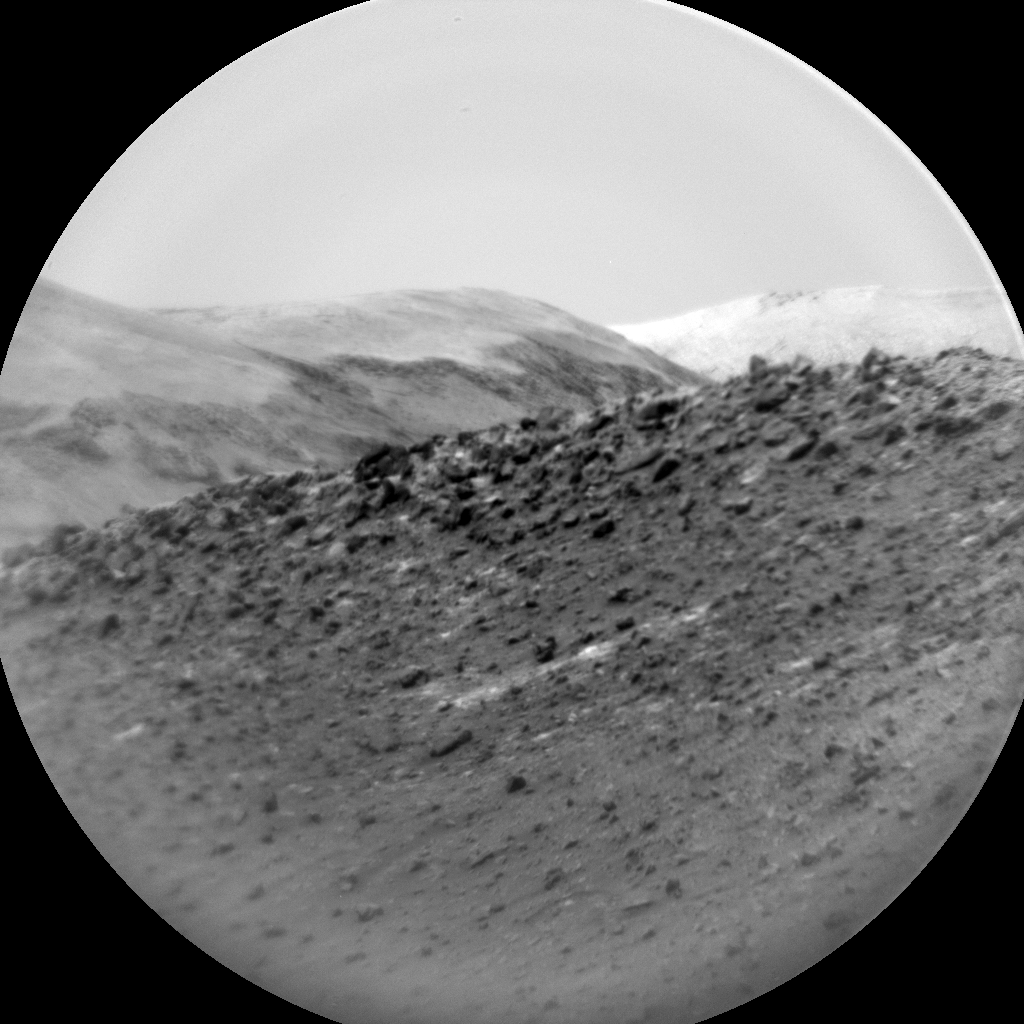
Curiosity Chemistry & Camera RMI photo taken on Sol 2728, April 9, 2020.
Credit: NASA/JPL-Caltech/LANL
On the second sol of the plan, a ChemCam Autonomous Exploration for Gathering of Increased Science (AEGIS) software activity is slated (where ChemCam picks its own targets!), as is a search for dust devils and monitoring the dust levels in the atmosphere.
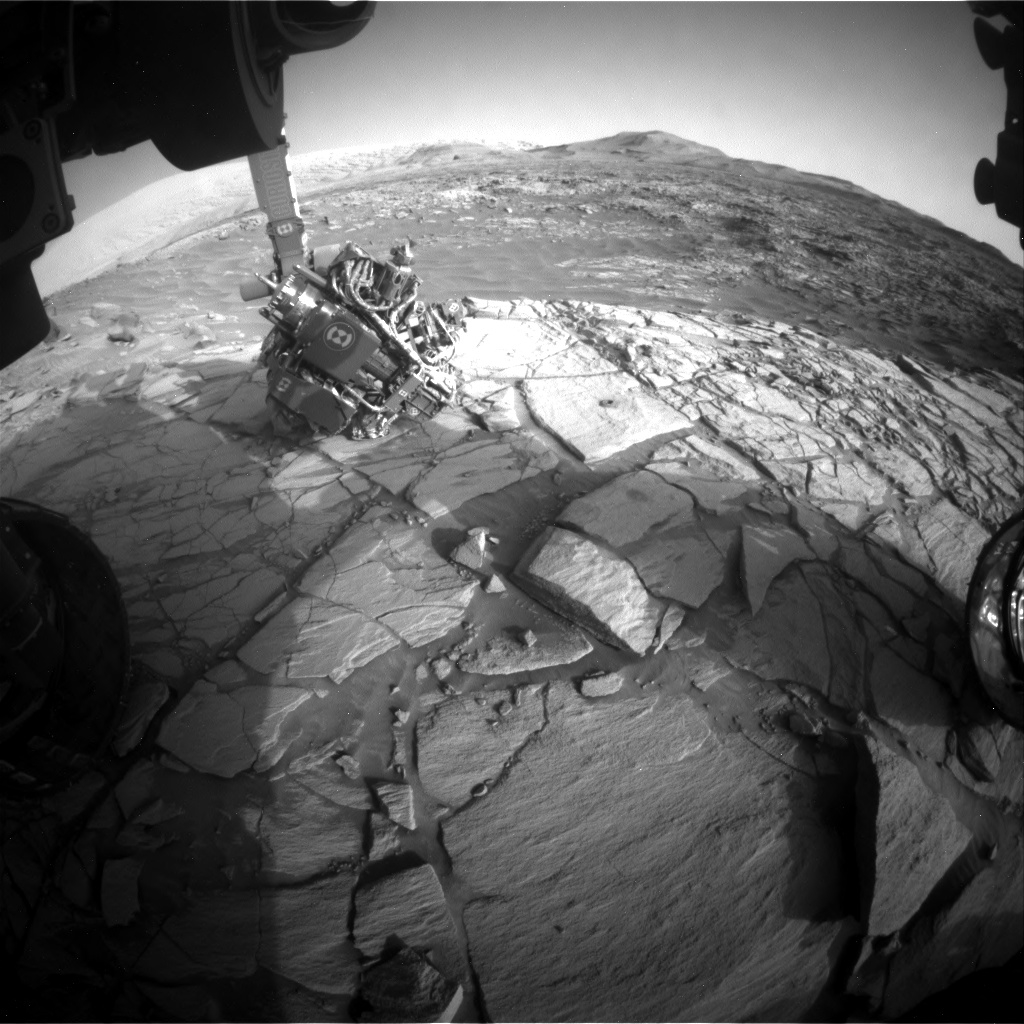
Curiosity Front Hazard Avoidance Camera Left B image taken on Sol 2728, April 9, 2020
Credit: NASA/JPL-Caltech
Upcoming is the equinox on Mars and spring begins for the southern hemisphere, Guzewich notes. “This is also when the dust storm season (generally the second half of the martian year) begins. Last Mars year (2018), we had a global dust storm and will be carefully watching to see if another develops this year!”
 Posted in Space News

