Author Archive
 Author:
  December 28th, 2015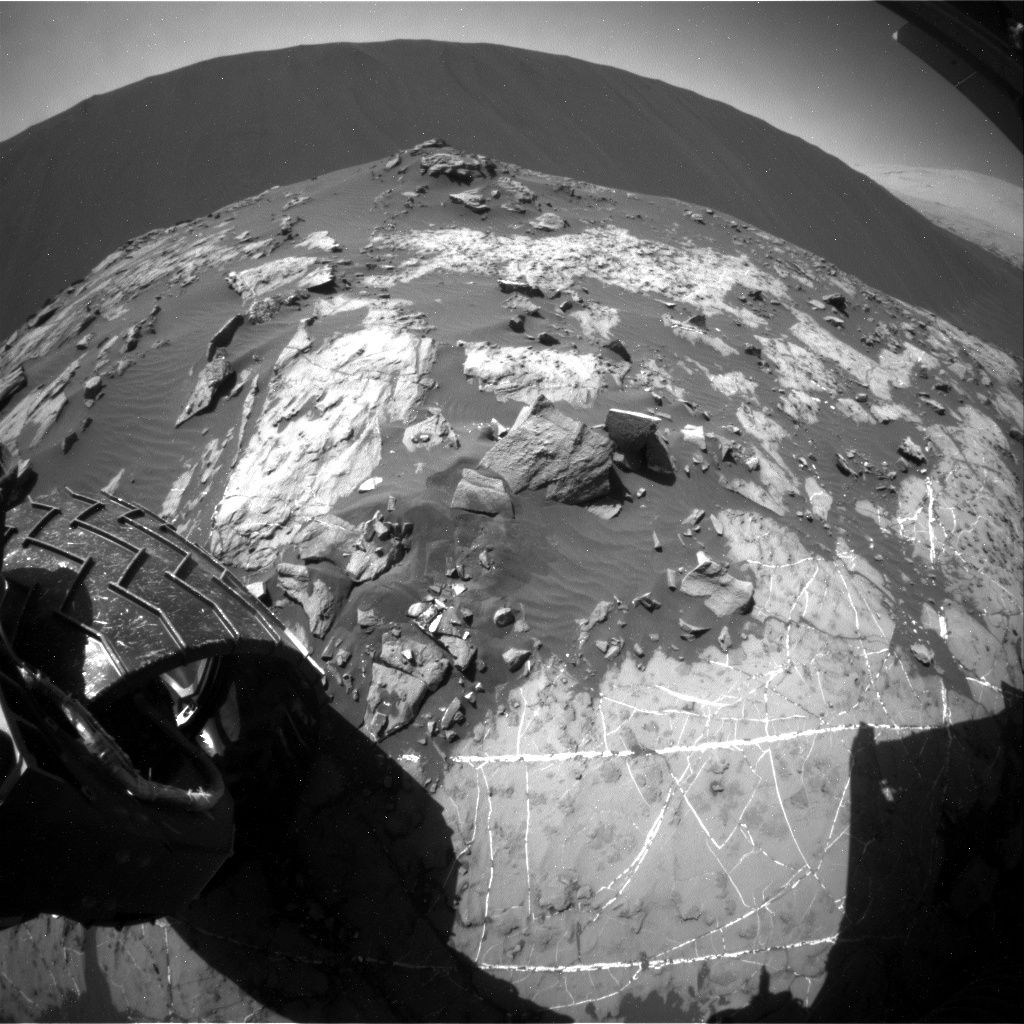
Curiosity Rear Hazcam Left B image taken on Sol 1206, December 28, 2015
Credit: NASA/JPL-Caltech
NASA’s Curiosity rover on Mars has entered Sol 1206.
New imagery from the robot includes added surveys of sand dunes.
The dunes close to Curiosity’s current location are part of “Bagnold Dunes,” a band along the northwestern flank of Mount Sharp inside Gale Crater.
Thanks to observations of this dune field from orbit, analysis show that edges of individual dunes move as much as 3 feet (1 meter) per Earth year.
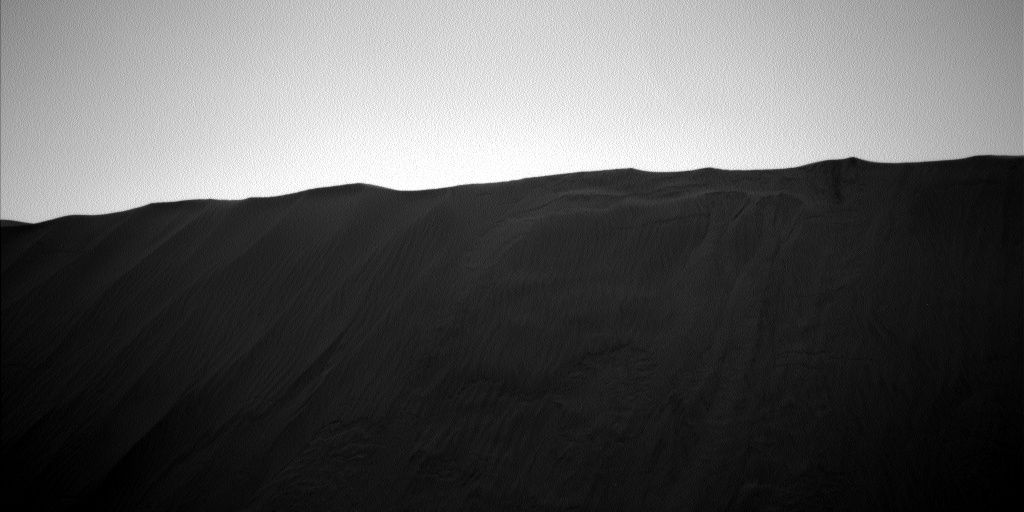
Curiosity Navcam Left B image taken on Sol 1206, December 28, 2015
Credit: NASA/JPL-Caltech
Curiosity has been working on the Red Planet since its landing in early August 2012.
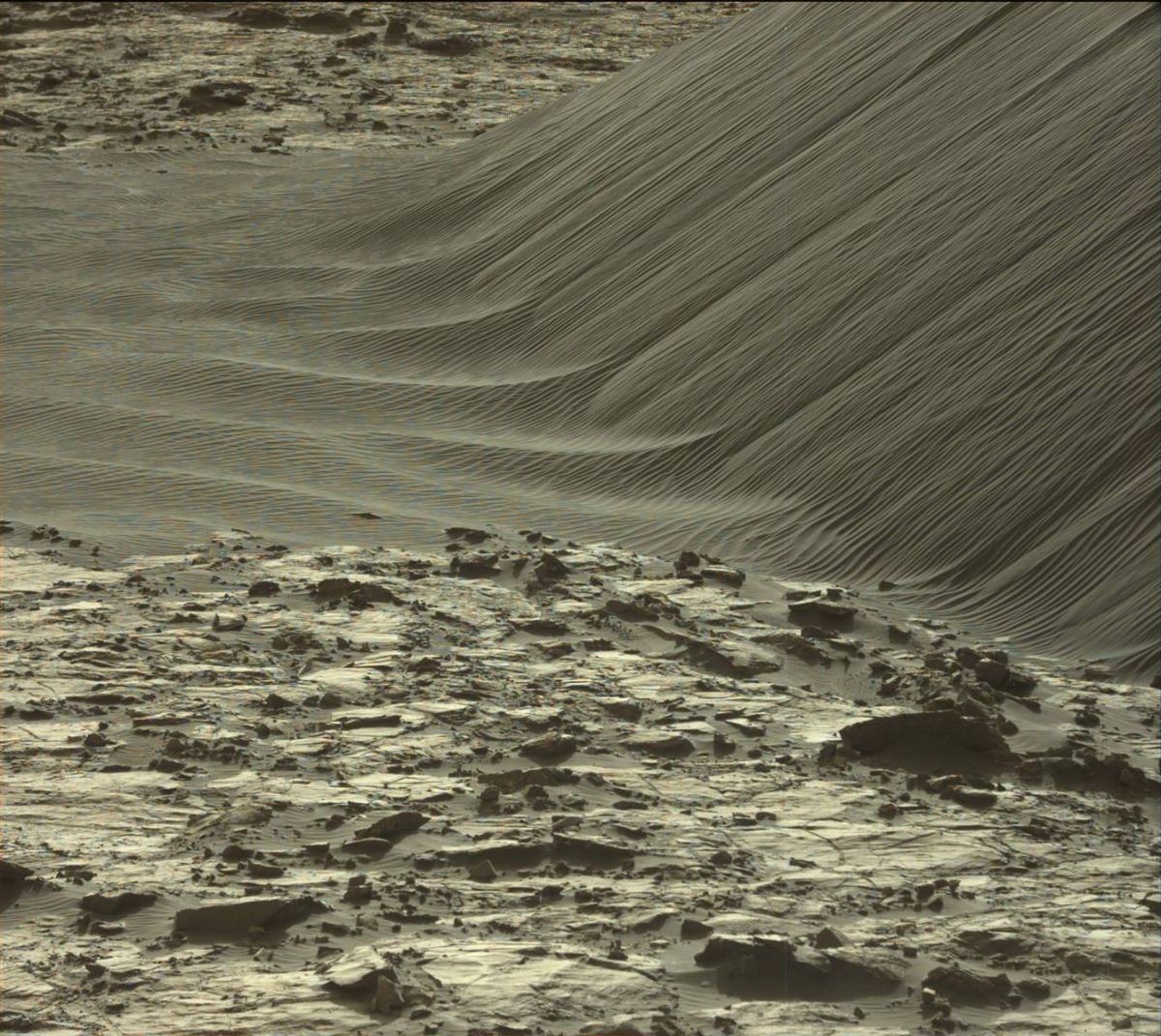
Curiosity’s Mastcam Left image taken on Sol 1204, December 26, 2015.
Credit: NASA/JPL-Caltech/MSSS
It reached the base of Mount Sharp in 2014 after investigating outcrops closer to its landing site and then trekking to the mountain.
The main mission of the robot is to examine higher layers of Mount Sharp.
 Posted in

Up for grabs? Future use of asteroids.
Credit: Texas A&M
By now the surprises under the tree have been unwrapped…but here’s a gift that is sure to keep on giving – the Solar System.
Comets and asteroids, the Moon and Mars and other distant destinations – all are rife with resources for the taking – or are they?
Economic adventurism
Back in November of this year, U.S. President Obama signed a law supporting entrepreneurs with aspirations of economic ventures beyond Earth orbit.
The Space Resource Exploration and Utilization Act of 2015 is part of the Commercial Space Launch Competitiveness Act. It provides that U.S. companies engaging in commercial recovery of space resources are entitled to possess, own, transport, use and sell the space resources obtained.
The U.S.-passed new law makes it legal for American firms to own resources obtained in outer space. Will this lead to a “gold rush” by U.S. companies. If so, how does this square with the global state of space?
Reason and retorts
In the give and take, yin and yang of the Universe, there is rising interest in mining extraterrestrial resources for a variety of reason and retorts.

Enter the space law experts!
Since the dawn of the Space Age, space lawyers have been debating the weaponization of outer space…even where Earth’s air stops and space begins.
“Space law is an area of the law that encompasses national and international law governing activities in outer space,” explains the International Institute of Space Law (IISL), founded in 1960.
But now there’s a fast-growing debate in space law circles involving the who, what, when, where, and why delicacies of space resource mining.
Indeed, the IISL has just issued a position paper on that topic.
Open question, starting point
The paper concludes with a classic scale of justice adjudication – a well-oiled, balancing act of concrete conclusion:
“It is an open question whether this legal situation is satisfactory,” concludes the IISL document.

Moon mining base.
Credit: Anna Nesterova
“Whether the United States’ interpretation of Art. II of the Outer Space Treaty is followed by other states will be central to the future understanding and development of the non-appropriation principle. It can be a starting point for the development of international rules to be evaluated by means of an international dialogue in order to coordinate the free exploration and use of outer space, including resource extraction, for the benefit and in the interests of all countries.”
Who rules?
Will the United States rule space resource mining?
That’s the question recently tackled by Tanja Masson-Zwaan and Bob Richards in their posting on the University of Leiden’s Leiden Law Blog from The Netherlands.
Tanja Masson-Zwaan is assistant professor and deputy director of the International Institute of Air and Space Law at Leiden University, The Netherlands.
Bob Richards is a founder of the International Space University, Singularity University, Students for the Exploration and Development of Space, the Space Generation Foundation and the commercial lunar resources company Moon Express, where he serves as chief executive.
— Check out their article at:
http://leidenlawblog.nl/articles/will-the-united-states-rule-space-resource-mining
— For the IISL Position Paper on Space Resource Mining, December 20, 2015, go to:
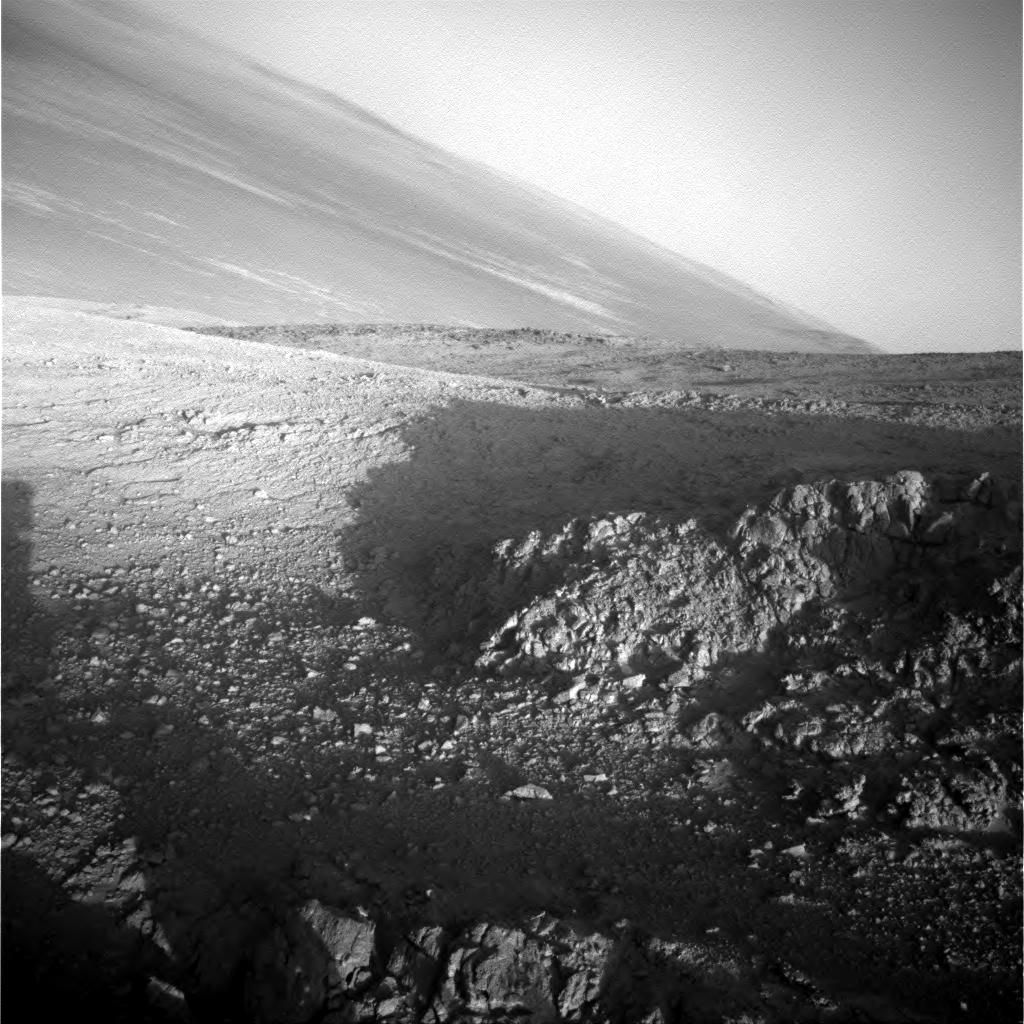
Opportunity’s Navigation Camera shows its surroundings on Sol 4236.
Credit: NASA/JPL
NASA’s Opportunity Mars rover is busy at work inside “Marathon Valley” on the west rim of Endeavour Crater. The robot is now in Sol 4238 of its mission.
Opportunity was launched on July 7, 2003 as part of NASA’s Mars Exploration Rover (MER) program. The airbag-encapsulated robot came to full stop in Meridiani Planum on January 25, 2004.
According to a Jet Propulsion Laboratory (JPL) update, the Mars machinery is positioned on steep slopes for improved solar array energy production.
Daily grind
The near-term duty of Opportunity has been positioning itself to enable grinding away at a high-value surface target using its Rock Abrasion Tool (RAT). Scientists believe this target may hold some of the clues as to the origin of the clay spectral signature detected in Marathon Valley.
On Sol 4222, Dec. 9, 2015, Opportunity “bumped” back about 12 feet (3.65 meters) to set up for an approach to this target on a very steep slope.
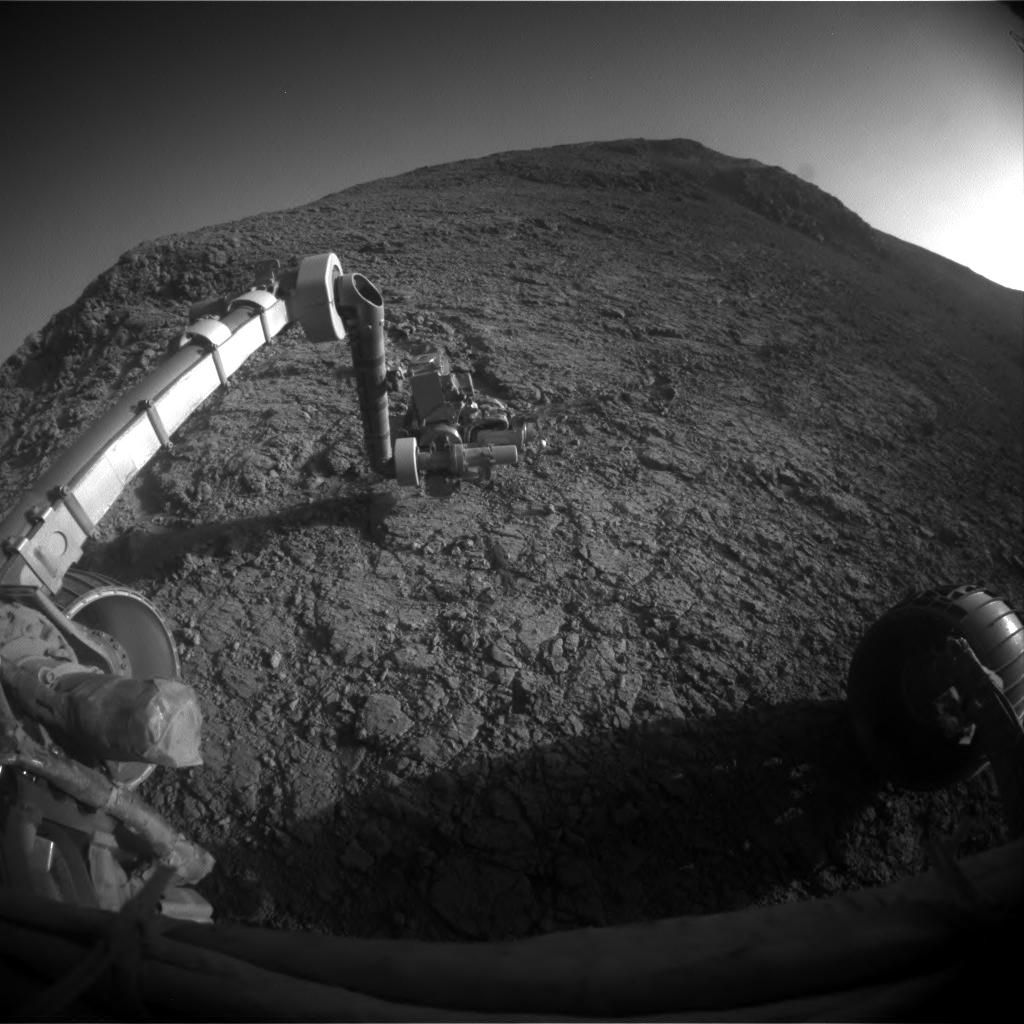
Front Hazcam on Opportunity shows its outstretched robot arm on Sol 4236.
Credit: NASA/JPL
Wheel currents
On the next sol, the rover bumped forward about 28 inches (70 centimeters), but because of the steep slopes the drive stopped as wheel currents exceeded protective set points for this steep terrain.
A second attempt was made on the next sol to approach this same target. Again the steep terrain caused the drive to stop after only 3.6 feet (1.1 meters) of wheel motion.
Slips as high as 50 percent are not uncommon for this steep terrain, notes the JPL update.
Past warranty
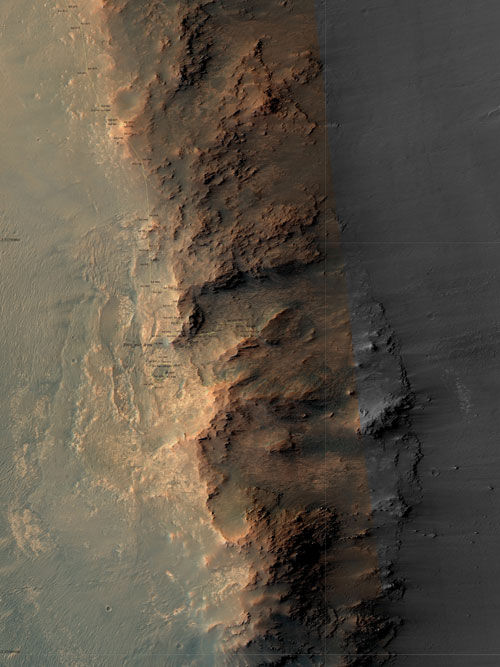
Latest map details movement of Opportunity as of Sol 4228.
Credit: NASA/JPL
In follow-on drives, Opportunity backed down slope about 10 feet (3 meters), collecting both pre-drive and post-drive imagery. That was followed by having the robot wheel roughly 14 feet (4.4 meters) to approach the target of interest from a more lateral direction. An approach bump followed that drive.
Since first movement on Mars, Opportunity’s total odometry reading is some 26.50 miles (42.65 kilometers).
The rover’s Sols past warranty now total 4148.
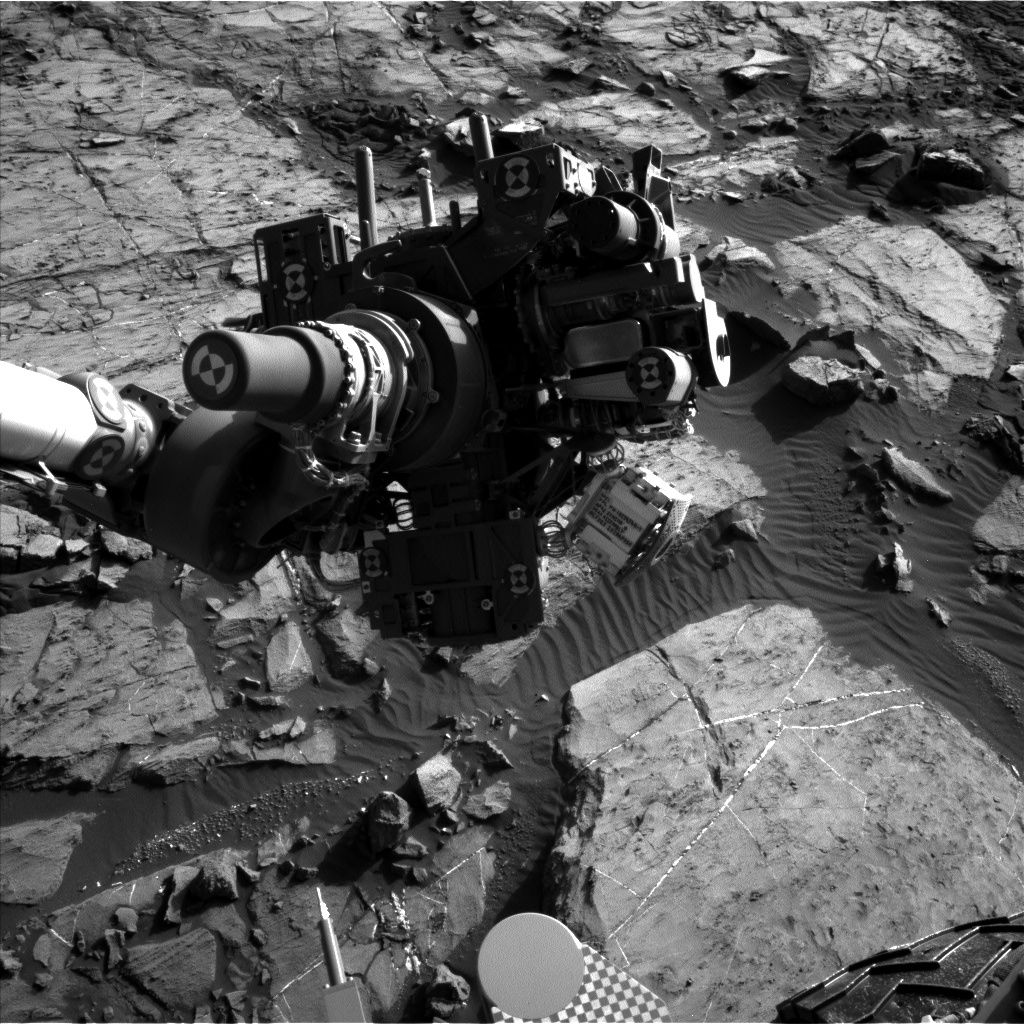
Curiosity image taken on Sol 1202 using its Navcam Left B camera on December 24, 2015.
Credit: NASA/JPL-Caltech
NASA’s Curiosity Mars rover has entered Sol 1203, recovering from an issue with its robotic arm.
Engineers ran diagnostics to better understand what happened with the arm. It is very likely that the arm hardware is okay, but the diagnostics will allow rover operators to avoid the problem in the future.

Curiosity Mastcam Left image taken on Sol 1200, December 22, 2015. Note view of the arm in the position where a fault occurred. The dump pile is visible just beyond the arm.
Credit: NASA/JPL-Caltech/MSSS
Due to the arm issue, samples of “Greenhorn” were dumped and there was work done to get the arm in full swing. There were some concerns about analyzing the dumped sample before Martian wind blew the specimen away.
Holiday plan
A four sol “holiday plan” covering Sol 1202-1205 was scripted, reports Ryan Anderson, a planetary scientist at the USGS Astrogeology Science Center in Flagstaff, Arizona and a member of the Chemistry & Camera (ChemCam) team on the Mars Science Laboratory (MSL) project.
On Sol 1202, the plan called for a repeat of ChemCam RMI and Mastcam change detection images of the nearby dunes. Then the arm will finish its sample dumping and cleaning activities, and the Mars Hand Lens Imager (MAHLI) was slated take some images of the dump pile and the robot’s Alpha Particle X-Ray Spectrometer (APXS) was to analyze that sample.
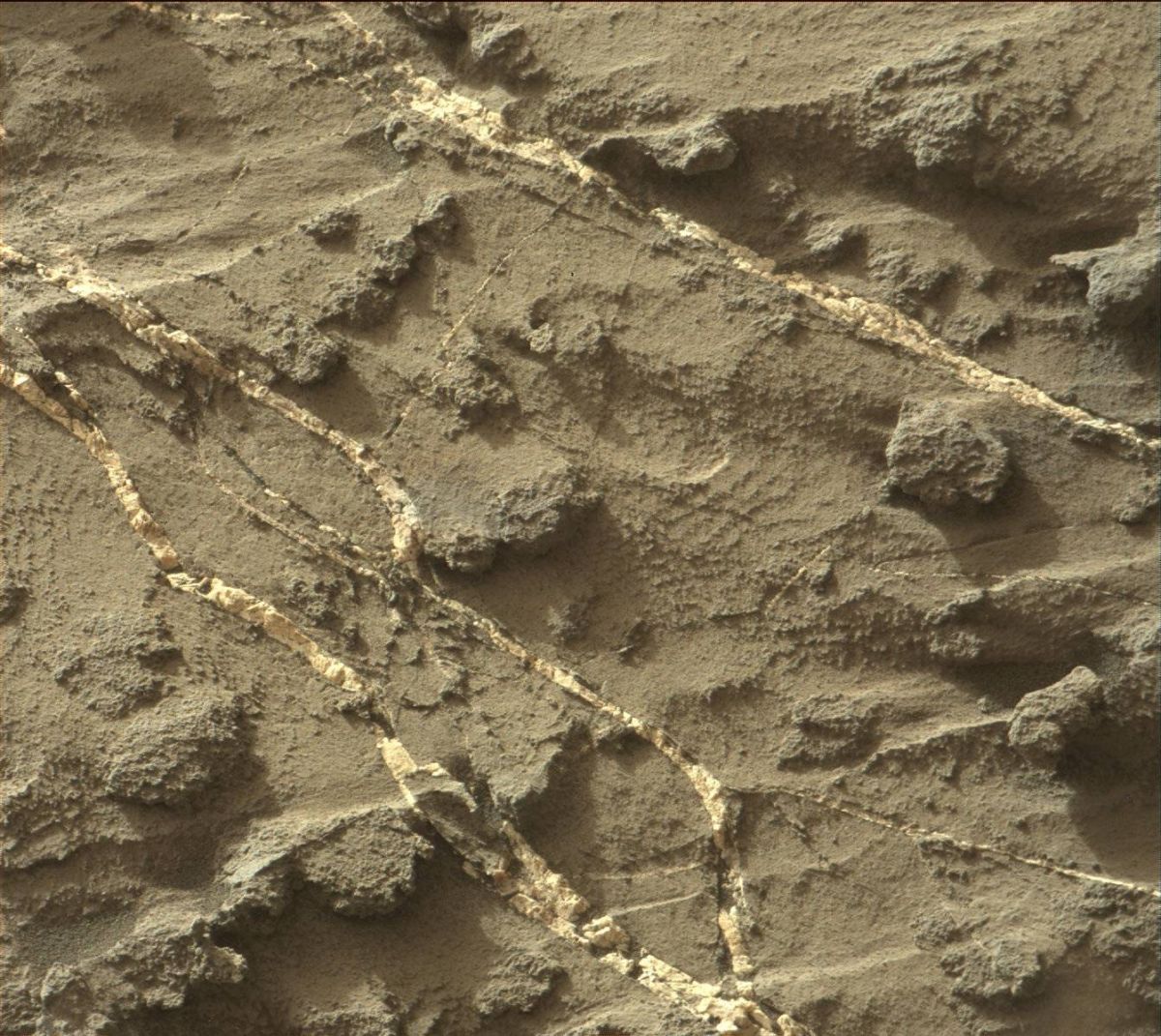
Curiosity Mastcam Right image taken on December 23, 2015, Sol 1201.
Credit: NASA/JPL-Caltech/MSSS
Dune observations
Today, Ryan notes, the schedule calls for repeating the Mastcam change detection observations of the dunes.
Mastcam is also slated to re-take some of the dune images from a recent 360 degree panorama with different exposure and focus settings.
ChemCam is scheduled to take two laser analyses of the targets “Aus” and “Aukas” and Mastcam is to take supporting images of that task.
“After that, we’ll take one more MAHLI image of the dump pile and then stow the arm,” Ryan adds.
Dump pile
On Sol 1204, ChemCam is on tap to collect some atmospheric observations, with the laser turned off, plus observations of the “Greenhorn” dump pile with the laser off and then with the laser on, Ryan reports.
The rover’s Mastcam will also observe the dump pile, using all of its different color filters. It will also measure the amount of dust in the atmosphere by looking at the sun, and will take some images of the rover’s deck to see any evidence of wind-blown sand possibly gathered there.

Curiosity’s Traverse Map Through Sol 1196.
This map shows the route driven by NASA’s Mars rover Curiosity through the 1196 Martian day, or sol, of the rover’s mission on Mars as of December, 18, 2015.
Numbering of the dots along the line indicate the sol number of each drive. North is up. The scale bar is 1 kilometer (~0.62 mile). From Sol 1194 to Sol 1196, Curiosity had driven a straight line distance of about 97.41 feet (29.69 meters).
The base image from the map is from the High Resolution Imaging Science Experiment Camera (HiRISE) in NASA’s Mars Reconnaissance Orbiter.
Credit: NASA/JPL-Caltech/Univ. of Arizona
“Sol 1205 will be a light day,” explains Ryan. Curiosity is to take some measurements to update ground controllers regarding the robot’s tilt and orientation, and the Rover Environmental Monitoring Station (REMS) is set to collect atmospheric measurements.
Dates of planned rover activities are subject to change due to a variety of factors related to the Martian environment, communication relays and rover status.
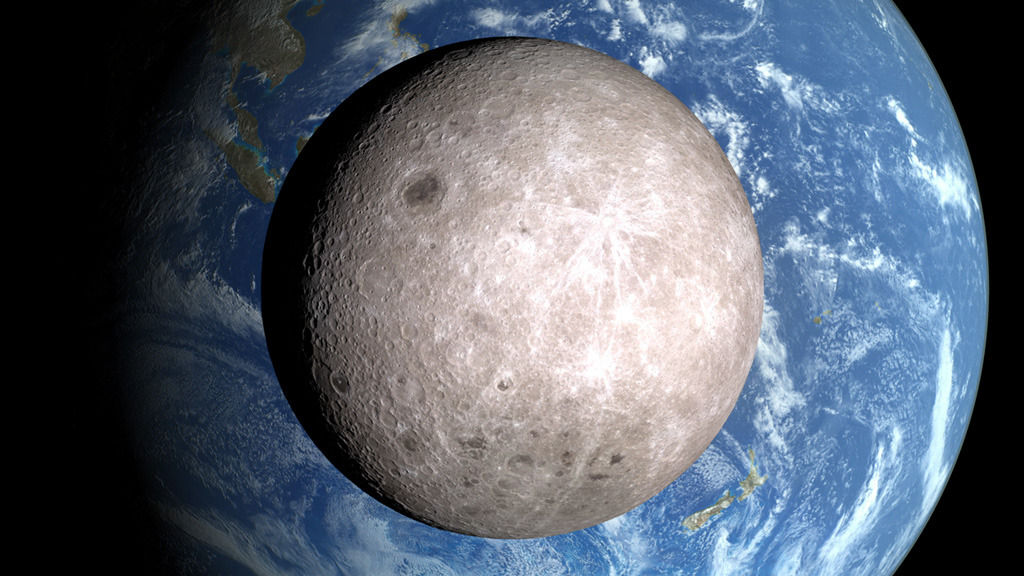
Credit: NASA’s Scientific Visualization Studio/Goddard Space Flight Center
Europe’s reach for the Moon is loud and proud.
That’s evident in new details following a European Space Agency (ESA) led meeting, an international symposium on “Moon 2020-2030 – A New Era of Coordinated Human and Robotic Exploration.”
The meeting was held December 15-16 at ESA/ESTEC in Noordwijk, The Netherlands.
Upshot: The Moon is viewed as a springboard to push the human exploration of the Solar System — with Mars as the horizon goal.
Comeback to the Moon
“A new lunar adventure is rising over Europe’s space exploration horizon,” declares a preliminary summary of the program that brought together over 200 scientists, engineers, astronauts, and space leaders from all over the world.
“ESA is teaming up with international key players to make possible the return of humans to the Earth’s natural satellite by the end of the next decade,” the document provided to Inside Outer Space explains.
In addition, private sector and industry are acting as a catalyst towards “a common and open lunar exploration architecture.”
Intercontinental teams at the meeting joined efforts to design plans for a lunar a space habitat and a combination of robotic and human landings.
Calling it a “comeback to the Moon” ESA envisions a series of human missions to the lunar vicinity, starting in the early 2020s, coordinated and interacting with robotic systems on the ground.
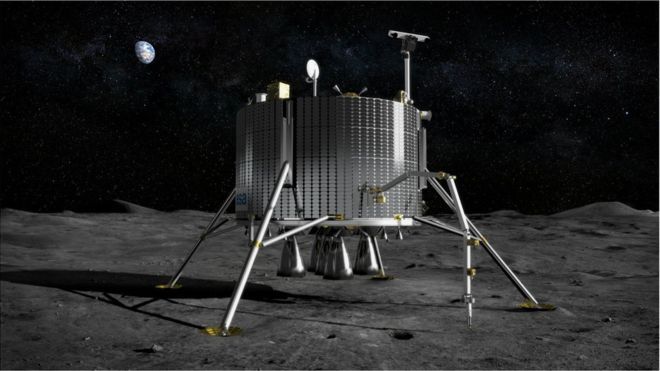
The European Space Agency and Russia are working jointly on the Luna 27 Moon lander.
Credit: ESA
Robots will land first, paving the way for human explorers that will set foot on the Moon.
Russian lander
This “rebirth of lunar technology and science,” adds the document, includes Europe supplying a precision-landing and hazard-avoidance system called PILOT.
That system would be onboard the Russian lander, Luna 27, to get the craft down safely near the Moon’s south pole.
A drill to retrieve samples and a communication system are also in the making.
New Moon
A major driver of renewed interest in the Moon is the hunt for lunar resources – in the form frozen volatiles – including water ice – known to be lurking within permanent shadows at the lunar poles.
“Their distribution in different regions is not yet clear. Understanding where they are and its uses are key for a sustainable long-term strategy,” the meeting summary explains.

Inside look at one idea the European Space Agency is exploring to fabricate a lunar habitat.
Credit: ESA/ Foster + Partners
A “new Moon” awaits the document concludes. “The extreme and unknown landscapes of the south pole, the highlands and the far side of the Moon lie along the road. Some secrets to how life began on Earth more than three billion years ago are well-preserved in these unexplored areas…”
NOTE: An eight-minute video gives an overview of the past, present, and future of Moon exploration, from the lunar cataclysm to the European Space Agency’s vision of what lunar exploration could be. Why is the Moon important for science? What resources does the Moon have? Is there water? Why should we go back and how will we do it?
To view the video, go to:

Demonstration milestone has re-energized plutonium production in the United States.
Credit: DOE/ORNL
The first U.S. production in several decades of plutonium-238 is being energetically spotlighted by NASA and the Department of Energy (DOE).
Researchers at DOE’s Oak Ridge National Laboratory (ORNL) in Tennessee have restored a U.S. capability dormant for nearly 30 years.
Roughly the mass of a golf ball, the 50 grams of plutonium-238 means good news for future deep space missions.
Next gen orbiters, landers and rovers
“This significant achievement by our teammates at DOE signals a new renaissance in the exploration of our solar system,” said John Grunsfeld, associate administrator for NASA’s Science Mission Directorate in Washington in a DOE press statement.
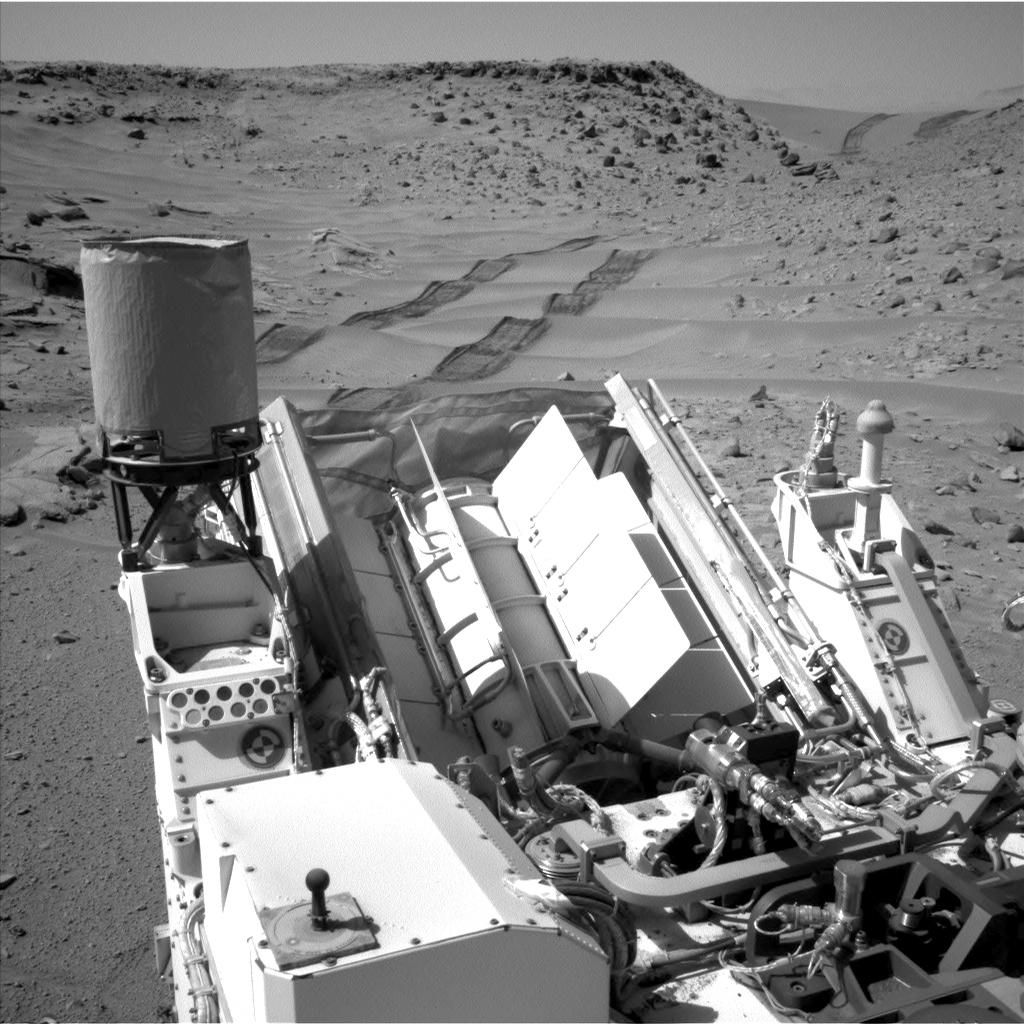
Radioisotope power system enables exploration by NASA’s Curiosity Mars rover.
Credit: NASA/JPL-Caltech/MSSS
“Radioisotope power systems are a key tool to power the next generation of planetary orbiters, landers and rovers in our quest to unravel the mysteries of the universe,” Grunsfeld said.
Multi-Mission success
Radioisotope power systems convert heat from the natural radioactive decay of the isotope plutonium-238 into electricity.
For NASA, these systems have powered, for example, the Viking lander missions to Mars, the Voyager spacecraft, and more recently they have energized the now on the prowl Curiosity Mars Rover and the New Horizons spacecraft that sailed past Pluto earlier this year.
The currently available radioisotope power system is called the Multi-Mission Radioisotope Thermoelectric Generator (MMRTG).
The next NASA mission planning to use an MMRTG is NASA’s Mars 2020 rover. Two (unfueled) MMRTGs are currently built and in storage at DOE facilities; one is reserved for Mars 2020, and the other could be used on a future mission. Fabrication of the fuel pellets for the Mars 2020 MMRTG — using the existing U.S. supply of plutonium dioxide — is already underway.
NASA’s Radioisotope Power System (RPS) program, managed by NASA Glenn Research Center in Cleveland, is funding the development of new, higher efficiency thermoelectric materials that could be incorporated into a next-generation enhanced MMRTG that would provide about 25 percent more power at the start of a typical mission, and 50 percent more power at the end of a mission.

Artist’s view of NASA’s nuclear powered New Horizons spacecraft as it passes Pluto and Pluto’s largest moon, Charon, last July.
Credit: NASA/JHU APL/SwRI/Steve Gribben
Increased production
Given “continued coordination,” explains the DOE, both agencies plan to increase production following the recent demonstration milestone success. That increase will being with 300 to 400 grams (about 12 ounces) of plutonium dioxide per year.
After implementing greater automation and scaling up the process, ORNL will produce an average of 1.5 kilograms (3.3 pounds) in subsequent years, the DOE explains.
“Once we automate and scale up the process, the nation will have a long-range capability to produce radioisotope power systems such as those used by NASA for deep space exploration,” said ORNL’s Bob Wham, who leads the project for the lab’s Nuclear Security and Isotope Technology Division.
The reaching of the demonstration milestone at ORNL comes two years after NASA began funding the DOE Office of Nuclear Energy through a roughly $15 million per year effort to revive the department’s capability to make plutonium-238.
For more information, go to:
https://www.youtube.com/watch?time_continue=16&v=VRJT6SKwuHg&noredirect=1
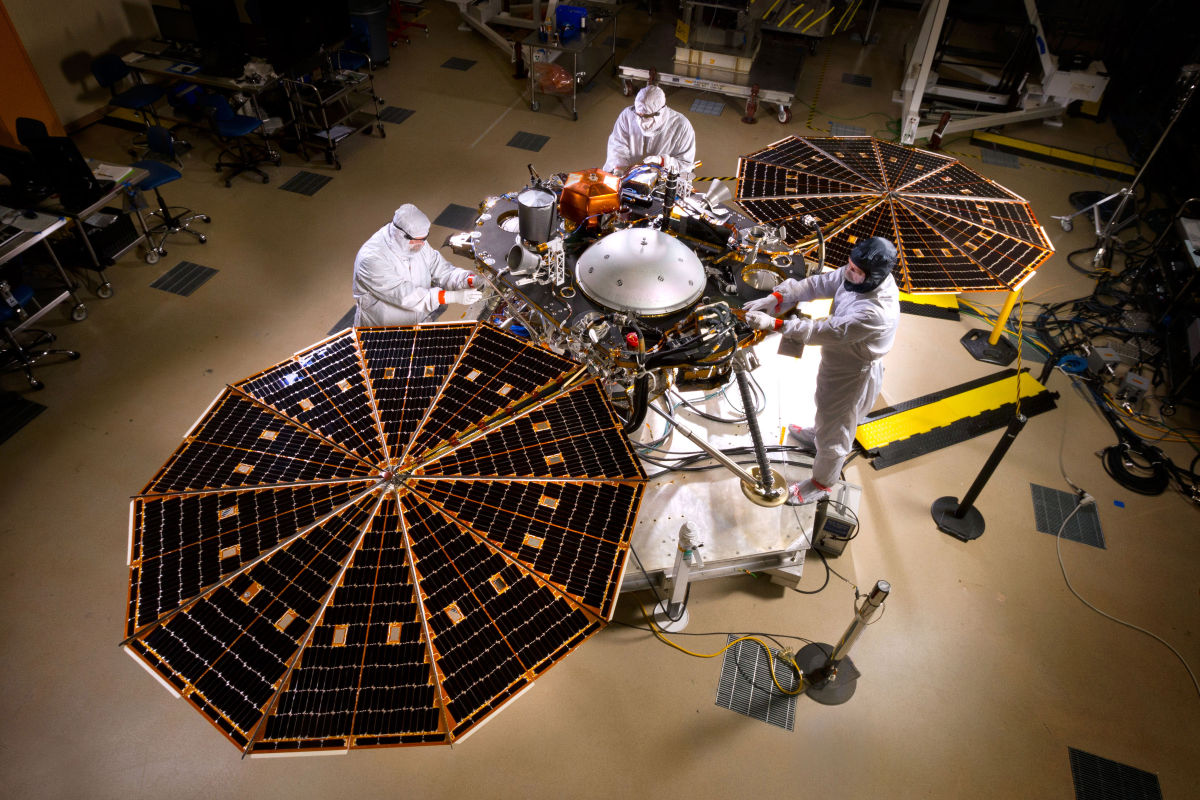
Back to the shop. NASA’s InSight Mars lander spacecraft in a Lockheed Martin clean room near Denver. Marscraft had been sent to launch site, but its March 2016 liftoff has been called off.
Credit: Lockheed Martin Space Systems
After thorough examination, NASA managers have decided to call off the planned March 2016 launch of the Interior Exploration using Seismic Investigations Geodesy and Heat Transport (InSight) mission. The decision follows unsuccessful attempts to repair a leak in a section of the prime instrument in the science payload.
A leak that previously had

InSight’s robot arm would have deployed sensitive Seismic Experiment for Interior Structure (SEIS) (white object in foreground).
Credit: NASA/JPL
prevented the seismometer from retaining vacuum conditions was repaired, and the mission team was hopeful the most recent fix also would be successful. However, during testing on Monday in extreme cold temperature (-49 degrees Fahrenheit/-45 degrees Celsius) the instrument again failed to hold a vacuum.
NASA officials determined there is insufficient time to resolve another leak, and complete the work and thorough testing required to ensure a successful mission.
The spacecraft, built by Lockheed Martin, was delivered to Vandenberg Air Force Base in California, on Dec. 16. With the 2016 launch canceled, the spacecraft will be returned from Vandenberg to Lockheed’s facility in Denver.
From Lockheed Martin, a statement on the InSight decision:
“We share NASA’s conviction that the top priority on any mission is to ensure it’s done right, and we stand ready to support the next steps on InSight in any way we can. Our team worked hard to get the InSight spacecraft built, tested and shipped to the launch site on schedule. Although InSight won’t launch in March as planned, we will work closely with NASA, JPL and their partners to map out the path forward for the spacecraft and its important mission. The InSight lander and its advanced scientific instruments are crucial to our understanding of how Mars and other rocky planets in the solar system formed. Like all Mars missions, it will also provide important knowledge and technological advancements to support future space exploration efforts.”

The outer solar system as we now recognize it. At the center of the map is the Sun, and close to it the tiny orbits of the terrestrial planets (Mercury, Venus, Earth and Mars). Moving outwards and shown in bright blue are the near-circular paths of the giant planets: Jupiter, Saturn, Uranus and Neptune. The orbit of Pluto is shown in white. Staying perpetually beyond Neptune are the trans-Neptunian objects (TNOs), in yellow: seventeen TNO orbits are shown here, with the total discovered population at present being over 1,500. Shown in red are the orbits of 22 Centaurs (out of about 400 known objects), and these are essentially giant comets (most are 50-100 kilometers in size, but some are several hundred kilometers in diameter). Because the Centaurs cross the paths of the major planets, their orbits are unstable: some will eventually be ejected from the solar system, but others will be thrown onto trajectories bringing them inwards, therefore posing a danger to civilization and life on Earth.
Credit: Duncan Steel
Giant comets could pose danger to life on Earth.
That’s the word from a team of astronomers from Armagh Observatory and the University of Buckingham.
They report that the discovery of hundreds of giant comets in the outer planetary system over the last two decades means that these objects pose a much greater hazard to life than asteroids.
Beware the centaurs
The giant comets — termed centaurs — move on unstable orbits crossing the paths of the massive outer planets Jupiter, Saturn, Uranus and Neptune. The planetary gravitational fields can occasionally deflect these objects in towards the Earth.
The team consists of researchers Bill Napier and Duncan Steel of the University of Buckingham, Mark Bailey and David Asher of Armagh Observatory.
Their work is just out in the December issue of Astronomy & Geophysics (A&G), the journal of the Royal Astronomical Society (RAS).
Serious hazard
“In the last three decades we have invested a lot of effort in tracking and analyzing the risk of a collision between the Earth and an asteroid,” says Napier in a RAS press statement.

Because they are so distant from the Earth, Centaurs appear as pinpricks of light in even the largest telescopes. Saturn’s 200-kilometers in size moon Phoebe, depicted in this image, seems likely to be a Centaur that was captured by that planet’s gravity at some time in the past. Until spacecraft are sent to visit other Centaurs, our best idea of what they look like comes from images like this one, obtained by the Cassini space probe orbiting Saturn. NASA’s New Horizons spacecraft, having flown past Pluto six months ago, has been targeted to conduct an approach to a 45-kilometers wide trans-Neptunian object at the end of 2018.
Credit: NASA/JPL-Caltech/Space Science Institute.
“Our work suggests we need to look beyond our immediate neighborhood too, and look out beyond the orbit of Jupiter to find centaurs,” Napier explains. “If we are right, then these distant comets could be a serious hazard, and it’s time to understand them better.”
Check out the full research paper at:
http://www.ras.org.uk/images/stories/press/Centaurs/Napier.Centaurs.revSB.pdf
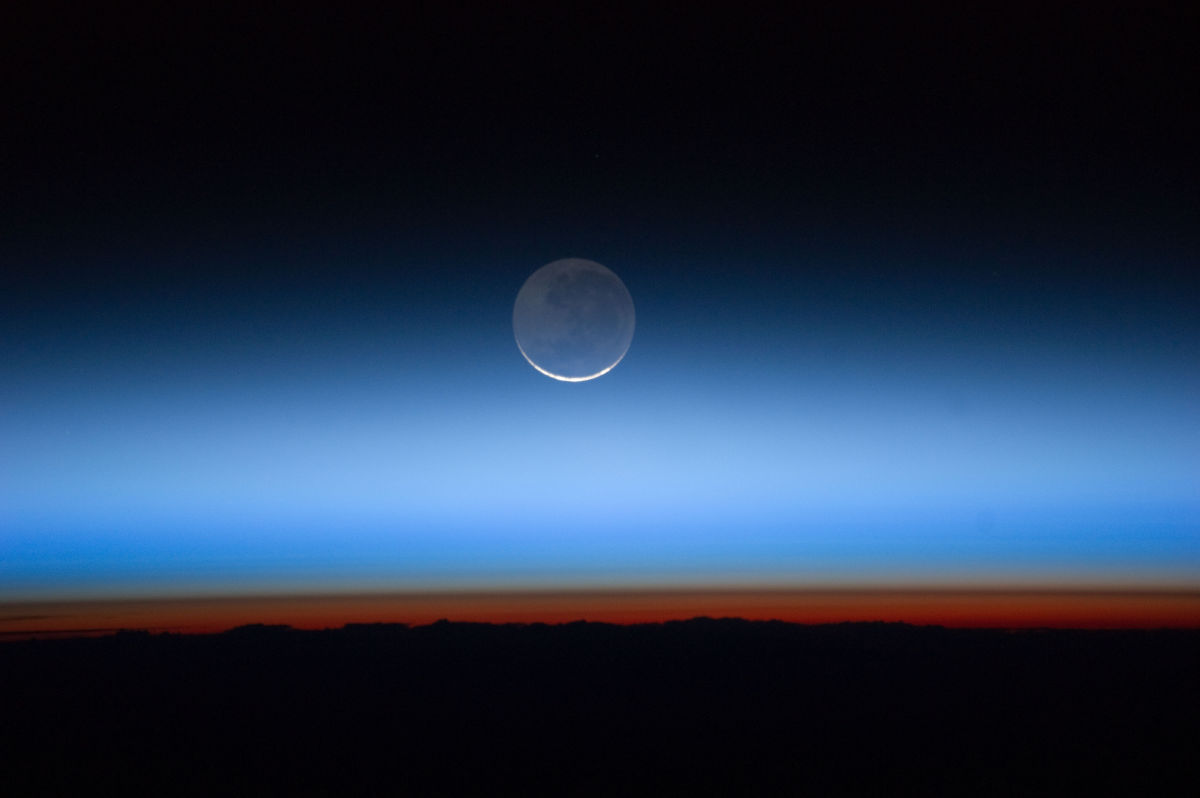
Europe is gathering organizational strenth to shoot for the Moon.
Credit: NASA
Try and not let the “Mars-now” folks know.
But there is increasing interest in Europe to prioritize the Moon as humankind’s next deep space destination.
That was clearly evident given an international symposium held December 15-16 on “Moon 2020-2030 – A New Era of Coordinated Human and Robotic Exploration,” staged at the European Space Agency’s (ESA) ESTEC in Noordwijk, The Netherlands.
Exploration telepresence
An active participant and organizer of the meeting was U.S. astronomer Dan Lester, a consultant and telerobotics expert. He provided Inside Outer Space some post-meeting, personal observations:
“The meeting was quite good. Lots of excitement about Moon-related efforts,” Lester said. “One big takeaway message — at least for me — was that exploration telepresence is no longer an off-the-wall idea, but one that seemed to be threaded throughout the conference. This conference seemed to accept that it was a new way of doing exploration.”
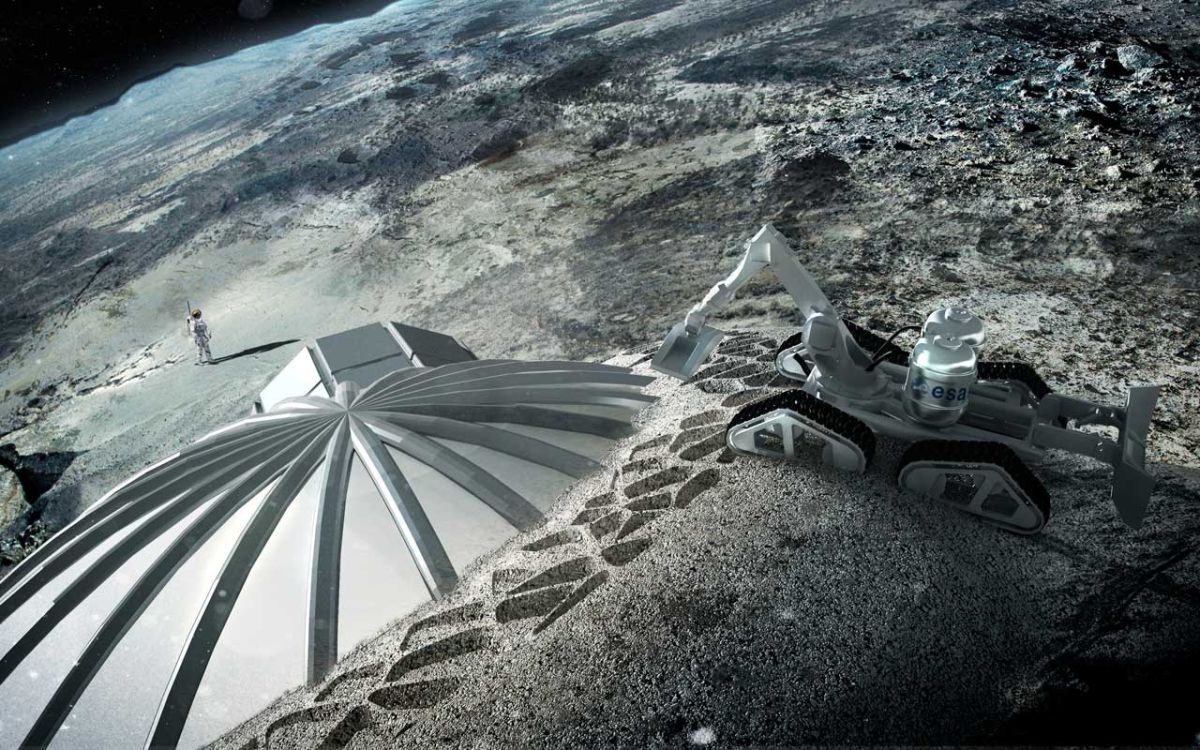
The European Space Agency is exploring the promise of 3D printing to enable construction of lunar habitats.
Credit: ESA/ Foster + Partners
Lester advised that a strong recommendation that will be coming out of the meeting is that real analog studies will be necessary to understand how to do operations on the Moon.
“Not analog operations at a Moon-like site which can be hugely expensive, just for travel, but analog operations where geologists use a real rover robot, perhaps just in a rockyard, with vision, dexterity/haptics and low latency control to do real-time field geology,” he said.
One other theme that was clear from the meeting, there is a load of important science that still needs to be done on the Moon. “That was a regular reminder at this meeting,” Lester said.
Wanted: coordinated prospecting program
Also bullish on the European meeting and a U.S. meeting organizer is Clive Neal, professor at the University of Notre Dame in Indiana.
“The meeting was excellent with over 200 people attending with 28 countries represented,” Neal told Inside Outer Space.
Neal said that take home messages were numerous.
“We keep talking about lunar resources, but we still need to demonstrate they can be used…they are, in fact, reserves. So ground truth verification of deposit size, composition, form, and homogeneity requires a coordinated prospecting program. A successful program would then clearly demonstrate that lunar resources can enable solar system exploration,” Neal said.
NASA sidelined
Technology development was highlighted in the meeting, Neal said, in terms of precision landing, robotic sample return, and cryogenic sampling, caching, return, and curation.
Inside look at one idea the European Space Agency is exploring to fabricate a lunar habitat.
Credit: ESA/ Foster + Partners
“Significant investments in the latter are required and starting to be made,” Neal said.
Quantifying the benefits from government investment in space exploration is critical for convincing both governments and the private sector to invest in such endeavors, Neal said.
In other meeting news, Neal said, it was evident that partnerships — especially between ESA and Russia — are maturing rapidly.
“NASA appears to be sidelined in this endeavor, which is alarming but a product of our current space policy,” Neal concluded.

Curiosity Mastcam Left image taken on Sol 1197, December 19, 2015.
Credit: NASA/JPL-Caltech/MSSS
Landing on Mars in August 2012, NASA’s Curiosity rover has driven closer to and imaged the lee side of Namib Dune, “and they reveal a lot of great details about the dune morphology,” reports Lauren Edgar, a research geologist at the USGS Astrogeology Science Center in Flagstaff, Arizona.
Today, Sunday, is a day without planning to allow Earth and Mars schedules to sync back up, Edgar notes. The rover has entered Sol 1199.
Curiosity’s camera system count is now over 290,000 images of the surrounding Mars landscape.
Slated activity is dumping the “Greenhorn” post-sieve sample and then analyzing it with both the Mars Hand Lens Imager (MAHLI) and the robot’s Alpha Particle X-Ray Spectrometer (APXS).
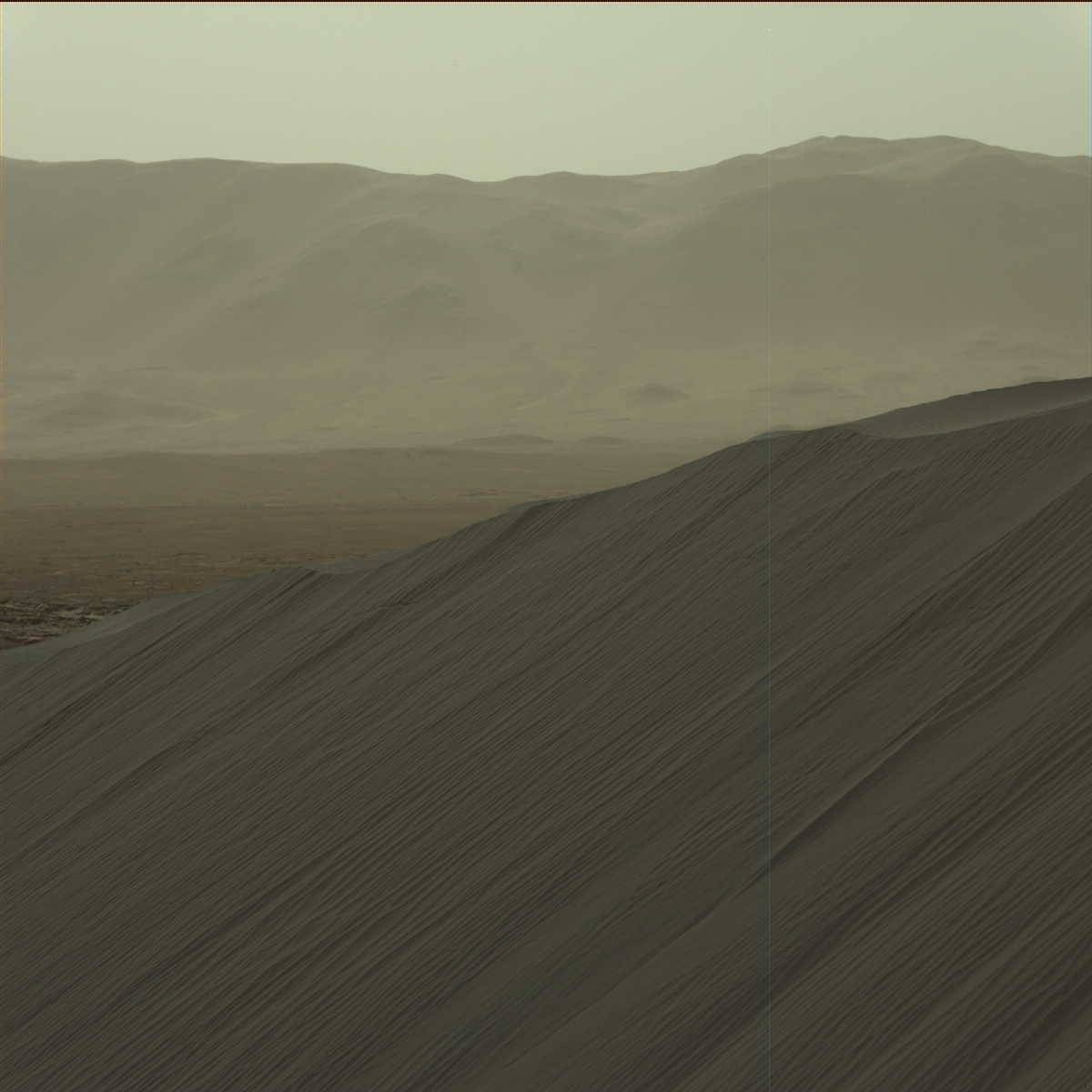
Another Curiosity Mastcam Left image taken on Sol 1197, December 19, 2015
Credit: NASA/JPL-Caltech/MSSS
The plan calls for Chemistry & Camera (ChemCam) viewing of targets “Duineveld” and “Spitzkop” to study the grain size and morphology of different parts of the dune’s slipface, Edgar explains.
Mastcam imaging of several targets for change detection is built into the plan.
On the schedule is testing of software for autonomous target selection, and using Mastcam and Navcam to monitor the Martian atmosphere.

Curiosity’s robotic arm busy at work, shown in this Navcam Left B image, taken on Sol 1198 December 20, 2015.
Credit: NASA/JPL-Caltech
Dates of planned rover activities are subject to change due to a variety of factors related to the Martian environment, communication relays and rover status.
Edgar adds: “We’ll be in the same location for a little while, so hopefully we’ll have the chance to observe some sand movement!”

