Author Archive
 Author:
  January 4th, 2016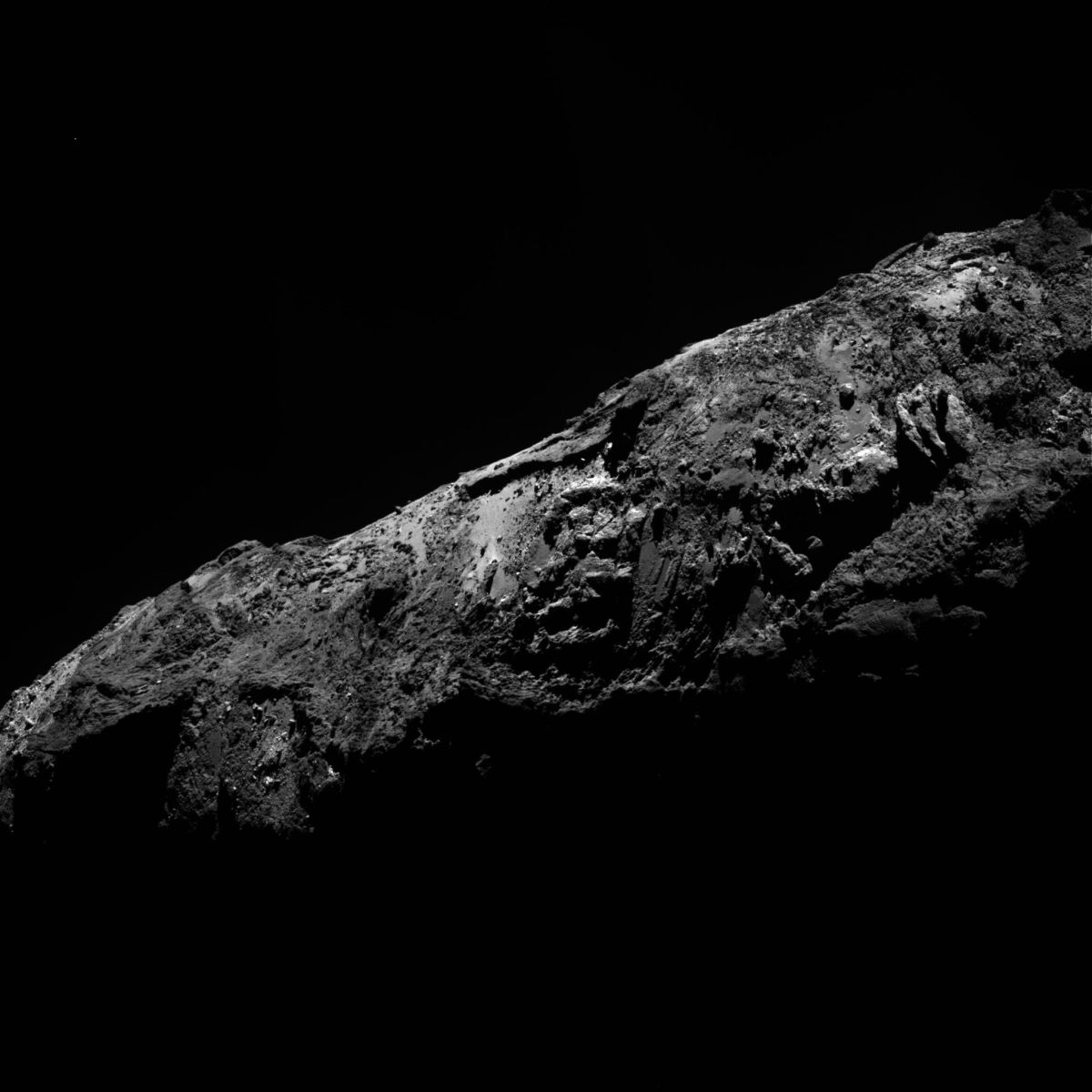
Rosetta image of comet taken on December 31, 2015 by the spacecraft’s OSIRIS narrow-angle camera from a distance of roughly 49 miles (79.6 kilometers) from the object.
Credits: ESA/Rosetta/MPS for OSIRIS Team MPS/UPD/LAM/IAA/SSO/INTA/UPM/DASP/IDA
The European Space Agency’s (ESA) Rosetta arrived at Comet 67P/Churyumov–Gerasimenko back in August 2014. After an initial survey and selection of a landing site, Rosetta unleashed the Philae probe on November 12 that bounced to a full-stop on the comet.
Still cruising along with the comet, ESA’s Rosetta spacecraft continues to produce outstanding images of the object, riding along with the celestial traveler through the Solar System.
“Now that we’re closer to the comet again we’re looking forward to seeing its surface in more detail. We’re also looking forward to sharing a fantastic view as Rosetta descends to the surface of the comet next September,” says Matt Taylor, ESA’s Rosetta project scientist.
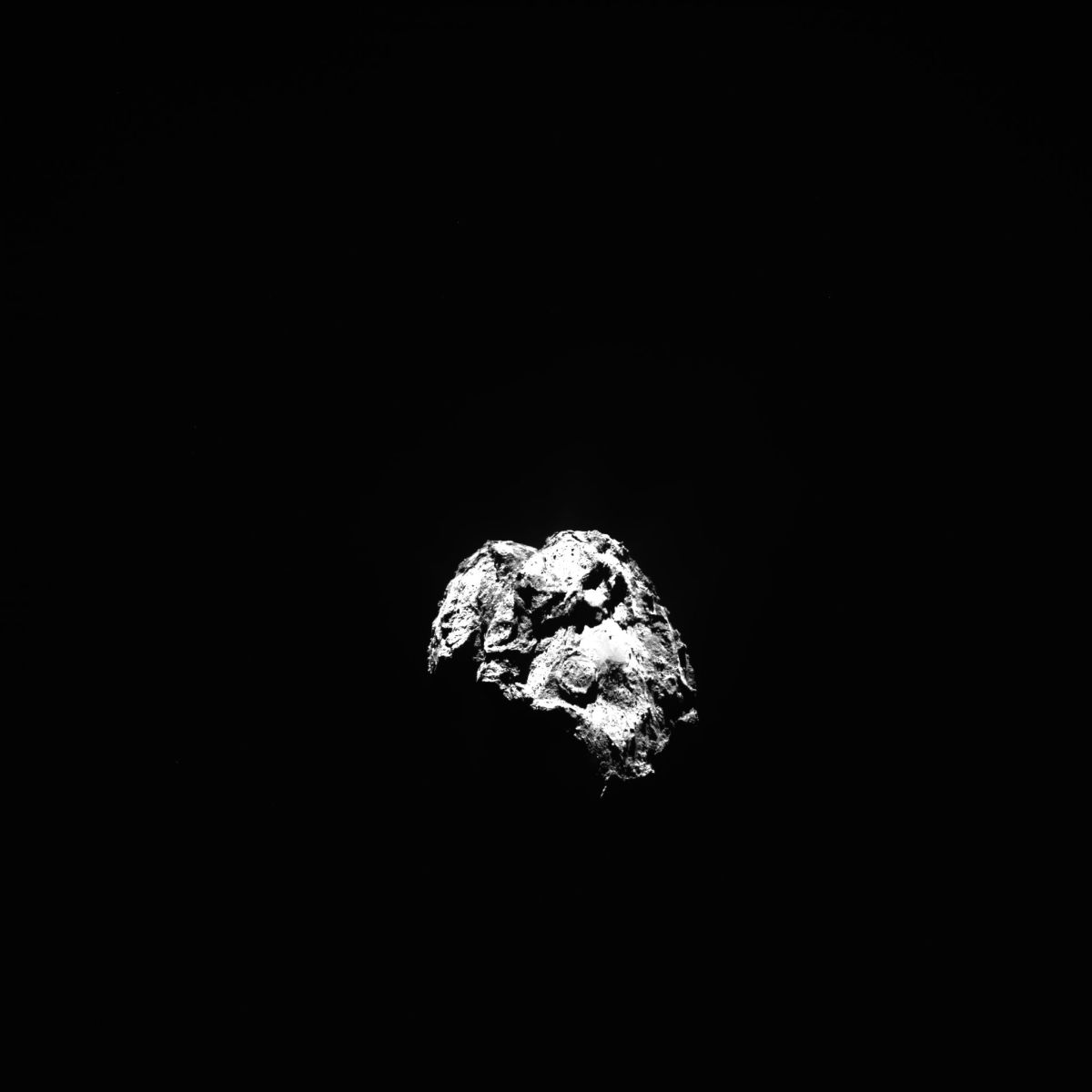
January 1, 2016 image of Comet 67P/ Churyumov–Gerasimenko taken by Rosetta’s Wide Angle Camera at roughly 50 miles (80 kilometers) distance from the object.
Credits: ESA/Rosetta/MPS for OSIRIS Team MPS/UPD/LAM/IAA/SSO/INTA/UPM/DASP/IDA
Rosetta was launched on March 2, 2004 by an Ariane-5 from Europe’s Spaceport in Kourou, French Guiana.
Check out this new video that pulls together details about Philae’s fall onto the comet at:
http://www.esa.int/spaceinvideos/Videos/2015/11/Reconstructing_Philae_s_flight
 Posted in
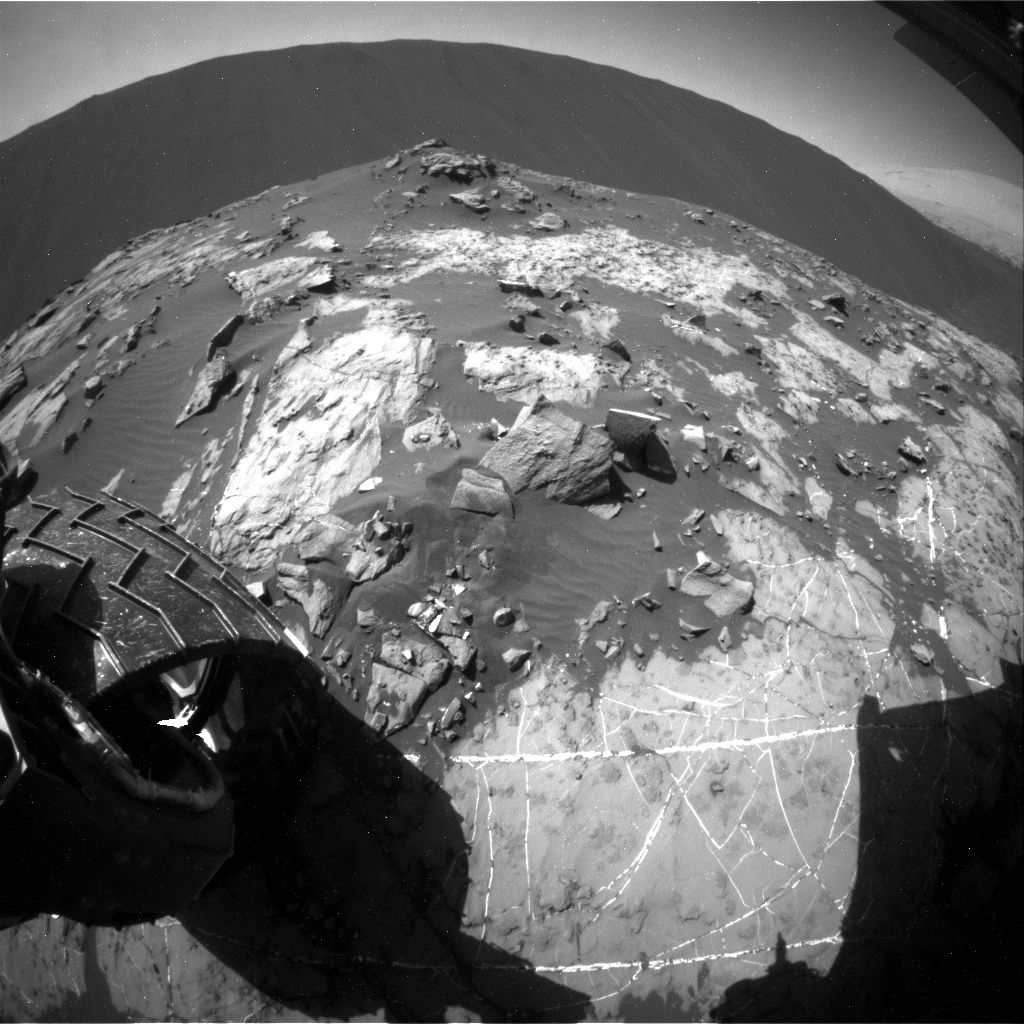
Rear Hazcam Left B image taken by NASA’s Mars rover Curiosity on Sol 1212, January 3, 2016
Credit: NASA/JPL-Caltech
NASA’s Curiosity Mars rover has entered Sol 1212 and has begun to transmit imagery in the New Year, 2016.
The machine continues to survey nearby dunes and ripples that are part of “Bagnold Dunes,” a band along the northwestern flank of Mount Sharp inside Gale Crater.
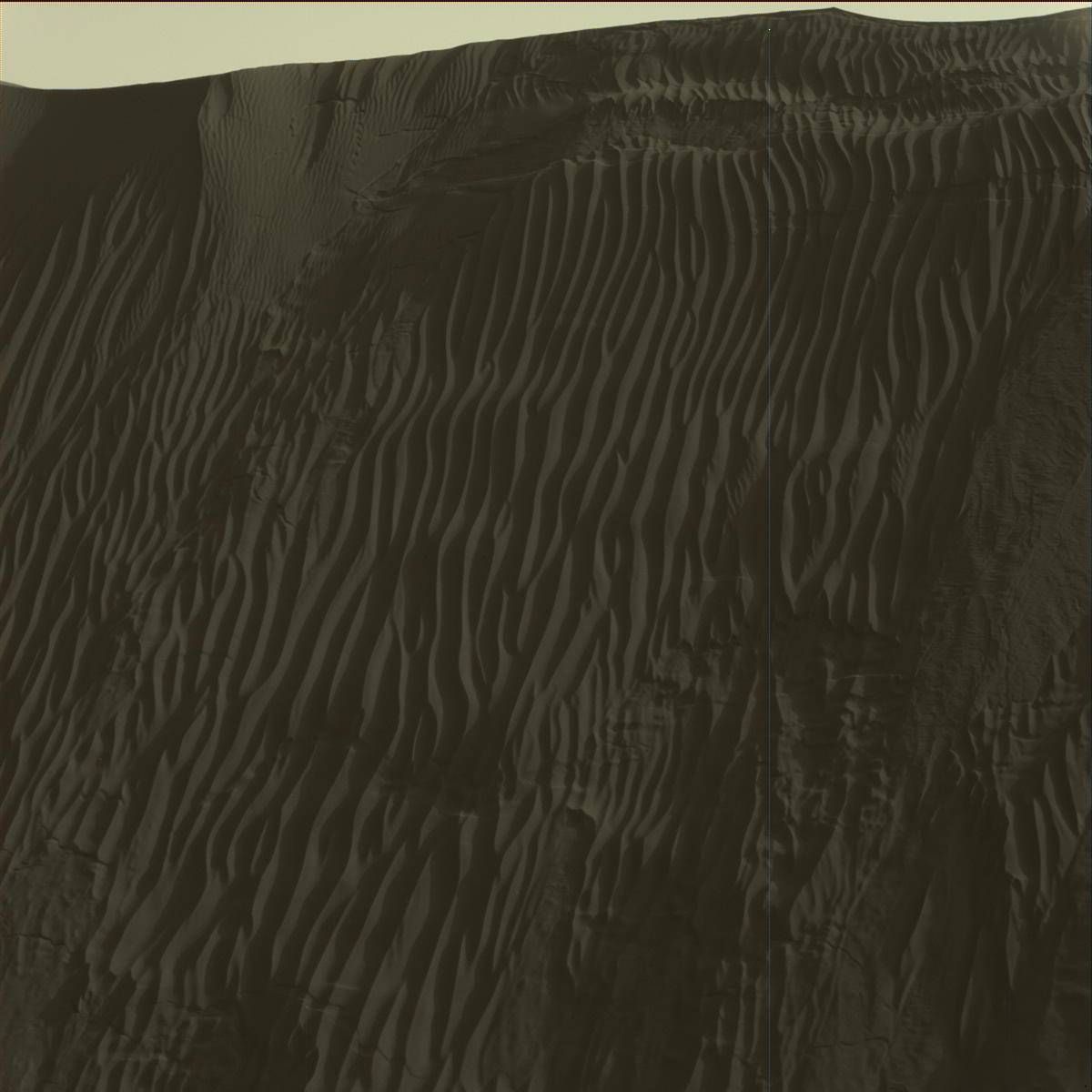
Curiosity Mastcam image taken on Sol 1211, January 2, 2016.
Credit: NASA/JPL-Caltech/MSSS
Landing on the Red Planet in August 2012, Curiosity’s long-term mission is to assess whether Mars ever had an environment able to support small life forms called microbes – to determine the planet’s “habitability.”

Curiosity’s Mastcam camera snagged this Sol 1211 image on January 2, 2016.
Credit: NASA/JPL-Caltech/MSSS
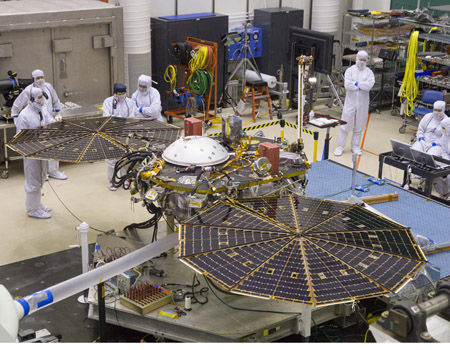
InSight Mars lander undergoing a solar array deployment test in the MTF clean room at Lockheed Martin.
Credit: Lockheed Martin
The recent decision by NASA to suspend the planned March 2016 launch of the Discovery-class InSight mission to Mars was due to unsuccessful attempts to repair a leak in a section of the prime instrument in the science payload.
That instrument was the sensitive Seismic Experiment for Interior Structure (SEIS).
The spacecraft’s name, InSight, says it all: Interior exploration using Seismic Investigations Geodesy and Heat Transport.
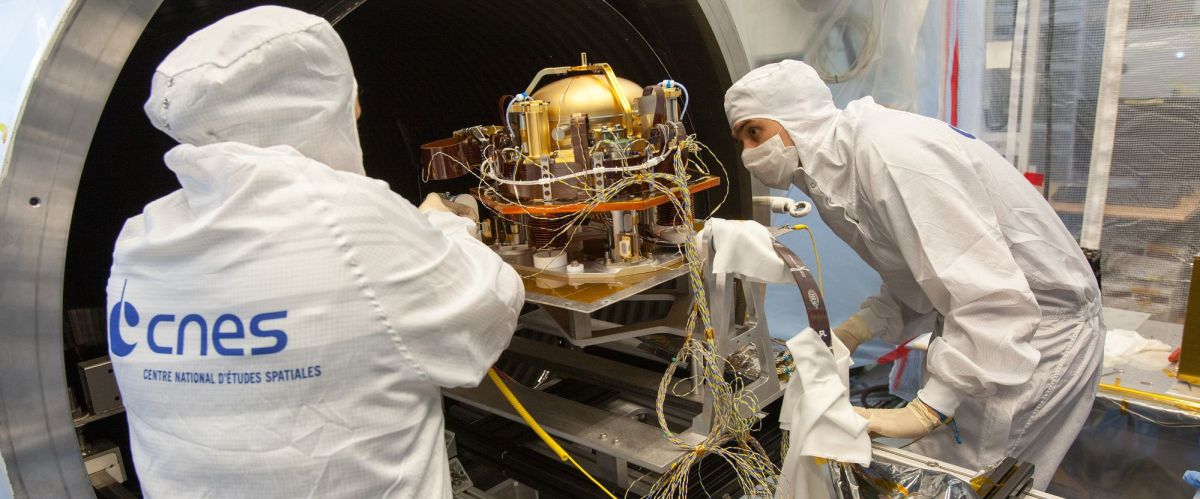
Preparing the SEIS instrument for thermal vacuum testing.
Credit: CNES /MALIGNE Frederick, 2015
Taking the pulse
SEIS is designed to capture the “pulse” of the Red Planet — its internal activity — by taking precise measurements of quakes and other internal commotion. Doing so equates to a better understand the planet’s history and structure.
Testing troubles
The sphere-shaped device itself is made of a series of measurement instruments, mainly composed of three French seismometers called VBB (Very Broad Band) and designed by the Institut de Physique du Globe de Paris (IPGP).
Overall, SEIS is an instrument provided by four European countries: France, Switzerland, United Kingdom and Germany.
The troubled SEIS had previously failed to retain vacuum conditions – a problem that was fixed. But during follow-up tests in extreme cold temperature (-49 degrees Fahrenheit/-45 degrees Celsius) another leak was detected.
Despite the repairs and the significant efforts of the teams, a cold pressure build-up, probably caused by a new leak, was detected on the sphere including the three low frequency seismometers of the IPGP and Sodern, a French company based in Limeil-Brévannes, near Paris, that specializes in space instrumentation.
NASA officials determined there was insufficient time to resolve another leak, and complete the work and thorough testing required to ensure a successful mission.
Finding a solution
“This is the first time a sensitive instrument is realized. We were very close to the result, a fault has occurred, requiring further investigations. Our teams will find a solution, but unfortunately not in time for the flight in 2016,” said Marc Pircher, Director of the Toulouse Space Center.
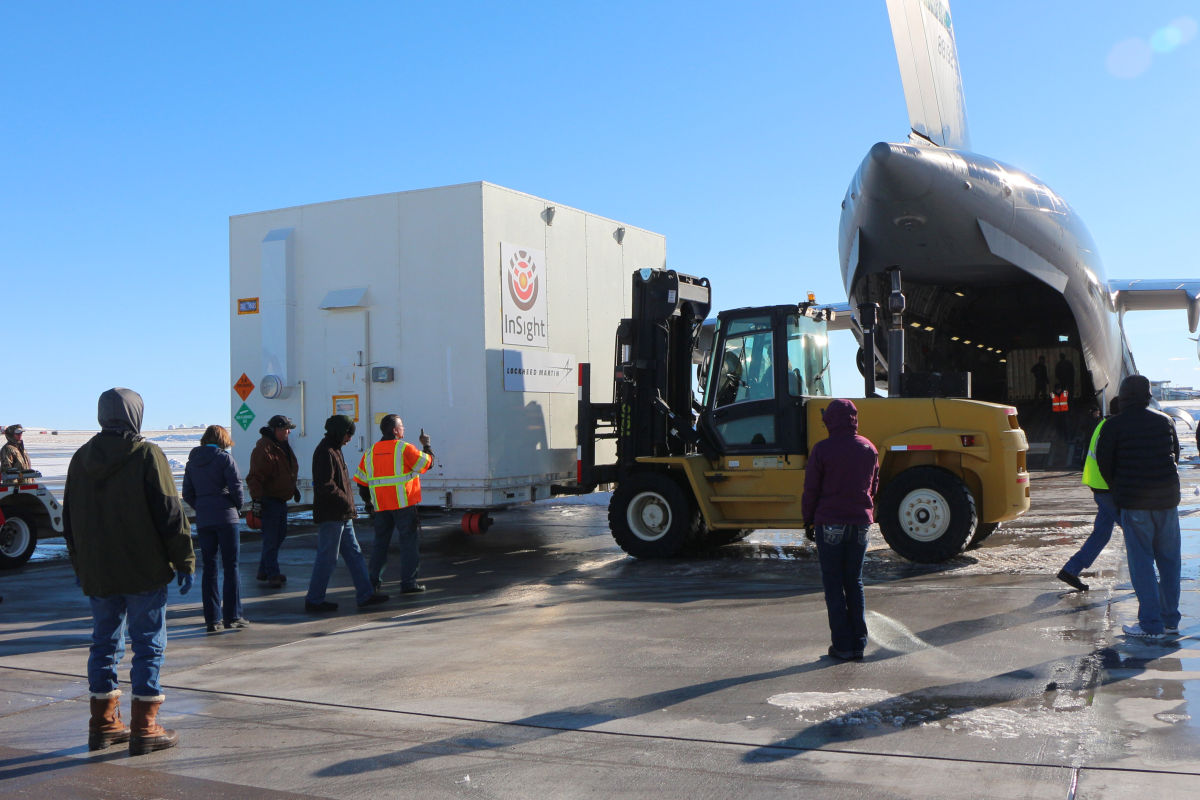
A Lockheed Martin team shipped NASA’s InSight Mars lander from Colorado where it was built to Vandenberg Air Force Base, California where it was slated for launch in March 2016.
Credit: Lockheed Martin
InSight was built by Lockheed Martin and delivered on December 16 to Vandenberg Air Force Base in California for its projected launch. With the 2016 launch canceled, the spacecraft is being returned from Vandenberg to Lockheed’s facility in Denver.
While at Vandenberg, within the Astrotech Space Operations facility, InSight was slated to undergo final processing including the installation and testing of the SEIS instrument, system-level checkout, propellant loading and a spin balance test.
“Our team worked hard to get the InSight spacecraft built, tested and shipped to the launch site on schedule. Although InSight won’t launch in March as planned, we will work closely with NASA, JPL and their partners to map out the path forward for the spacecraft and its important mission,” Lockheed Martin said in a statement provided to Inside Outer Space.
What next?
So what next for InSight…and getting its legs firmly down on Mars?
For legal and policy reasons, NASA can’t go any further than saying that the launch is suspended, explains W. Bruce Banerdt, Principal Investigator for the InSight Mission to Mars at the Jet Propulsion Laboratory in Pasadena, California.
“They have explicitly stated that the mission is not canceled, but there is a process they have to follow to decide whether and how they can extend us,” Banerdt told Inside Outer Space.
Cost cap
“Legally, there is a cost cap on a Discovery mission, and, as I understand it, they [NASA] have to go to Congress to get authorization to exceed that cap,” Banerdt said.

This artist’s concept depicts NASA’s InSight Mars lander fully deployed for studying the deep interior of Mars. Robot arm would deploy the sensitive Seismic Experiment for Interior Structure (SEIS) device, white object in foreground.
Credit: NASA/JPL-Caltech
NASA managers have expressed strong support for both the science of InSight and the mission itself, Banerdt said, “so I am optimistic that we will eventually get the go-ahead.”
Banerdt said that the InSight team is in the beginning stages of putting together a plan, with schedule and budget, to present to NASA for launching in 2018. “It will likely be at least a couple of months before any decision can be made, even provisionally,” he said.
For more information on the SES go to this video in French at:
https://www.youtube.com/watch?v=k3IOKszmnyo
For an English video on InSight, go to:
https://www.youtube.com/watch?v=7VVKyYhwfBk
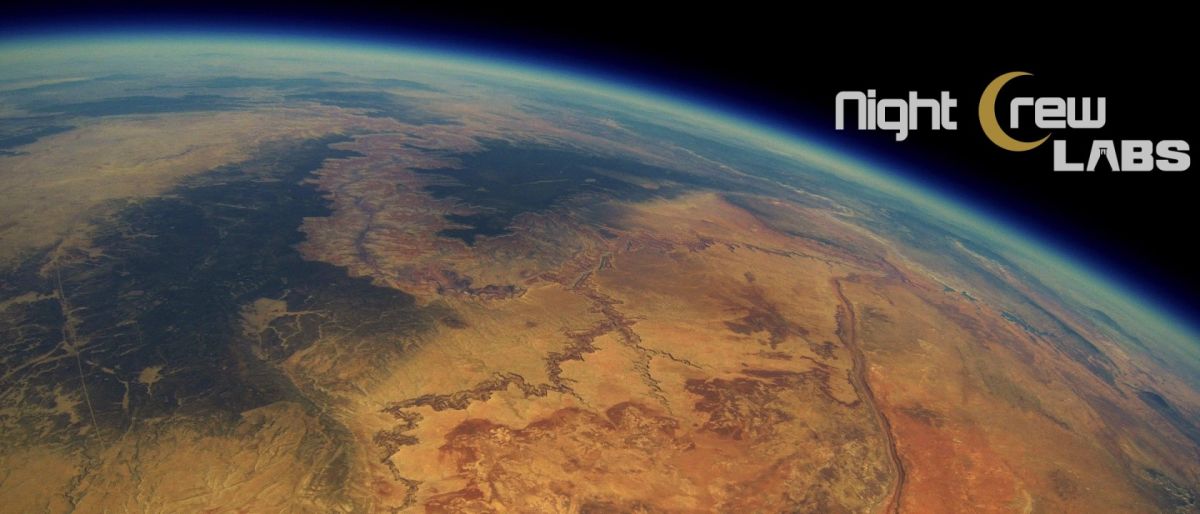
Credit: Night Crew Labs
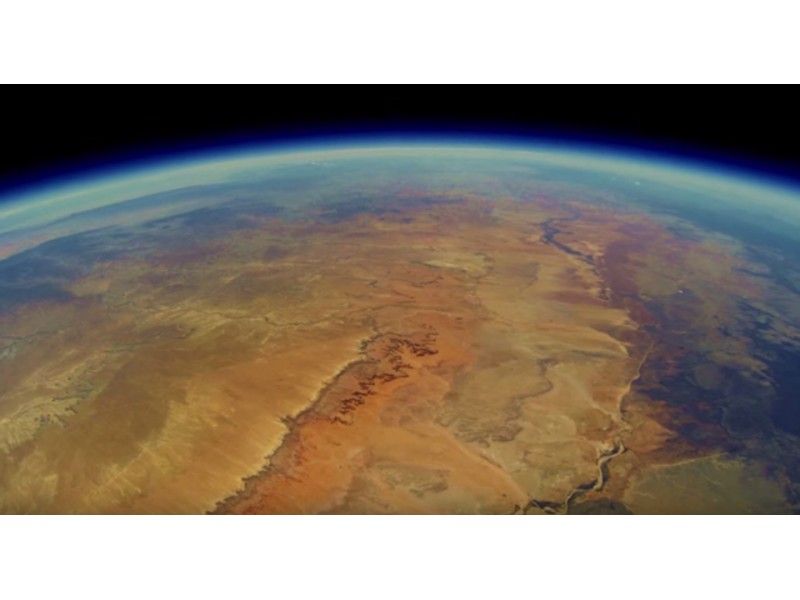
Thanks to an Arizona hiker, a high-altitude balloon experiment has been reclaimed last year – missing for some two years.
Launched via weather balloon in June 2013, the soaring science payload included a GoPro Hero3, Sony Camcorder, Samsung Galaxy Note II phone.
The GoPro and camcorder were recording video footage, while the phone was taking still images.
The balloon carried the payload to a maximum altitude of 98,664 ft (30.1 km). Time of flight lasted one hour, 38 minutes.
Beauty of Earth
Headquartered at Stanford University, Night Crew Labs is on a mission to captivate viewers by showcasing the beauty of Earth from unique, rarely-seen perspectives.
Credit: Night Crew Labs
In addition, Night Crew Labs conducts scientific research, and promotes STEM outreach as well as worldwide nature conservation efforts.
Exposures and composure
“Our high altitude balloon mission over the Grand Canyon…this mission tested principles of fluid lensing as well as the capability of smartphones to perform GPS navigation at high altitudes,” notes the website of the Night Crew Labs. “Due to some unforeseen events, we lost track of our balloon and didn’t get back until a hiker came across it two years later.”
The upshot of regaining their exposures and composure is that their first video feature — “Grand Canyon from the Stratosphere!” — has reached over 6 million viewers, captivated audiences around the world.
Next up
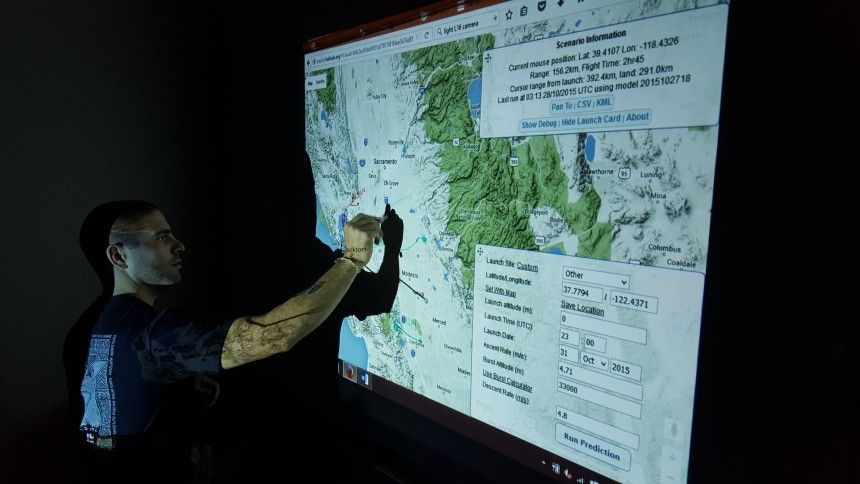
The success of the Grand Canyon Balloon Mission has motivated Night Crew Labs to aim higher with a more go-getting mission: to capture the northern lights from a high-altitude balloon in Alaska.
Credit: Night Crew Labs
“To accomplish this, we are now pursuing an aggressive timeline which will require a more complex, and technologically advanced build,” the team reports.
Resources
To take a stratospheric ride above Earth, check out this video of the launch preparations, video footage, and some data analysis of the flight, go to:
https://www.youtube.com/watch?v=EABQ5psUz70
To keep up to date with future projects of the Night Crew Labs, go to:

Group shot…China’s Chang’e 3 lander and Yutu rover.
Credit: Chinese Academy of Sciences
Data gleaned by China’s Yutu rover on the Moon has identified a new type of lunar basalt, shedding insight on lunar volcanism.
As noted by the state-run Xinhua news agency, the new type of basaltic rock was discovered at a fresh crater named Zi Wei. The measurements were made by Yutu’s Active Particle-induced X-ray Spectrometer (APXS) and its Visible and Near-infrared Imaging Spectrometer (VNIS).
Measurements of the rock composition indicate that the basalt contains a high enrichment of titanium dioxide and olivine.
A team of scientists from China and the United States, led by Ling Zongcheng from China’s Shandong University, published the new findings in the journal Nature Communications.
Late-stage magma ocean
On December 14, 2013, the Chang’e -3 (CE-3) lander soft landed on the Moon in the northeast of the Mare Imbrium. The lander then deployed the instrument-loaded robot.

China’s Yutu lunar rover took this image of Change’3 lander.
Credit: NAOC/Chinese Academy of Sciences
Though the robot suffered mechanical woes after wheeling about for some 375 feet (114 meters), it gathered images and scientific data about the Moon.
While presently unable to traverse the Moon, Yutu reportedly continues to gather data, send and receive signals, and record images and video.
The researchers said that the area surveyed by the Yutu rover was covered in a late-stage magma ocean during the Moon’s development around three billion years ago. Rock samples from the U.S. Apollo and the former Soviet Union’s Luna missions mainly date back from the early-stage magma oceans between three and four billion years ago.
Freshly excavated crater

Location of the Chang’e-3 landing site.
(a) Chang’e-1 CCD image with boundaries of typical mare basalt units7. (b) Chang’e-2 CCD image and (c) LROC NAC image (LROC NAC M1142582775R). (d) The traverse map of the Yutu rover and the locations of APXS and VNIS measurements. (e) Panoramic view of the ‘Zi Wei’ crater by the Panoramic Camera on the Yutu rover at the CE3-0008 site.
Credit: Ling Zongcheng, et. al
In part, the scientific paper in Nature explains: “From a correlated analysis of the regolith derived from rocks at the CE-3 landing site, freshly excavated by Zi Wei crater, we recognize a new type of lunar basalt with a distinctive mineral assemblage compared with the samples from Apollo and Luna, and the lunar meteorites. The chemical and mineralogical information of the CE-3 landing site provides new ground truth for some of the youngest volcanism on the Moon.”
To view the entire scientific paper – “Correlated compositional and mineralogical investigations at the Chang’e-3 landing site” – go to:
http://www.nature.com/ncomms/2015/151222/ncomms9880/full/ncomms9880.html#abstract

Credit: NRO
A fact-packed treasure-trove of historical data – pictures, film and numerous documents – has been released by the National Reconnaissance Office (NRO) regarding the secretive Cold War U.S. Air Force project known as the Manned Orbiting Laboratory (MOL).
The MOL program ran from December 1963 until its cancellation in June 1969. In those nearly six years, according to some estimates, the MOL program spent $1.56 billion during the program’s life.
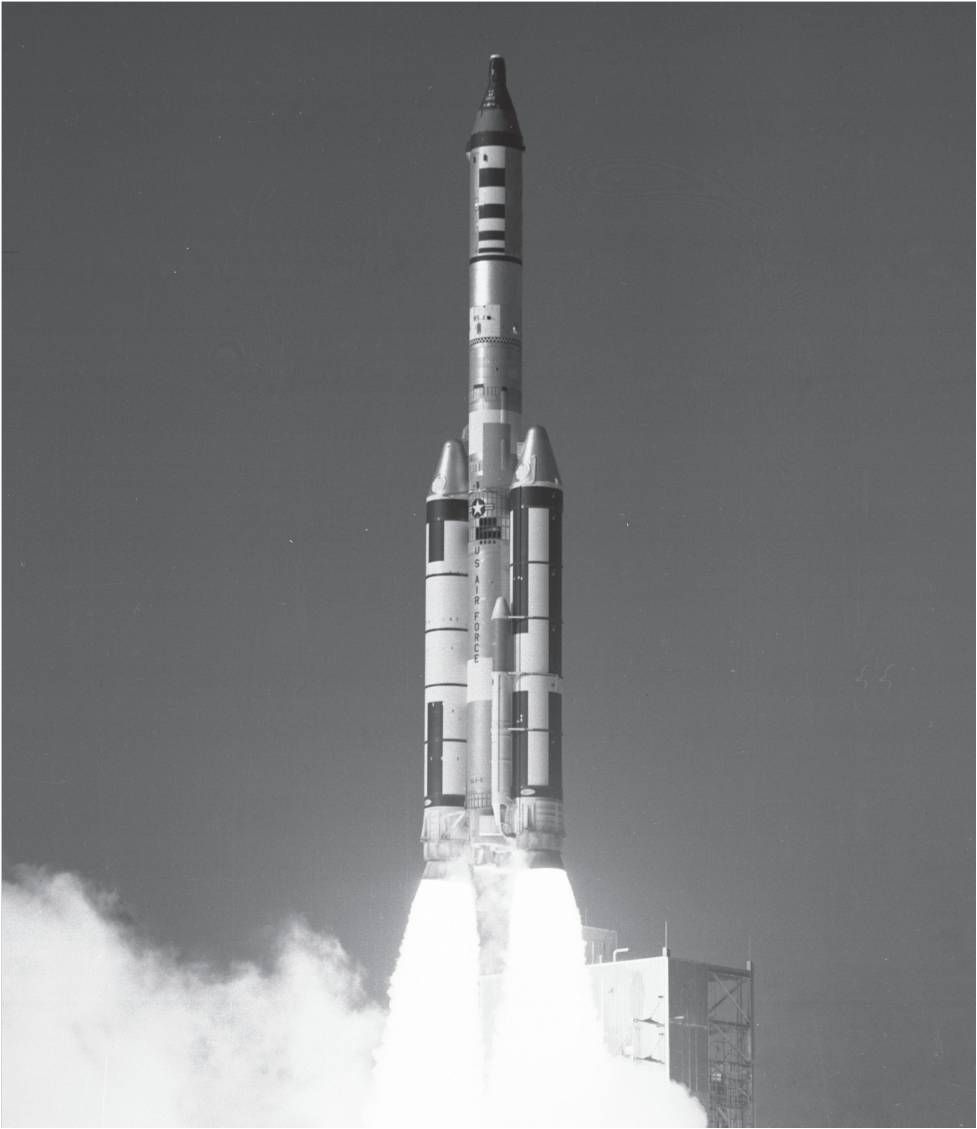
A November 1966 test flight of the Manned Orbiting Laboratory (MOL) using a Titan IIIC-9 booster from Cape Canaveral Launch Complex 40. The flight consisted of a MOL mock-up topped by a refurbished Gemini spacecraft as a Gemini B prototype.
Credit: U.S. Air Force
Even today, aspects of the MOL initiative remain secret.
For an inside look at this U.S. military space program, go to my new Space.com story:
Declassified: US Military’s Secret Cold War Space Project Revealed
http://www.space.com/31470-manned-orbiting-laboratory-military-space-station.html

Road map to the Moon, ESA-style.
Credit: ESA
Calling it a “comeback to the Moon,” European space planners envision a series of human missions to the lunar vicinity, starting in the early 2020s, coordinated and interacting with robotic systems on the ground.
Robots would land first, paving the way for human explorers that will set foot on the Moon.
For more details on Europe’s lunar plans, go to my new Space.com story:
Lunar Leap: Europe Is Reaching for a Moon Base by the 2030s
December 30, 2015 08:00 am ET
http://www.space.com/31488-european-moon-base-2030s.html
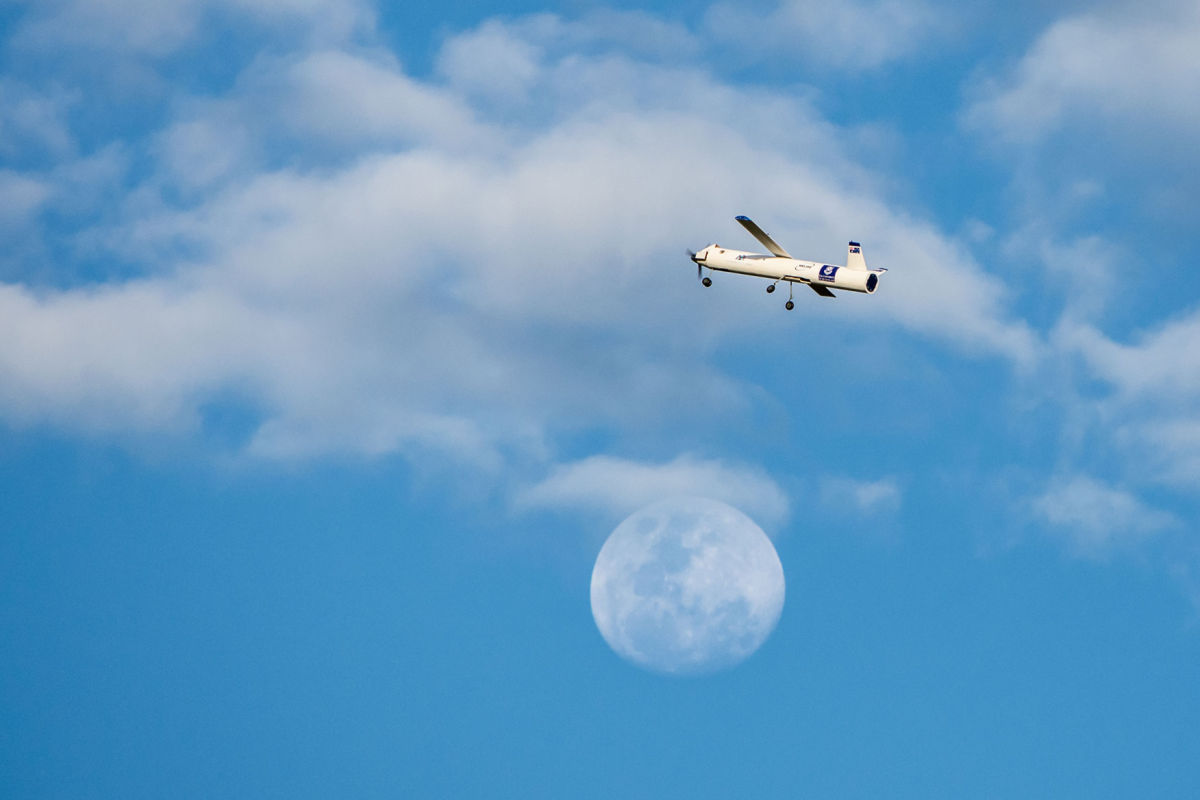
The Austral Launch Vehicle during its first successful use.
Photo by J.R.Llobet
Things are looking up for researchers at The University of Queensland (UQ) in Australia.
A team of investigators moved one step closer to sending small satellites into space via a reusable launch system.
Start small
It’s called the Austral Launch Vehicle (ALV).
On December 23, ALV underwent its first successful test, a craft designed to return to its base after lofting a satellite into space.
The UQ team envisions a combination of ALV and a scramjet for satellite launchings – making possible nearly 85 per cent of a satellite launch system becoming reusable.
Cutting launch costs
UQ Chair of Hypersonic Propulsion is Michael Smart said that current single-use launch systems for small satellites make it incredibly expensive to send satellites into orbit.
“Working in partnership with Brisbane-based start-up companies — Heliaq Advanced Engineering and Australian Droid and Robot — we’ve designed a rocket system that can be re-used,” Professor Smart said in a UQ press statement.
International market
The launch of the ALV has the researchers eyeing the international market, one that is estimated to see a projected demand for 400 satellites in 2016.
Smart is bullish on the future and use of the ALV concept.
“I think there is real potential for Australia to become the ‘go-to’ country for small satellite launches, and I see this as playing a vital role in Australia’s innovation revolution,” Smart said.
For a Vimeo view of the flight, go to:

Credit: Stuart Grey/The Royal Institution
Think of it as nearly 20,000 points of light – and that’s not a good thing.
That is roughly the number of tracked pieces of space junk orbiting the Earth – there’s lots of smaller stuff!
A visual story of space debris since October 1957 — with the launch of the former Soviet Union’s Sputnik 1– has been captured by Stuart Grey, lecturer at University College London and part of the Space Geodesy and Navigation Laboratory.
Grey’s work involves precise orbit determination and force modeling of spacecraft and space debris.
His visualization, depicting the menacing build-up, was published on December 20, and tells the story of how all that clutter has accumulated over the decades.
Take a look at this video:

Credit: Lockheed Martin
When the first footfalls on Mars takes place, any firm footing on that distant world means living off the land.
It is already known that Mars is a plentiful planet, one that has usable resources to sustain any onslaught of future expeditionary crews.
But hunkering down and living off the un-earthly scenery is easier said than done – a theme also termed as In-Situ Resource Utilization, or ISRU. There are many issues to tangle with – not only to survive on Mars, but also thrive there.
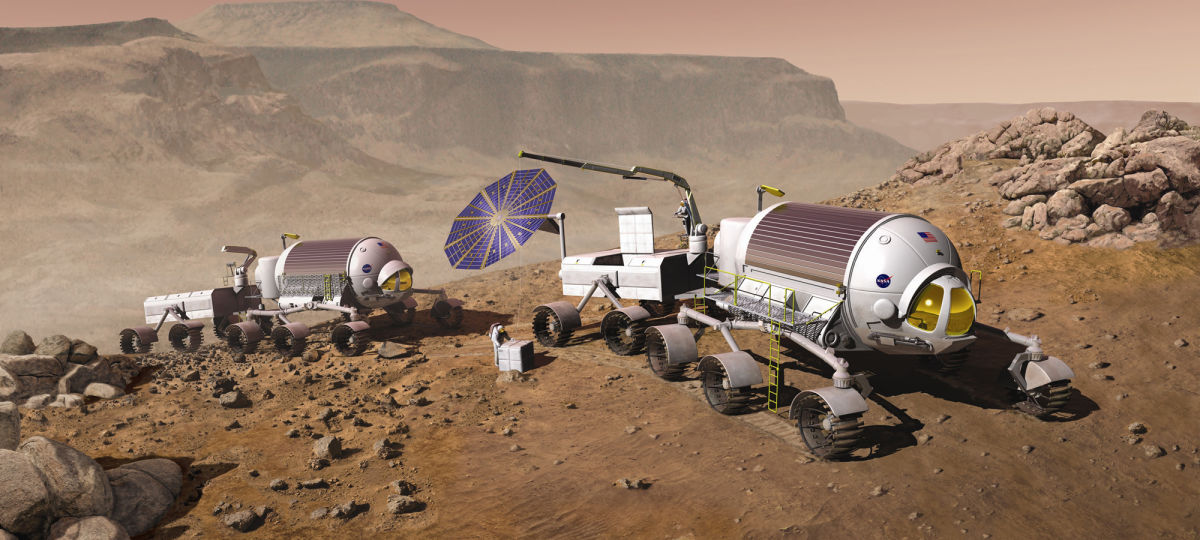
Credit: NASA
For more details, take a read of my new story on Space.com:
Digging in on Mars! How Astronauts Will Survive and Thrive on the Red Planet
by Leonard David, Space.com’s Space Insider Columnist
December 28, 2015 08:05am ET
Go to:
http://www.space.com/31474-mars-colony-living-off-the-land.html

